



Louis XVI Bureau
A louis xvi bureau offers refined neoclassical symmetry, exquisite parquetry, and chased gilt bronze mounts for the discerning collector.
Louis XVI Bureau
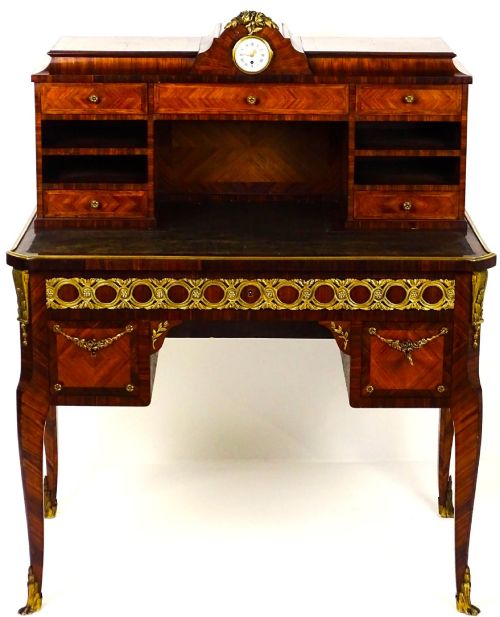
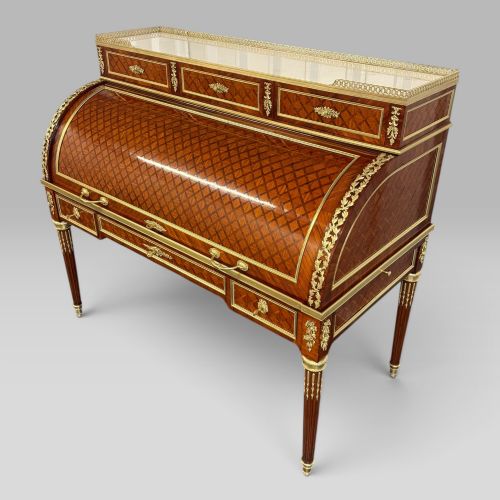
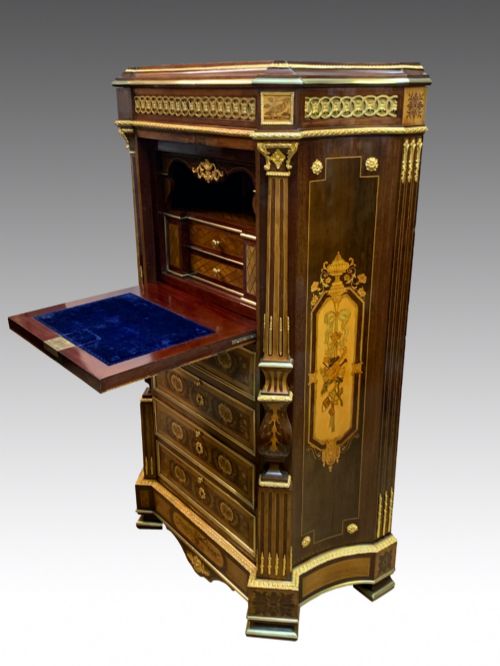
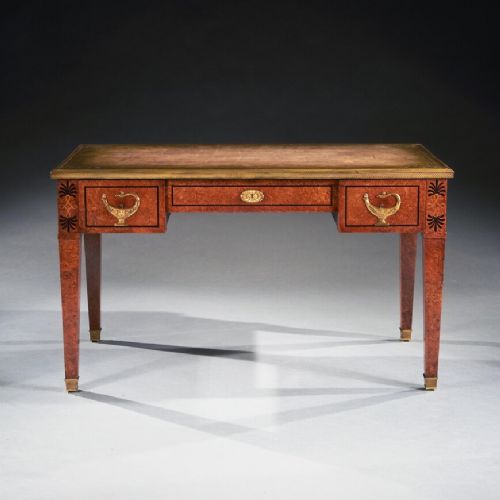
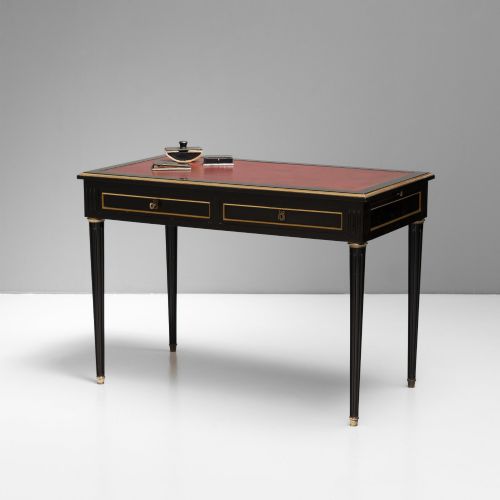
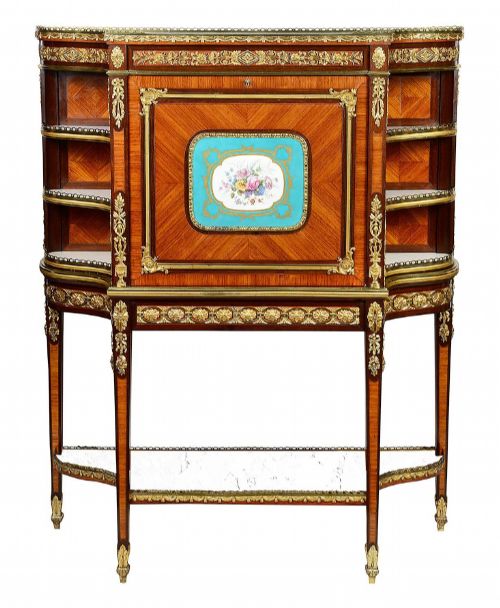
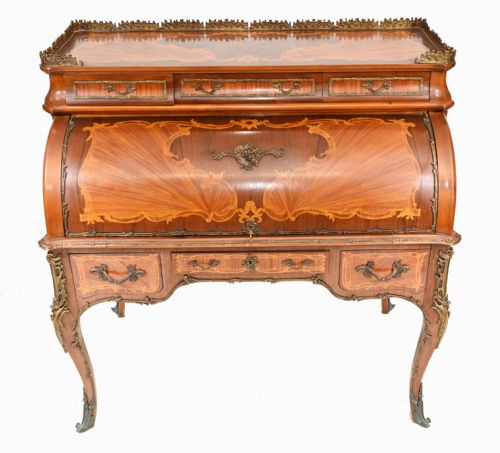
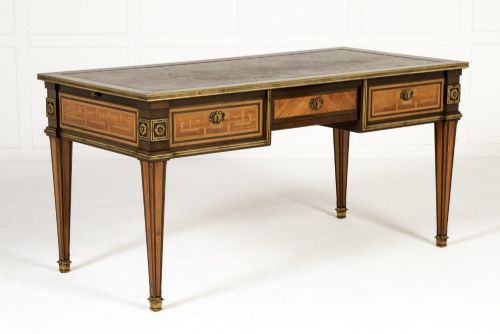
A louis xvi bureau embodies the neoclassical shift away from rococo curves toward straight lines, restrained proportions, and architectural dignity. The pieces seen here encompass writing tables, cylinder desks, and drop-front secretaires designed for elegant correspondence.
Nineteenth-century revival pieces dominate this selection, particularly French items produced during the Victorian and Edwardian eras. Makers of this period drew heavily on eighteenth-century models, producing sophisticated desks with leather writing surfaces and intricate marquetry.
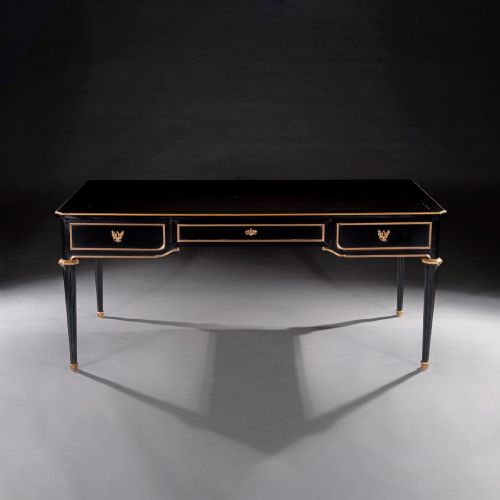
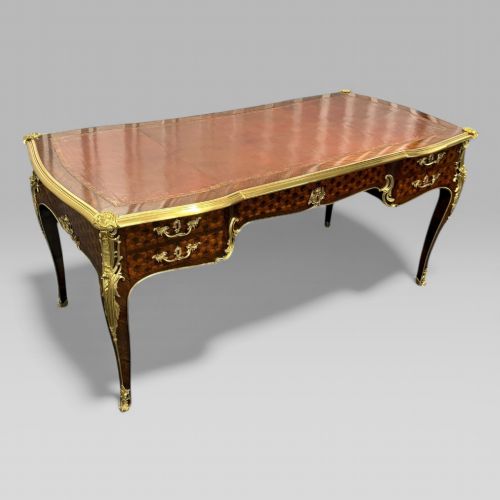
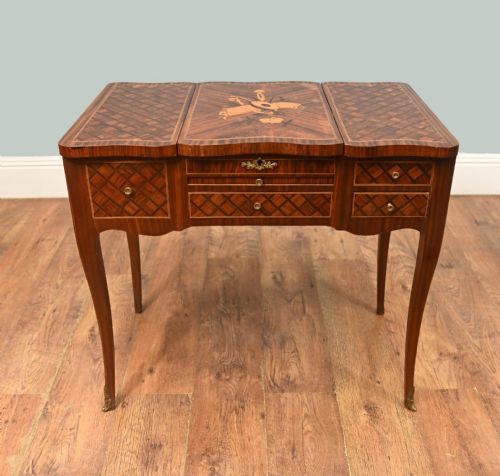
Forms range from the grand bureau plat intended for the centre of a room to the intimate bonheur du jour designed for boudoir use. Walnut, mahogany, and exotic veneers provide the foundation for these sophisticated writing pieces.
Materials and Construction
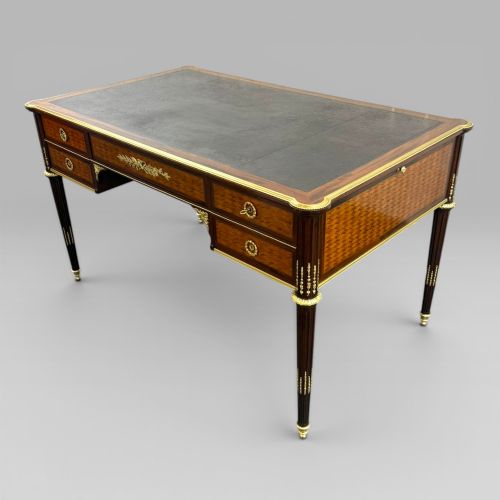
Cabinetmakers utilised dense timbers such as kingwood, tulipwood, satinwood, and mahogany as foundations for elaborate geometric parquetry and floral marquetry. These veneers were meticulously hand-cut and laid onto solid carcass woods to create striking contrasting patterns.
Ormolu and gilt bronze mounts were cast, chased, and fire-gilded to accent the structural corners, aprons, and legs of the desk. Brass stringing and leather writing inserts completed the luxurious finish of these sophisticated writing tables.
Listings feature woods like kingwood, mahogany, and satinwood combined with hand-chased ormolu mounts across nineteenth-century revival forms.
Quality and Craftsmanship
The distinction between standard production and masterwork pieces rests in the crispness of the ormolu chasing and the precision of the veneer work. Superior examples feature deeply hand-chiselled mounts that retain their original fire gilding rather than later lacquered finishes.
Internal construction reveals the maker's hand, where dovetailed drawer linings in oak or mahogany demonstrate uncompromised standards. The fluidity of the marquetry and the tightness of the timber joints separate ordinary cabinetwork from the output of premier Parisian workshops.
Paul Sormani·Maison Krieger·François Linke·Blake London·Donald Ross·Alphonse Tahan·Fournier
The Louis XVI Bureau Glossary
- Ormolu
- Gilt bronze mounts applied to furniture for decorative accent and edge protection. This technique involved an amalgam of mercury and gold applied to cast bronze.
- Bureau Plat
- A flat-topped writing table, finished on all sides to stand free in the middle of a room. These typically feature multiple frieze drawers beneath the leather-inlaid top.
- Marquetry
- The art of applying pieces of veneer to a structure to form decorative patterns and pictures. Craftsmen selected various toned woods to create naturalistic floral or geometric designs.
- Parquetry
- Geometric mosaic woodwork arranged in repeating patterns such as cubes or chequers. This technique showcases the natural grain variations of kingwood and mahogany.
- Secretaire Abattant
- A tall vertical cabinet featuring a drop-front writing flap that conceals inner compartments and small drawers. These upright desks maximise workspace while maintaining a compact footprint.
- Sabot
- A cast and chased metal foot mount fitted to the base of furniture legs. They served both to protect the timber end and to unify the decorative scheme.
Louis XVI Bureau: Frequently Asked Questions
How do I distinguish revival pieces?
Nineteenth-century revival pieces often display machine-sawn veneer thickness and slightly different secondary wood choices compared to eighteenth-century originals. Examining the construction methods and fastener types usually clarifies the exact period of manufacture.
Master craftsmen during the revival era reproduced neoclassical forms with exceptional skill, making signature marks and brass stamps crucial for precise attribution.
Where should I place a cylinder desk?
A cylinder desk requires adequate clearance behind it if the roll top mechanism extends past the main carcass. Placing it in a bright room highlights the contrasting kingwood and tulipwood veneers.
Because many examples are finished on all sides, they work exceptionally well away from walls where the back panel and ormolu mounts remain visible.
How do I maintain leather writing surfaces?
To preserve tooled leather inserts, keep them away from direct sunlight and apply specialised leather dressings sparingly to prevent cracking. Avoid using modern chemical solvents that might lift the gold leaf tooling.
Gentle dusting with a dry cloth is sufficient for routine maintenance of both the leather and the surrounding wood veneers.