

Gilt Bronze Bureau
A gilt bronze bureau is a fine nineteenth-century writing table adorned with cast metal mounts, offering both a functional workspace and an opulent display piece.
Gilt Bronze Bureau
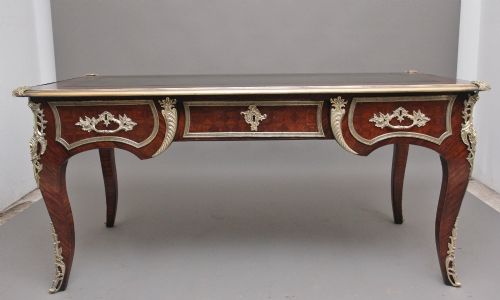
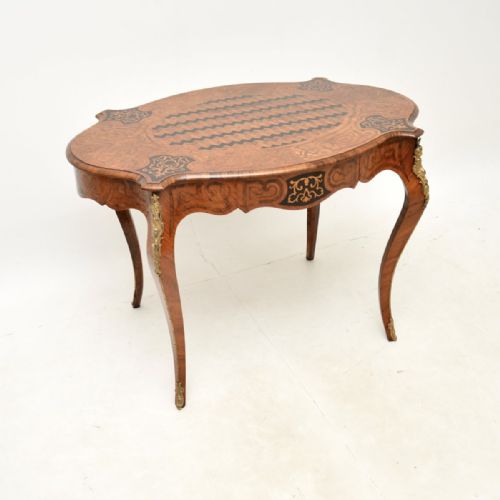
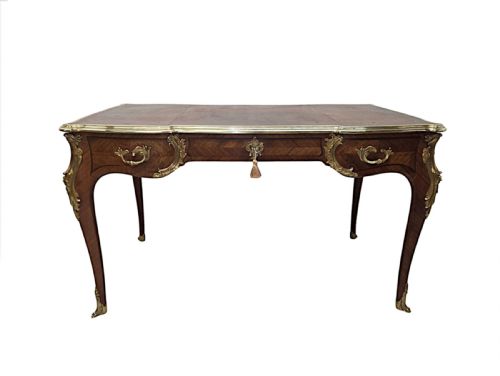
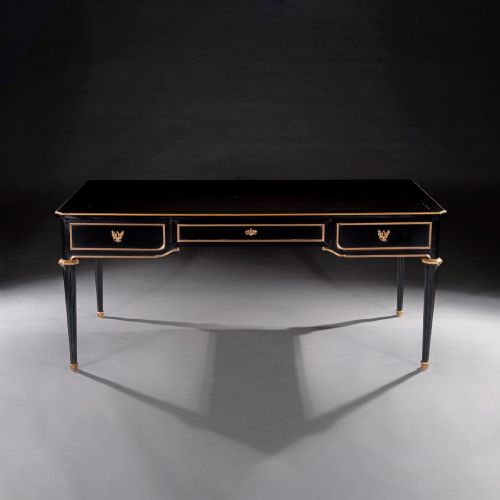
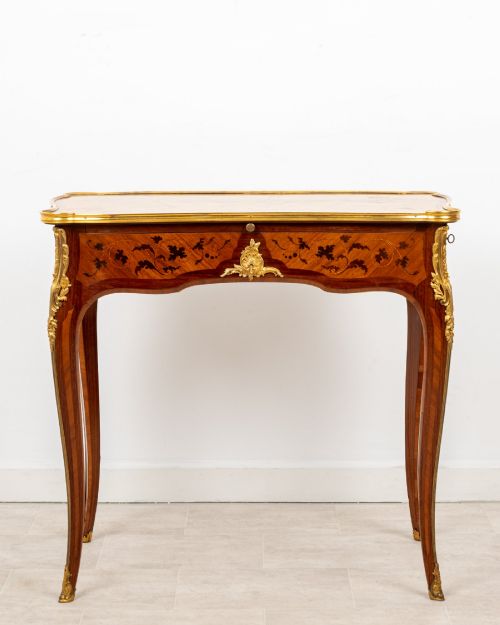
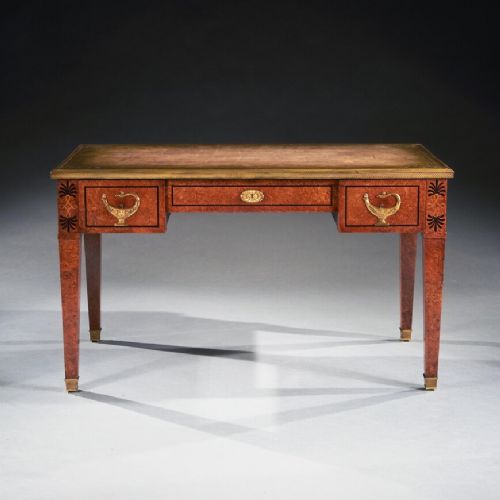
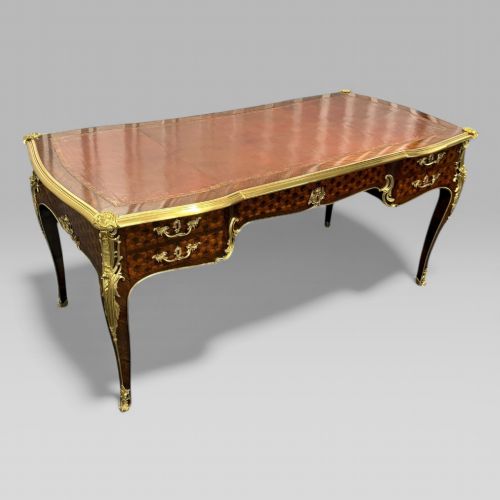
A gilt bronze bureau typically takes the form of a bureau plat, a freestanding writing table with a finished back and multiple drawers designed for the centre of a room rather than against a wall. These pieces frequently emerge from nineteenth-century French workshops adopting the revival styles of Louis XV and Louis XVI, blending historical forms with sophisticated cabinet-making.
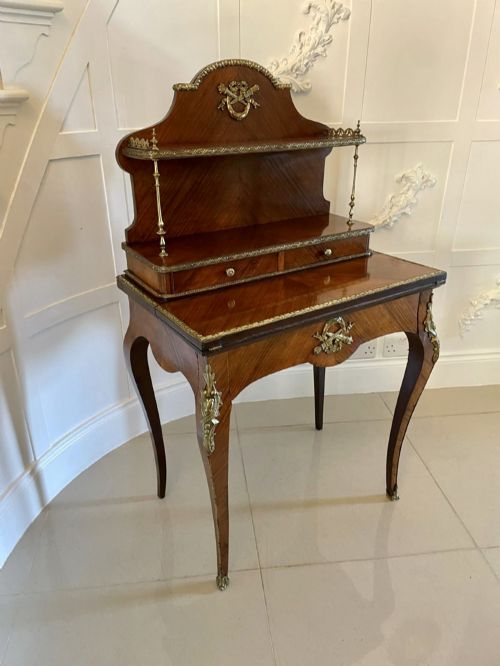
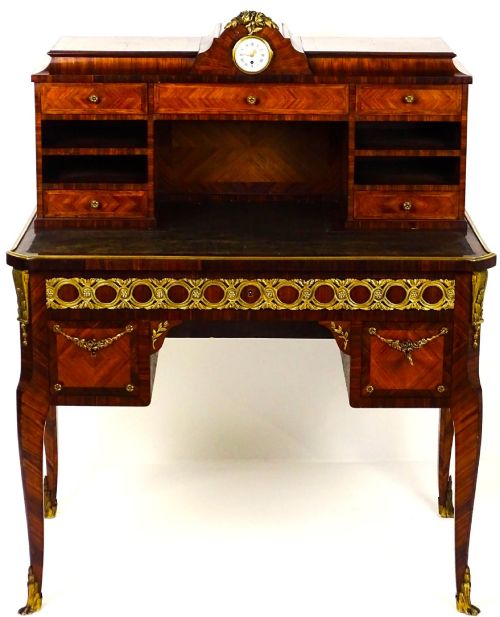
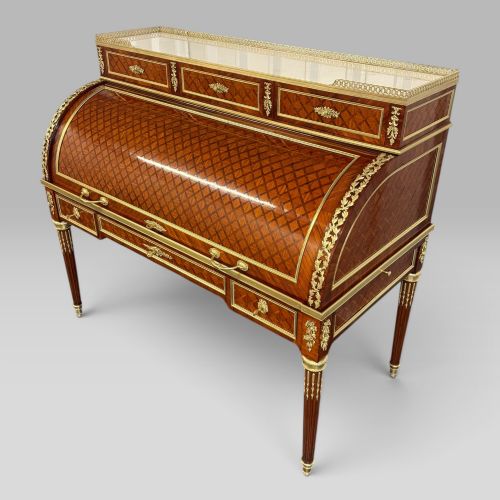
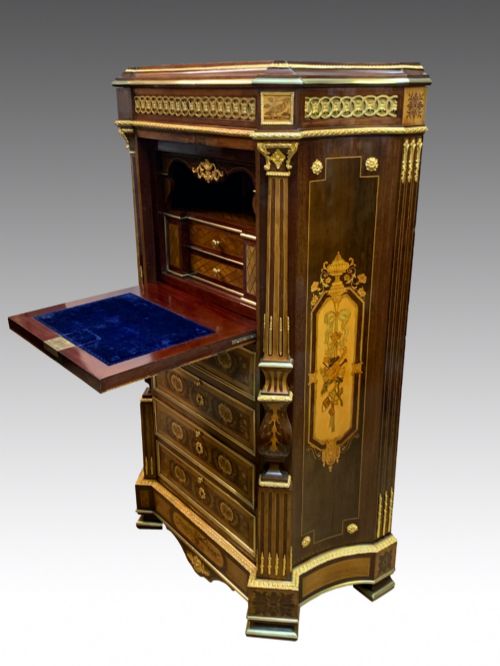
Buyers often encounter variations such as the bonheur du jour, a smaller ladies writing cabinet featuring a superstructure of shelves and small drawers, or the upright secrétaires equipped with a drop-down writing surface. The majority of items on this page belong to the nineteenth century, reflecting a period of intense revivalism and exceptional craftsmanship.
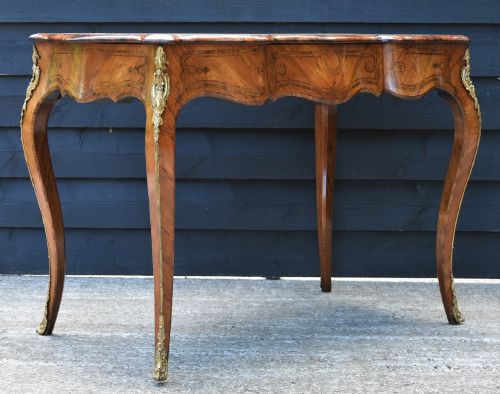
The materials paired with these gilt bronze mounts shape the overall character of each desk, ranging from figured kingwood and rosewood to ebonised wood and mahogany. Many examples incorporate leather writing inserts, parquetry patterns, or porcelain plaques, anchoring them firmly within the French decorative tradition.
Materials and construction
Makers constructed the carcass of each desk using solid woods like mahogany or pine as a foundation, which they then veneered in decorative hardwoods including kingwood, tulipwood, and satinwood. Marquetry and parquetry designs were meticulously cut and fitted by hand into the surface veneers, creating intricate geometric or floral patterns across the top and sides.
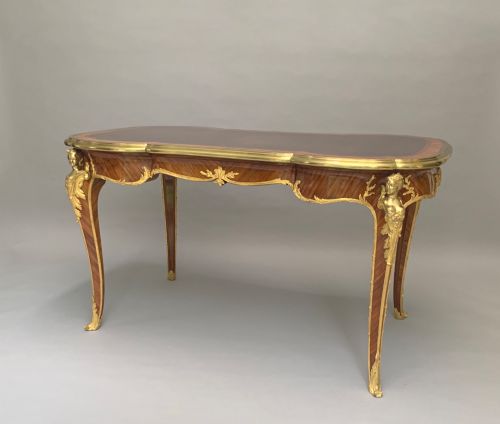
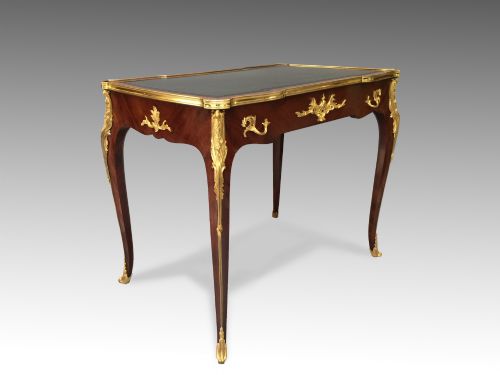
The characteristic gilt bronze or ormolu mounts were cast in brass or bronze and subsequently fire-gilded with a mercury amalgam to achieve a brilliant, lasting metallic finish. These metal elements were then screwed or pinned to the corners, aprons, and legs of the desk to accentuate its architectural lines.
The listings on this page span the nineteenth century, featuring woods like kingwood and mahogany alongside ormolu mounts.
Distinctions in quality
The standard of a gilt bronze bureau rests heavily on the crispness and depth of the metal castings, where sharp chisel work and detailed chasing separate superior mounts from soft, commercially produced alternatives. Master makers ensured that every scroll and acanthus leaf appeared crisp to the touch.
Cabinet-making execution dictates the longevity of the piece, evident in the tightness of the veneer joints, the smooth action of the drawer linings, and the integrity of the underlying timbers. Desks bearing the stamps or signatures of renowned makers or retailers command greater attention due to their documented provenance.
Francois Linke·Paul Sormani·Maison Krieger·CH. Jeanselme and Co·Durand·Blake·Edwards and Roberts·Fournier
The Gilt Bronze Bureau Glossary
- Ormolu
- Gilded bronze, where finely ground gold is applied to a bronze base using mercury. This technique produces a rich, durable golden sheen characteristic of fine nineteenth-century mounts.
- Bureau plat
- A flat-topped, freestanding writing desk with drawers in the frieze. It is finished on all sides so it can sit in the middle of a room.
- Bonheur du jour
- A small, light ladies writing desk featuring a small cabinet or set of shelves upon the writing surface. This form gained popularity during the mid-nineteenth century revival periods.
- Parquetry
- Geometric wood-mosaic work used for decoration on furniture surfaces. Small pieces of veneer are arranged in repeating patterns such as cubes or chequers.
- Marquetry
- Inlaid woodwork where different coloured veneers are assembled to form pictorial or scrollwork designs. Artisans cut these veneers from exotic timbers to adorn the tops and drawers of desks.
Gilt Bronze Bureau: Frequently Asked Questions
What is a bureau plat?
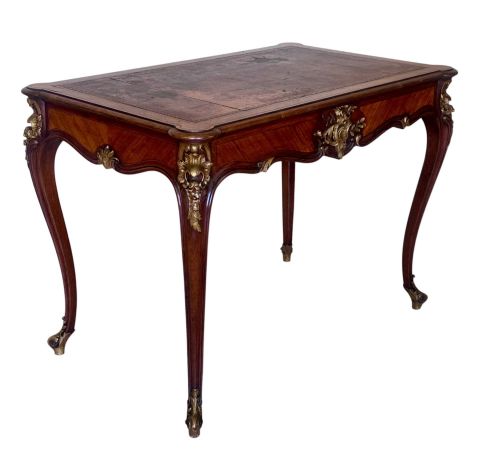
A bureau plat is a freestanding writing desk featuring a flat top, usually lined with leather, and drawers set into the frieze below. Because the back is finished with the same care as the front, it sits comfortably in the middle of a room rather than against a wall.
These desks often feature ornate gilt bronze mounts at the corners and legs, reflecting the revival of eighteenth-century French design tastes during the nineteenth century.
How do I care for leather desk tops?
Leather writing surfaces require gentle cleaning with a slightly damp cloth followed by a neutral leather cream to keep the hide supple. Avoid using harsh chemical cleaners or excess water, which can stain the leather and damage the surrounding wood veneer.
Keeping the desk away from direct sunlight and heat sources prevents the leather from drying out and cracking over time.
What is the difference between ormolu and gilt bronze?
Ormolu and gilt bronze refer to the same material process, where a layer of gold is bonded to a bronze or brass base. The term ormolu derives from the French phrase describing ground gold, commonly used in antique furniture descriptions.
Both terms describe the decorative metal mounts that accent the corners, handles, and aprons of nineteenth-century French desks.
Where were these desks made?
The majority of these desks originated in France, particularly in the workshops and studios operating around Paris during the nineteenth century. Makers in this region drew heavily on Louis XV and Louis XVI design vocabularies.
Some examples also emerged from English workshops or retailers who adapted these popular French revival styles for domestic clients.