




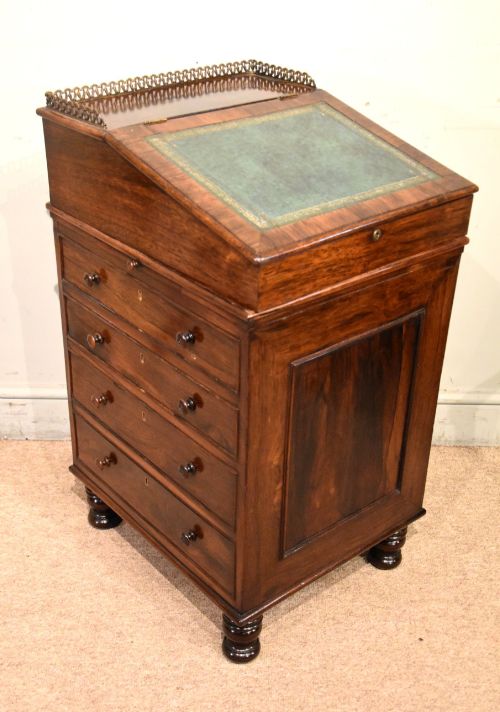
Writing Bureau with Gallery
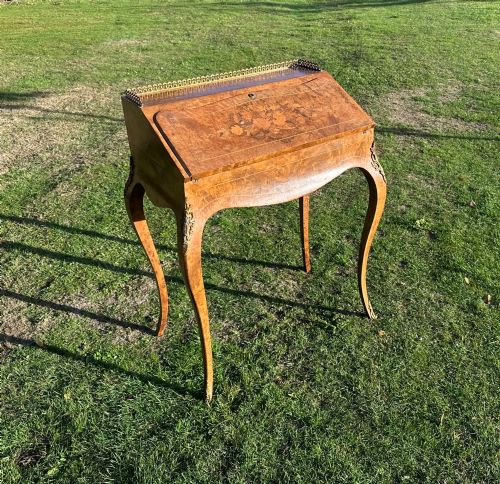
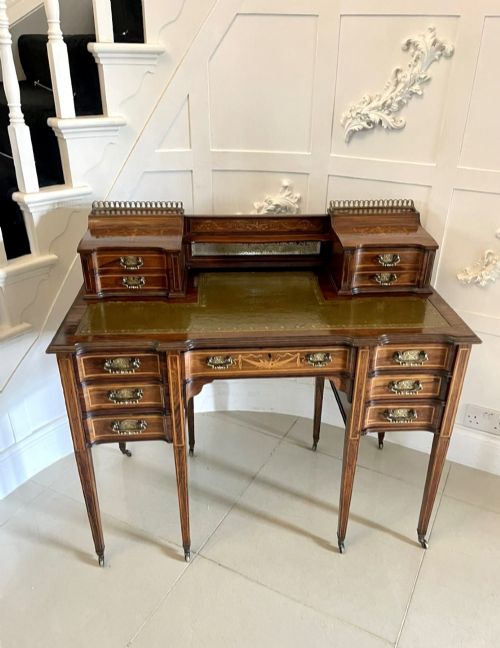
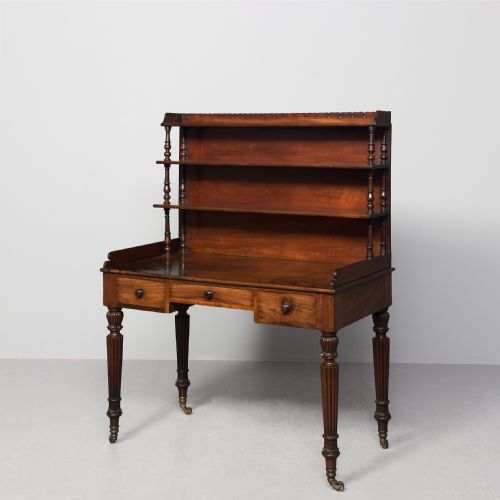
A writing bureau with gallery sits upon a tabletop or desk, providing upright compartments and small drawers to organise correspondence.
Writing Bureau with Gallery
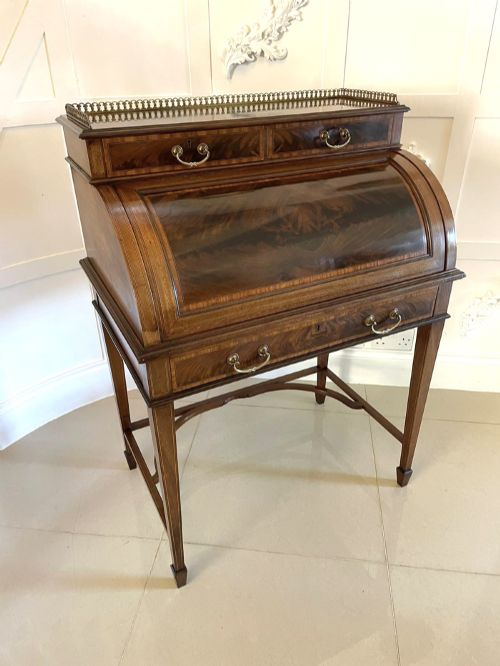
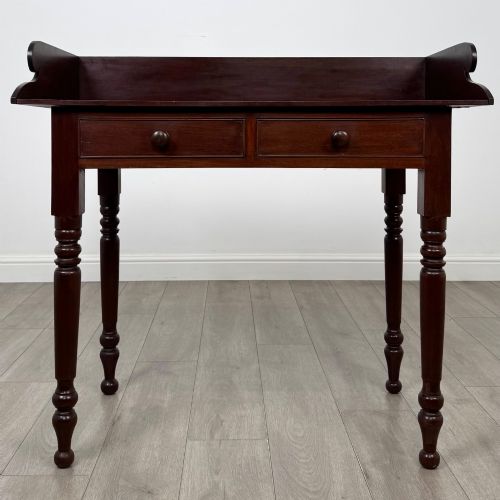
When you search for a writing bureau with gallery, you are looking at practical antique furniture designed for correspondence and storage. These pieces date from the Regency period through to the Edwardian era, spanning the nineteenth and early twentieth centuries.
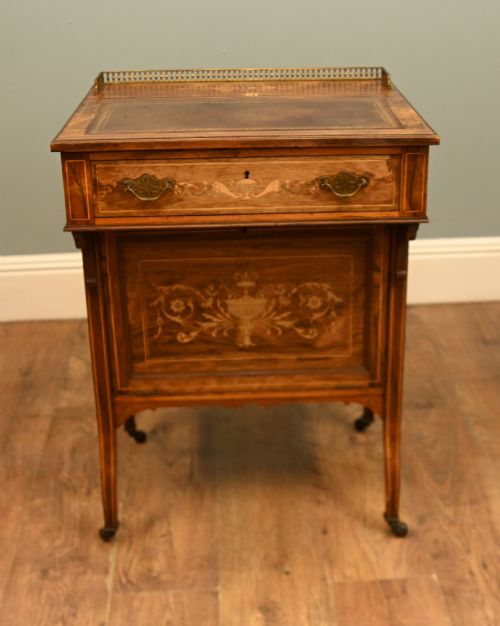
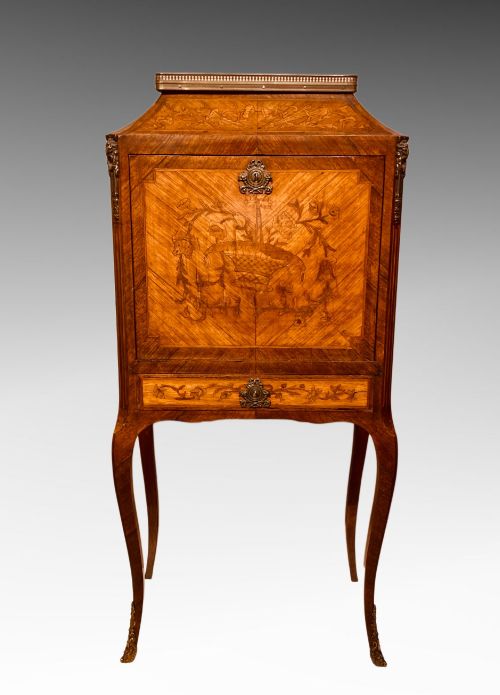
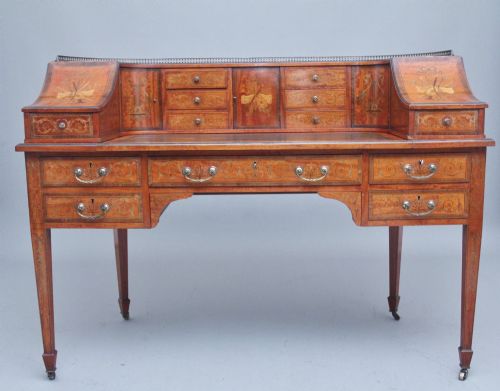
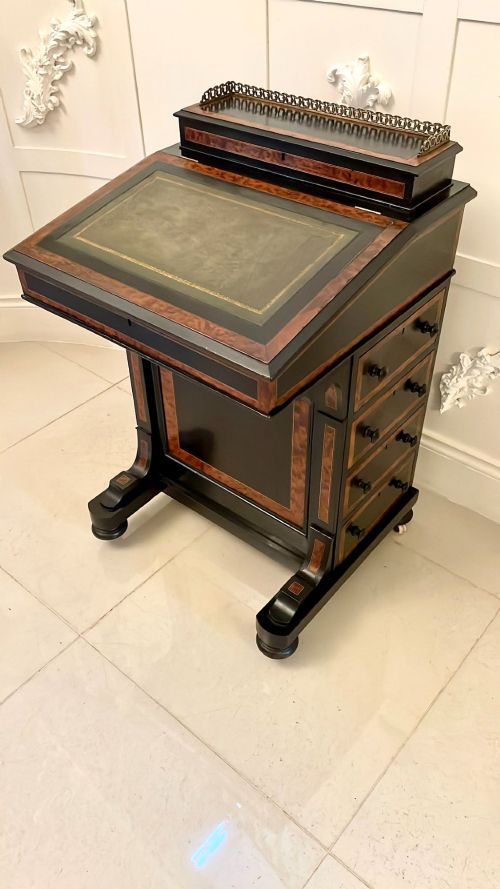
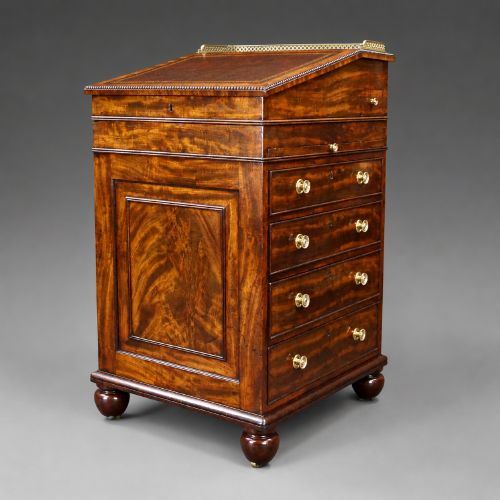
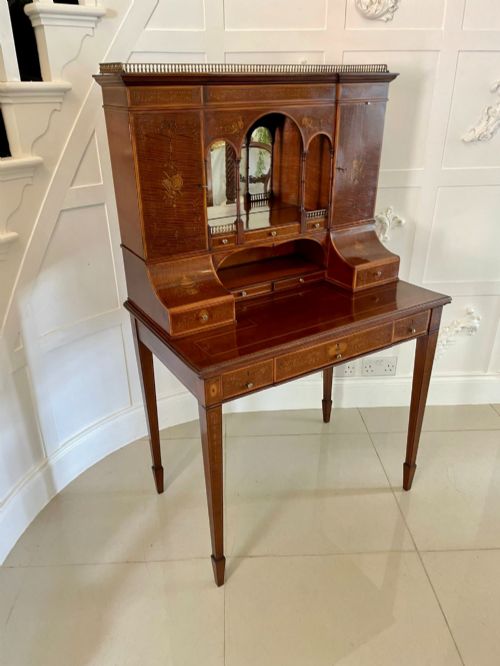
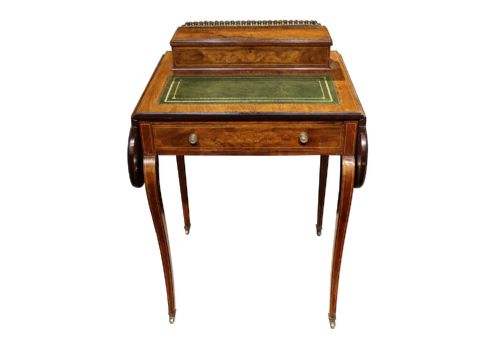
The form appears in various shapes including Davenport desks, Carlton House desks, escritoires, and bonheur du jour tables. Edwardian examples and nineteenth-century variants dominate the selection, often incorporating upright galleries for letters and stationery.
Makers utilised woods such as mahogany, walnut, satinwood, and kingwood, sometimes applying detailed inlay or crossbanding. These desks serve both functional workspaces and decorative household items.
How they were made
Cabinetmakers constructed these desks using solid timbers and decorative veneers such as flame mahogany, burr walnut, and satinwood. Drawer linings typically feature oak or secondary woods.
Metal components like brass handles, ormolu mounts, and hinges provide structural and decorative detail. Leather inset tops furnish a smooth writing surface on many of the desks.
Writing Bureau with Gallery Retail Price Guide 2026
Typical asking prices for writing bureau with gallery among the pieces listed under this phrase on Sellingantiques today, from the lower quarter to the upper quarter. They describe what is for sale here now, not the wider market.
Some desks hide porcelain plaques among their brass mounts, proving the nineteenth-century love for unexpected decoration.
What varies in quality
Quality depends upon the choice of timber and the precision of the cabinetwork. Pieces featuring figured veneers like burr walnut or flame mahogany demonstrate superior material selection.
The refinement of the gallery details, drawer dovetailing, and original brass hardware distinguish workshop standards. Finer desks incorporate detailed satinwood inlay and fitted interiors.
Gillows·James Mein of Kelso·Maple of London·Heal and Sons
The Writing Bureau with Gallery Glossary
- Gallery
- An elevated rail or framework incorporating small shelves and compartments on top of a desk.
- Davenport
- A compact form of writing desk featuring a sloped writing surface and drawers opening to the side.
- Carlton House desk
- A distinctive horseshoe-shaped writing desk surrounded by a continuous raised gallery of small drawers and pigeonholes.
- Escritoire
- A writing cabinet or desk, usually featuring a drop-front writing surface concealing internal compartments.
- Crossbanding
- A strip of veneer applied across the grain of the main surface to create a decorative border.
Writing Bureau with Gallery: Frequently Asked Questions
What is a gallery back on a desk?
A gallery back consists of small raised compartments and shelves affixed to the upper rear surface of the writing desk.
This structure organises letters, envelopes, and stationery within easy reach of the writer.
How do I identify an Edwardian desk?
Edwardian desks date from roughly the period between eighteen ninety and nineteen ten. They frequently display lighter satinwood or inlaid mahogany construction.
Styles from this era often lighter proportions compared to heavy Victorian pieces.
Where were these desks used?
These pieces served in private libraries, bedrooms, and reception rooms of grand houses. Ladies writing desks particularly suited drawing rooms for correspondence.
Larger executive desks functioned in estate offices and studies.
What woods were used in construction?
Cabinetmakers employed mahogany, walnut, oak, pitch pine, and exotic woods like kingwood and satinwood. Burr walnut and flame mahogany provided decorative veneered surfaces.
Secondary woods like oak reinforced internal drawer structures.