


Rococo Porcelain Candle Holders
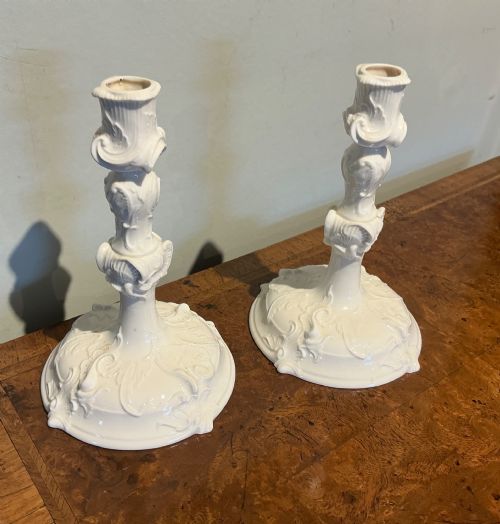
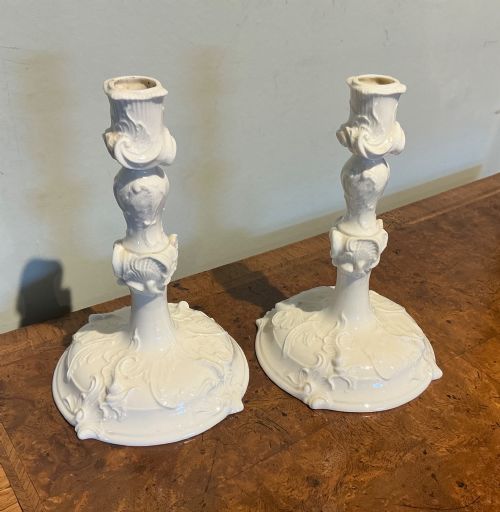
Rococo porcelain candle holders bring asymmetrical curves and figurative charm to a mantelpiece, combining fired clay with gilt bronze mounts.
Rococo Porcelain Candle Holders
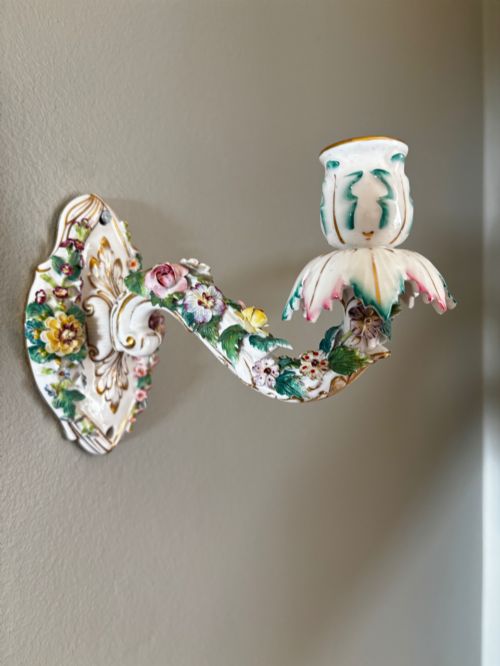
These pieces encompass candlesticks, multi-arm candelabra, wall sconces and chambersticks designed with the energetic, scroll-heavy lines characteristic of the style. Most examples appearing here date from the eighteenth century through to the late nineteenth century revival periods.
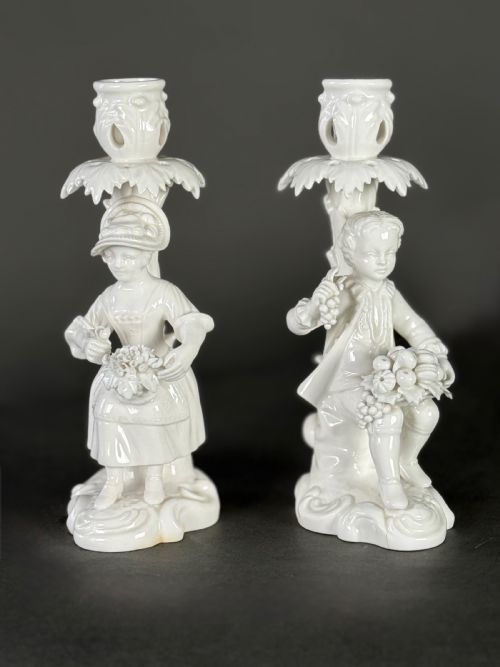
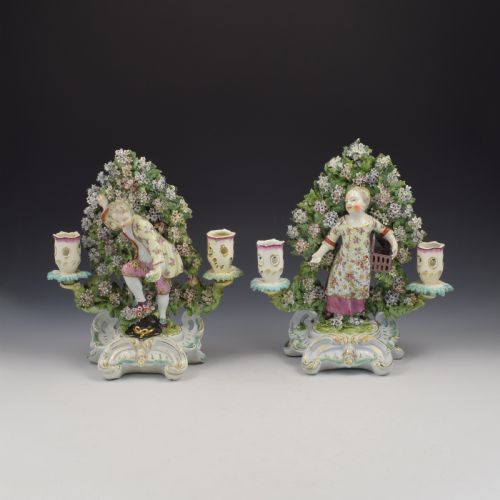
The dominant forms include figural groups depicting musicians, children, dancers and allegorical seasons, often framed by dense foliage known as bocage. Pairs predominate, alongside occasional single wall sconces and chambersticks intended for bedside use.
Origins span major European factories, with English porcelain represented by Derby, Bow, Chelsea and Minton, and continental production led by Meissen, Nymphenburg, Sitzendorf and Dresden.
Materials and construction
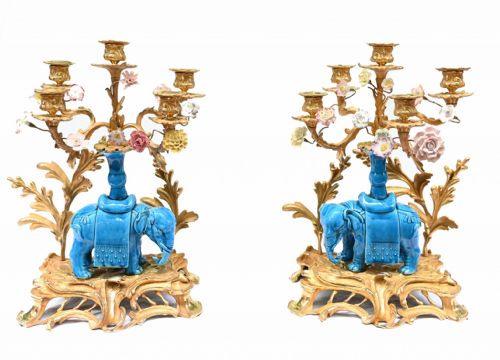
Makers utilised hard-paste or soft-paste porcelain, shaping the figures and scroll bases in moulds before applying hand-painted enamels and gilding. Many nineteenth century examples combine glazed porcelain with cast or fire-gilt ormolu and gilt bronze mounts.
Figural pieces frequently incorporated delicate applied floral elements and leafy bocage backgrounds, which required exceptional skill during high-temperature kiln firings to prevent collapse or cracking.
Children acting as musicians and dancers hold up the lights while porcelain dogs keep a watchful eye from below.
Distinctions in quality
The integration between the porcelain body and any metal mounts also determines quality, alongside the complexity of the original mould and the crispness of the rococo scrolls.
Nymphenburg·Meissen·Derby·Volkstedt·Chelsea·Minton·Sitzendorf·Dresden·Bow·Triebner, ENS & Eckert·Sevres
The Rococo Porcelain Candle Holders Glossary
- Bocage
- Applied or modelled porcelain foliage and flowers that often surrounds figures in eighteenth century candlesticks. This background element adds considerable delicacy and fragility to the piece.
- Hard-Paste Porcelain
- A dense ceramic composition fired at very high temperatures using kaolin and petuntse. It produces a durable body that resists scratching and accepts bright enamel colours.
- Ormolu
- Finely cast or chased bronze that has been coated with a layer of gold. It provides rich metallic contrast to the glazed porcelain bodies.
- Candelabra
- A branched candle holder designed to support multiple tapers simultaneously. These often incorporate figural porcelain columns and gilt metal arms.
- Chamberstick
- A low candle holder fitted with a shallow pan and a loop handle for carrying through a house. These practical items frequently feature figural or floral ornamentation.
Rococo Porcelain Candle Holders: Frequently Asked Questions
How do I date rococo porcelain candle holders?
Dating relies on factory marks stamped or painted under the glaze, combined with the style of the modelling and the characteristics of the paste. Eighteenth century pieces typically show softer glazes and hand-potted irregularities compared to later nineteenth century revivals.
Changes in palette and the introduction of gilt bronze mounts from specific decades also help narrow down the period of manufacture.
Were these candle holders used for daily lighting?
While capable of holding wax tapers, many elaborate figural examples served primarily as decorative ornaments for formal rooms. Chambersticks with loop handles were practical items carried to light a path down dark corridors.
Large multi-arm candelabra stood on dining tables or sideboards where reflected candlelight enhanced the gilt and enamel surfaces.
How do I clean porcelain candle holders safely?
Dusting with a soft, dry brush removes loose particles without risking delicate applied flowers or painted enamels. Moisture should be kept away from unglazed areas and old repairs.
Harsh chemical cleaners will strip gold leaf and damage fragile enamel work permanently.
What is the difference between soft-paste and hard-paste?
Soft-paste porcelain is an artificial ceramic composite fired at lower temperatures, producing a warm body often associated with early English factories. Hard-paste is a true porcelain containing kaolin fired at higher heats, creating a harder, whiter surface.
Visual inspection under magnification reveals differences in the way the glaze absorbs light and sits against the underlying clay body.