


18th Century Porcelain Candlesticks
These 18th century porcelain candlesticks bring sculptural modelling and soft enamel colour to a mantelpiece, offering both domestic utility and cabinet display.
18th Century Porcelain Candlesticks
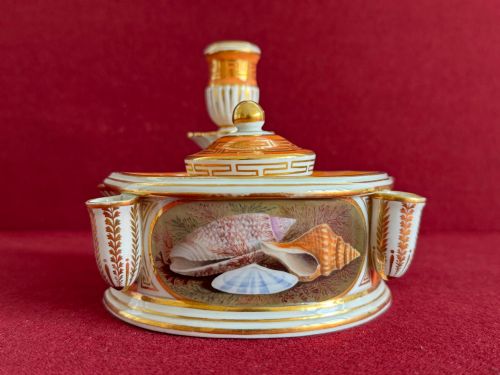
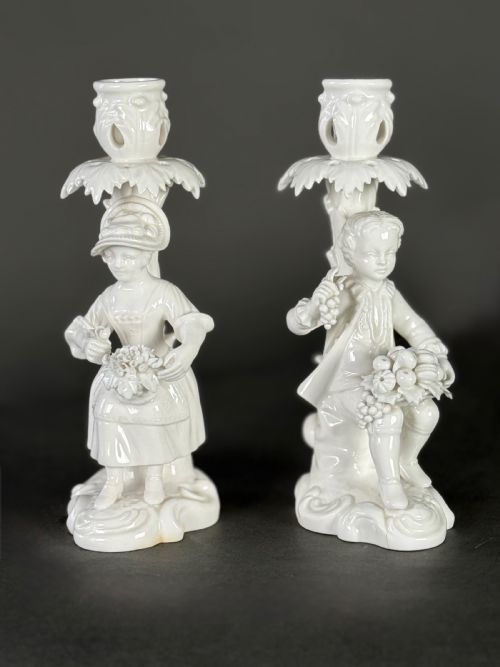
When searching for 18th century porcelain candlesticks, collectors encounter both plain figural supports and elaborate bocage groupings. These pieces range from simple functional shafts to sculptural pairs depicting musicians, dancers, and allegorical figures.
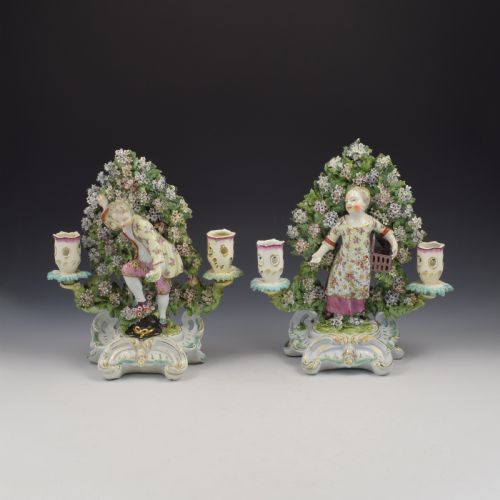
Buyers frequently find matched pairs complete with sconces, modelled with pastoral or mythological themes. Candlestick figures entwined in bocage foliage represent the most intricate form within this category.
How they were made
Potteries utilised soft-paste and hard-paste porcelain bodies, shaped through press-moulding and slip-casting techniques to form the figures and scroll bases. Artisans then applied detailed enamel colours by hand before a final glaze firing.
Applied bocage work required individual leaves and flowers to be hand-formed and attached to the porcelain bough surrounding the candle nozzle. Gilding with gold leaf or gold gilt provided final highlights to rococo scrollwork and garment borders.
Early Derby modellers occasionally added small domestic dogs hiding beneath musicians' feet to surprise attentive viewers.
What varies in quality
Preservation of fragile porcelain elements, such as outstretched arms, delicate leaves, and original sconces, defines the standing of individual pairs. Greater artistic ambition in the grouping, such as multi-figure musical scenes, separates standard candlesticks from cabinet showpieces.
Derby·Chelsea·Meissen
The 18th Century Porcelain Candlesticks Glossary
- Bocage
- An application of pierced ceramic foliage and flowers forming a background arbour behind figures. This decorative technique is particularly common in mid-eighteenth-century figures.
- Soft-paste porcelain
- A vitreous ceramic composition fired at lower temperatures than hard-paste, resulting in a warm glaze texture. English factories perfected this body during the eighteenth century.
- Sconce
- The metal or porcelain cup at the top of a candlestick designed to catch dripping wax. Many antique pairs retain their matching sconces.
- Rococo
- An asymmetrical, ornate design style characterised by C-scrolls, shell motifs, and naturalistic curves. This aesthetic dominates mid-eighteenth-century decorative arts.
- Patch-mark
- An unglazed patch on the base of porcelain left by the kiln supports during firing. This mark is characteristic of eighteenth-century Derby production.
18th Century Porcelain Candlesticks: Frequently Asked Questions
How do I spot a marriage in a pair?
Examine the modelling height, base proportions, and enamel palette under good light to ensure both pieces originated from the same mould series. Minor discrepancies in firing shrinkage can occur, but genuine pairs share identical hand-painting techniques and paste characteristics.
Check the undersides for consistent factory marks, kiln residue, and wear patterns. Factory practices shifted over decades, making simultaneous production easier to verify through stylistic uniformity.
Were these used for daily lighting?
While fully functional for holding wax candles, eighteenth-century porcelain was expensive and primarily served as ornamental display for the wealthy. Surviving examples often show minimal wax residue, indicating they were decorative centrepieces rather than utilitarian light sources.
When lit in period rooms, the translucent porcelain body allowed candlelight to glow softly through the thinner sections of the figures. Today, modern collectors generally avoid burning candles in them to protect the fragile enamel and gilt details.
How should I clean porcelain candlesticks?
Dust accumulated in the intricate bocage and scrollwork should be removed gently using a very soft artist's brush. Avoid dipping antique porcelain in water, as moisture can penetrate hairline fractures or weaken old repairs.
Harsh chemical cleaners will strip the delicate cold-painted enamels and gold leaf highlights applied over the glaze. Professional conservation is necessary if structural adhesives fail or if deep cleaning becomes unavoidable.
What does patch-mark period mean?
The term refers to eighteenth-century Derby figures supported on small clay wad spacers during firing, leaving distinct unglazed spots on the base. This manufacturing detail helps date pieces securely to the middle decades of the Georgian era.
Recognising these factory traits allows collectors to distinguish early figures from later nineteenth-century revival pieces. The presence of these kiln marks confirms the authentic working methods of the early Derby factory.