


Gilded Porcelain Figure Candlesticks
Gilded porcelain figure candlesticks combine sculptural form and functional illumination, bringing eighteenth and nineteenth century craftsmanship into the home.
Gilded Porcelain Figure Candlesticks
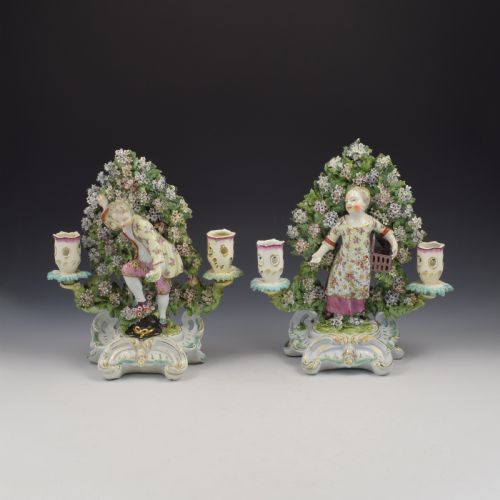
Gilded porcelain figure candlesticks combine functional lighting with sculptural modeling, frequently depicting allegories, children, or musicians amidst leafy bocage backgrounds. The listings here span the eighteenth and nineteenth centuries, taking forms such as paired musicians, allegorical figures representing the seasons, and children with ornamental candle sockets.
Most examples originate from English and continental factories, including Derby, Chelsea, Bow, Meissen, Dresden, Volkstedt, and Staffordshire makers. Buyers encounter Georgian rococo pairs alongside Victorian neoclassical and rococo revival interpretations, often incorporating gilt bronze or ormolu mounts alongside the glazed ceramic bodies.
How they were made
Makers utilised soft-paste or hard-paste porcelain, shaping the figural components and intricate background foliage by hand before applying detailed enamel painting and gold leaf or gilding. The delicate bocage elements required careful assembly to support the weight of the ceramic leaves and branches surrounding the candle holders.
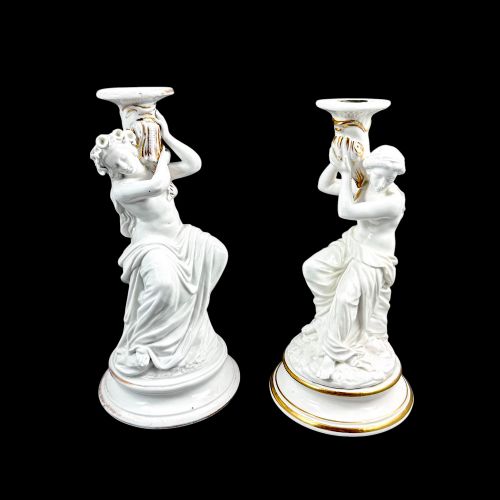
Mounting added structural support, with certain eighteenth and nineteenth century pieces set into gilt bronze or ormolu metal bases to secure the upright shafts. Biscuit porcelain also appears unglazed on specific figural elements, contrasting with the glossy enamel surfaces and applied gilding.
Musical cherubs and children masquerading as musicians keep perpetual silent concerts frozen in fragile porcelain.
What varies in quality
The sophistication of the figural proportions and the integration of the metal mounts distinguish standard production from exceptional factory output. Pieces retaining their original pairing and authentic eighteenth or nineteenth century colouring command greater interest from collectors.
Derby Porcelain·Chelsea·Bow·Volkstedt·Dresden·Meissen·Minton
The Gilded Porcelain Figure Candlesticks Glossary
- Bocage
- An applied background of ceramic leaves and flowers that frames the figures on eighteenth-century candlesticks. This decorative foliage surrounds the candle socket to evoke a natural bower.
- Soft-paste porcelain
- An artificial ceramic paste fired at lower temperatures than hard-paste porcelain during the eighteenth century. It produces a warm glaze and slightly softer surface detail.
- Ormolu
- Finely detailed gilded bronze mounts applied to furniture and porcelain bases. This technique adds structural stability and decorative metallic contrast to ceramic figures.
- Biscuit porcelain
- Unglaved ceramic fired to a matte finish that resembles white marble. It highlights the fine modeling of human figures and sculptural shafts.
Gilded Porcelain Figure Candlesticks: Frequently Asked Questions
How were figural candlesticks used?
These pieces served as functional illumination on dining tables, mantelpieces, and sideboards during the eighteenth and nineteenth centuries. The reflective quality of the gilding and the white porcelain helped amplify the flickering light of candles.
Beyond providing light, they acted as decorative ornaments that displayed the owner's taste and wealth. Pairs were typically arranged symmetrically on either side of a mirror or clock.
How do I identify eighteenth-century pieces?
Early pieces often feature soft-paste porcelain bodies with hand-modelled bocage and characteristic rococo asymmetry. The painting style tends to be looser and more painterly than later nineteenth-century factory output.
Examination of the base and glaze under magnification reveals the characteristics of specific factories like Derby, Chelsea, or Bow. Wear patterns on the gilding also indicate genuine age from historical handling.
What is bocage?
Bocage is the applied leafy branchwork that surrounds the figures on many antique candlesticks. It mimics a woodland arbor and creates a dramatic backdrop for the central characters.
Because these porcelain leaves and flowers are extremely fragile, surviving examples often show small historical repairs or restorations to the foliage. This delicate technique defines the aesthetic of mid-eighteenth-century English figures.
How do I care for antique porcelain?
Keep these candlesticks away from direct sunlight and areas prone to sudden temperature fluctuations to protect the glaze and gilding. Dust them gently with a soft, dry brush rather than using liquid cleaners.
Avoid using them with lit candles if the structural integrity is compromised or if there are previous restorations near the socket. Handling them by the base rather than the fragile bocage prevents accidental damage.