
Rich Brown Mahogany Table
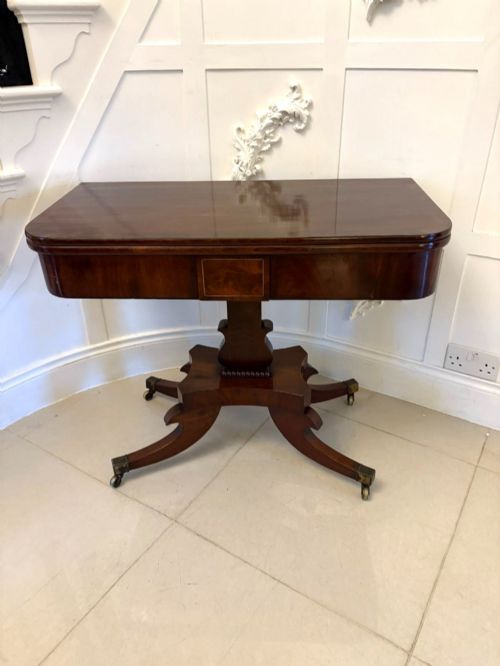
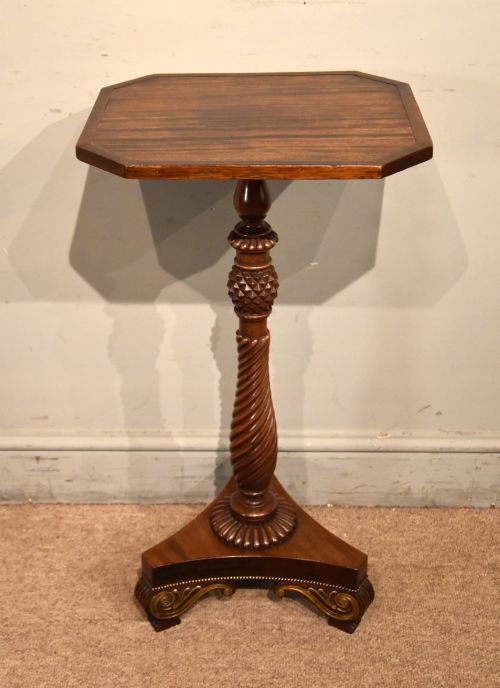
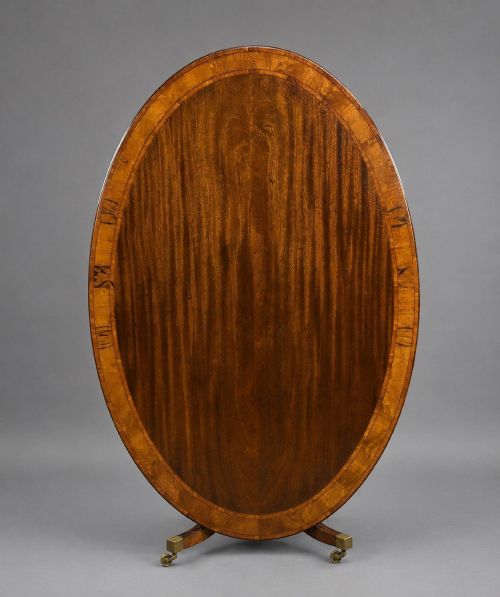
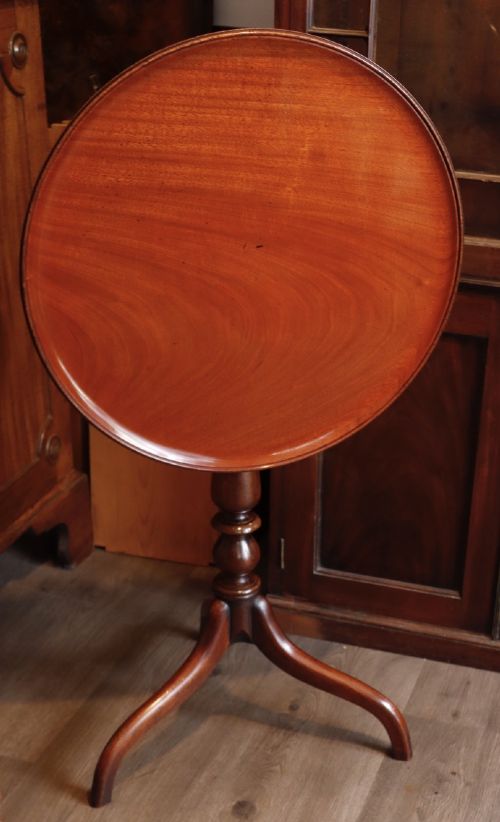
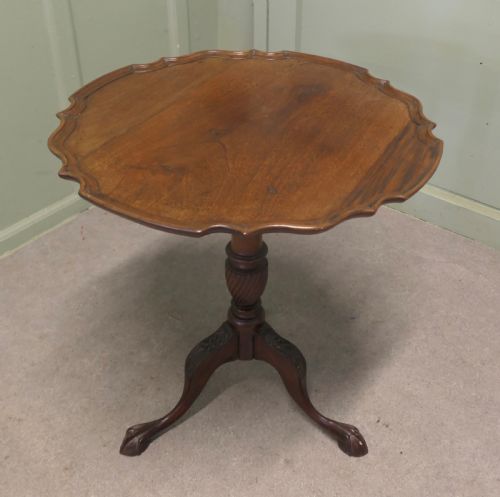
A rich brown mahogany table brings warmth and deep timber figure into a room, spanning forms from tripod wine stands to wind-out dining pieces.
Rich Brown Mahogany Table
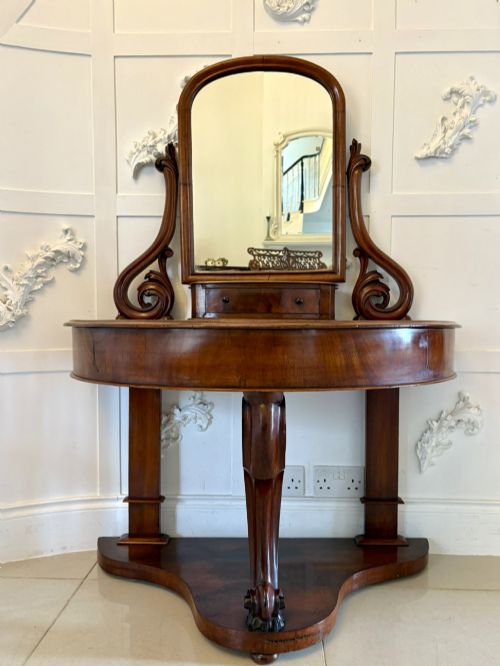
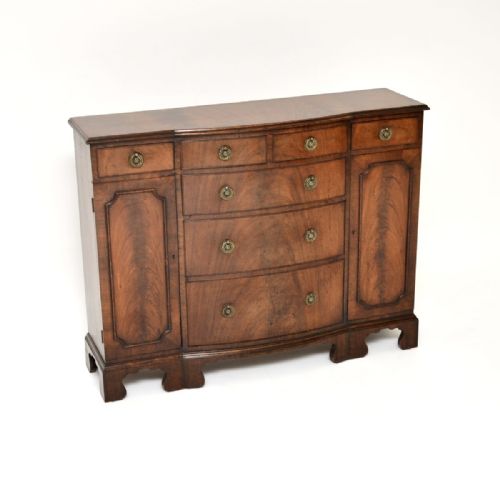
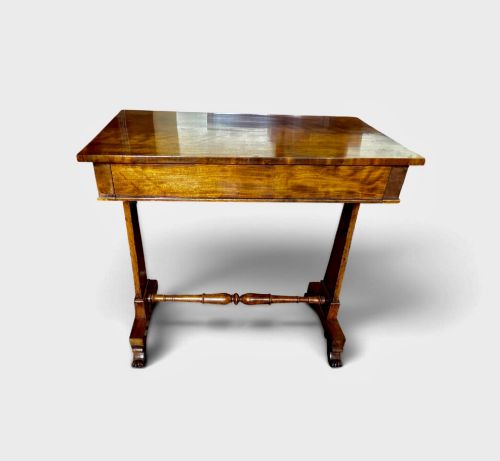
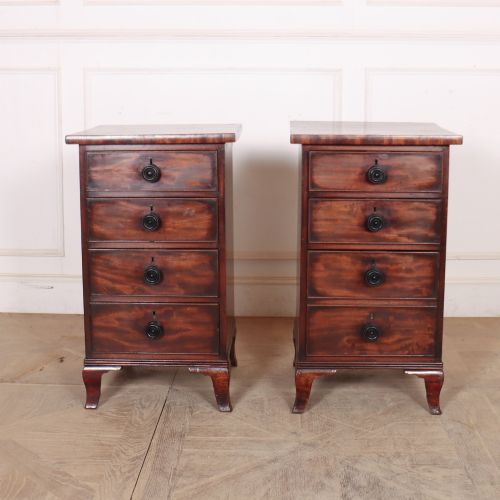
A rich brown mahogany table encompasses a broad range of domestic furniture built across the Georgian, Regency, Victorian, and Edwardian periods. Buyers encounter a diverse selection of forms on this page, including side tables, occasional tables, large dining tables, desks, writing tables, and bedside cabinets.
The material unites pieces made from the eighteenth century into the twentieth century, shifting in tone from the deep reddish hues of earlier periods to darker Victorian iterations. Simpler occasional tables and tripod wine stands sit alongside substantial architectural desks and grand console tables.
Earlier examples often bear specific stylistic traits such as George III or Chippendale influence, while later nineteenth-century pieces range from pedestal lamp tables to extensive wind-out dining variants. Edwardian interpretations bring lighter proportions and occasional inlay work to the traditional timber.
Evaluating quality and proportion
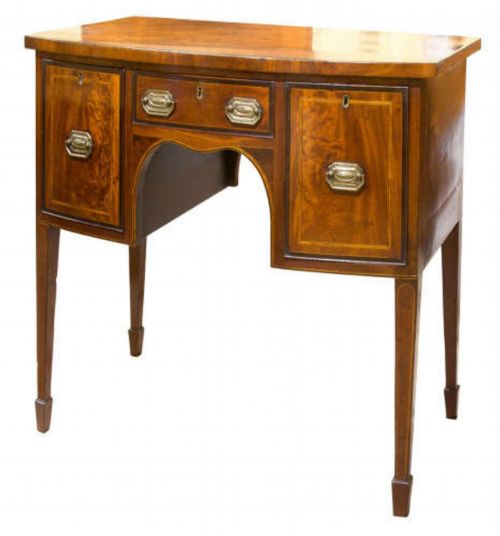
Quality rests upon the selection of the timber, particularly the depth of grain in figured mahogany and the crispness of any carved or inlaid detail. Superior pieces maintain harmonious proportions, whether handling the compact dimensions of a spider leg tea table or the expansive span of a large dining board.
The integrity of the original construction, the retention of period brassware, and the depth of the polished surface finish distinguish finer examples. Lesser pieces may show heavy or unsympathetic later alterations, whereas superior items preserve their original structural form and timber patination.
Listings feature mahogany combined with brass, glass, satinwood, fabric, wood inlay, boxwood, and ebonised wood across multiple centuries.
The Rich Brown Mahogany Table Glossary
- Tilt top
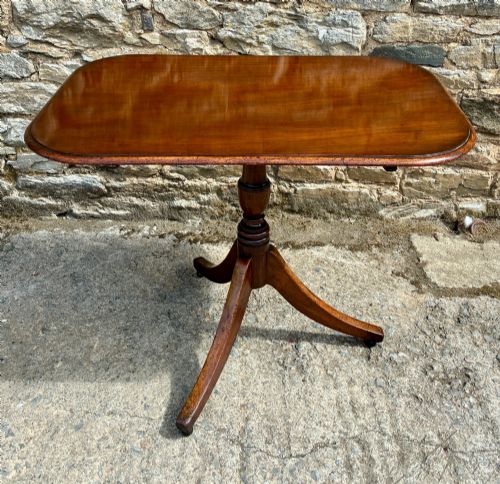
- A table mechanism allowing the top to pivot vertically when not in use, saving floor space in smaller rooms. This arrangement is commonly found on tripod wine tables and breakfast tables.
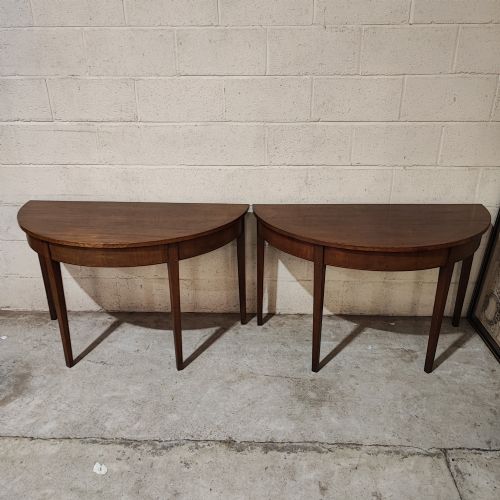
- Demi lune
- A half-moon shape characteristic of console and side tables designed to sit flush against a wall. Such formats were popular during the Georgian period.
- Wind out
- A dining table mechanism utilising a central screw threaded rod operated by a crank handle to expand the surface area. This allows extra leaves to be inserted for larger gatherings.
- Spider leg
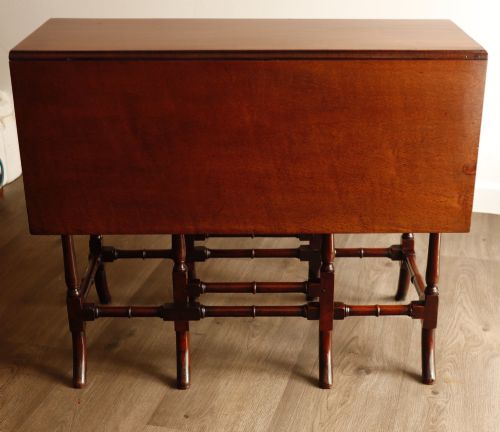
- A table featuring slender, delicate turned legs braced by multiple thin stretchers for stability. These supports are typically seen on lighter tea and occasional tables.
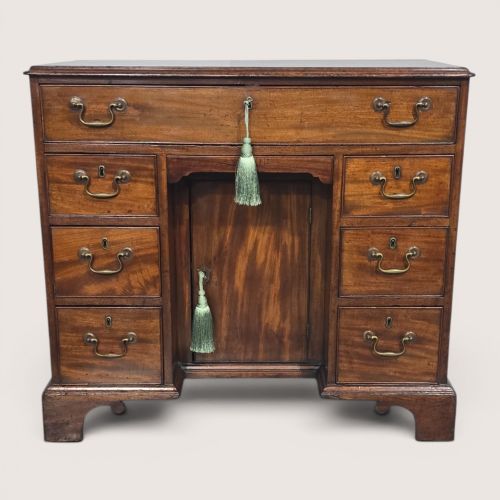
- Kneehole desk
- A writing table featuring a central recessed space for the legs flanked by banks of small drawers. Georgian examples often conceal a cupboard door within the kneehole recess.
Rich Brown Mahogany Table: Frequently Asked Questions
How do I date a mahogany table?
Dating relies on observing structural characteristics, timber thickness, and secondary woods used in drawer linings. Georgian pieces often display hand-cut dovetails and lighter internal framing compared to heavier Victorian counterparts.
Stylistic markers such as bracket feet, slender legs, or brass drop handles further narrow the period of manufacture. Cross-referencing these details against known cabinet-making traditions provides a reliable window of origin.
Were these tables used for dining?
Dining tables formed a central part of domestic life, ranging from small Pembroke and drop-leaf formats to large wind-out tables designed to seat many guests. Smaller occasional and console tables served entirely different social functions in the parlour or hallway.
Breakfast tables and Pembroke variants accommodated flexible daily routines, moving easily between dining, reading, and tea service. Their construction reflected the specific domestic duties assigned to each room.
How do I care for mahogany timber?
Regular dusting with a soft cloth keeps the polished surface free from abrasive particles. Avoiding direct sunlight and maintaining stable room humidity prevents the timber from drying out or splitting.
Applying a traditional beeswax polish occasionally helps nourish the wood and maintain its deep lustre. Avoid using modern silicone-based sprays, which can build up a hazy film over the original polish.
What is figured mahogany?
Figured mahogany refers to timber cut from specific parts of the tree, such as crotches or burls, where the grain grows in swirling, irregular patterns. This creates a highly decorative surface appearance when polished.
Cabinet-makers reserved these prized veneers for prominent surfaces like table tops, drawer fronts, and cabinet doors. The resulting optical depth is a key indicator of higher-grade craftsmanship.