

Scalloped Wine Table
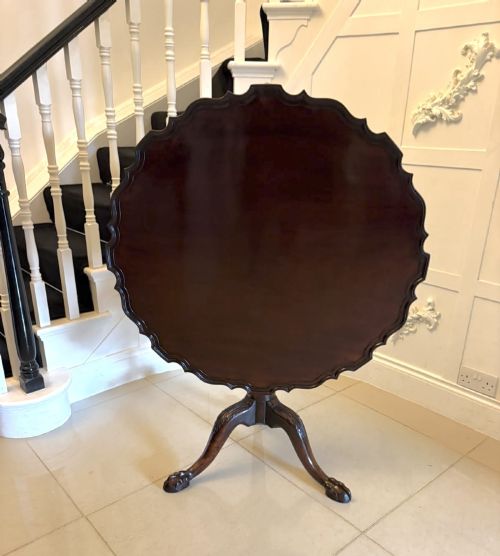
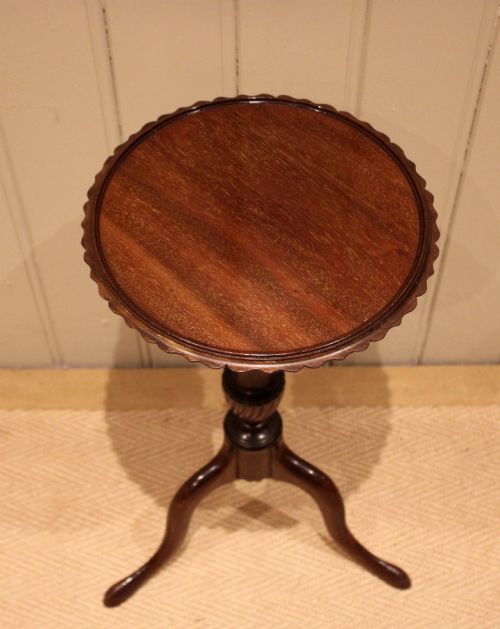
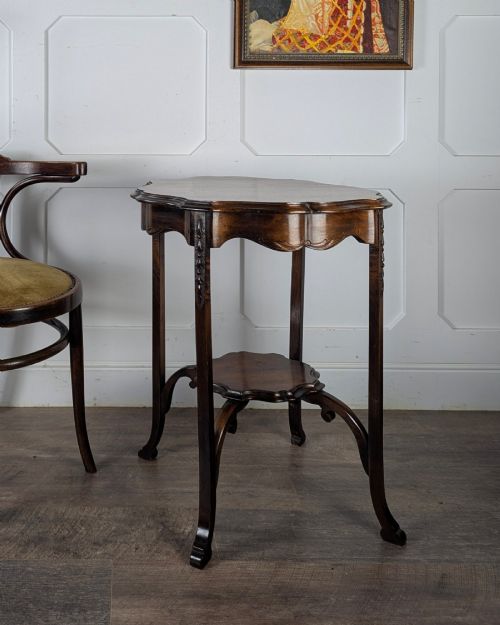
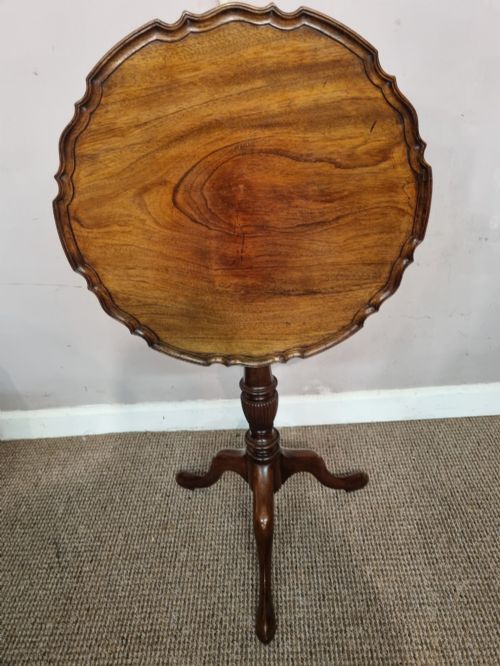
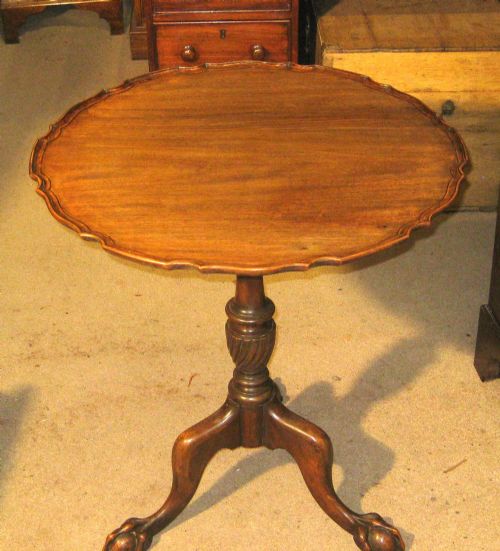
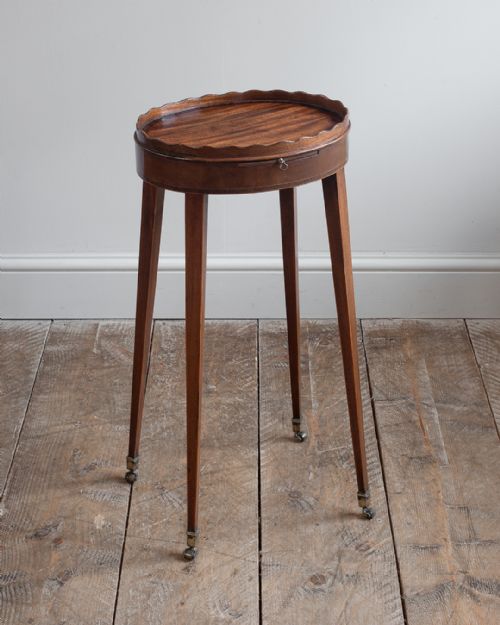
A scalloped wine table brings compact elegance to a corner, offering a raised piecrust edge designed to keep bottles and glasses secure.
Scalloped Wine Table
A scalloped wine table stands on a central pillar with tripod legs, serving as an intimate stand for drinks or small decorative objects. The pieces found here span the eighteenth, nineteenth, and early twentieth centuries, encompassing Georgian origins and later revivals.
Materials and Construction
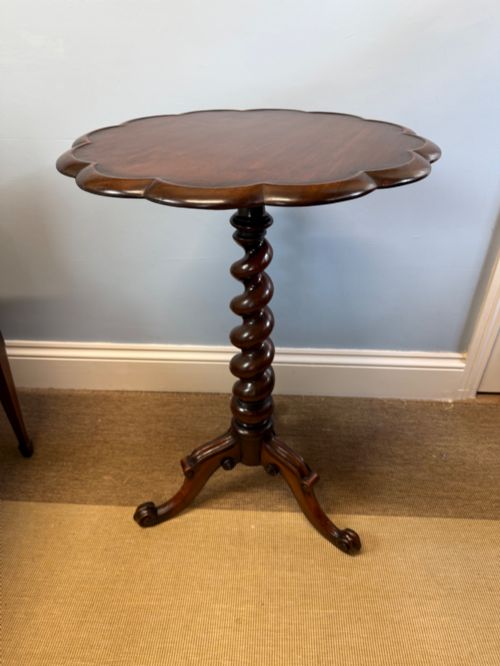
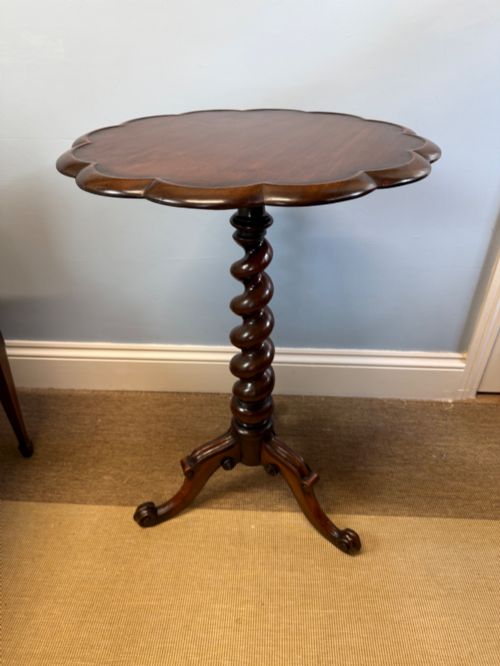
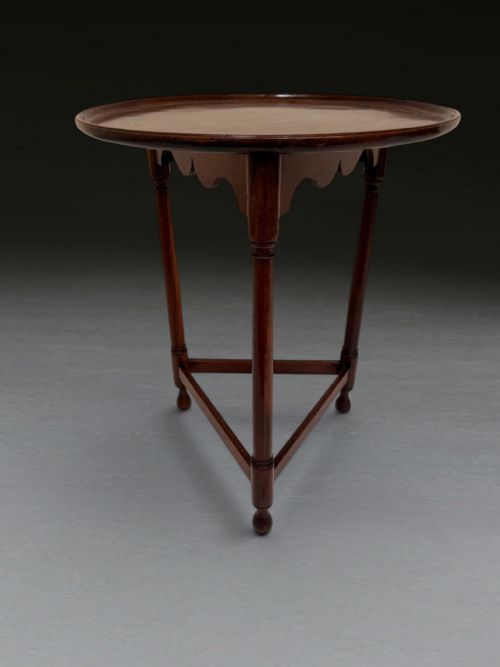
Cabinetmakers predominantly utilised solid mahogany and walnut, occasionally selecting figured grains, burr veneers, or exotic woods such as kingwood and rosewood to elevate the visual appeal of the top. Some regional pieces incorporate English oak with turned barley twist supports.
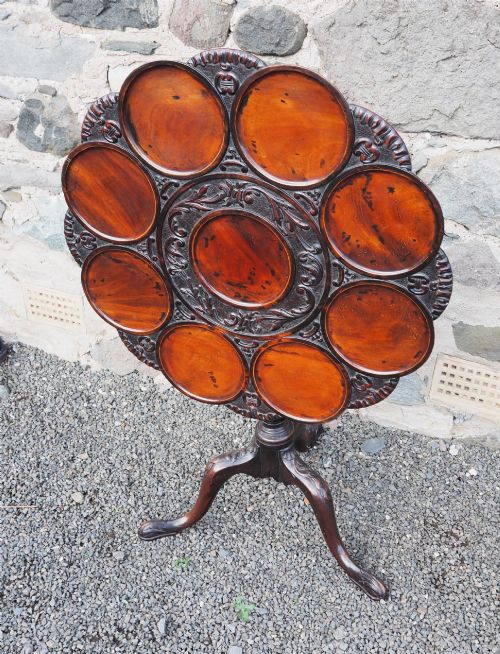
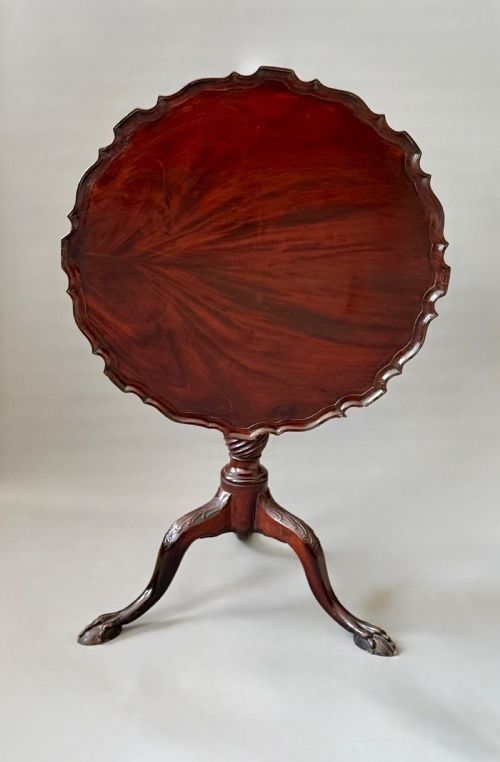
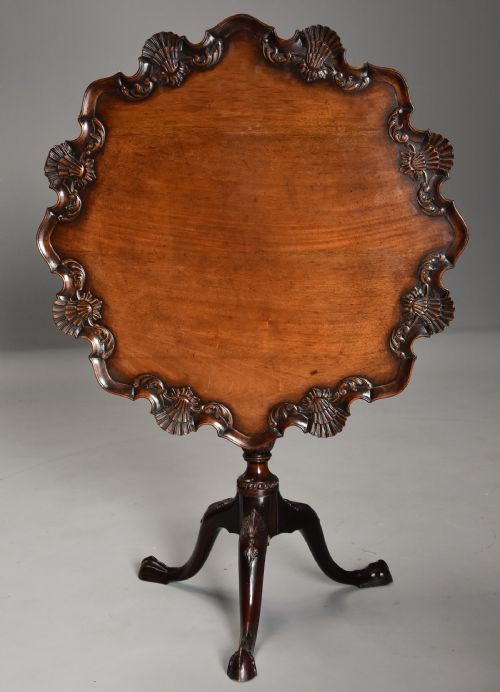
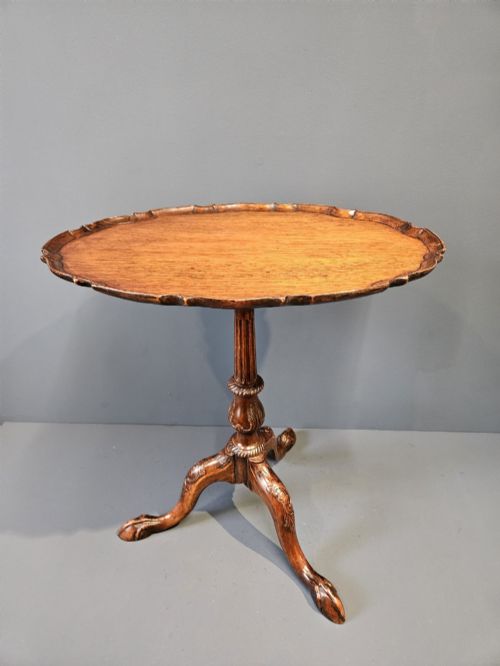
The characteristic scalloped or piecrust edge required meticulous hand-carving from a solid timber blank or precise shaping around a raised perimeter. Many examples incorporate a tilt-top mechanism with a birdcage or block pivot, allowing the tabletop to fold flat against the pillar when not in use.
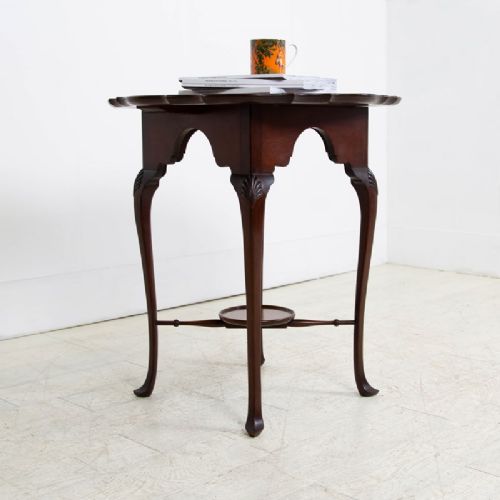
Listings feature mahogany, walnut, oak, and rosewood surfaces spanning the Georgian, Victorian, and Edwardian periods.
Gradations of Excellence
Quality rests principally in the crispness of the hand-carved edge and the proportion of the tripod base, where slender, elegant cabriole legs terminating in pad or claw-and-ball feet distinguish superior workshops from later, heavier reproductions.
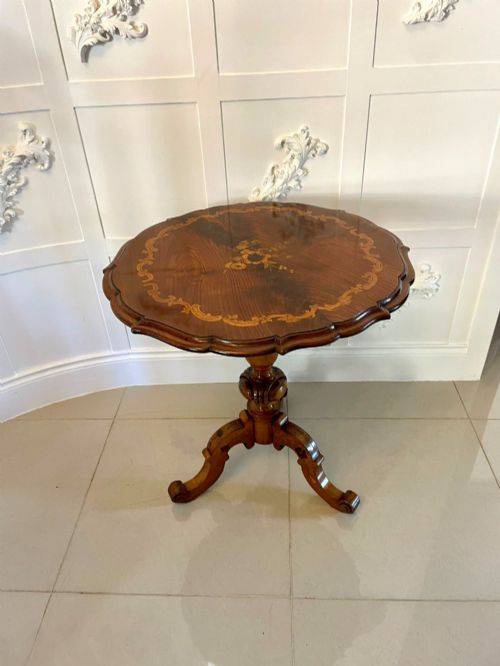
The integrity of the timber selection and the subtlety of secondary decorative elements, such as fine marquetry inlay, mother-of-pearl accents, or brass fittings, separate standard utility pieces from exceptional examples created in the Chippendale taste.
Shapland and Petter
The Scalloped Wine Table Glossary
- Piecrust edge
- A raised, scalloped perimeter carved directly from the solid timber of the tabletop, reminiscent of pastry work. This decorative feature prevents items from sliding off the surface.
- Tilt-top table
- A table featuring a hinged mechanism beneath the top that allows the surface to pivot into a vertical position. This clever design saved valuable floor space in smaller period rooms.
- Tripod table
- A small freestanding table supported by a central pillar resting on three spreading legs. This configuration ensured stability on uneven floors.
- Marquetry
- The art of applying pieces of veneer to a structure to form decorative patterns and pictures. Craftsmen utilised various contrasting woods to achieve intricate floral and geometric designs.
- Birdcage
- A wooden framework beneath the tabletop that allows the surface to both tilt and rotate. It represents a mark of superior construction in eighteenth-century examples.
Scalloped Wine Table: Frequently Asked Questions
What is a scalloped wine table used for?
These compact tables were historically placed beside seating to hold wine glasses, bottles, or candles within easy reach during social gatherings. Today, they serve equally well as lamp tables or decorative accent pieces in reception rooms.
Because of their modest footprint, they fit easily into awkward corners or beside armchairs where larger furniture would overwhelm the space.
How do I distinguish an 18th-century table from a revival piece?
Examining the timber shrinkage, the method of joining the central pillar to the legs, and the tool marks beneath the top reveals the age of the piece. Eighteenth-century examples display hand-cut joinery and authentic patination accumulated over generations of use.
Revival pieces from the Edwardian era or the 1920s often utilise more uniform machine-sawn components and different secondary woods, even when successfully mimicking earlier Chippendale styles.
Why do some tabletops tilt?
The tipping mechanism was originally devised so the table could be folded flat and stored against a wall when not in use, maximising living space in historic homes. It also made the heavy wooden furniture easier to transport between rooms.
On authentic period pieces, the catch and pivot block beneath the top form an intricate mechanical assembly that operates smoothly when balanced.
How do I care for a polished wood surface?
Maintain the timber by applying a traditional beeswax polish sparingly and buffing it with a soft cloth to nourish the grain. Avoid placing the table in direct sunlight or near heat sources, which can cause the veneer or solid wood to split.
Using coasters and placing felt pads beneath objects helps protect the antique polish from rings and scratches.