
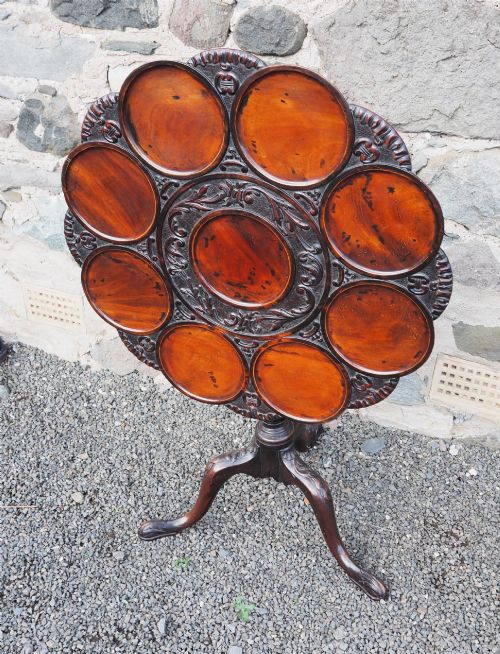
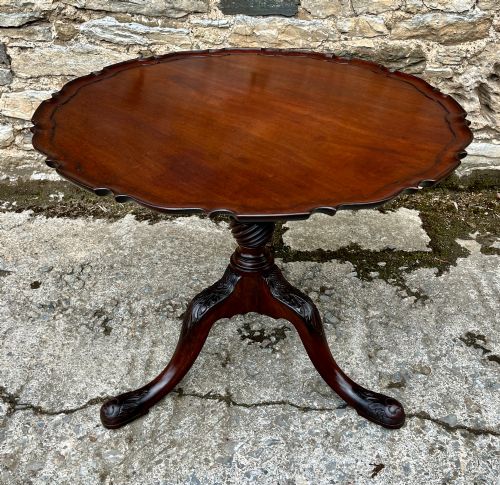
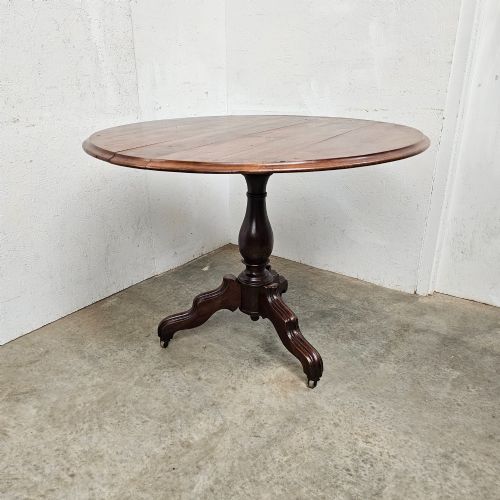


Carved Mahogany Supper Table
A carved mahogany supper table brings eighteenth-century dining versatility and rich timber grain directly into a modern room.
Carved Mahogany Supper Table
When you search for a carved mahogany supper table, you encounter tripod bases, tilt-top mechanisms, and piecrust edges originating mostly from the Georgian and Victorian eras. These pieces combine utilitarian dining functions with decorative occasional table formats, frequently appearing in 18th-century, George II, and George III stylistic iterations.
The dominant configurations on this page include snap-top and tilt-top mechanisms supported by tripod legs, often featuring carved details or birdcage actions. Alongside traditional forms, occasional tables and coffee table adaptations bridge the gap between antique dining furniture and contemporary domestic settings.
Originating predominantly from British workshops in mahogany and walnut timbers, these tables range from compact tripod designs to larger circular top variants. Buyers find both authentic 18th-century pieces and later revival iterations, each displaying distinct period joinery and timber characteristics.
How they were made
Cabinetmakers constructed these tables primarily using solid mahogany and walnut timbers, selecting stock for dense grain patterns and deep natural colour. Timber preparation involved traditional hand-sawing and planing, yielding heavy top boards and sturdy turned or carved upright columns.
The pivotal tilt-top and snap-top actions relied on intricate wooden or brass catches that allowed the circular surfaces to fold flat against the base when not in use. Tripod bases were joined to central pillars using robust dovetail or tenon joints, often terminating in carved pad feet or claw and ball designs.
Listings on this page span the Georgian, Victorian, and Edwardian periods, featuring mahogany, walnut, and brass elements across various occasional table forms.
What varies in quality
The distinction between standard examples and superior pieces rests in the crispness of the timber carving, particularly along the piecrust edges and tripod legs. Crisp, deeply undercut mouldings and sculptural foot details indicate a high level of joiner craftsmanship.
Surface finish and timber figure dictate much of the visual appeal, with rich, undisturbed patina elevating an item significantly above stripped or overly restored alternatives. The integrity of the tilt-top mechanism and the alignment of the birdcage action also reflect the original workshop standards.
The Carved Mahogany Supper Table Glossary
- Pie Crust Edge
- A raised, scalloped border carved directly into the solid timber perimeter of a circular table top. This decorative edge prevents items from sliding off and demands precise hand-carving skill.
- Tilt Top
- A table top mounted on a hinge mechanism that tilts into a vertical position for storage against a wall. It is frequently paired with a tripod base for stability.
- Tripod Base
- A supporting structure comprising three legs radiating from a central pillar. This design ensures firm contact on uneven floor surfaces without rocking.
- Birdcage
- A timber framework placed between the pillar and the top of a tilt-top table that allows the surface to both tilt and rotate independently. It represents a more complex mechanism found on higher-grade examples.
- Snap Top
- A spring-loaded or catch-secured mechanism holding a tilt-top table firmly in its horizontal position during use. It releases easily when the table needs folding.
Carved Mahogany Supper Table: Frequently Asked Questions
What is a supper table used for?
These tables served historically as movable dining surfaces for evening meals in private parlours or drawing rooms before being cleared away. Their tilt-top design allowed them to stand flat against room perimeters when dining finished.
Today, they function effectively as central coffee tables, display surfaces, or occasional tables in living spaces. Their compact footprint suits rooms requiring flexible furniture arrangements.
How do I identify a Georgian supper table?
Georgian examples typically exhibit dense mahogany timber with a warm patina, hand-cut joinery, and traditional tripod bases with pad or claw feet. Look for subtle tool marks and period construction methods beneath the top.
Many of these pieces feature tilt-top mechanisms or piecrust edges characteristic of mid-eighteenth-century design. Comparing the proportions and timber weight helps separate authentic period work from later revival pieces.
How do I care for mahogany timber?
Keep mahogany furniture away from direct heat sources, radiators, and prolonged direct sunlight to prevent timber warping and fading. Applying natural beeswax periodically maintains the sheen and nourishes the antique grain.
Avoid using silicone-based polishes or excessive moisture during routine cleaning. A soft, dry cloth removes dust safely while preserving the historic surface finish.