


Rococo Revival Accent Table
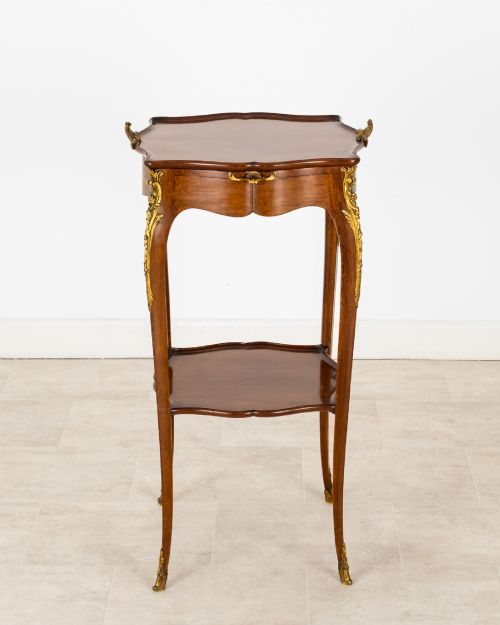
A rococo revival accent table brings nineteenth century serpentine curves and organic forms into a room.
Rococo Revival Accent Table
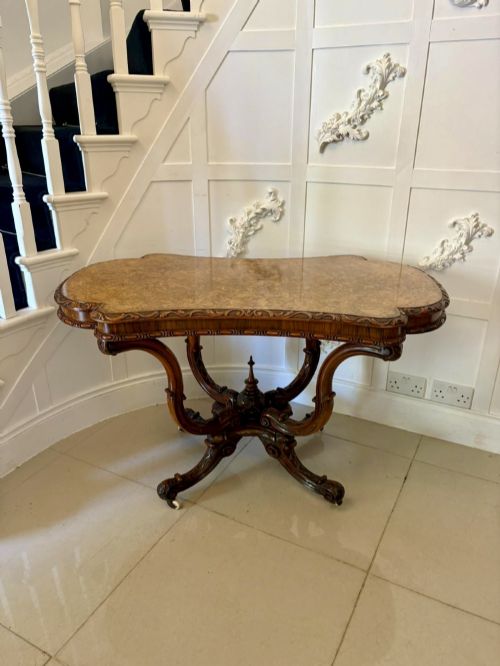
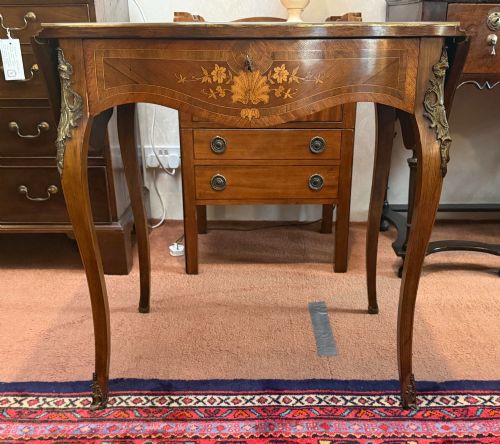
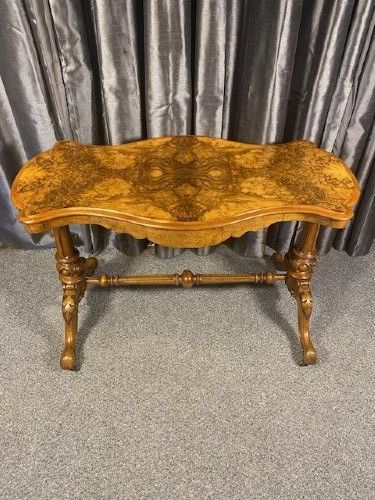
A rococo revival accent table takes the form of occasional tables, side tables, centre tables, tea tables, and bedside tables created during the nineteenth century. These pieces display distinct revival styles including French Rococo Revival, Louis XV Revival, and Italian Rococo Revival, alongside Victorian and Swedish Country expressions. The buyer meets these primarily in walnut, mahogany, and exotic veneers such as kingwood and burr walnut.
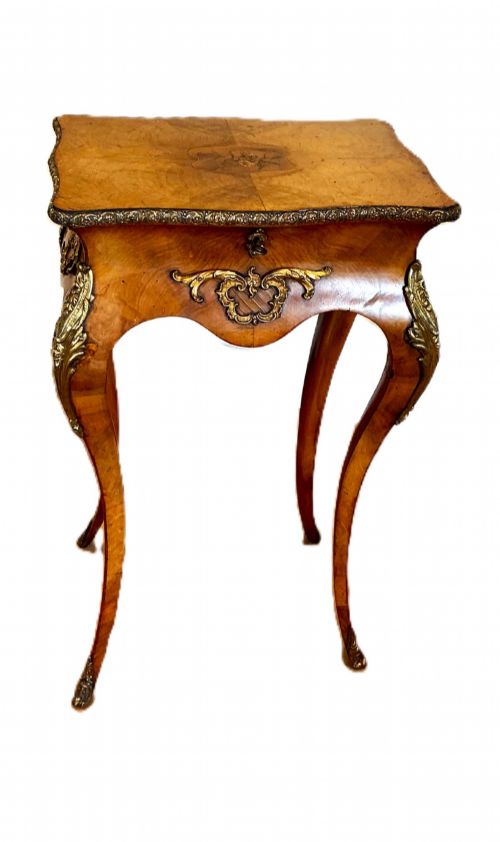
The silhouettes rely on shaped tops, cabriole legs, and asymmetric scrolls drawn from eighteenth century precedents. Pieces originating from French workshops often incorporate marble tops or intricate parquetry inlay, whilst English Victorian examples lean towards carved walnut and solid mahogany constructions. Occasional and side tables provide compact surfaces suited to displaying decorative objects or lighting.
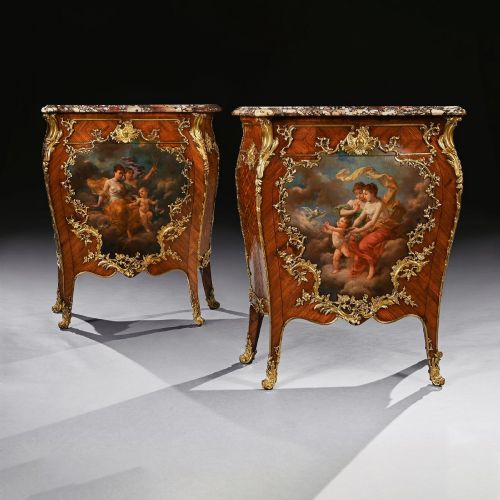
Makers and designers working in this idiom adopted various regional interpretations, ranging from grand gilt bronze mounted French commodes and gueridons to restrained Swedish birch tea tables. The structural variety spans from freestanding centre tables finished on all sides to demilune tea tables designed to sit flush against a wall until required.
Materials and construction
Cabinetmakers constructed the carcases of these tables using solid timbers such as mahogany and walnut, frequently applying veneers of kingwood, rosewood, and burr walnut to the surfaces. Tops often received marquetry or parquetry inlay arranged in floral or geometric patterns, whilst some regional pieces utilised painted finishes.
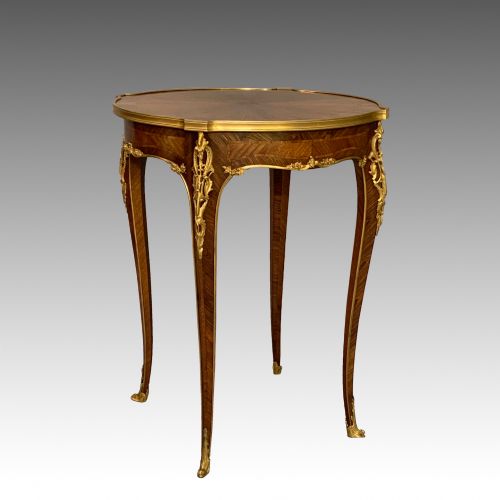
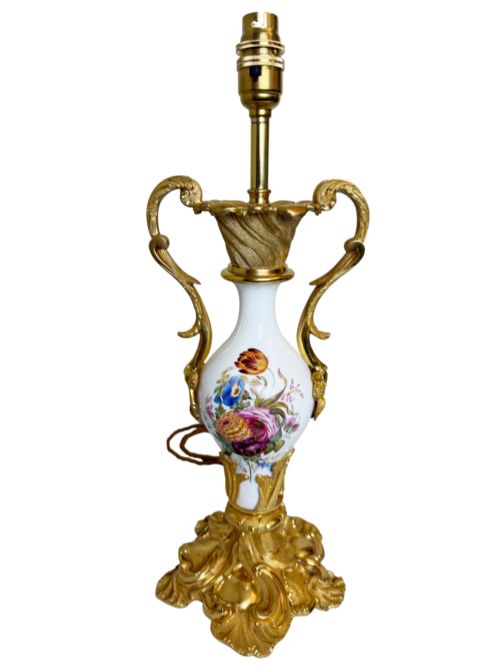
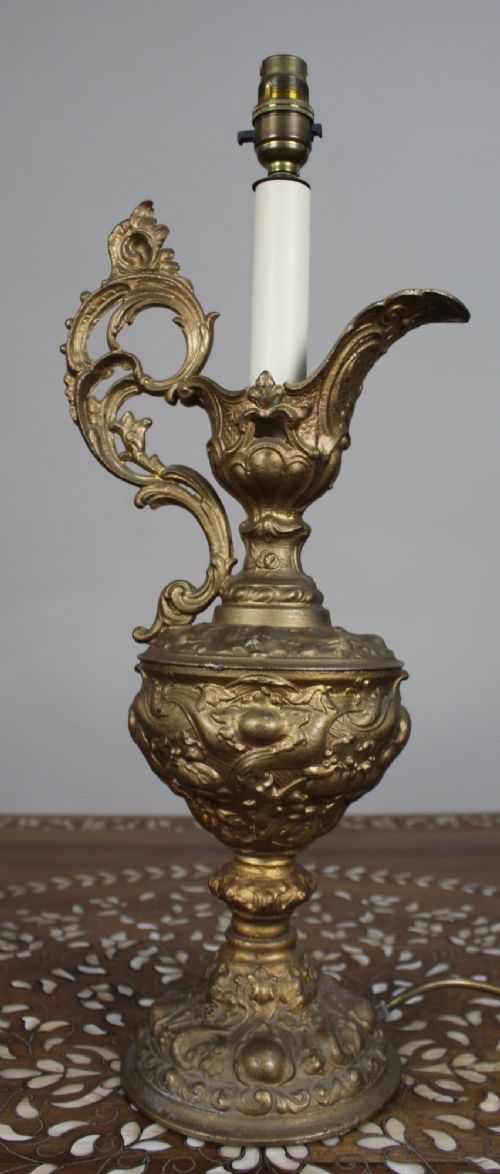
Metal mounts cast in ormolu, gilt bronze, or gilt metal provided decorative highlights along aprons, shoulders, and legs. Marble inserts were fitted directly into recessed tops on French gueridons and side tables to create durable, cool surfaces.
A Swedish birch tea table proves that even chilly northern forests eagerly joined the nineteenth century craze for French curves.
Assessing quality and execution
The calibre of a rococo revival accent table rests upon the crispness of its carved woodwork and the precision of its veneers. Tables boasting finely cast ormolu mounts with sharp chasing stand apart from those with softer, coarser metalwork.
Construction details such as the selection of richly figured burr walnut or kingwood, balanced parquetry layouts, and heavy marble tops distinguish superior workshop production from simpler commercial output.
Joseph Emmanuel Zwiener
The Rococo Revival Accent Table Glossary
- Ormolu
- Gilt brass or bronze mounts applied to furniture. This technique was widely utilised by nineteenth century French cabinetmakers to accent corners and aprons.
- Gueridon
- A small round occasional table supported by a central pillar or multiple legs. These frequently feature marble tops and gilt bronze mounts.
- Cabriole leg
- A furniture leg that curves out and then in, resembling an animal's leg. It forms a defining structural element of rococo revival design.
- Marquetry
- Decorative patterns formed by inserting pieces of wood into a veneer. Craftsmen used contrasting timbers like kingwood and rosewood to create floral motifs.
Rococo Revival Accent Table: Frequently Asked Questions
What is a rococo revival accent table used for?
These tables serve as functional surface areas for lamps, decorative objects, and tea service within sitting rooms and bedrooms.
Their compact proportions allow them to fit easily beside seating or function as freestanding centre tables.
How do I identify French versus English pieces?
French examples frequently incorporate exotic veneers, ormolu mounts, and inset marble tops reflecting Louis XV styles.
English pieces from the Victorian era typically rely on carved solid walnut, mahogany, or burr walnut without metal mounts.
Are these tables sturdy enough for daily use?
Nineteenth century construction using hardwoods like walnut and mahogany ensures these tables remain robust for everyday placement.
However, delicate parquetry surfaces and gilt bronze mounts benefit from sensible placement away from direct heat.
What periods do these tables date from?
The majority date throughout the nineteenth century, spanning from the early Victorian period through the height of the revival.
Some iterations extend into the early twentieth century, maintaining traditional Louis XV revival forms.