


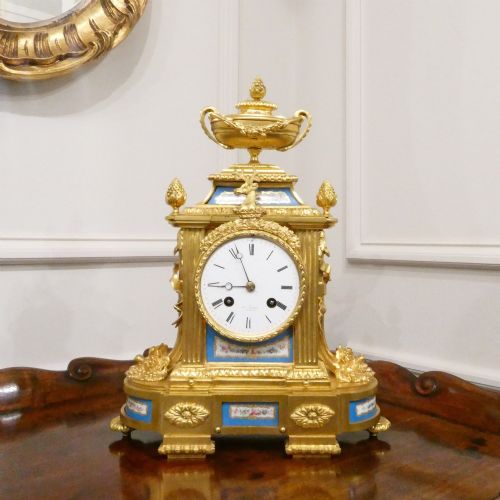
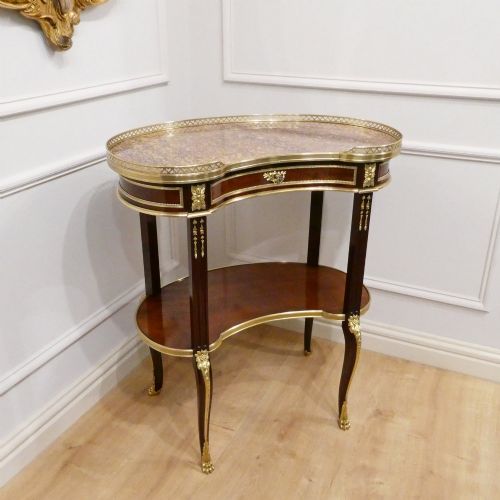
French Gilt Bronze Table
A french gilt bronze table brings nineteenth-century salon grandeur into a modern room through disciplined casting and rich surface gilding.
French Gilt Bronze Table
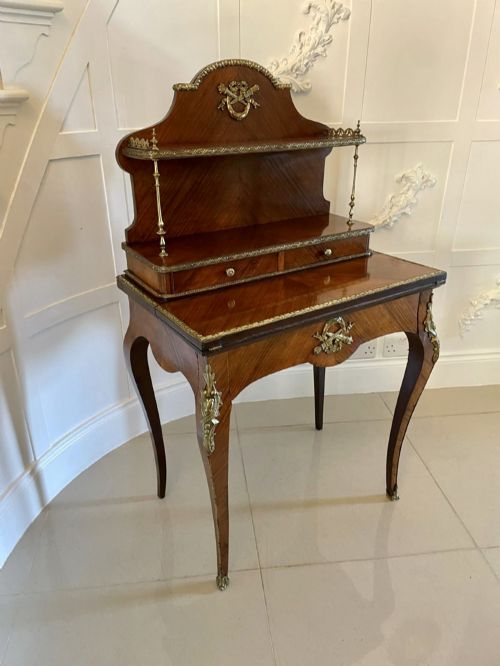
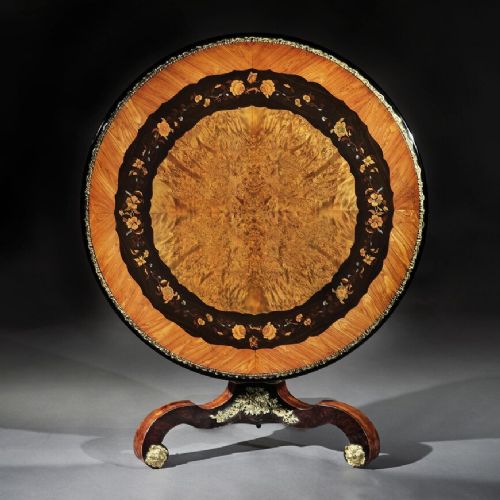
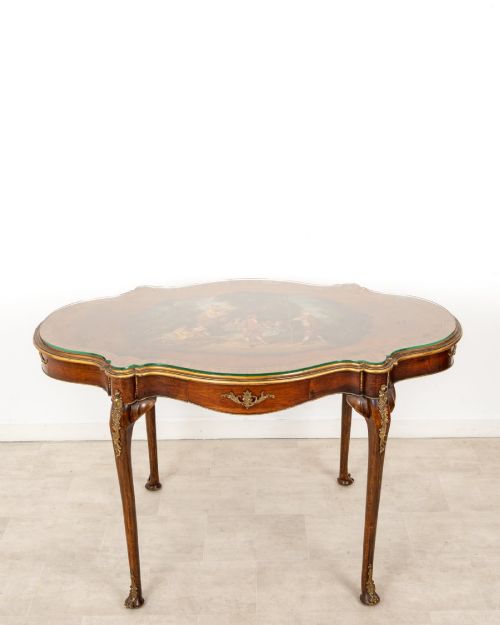
A french gilt bronze table encompasses centre tables, writing desks, and occasional pieces produced across the nineteenth century and into the Edwardian period. These items typically reflect revivalist aesthetics such as Louis XV, Louis XVI, and Empire styles, often incorporating rich woods like kingwood and mahogany.
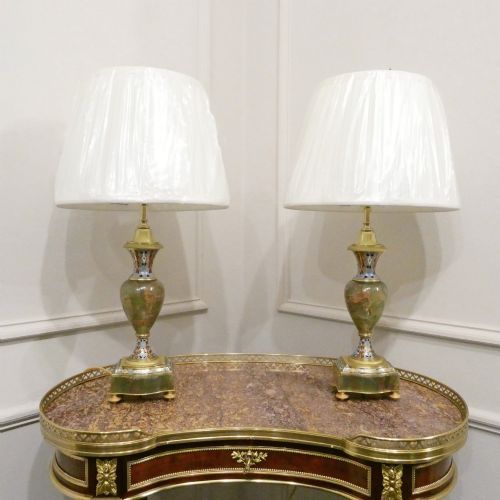
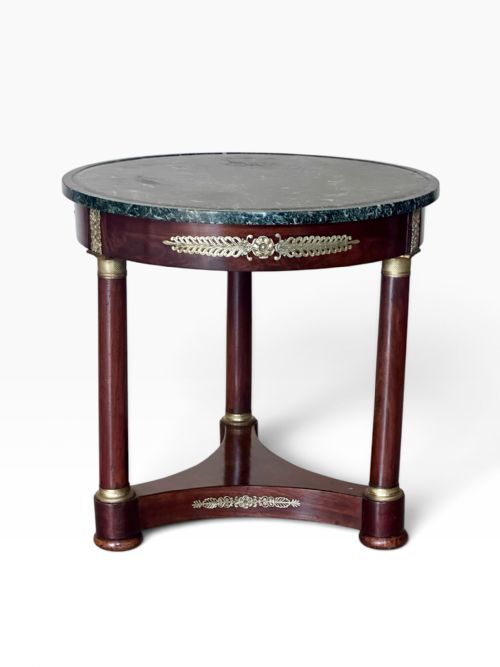
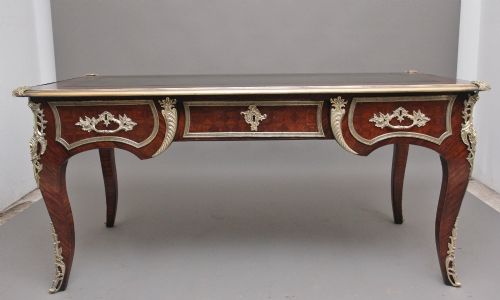
Centre tables and freestanding desks dominate the selection, frequently framed by elaborate mounts and supported by cabriole or tapered legs. Smaller lamp tables and gueridons also appear, combining marble tops with gilt bronze mounts.
Originating largely from Parisian workshops and prominent makers of the period, these pieces served both functional writing and display roles in elite nineteenth-century interiors. Today, they function as focal points in sophisticated residential schemes.
Materials and Construction
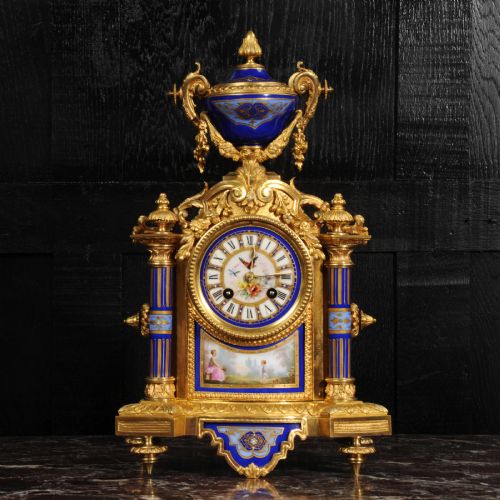
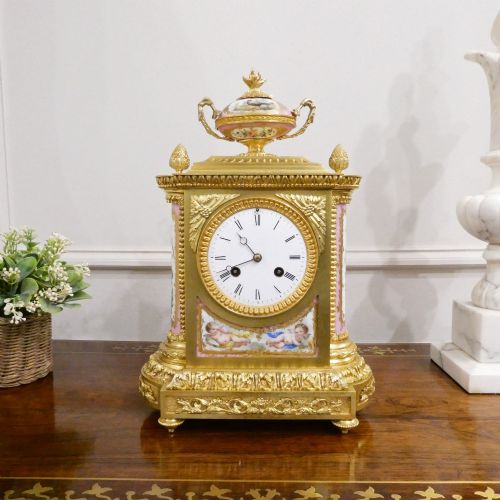
Makers utilised cast bronze, finished with mercury gilding or electroplating to achieve the characteristic rich surface known as ormolu. This metalwork was then mounted onto structural carcasses of mahogany, kingwood, rosewood, or walnut.
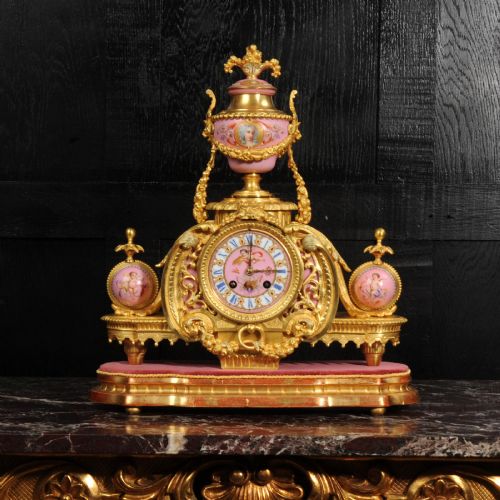
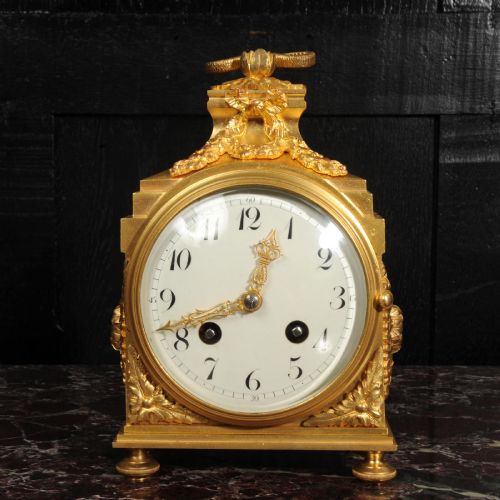
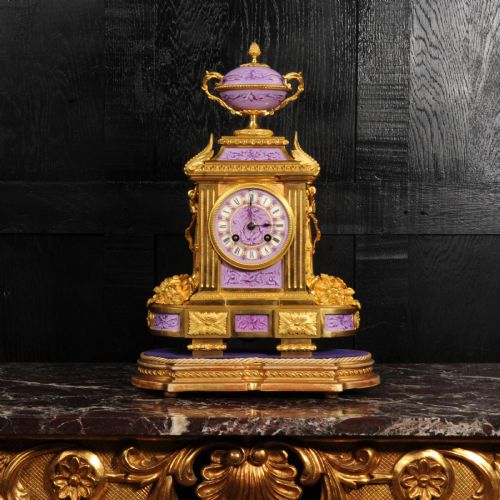
Surface decoration frequently involved intricate marquetry and parquetry patterns, complemented by inset panels of marble, porcelain, or glass. Candelabra and clock components similarly combined cast bronze with champleve enamel and onyx elements.
Joinery and mechanical elements required high precision, particularly on bureau plats and occasional tables featuring specialised mechanisms, drawers, and drop-front writing surfaces.
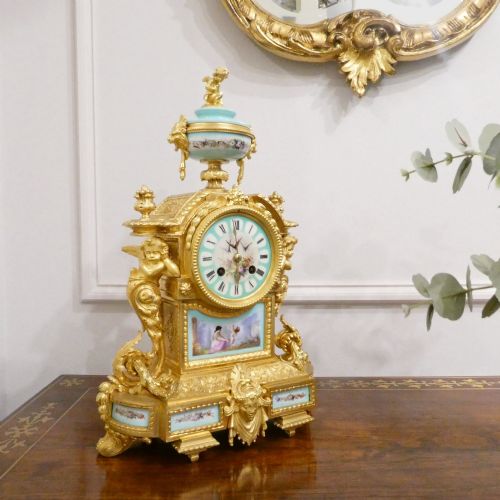
Several bronze cherubs in the archive spend their days guarding clocks and holding lamps, seemingly unfazed by changing centuries.
Assessing Craftsmanship
The selection of timber veneer and the precision of the marquetry dictate the upper tiers of value, with symmetrical grain alignment and complex floral or geometric patterns marking master workshop output. Secondary woods and simpler structural framing indicate more utilitarian nineteenth-century production.
Attribution to documented makers or retailers elevates a piece significantly, provided the mounts, veneers, and internal carcase construction remain entirely uniform and undisturbed by later alterations.
Edward Holmes Baldock·Achille Brocot·Henry Marc·Maison Millet·Charles a Orleans·Japy Freres·Samuel Marti·Francois Linke·Edwards and Roberts·Joseph Emmanuel Zwiener·Paul Sormani·E Rousseau
The French Gilt Bronze Table Glossary
- Ormolu
- Gilded bronze, derived from the French term for ground gold. It was applied to decorative mounts on furniture, clocks, and candelabra.
- Bureau plat
- A flat-topped freestanding writing desk, usually fitted with drawers and mounted with bronze edges and sabots.
- Gueridon
- A small round occasional table supported by a central column or multiple legs, often featuring a marble top.
- Kingwood
- A dense, heavily figured Brazilian timber utilised extensively in nineteenth-century French marquetry and veneer work.
- Champleve
- An enamelling technique where troughs are dug into a metal surface and filled with vitreous paste before firing.
French Gilt Bronze Table: Frequently Asked Questions
How do I identify a bureau plat?
A bureau plat is a freestanding writing table designed to sit away from the wall, featuring a finished back and multiple pull-out drawers beneath the leather or wood writing surface.
These desks are almost invariably decorated with gilt bronze mounts along the apron, corners, and sabots to showcase the owner's status in a nineteenth-century study.
What is the difference between ormolu and brass?
Ormolu consists of cast bronze treated with a gold amalgam or fine gilding process to produce a deep, warm metallic lustre that resists tarnishing over centuries.
Brass is a brighter alloy of copper and zinc used more commonly for structural hardware or simpler secondary mounts rather than high-end decorative casting.
How should I care for marble tops?
Marble table tops require regular dusting with a dry microfiber cloth and immediate blotting of acidic liquids like wine or citrus to prevent permanent etching.
Avoid abrasive household cleaners and acidic polishes, utilising instead a neutral soap solution followed by thorough drying to maintain the natural stone finish.
Are these tables suitable for daily use?
These tables function well for everyday placement in low-impact areas, provided they are protected from excessive direct sunlight, high humidity, and heavy moisture.
Writing desks and occasional tables handle normal surface placement of lamps and decorative objects easily, though antique mechanisms and fine veneer benefit from gentle handling.