

Vintage Tier Display Stand
A vintage tier display stand organises vertical space with multiple levels, combining practical surface area with period charm.
Vintage Tier Display Stand
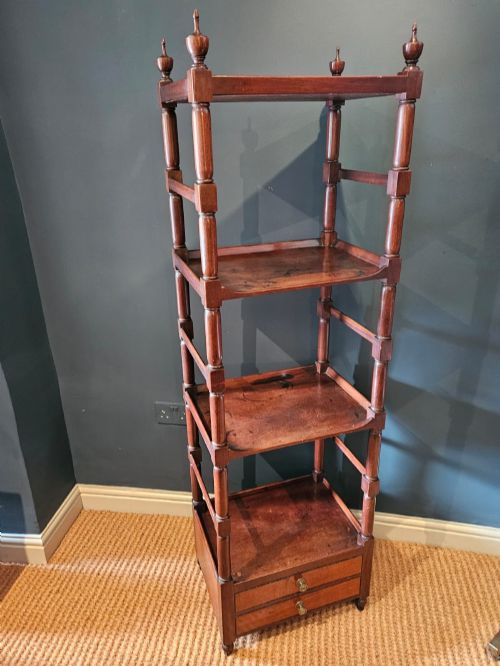
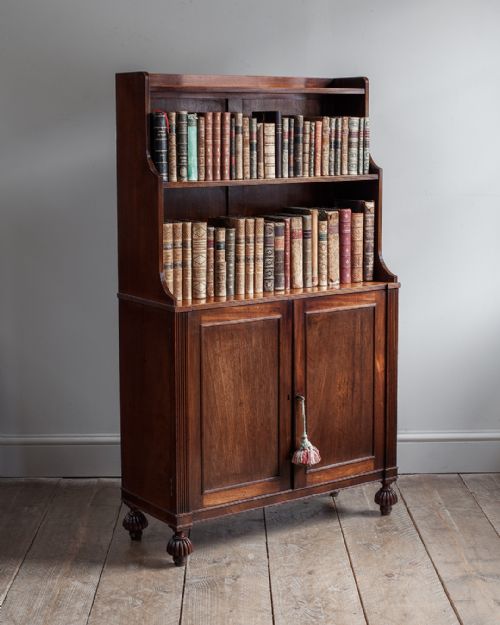
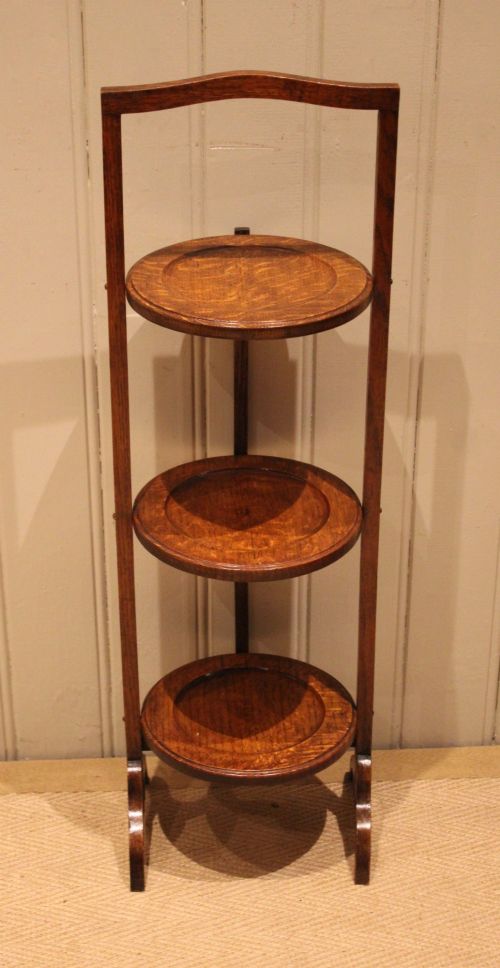
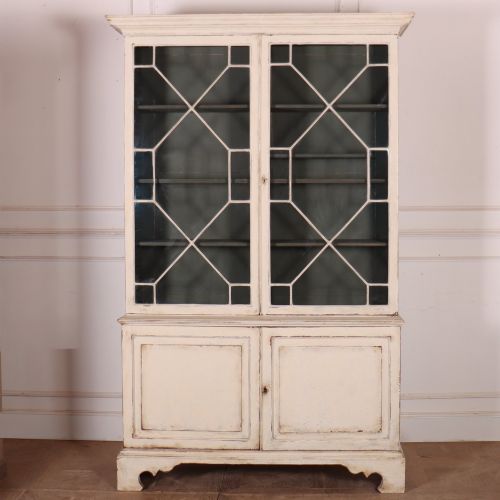
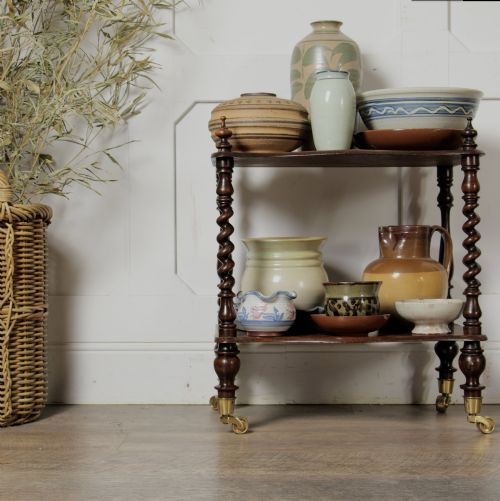
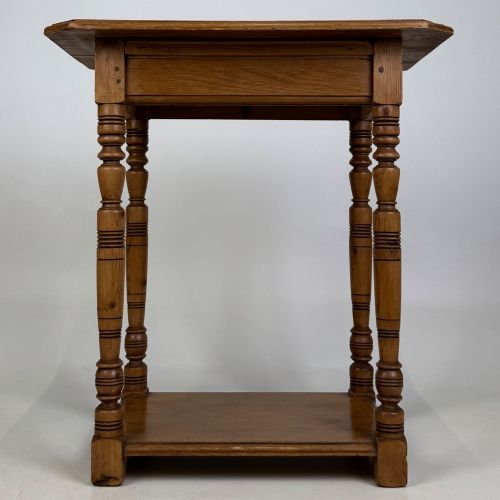
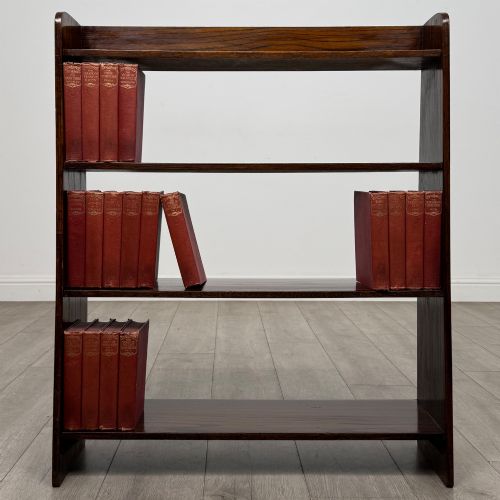
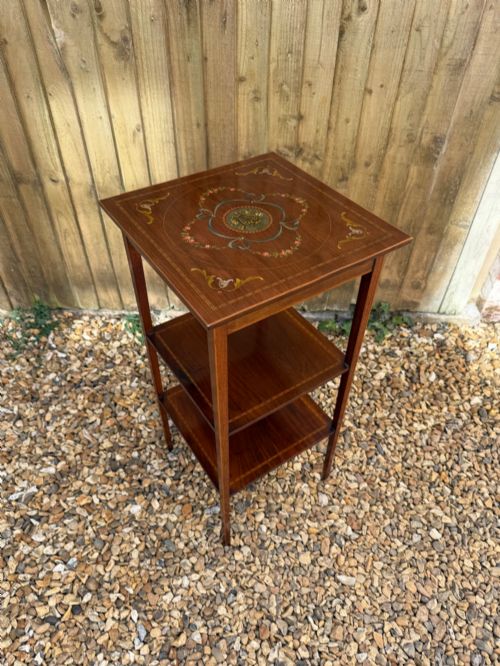
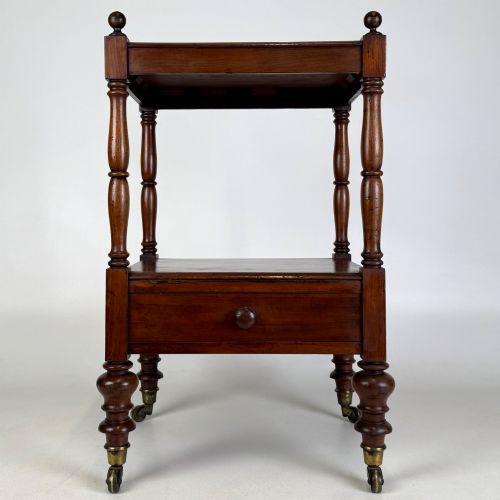
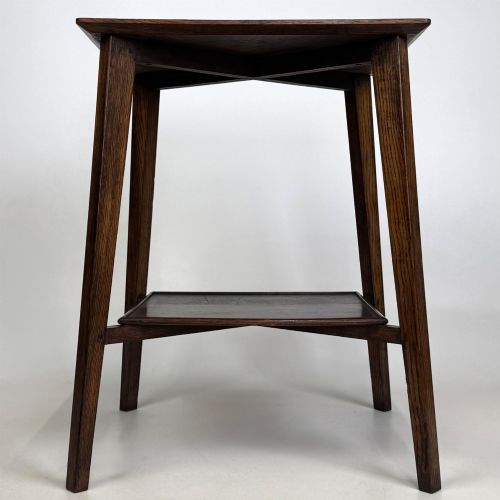
A vintage tier display stand brings vertical shelving into domestic spaces through forms such as whatnots, etageres, cake stands and multi-tiered occasional tables. These pieces arrange surfaces in graduated layers to hold books, plants, display items and ceramics.
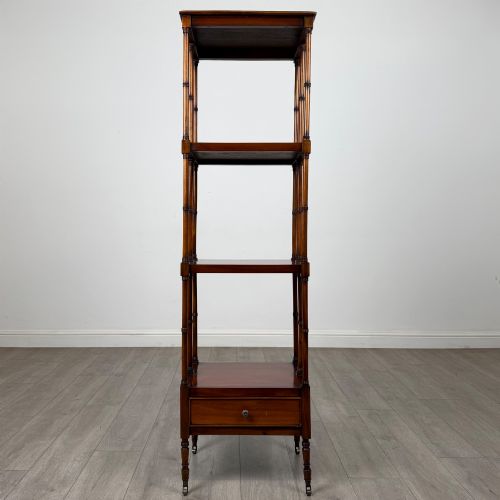
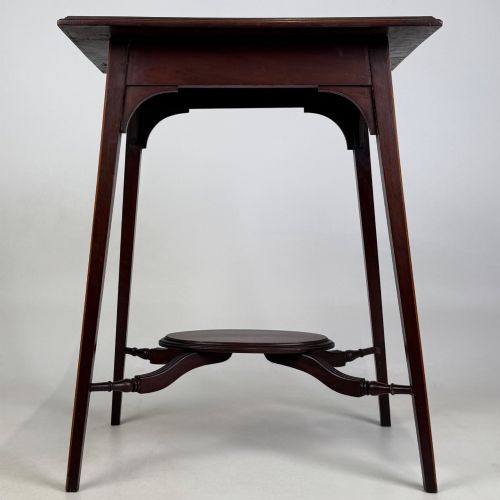
The selections span Victorian, Edwardian, Regency and Arts and Crafts periods, showing how different eras adapted stacked surfaces for daily use. Pieces range from slender corner shelves and plant stands to robust four-tier mahogany bookcases and walnut cabinets.
Buyers look for these multi-level pieces to maximise display space without dominating a room's floor plan. The variety in form reflects how makers across the nineteenth and twentieth centuries reinterpreted stacked shelving for parlours, drawing rooms and sitting areas.
Materials and construction methods
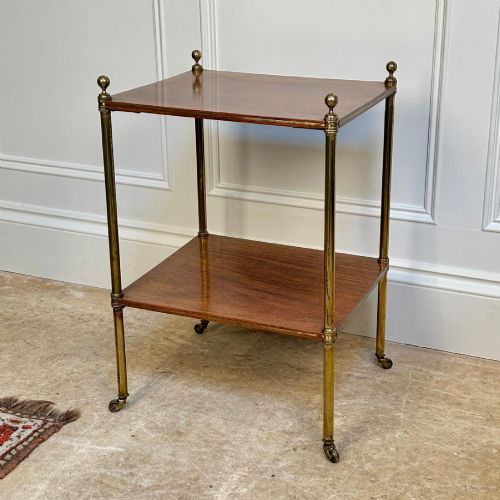
Makers utilised dense timbers such as mahogany, oak, walnut and burr walnut, often selecting figured veneers to catch the light on horizontal surfaces. Brass fittings provide structural support and decorative contrast, particularly on etageres and plant stands.
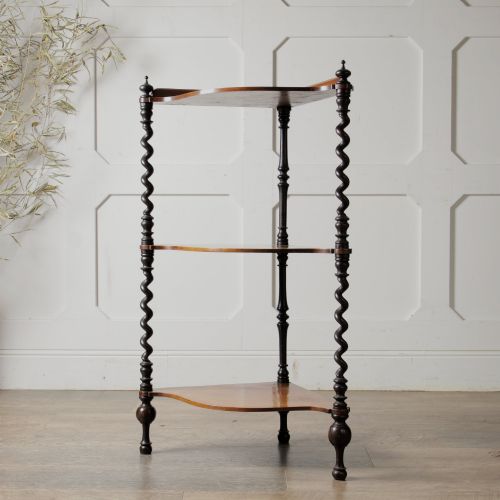
Turned uprights, barley twist columns and bamboo framing give these multi-tier structures their vertical integrity while keeping the overall silhouette light. Painted and ebonised finishes appear alongside polished wood grains, offering smooth surfaces that complement the tiered architecture.
Listings feature periods from the 18th Century through the 1930s, constructed in mahogany, oak, walnut, rosewood and bamboo.
Evaluating construction and finish
Quality rests in the stability of the tiers and the precision of the joints connecting each shelf to the upright supports. Superior examples maintain rigid alignment across every level without wobble, even when bearing the weight of books or ceramics.
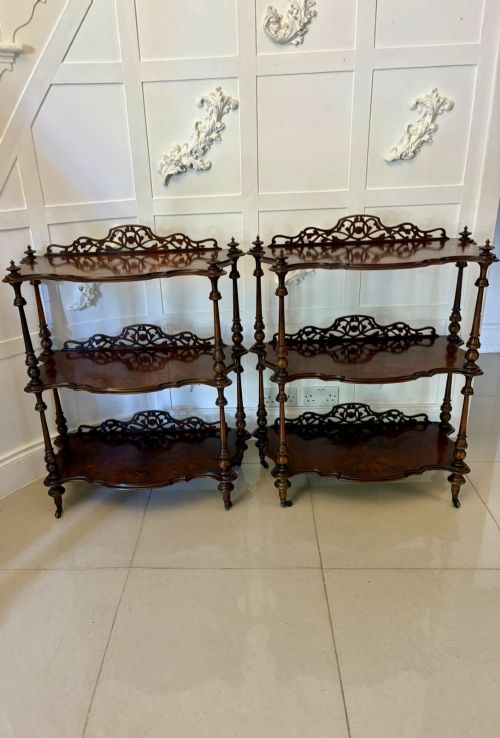
The choice of timber grain, such as matched burr walnut or figured mahogany, distinguishes standard utilitarian items from finer parlour pieces. Refined turning on columns and crisp inlay work further separate accomplished cabinet-making from simpler production.
The Vintage Tier Display Stand Glossary
- Whatnot
- A moveable set of open shelves used for displaying ornaments or books. These pieces typically feature three or four tiers supported by slender uprights.
- Etagere
- A piece of furniture consisting of a set of open shelves for displaying small objects or ornaments. French and English examples often combine brass mounts with exotic wood veneers.
- Barley twist
- A type of turning shaped like a helix, resembling a twisted rope or barley sugar. This decorative motif appears frequently on nineteenth-century upright supports.
- Torchere
- A tall stand designed to support a lamp, candle or decorative plant. Edwardian examples often incorporate inlaid mahogany shafts and circular top tiers.
Vintage Tier Display Stand: Frequently Asked Questions
What rooms suit a tiered display stand?
These multi-level stands fit neatly into corners or narrow wall spaces where standard tables take up too much floor area. They work well in living rooms for books and plants, or in hallways for holding small decorative objects.
The vertical design draws the eye upward, making smaller rooms feel taller while providing practical storage across multiple distinct levels.
How do I identify a Victorian whatnot?
Victorian whatnots typically feature three to four graduated wooden shelves supported by turned columns or barley twist uprights. They often appear in dense timbers like walnut, mahogany or rosewood.
Many incorporate low storage drawers at the base or delicate pierced galleries along the shelf edges to keep displayed items secure.
Are Edwardian cake stands still practical?
Edwardian cake stands provide sturdy folding or fixed tiers that serve reliably for afternoon tea, plant displays or small collections. Their light wooden frames make them easy to reposition around the home as needed.
The multiple levels offer an efficient way to present items without crowding flat surfaces in sitting rooms or dining spaces.
What is the difference between an etagere and a bookshelf?
An etagere is designed primarily for display, featuring open sides and lighter framing intended for decorative objects, porcelain and plants. Bookshelves are constructed with heavier side panels to support dense rows of volumes.
While both use multiple tiers, etageres prioritise visual lightness and decorative materials like brass and exotic veneers over sheer load capacity.