



French Brass Side Table
A French brass side table brings undeniable Parisian elegance to a room, offering a slender metal frame paired with marble, onyx, glass, or fine wood.
French Brass Side Table
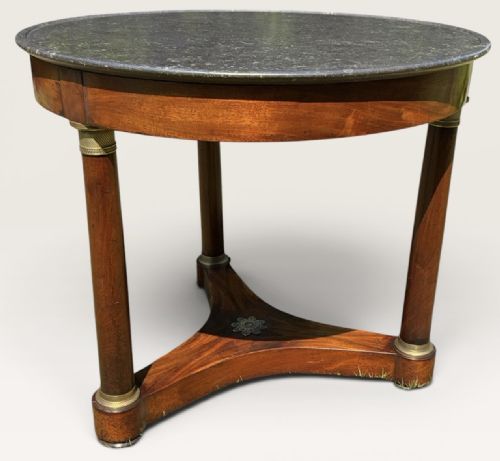
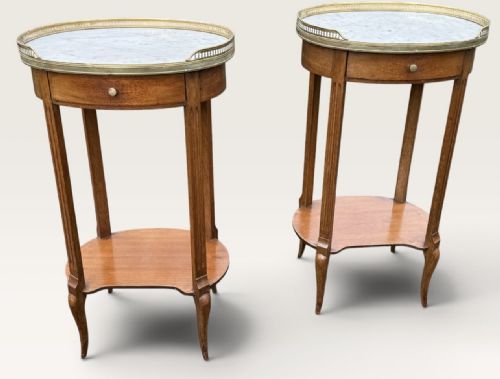
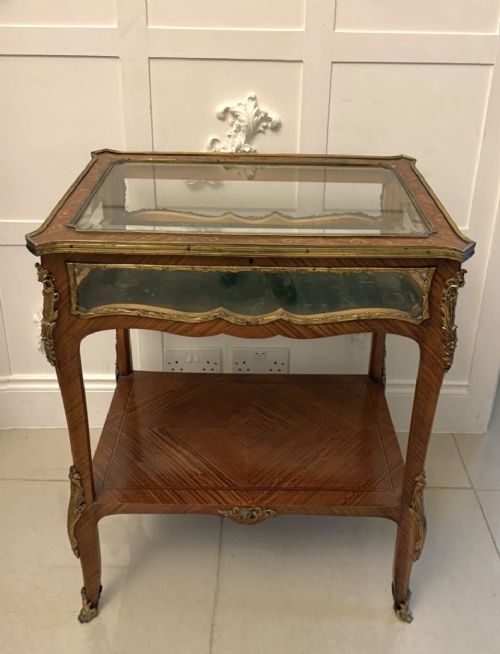
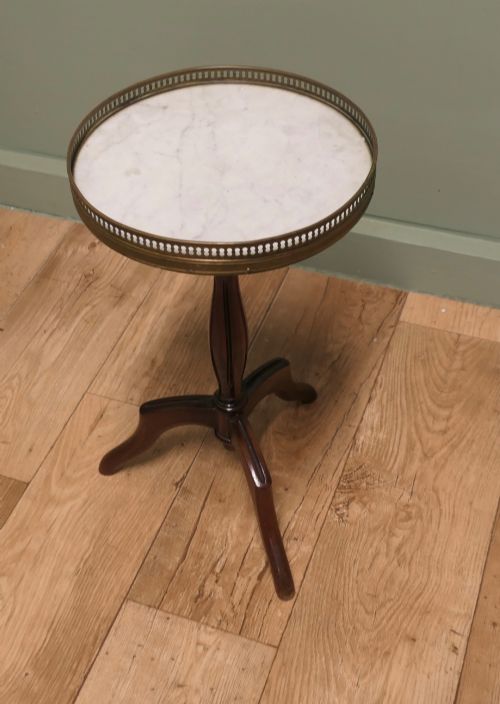
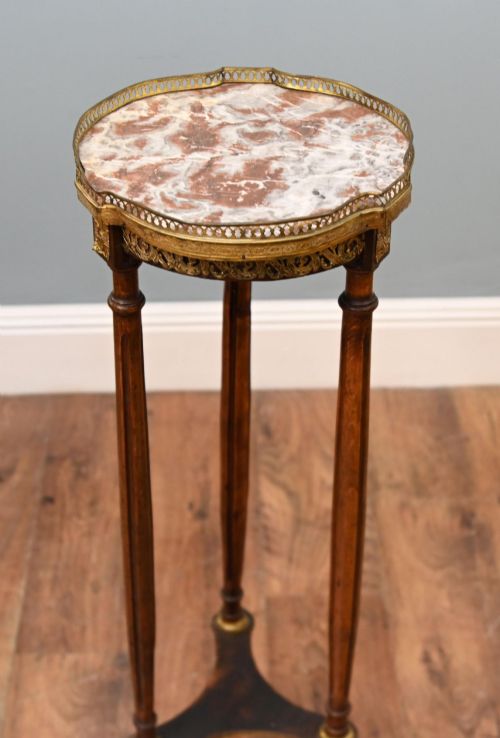
A French brass side table combines structural metal framing with inset tops of marble, onyx, leather, or glass, often taking the form of a guéridon, an etagere, a tier table, or a magazine rack. These pieces function as versatile accent furniture designed to hold lamps, drinks, or books while adding a distinct decorative presence.
The selections span the nineteenth century into the twentieth century, encompassing varied aesthetic movements from French Empire and Neoclassical styles to Hollywood Regency and later revival periods. Buyers frequently encounter variations featuring tripartite legs, rams heads, or galleried tops.
Origins trace directly to French workshops and cabinetmakers, utilising rich timbers such as mahogany alongside gilt bronze, ormolu, and ebonised wood. The scale remains compact, making these items ideal for placement beside upholstery or within alcoves.
Materials and Construction
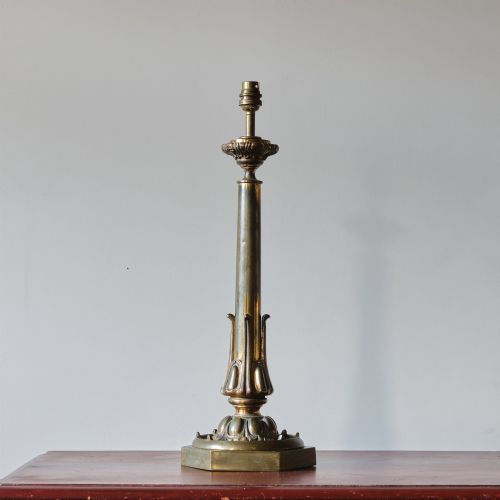
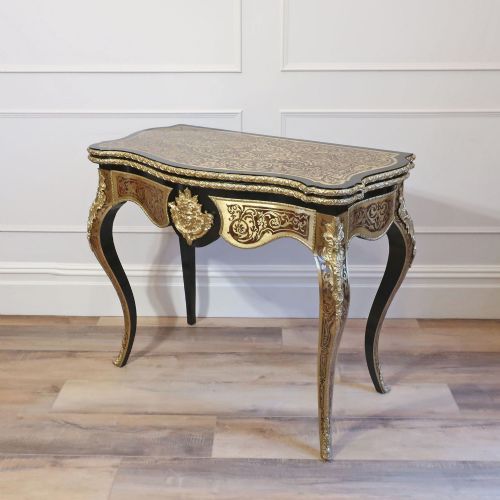
Construction relies upon cast and gilt brass, ormolu, and structural metalwork shaped into frames, often accented with decorative mounts, bamboo styling, or rams heads. Metal components support heavy inset slabs of white or coloured marble and onyx.
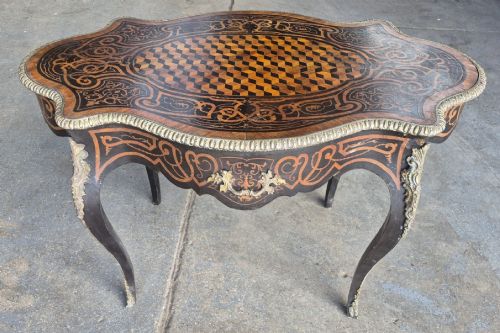
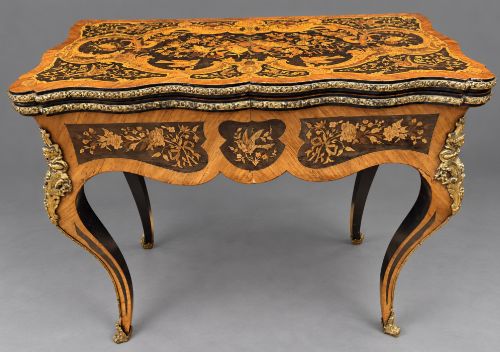
Cabinetmakers integrated brass inlay, parquetry, marquetry, and leather surfaces into mahogany, cherry, and ebonised wood carcasses. Detailed surface treatments include fire gilding on bronze and precise metal stringing fitted flush into timber tops.
French Brass Side Table Retail Price Guide 2026
Typical asking prices for french brass side table among the pieces listed under this phrase on Sellingantiques today, from the lower quarter to the upper quarter. They describe what is for sale here now, not the wider market.
Listings feature materials spanning brass, marble, gilt bronze, onyx, leather, glass, mahogany, cherry, and ebonised wood across nineteenth and twentieth-century periods.
Judging Quality and Craftsmanship
Quality reveals itself in the crispness of the metal casting, where fine chasing on ormolu mounts and cast brass elements shows sharp relief rather than softened edges. The weight and thickness of the marble or onyx top also indicate standard of manufacture.
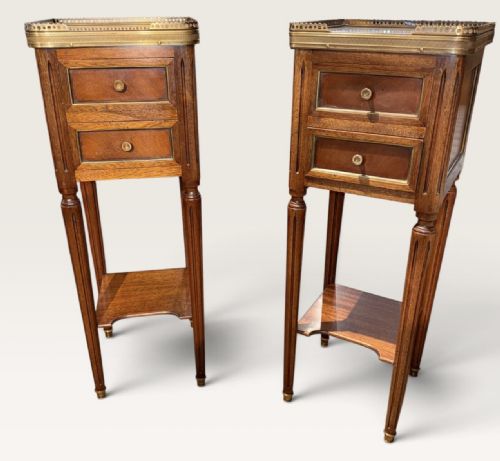
The integration of materials determines the upper tier of execution, such as seamless brass inlay within dense mahogany or tight joints on ebonised and gilt frameworks. Finer examples display architectural proportions and purposeful detailing like integrated brass galleries.
Alphonse Tahan
The French Brass Side Table Glossary
- Guéridon
- A small French table supported by a central pillar or a tripartite stand. These pieces frequently feature round marble tops and decorative brass mounts.
- Ormolu
- Gilt bronze created by applying a finely ground high-carat gold-mercury amalgam to a bronze object. This technique imparts a rich golden finish to metal mounts.
- Etagere
- A set of open shelves for displaying small objects or books. They appear here in tiered formats supported by brass frames.
- Parquetry
- Geometric patterns formed by wooden tiles fitted into a floor or furniture surface. It often appears alongside brass inlay on table tops.
- Onyx
- A banded variety of chalcedony used as a smooth decorative stone top. It provides a distinct striated appearance on occasional tables.
French Brass Side Table: Frequently Asked Questions
What is a French guéridon table?
A guéridon is a traditional French round table supported by a central column or multiple legs. They were originally introduced in the seventeenth century and often feature marble tops.
In later nineteenth-century iterations, these tables were constructed with cast brass and ormolu mounts, serving as decorative surfaces for lamps or display.
How do I clean marble and brass?
Marble requires gentle wiping with a damp cloth and mild neutral soap to protect the polished stone from acidic stains. Avoid harsh chemical cleaners that can etch the surface.
Brass and gilt metal should be dusted carefully with a soft dry cloth. Polishing agents should be used sparingly to preserve any original gilt or patinated finish.
Where should I place a side table?
These compact tables fit naturally beside armchairs, sofas, or beds to hold lighting and everyday items. Their small footprint allows them to occupy awkward corners or narrow hallways.
Because they feature finished decorative details on all sides, many designs sit comfortably away from walls as freestanding accent pieces.