



Round Marble Side Table
A round marble side table brings solid stone and classical form into a room, offering a stable surface for lamps and drinks.
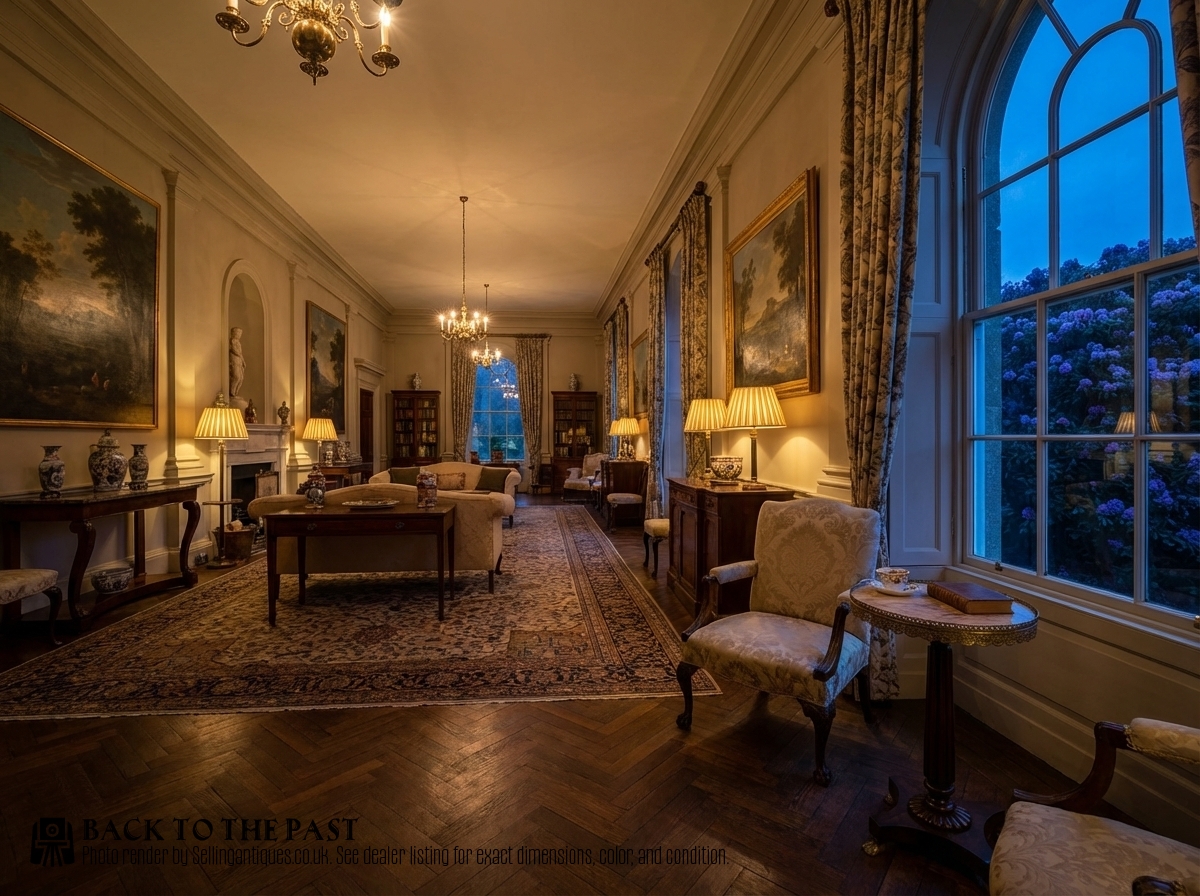
What round marble side tables are
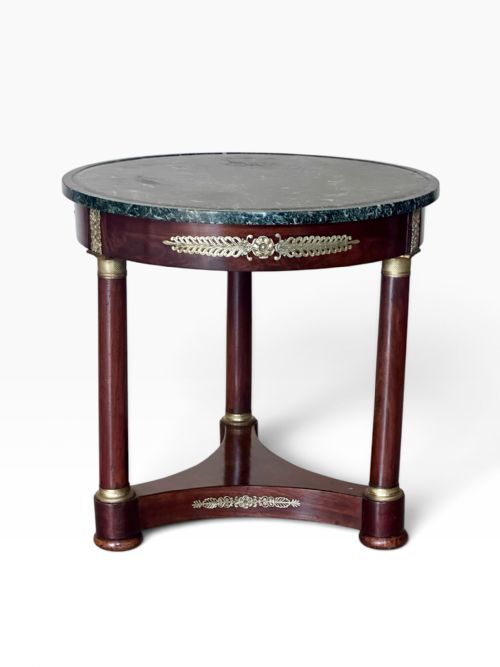
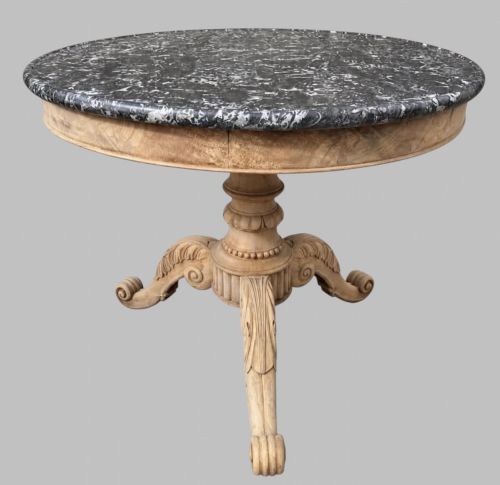
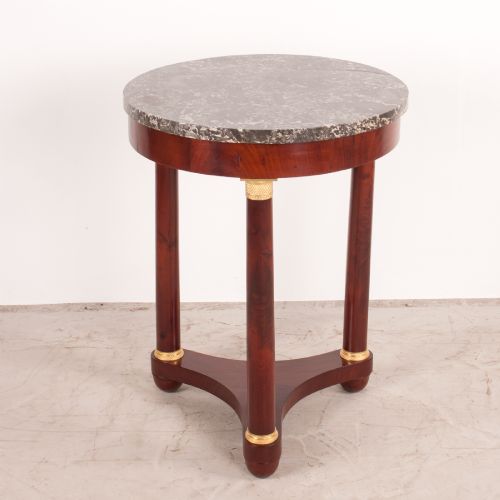
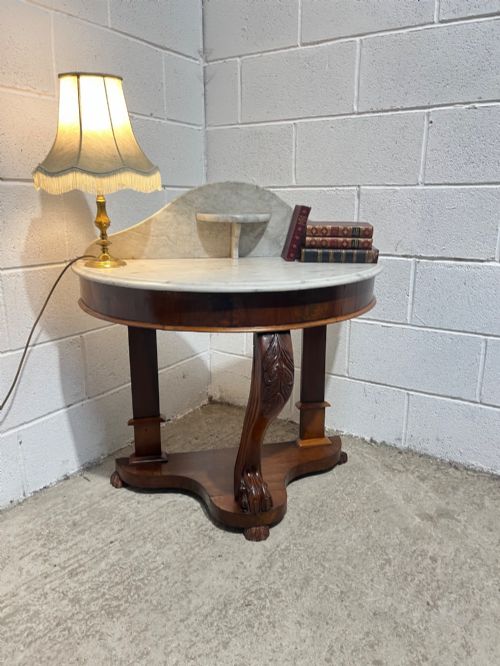
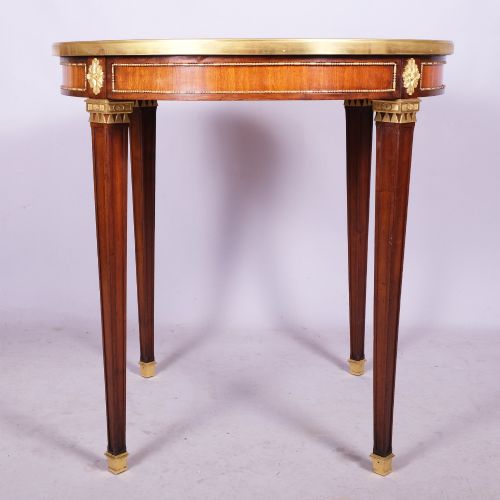
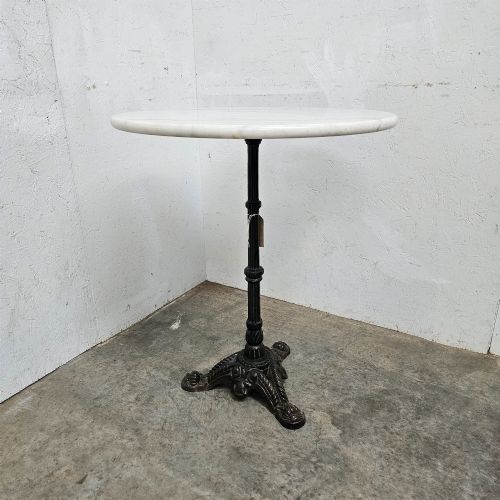
A round marble side table combines a heavy stone top with a supportive wooden, brass, or iron base. Pieces matching a round marble side table span the nineteenth century and the early twentieth century, including French bistro tables, gueridons, and occasional wine tables alongside Welsh cricket tables.
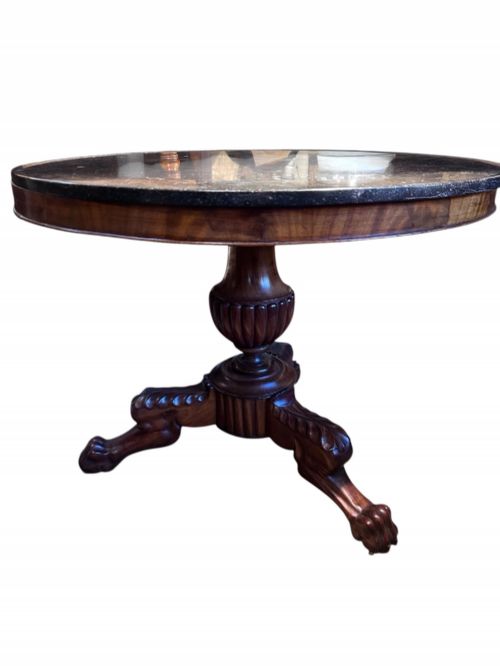
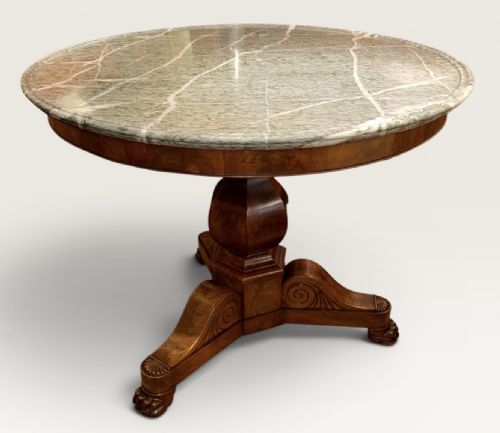
The most common form on this page is the French gueridon or centre table, featuring a circular marble slab set upon a pedestal or tripod base. These tables function well beside seating or in the centre of a room as decorative focal points.
Origins heavily lean toward France, with occasional British vernacular pieces appearing in the mix. Buyers encounter styles ranging from French Empire and French Restoration to French Bistro, French Chateau, and Welsh Vernacular.
How they were made
Maker workshops cut and polished stone to create smooth circular marble surfaces, sometimes pairing white marble with contrasting wooden frames. Supporting structures utilise timber species such as mahogany and oak alongside cast iron and brass elements.
Pedestal tables and gueridons rely on sturdy central columns or multi-legged frames to bear the considerable weight of the stone top. Some designs incorporate metal perimeters and sliding components for added function.
Retail Price Guide 2026
Typical UK retail prices for round marble side table, calculated from the Sellingantiques database of over a million retail prices indexed since 2003. This retail price guide relies exclusively on Sellingantiques data; no external sources or auction records are used, so the figures do not describe the wider market.
Certain antique tables feature twin slide outs, proving that nineteenth-century hosts also needed extra space for their evening refreshments.
What varies in quality
Quality rests in the harmony between the stone and the base, where finer examples display carefully selected marble grain and robust joinery. Lesser pieces may show clumsier proportions in the pedestal or mismatched timber repairs.
The sophistication of the period style dictates the overall refinement, moving from utilitarian cast iron cafe frames to polished mahogany and gilt metal mounts. Finer execution is evident in the crispness of the turning and the precise fit of the marble insert.
The Round Marble Side Table Glossary
- Gueridon
- A small circular table on a central pillar, originating in seventeenth-century France and remaining popular through the nineteenth century.
- Cricket table
- A traditional British three-legged round table with a wooden top, historically used in domestic settings.
- Bistro table
- A small café table typically constructed with a metal or iron base and a stone top designed for commercial or domestic dining.
- Drum table
- A circular library or side table with a deep top resembling a drum, frequently fitted with drawers or slides.
Frequently Asked Questions
What is a gueridon table?
A gueridon is a traditional French round table supported by a single central pillar or tripod base. These versatile pieces function well as side tables or centre tables in reception rooms.
Originating in various periods including the nineteenth century, they offer a compact footprint while showcasing decorative stone and timber.
How do I style a marble side table?
A round marble side table works well beside an armchair or sofa to hold lighting and small objects. The cool stone surface contrasts pleasingly with upholstered seating and wooden furniture.
Keep decorative items minimal to let the natural grain of the marble remain the primary focus of the piece.
Are these tables heavy?
Marble tops add substantial weight to these tables, making them remarkably sturdy in daily use. This weight helps anchor the piece securely in place beside seating.
Care should be taken when moving them, separating the stone top from the base if the design permits.
What period do these tables come from?
The pieces available span the nineteenth century and the early twentieth century. Styles reflect French design movements such as Empire and Restoration alongside vernacular British furniture.
Examining the materials, including mahogany, oak, cast iron, and brass, helps determine the era of manufacture.