


Repousse Silver Casket
A repousse silver casket brings raised surface ornament and weight to a dressing table, holding rings, trinkets and letters.
Repousse Silver Casket
A repousse silver casket search brings up small vessels designed to sit upon dressing tables, writing desks and sideboards for the storage of personal valuables. The pieces on this page span from the late nineteenth century into the early decades of the twentieth century, including Victorian and Edwardian examples alongside continental and colonial work.
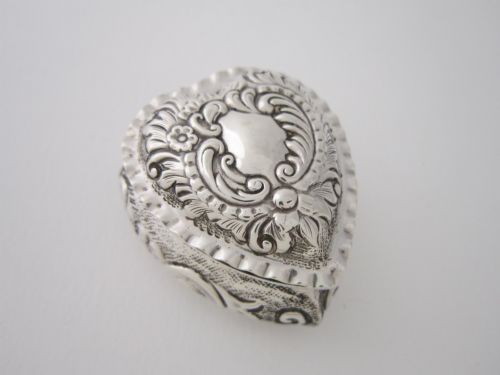
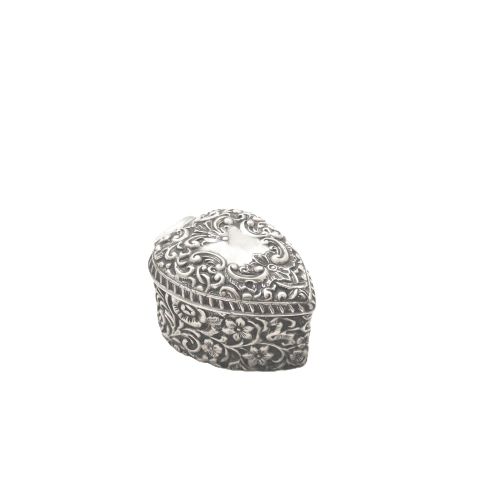
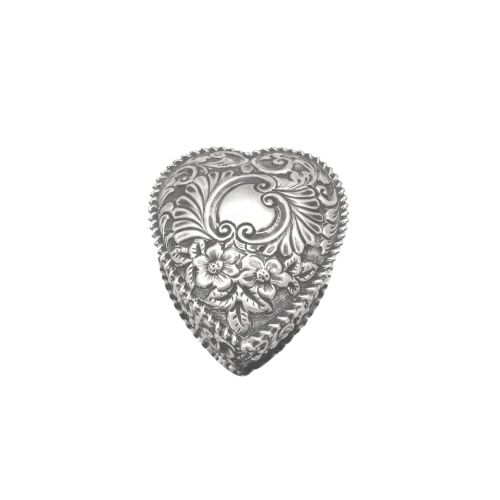
Forms range from simple oval and heart-shaped trinket boxes to substantial table caskets and ring boxes fitted with internal linings. British provincial and London assay offices feature alongside German Hanau and Indian colonial pieces, showing how widely workshop styles travelled during this era.
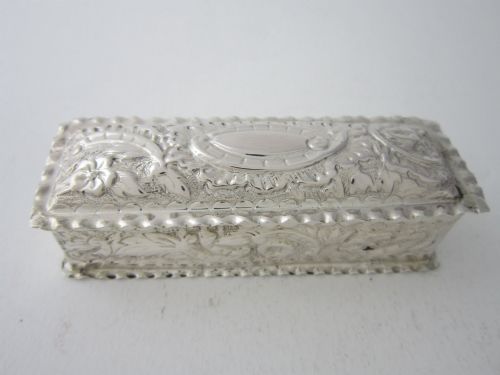
Makers adapted these containers for various domestic uses, creating specialised compartments for rings, powder and documents. Buyers encounter everything from small hinged pocket boxes to heavy table caskets bearing elaborate floral and figural relief.
Materials and technique
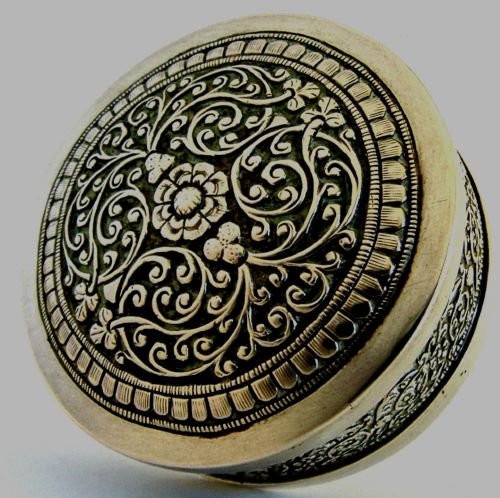
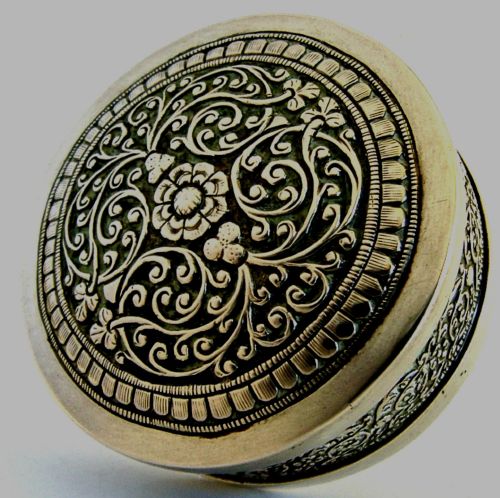
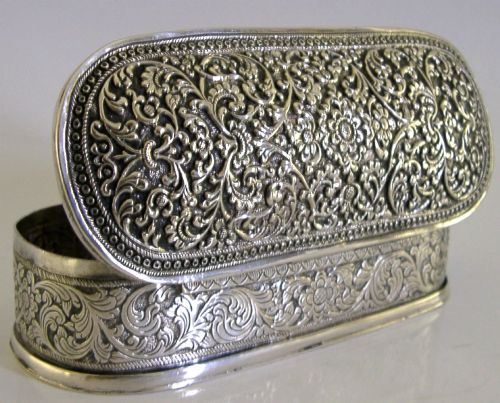
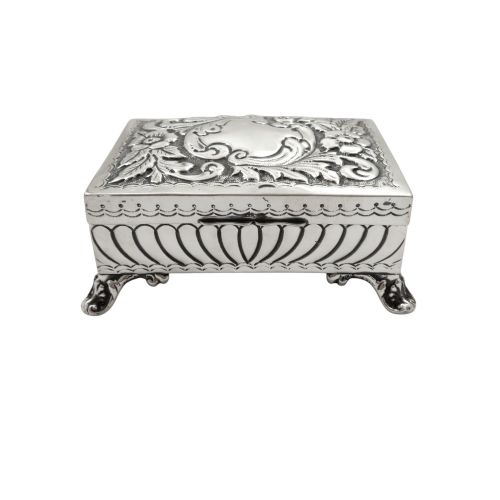
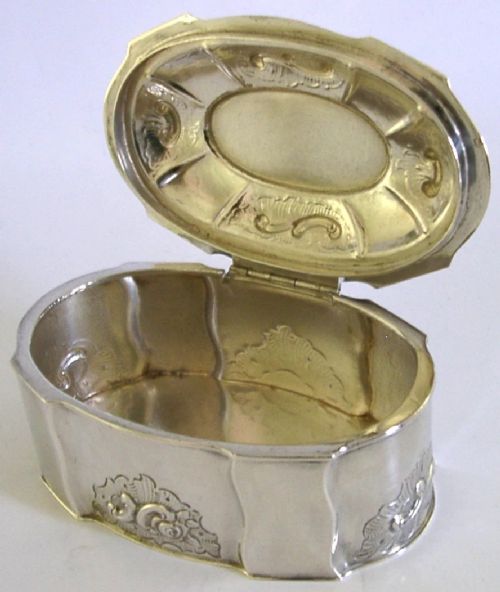
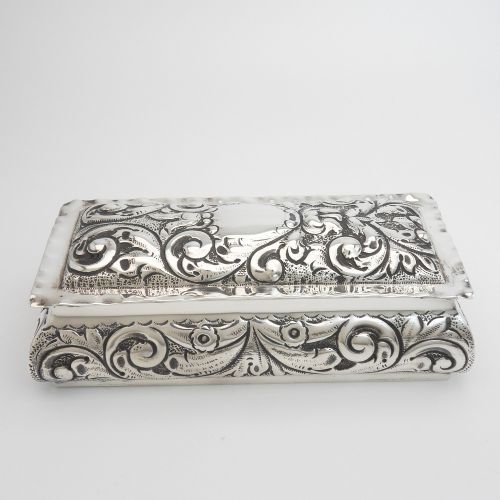
Silversmiths shaped these caskets from sterling silver, solid silver and silver plate, often applying gold gilt to the interior surfaces for contrast and protection against tarnishing. The defining characteristic is the repousse technique, where metal is hammered from the reverse side to push the design into high relief before fine chasing is worked on the front.
Makers mounted many of these boxes on small feet, fitted them with working hinges and lined the interiors with velvet, silk or satin to cushion delicate jewellery. Continental workshops frequently employed similar hammering methods on heavier gauge metal to produce table boxes with detachable lids and dense pictorial scenes.
Repousse Silver Casket Retail Price Guide 2026
Typical asking prices for repousse silver casket among the pieces listed under this phrase on Sellingantiques today, from the lower quarter to the upper quarter. They describe what is for sale here now, not the wider market.
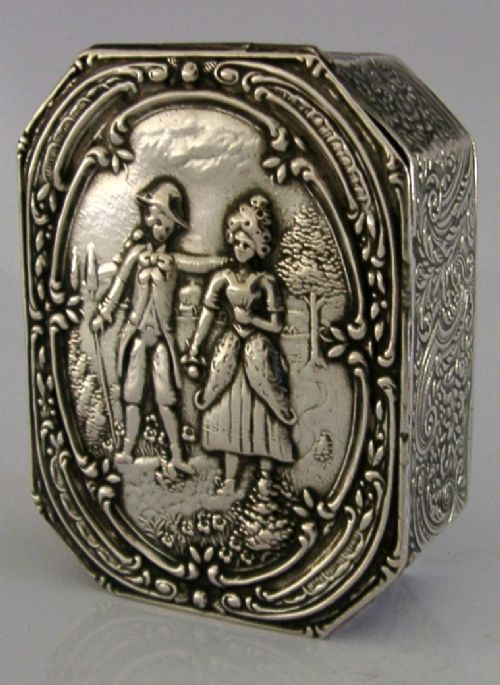
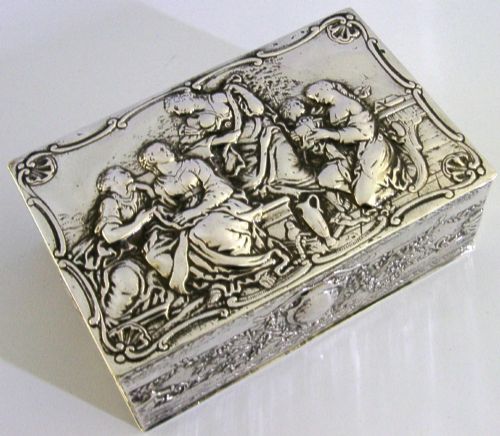
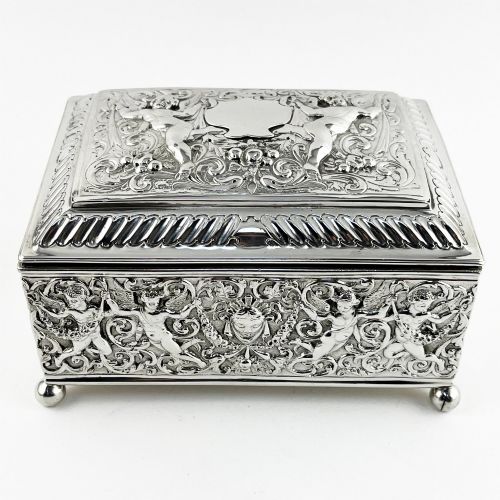
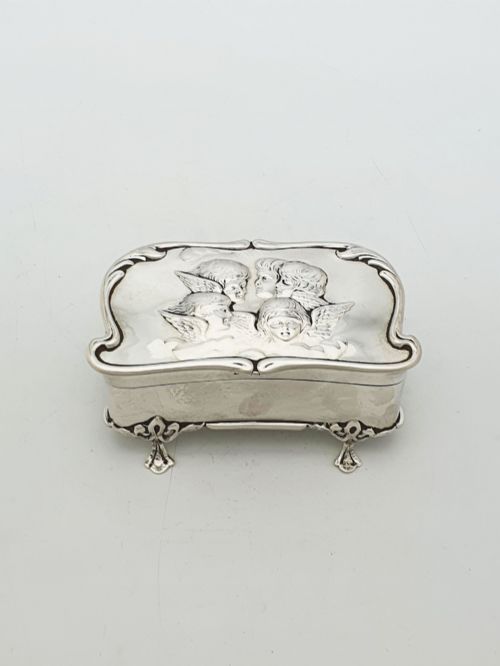
Cherubs and mythical scenes frequently peer out from the hammered relief of nineteenth-century dressing table boxes.
Design depth and finish
Quality rests in the crispness of the hammered relief and the weight of the metal used for the body and lid. Finer examples display deep, three-dimensional repousse work where the design remains sharp rather than flattened through excessive polishing or hurried production.
Construction details separate standard utility boxes from superior workshop output, including the thickness of the silver gauge, the snugness of the lid closure and the survival of original gilding inside. Maker identity and clear hallmarks provide further distinction between massed factory output and specialised silversmith production.
A & J Zimmerman Ltd·William Comyns & Sons·William Neale & Sons·Walker and Hall·H. Matthews
The Repousse Silver Casket Glossary
- Repousse
- A metalworking technique where the artisan hammers the reverse of a sheet to create a raised design on the front. Fine chasing is usually applied to the front surface afterwards to sharpen the details.
- Gilt
- A thin layer of gold applied to the interior silver surface of a box. This treatment prevents the silver from tarnishing when exposed to cosmetics or scented items.
- Hallmark
- A series of official marks stamped into precious metal indicating the assay office, the standard of purity and the year of manufacture. British pieces carry distinct town marks and date letters.
- Trinket box
- A small container utilised on dressing tables for holding rings, brooches and loose ornaments. They are typically lined with fabric and fitted with a hinged lid.
Repousse Silver Casket: Frequently Asked Questions
What is a repousse silver casket?
A repousse silver casket is a small lidded box featuring raised metal decoration created by hammering from the reverse side. These pieces were made to hold personal valuables on dressing tables and desks.
They appear in various regional styles, ranging from British Victorian assay-marked boxes to continental and colonial workshop productions from the same era.
How do I date a silver trinket box?
Dating relies primarily on the legible hallmarks stamped into the metal, which reveal the assay office and the specific year of manufacture. Stylistic clues such as floral motifs and shape also help place a piece within the Victorian or Edwardian periods.
Unmarked continental or colonial pieces require stylistic comparison with known regional manufacturing traditions and export periods.
Are these boxes made of solid silver?
The listings include both solid sterling silver and silver-plated examples, distinguished by their weight and the presence of standard hallmarks. Solid pieces carry stamps indicating the silver purity standard used by that country.
Plated boxes consist of a base metal coated with a thin layer of silver, often produced by large manufacturing firms for a broader market.
How should I clean my silver box?
Cleaning requires a soft cloth and a specialised silver polish formulated to remove tarnish without wearing down the delicate high relief of the repousse work. Harsh abrasive pastes should be avoided entirely to preserve the original surface detail.
Fabric-lined interiors require careful protection from moisture and cleaning liquids during the maintenance of the exterior metal.