
Regency Wooden Buffet
A regency wooden buffet brings architectural dignity and practical surface space to a dining room through rich mahogany timbers.
Regency Wooden Buffet
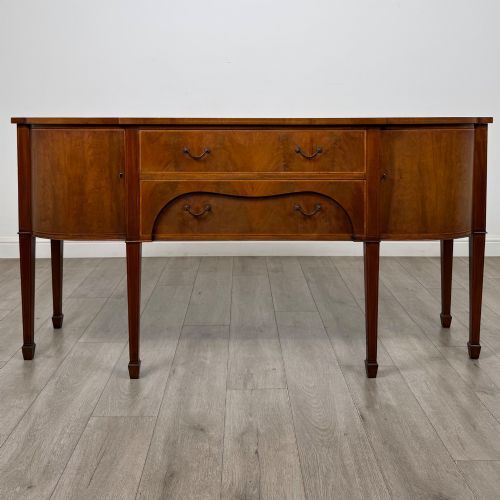
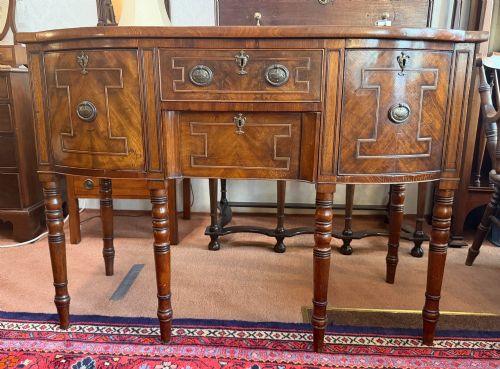
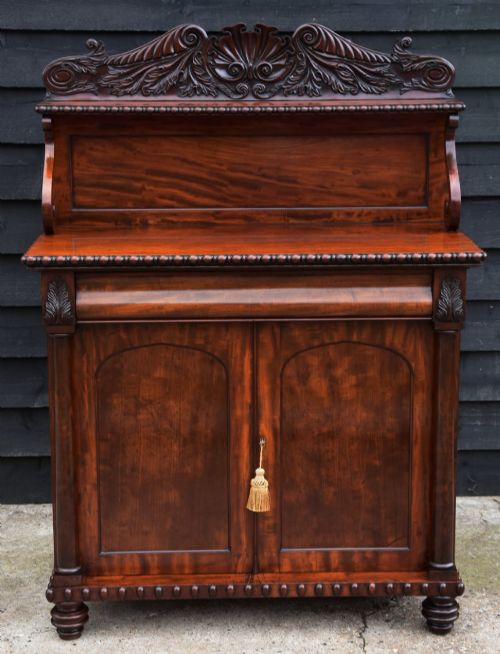
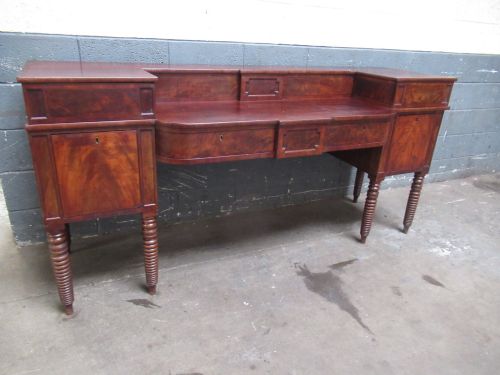
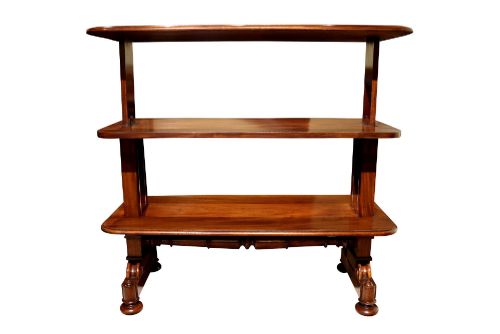
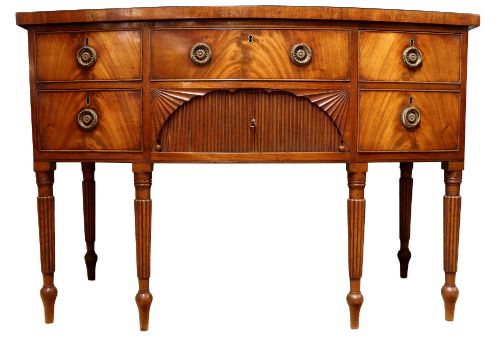
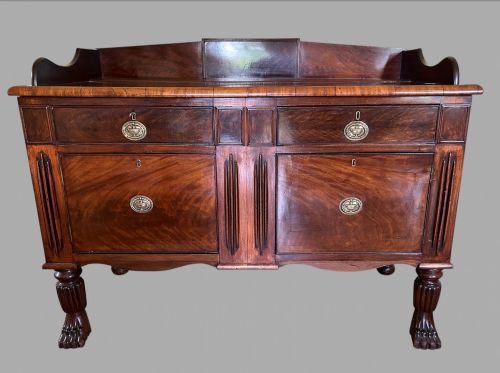
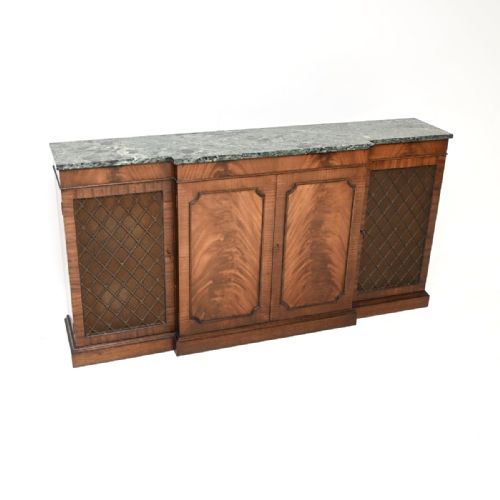
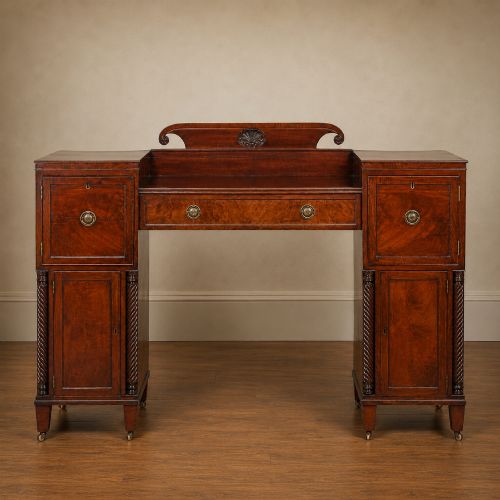
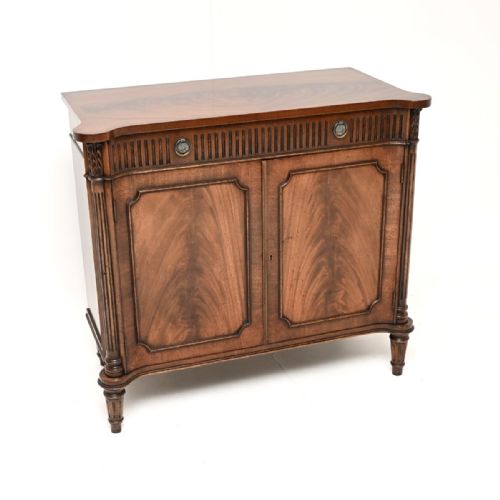
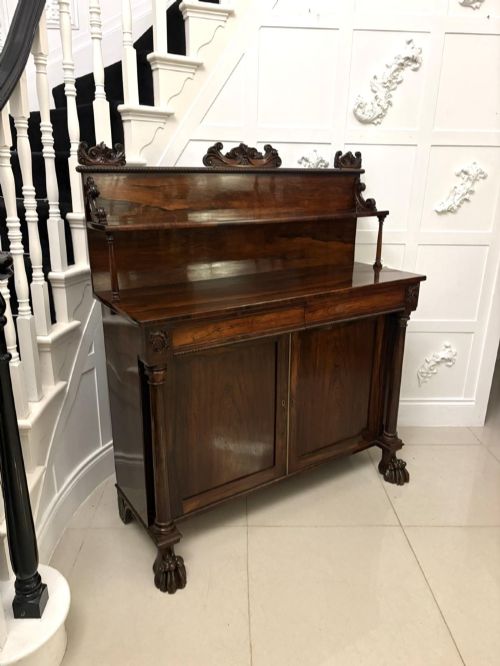
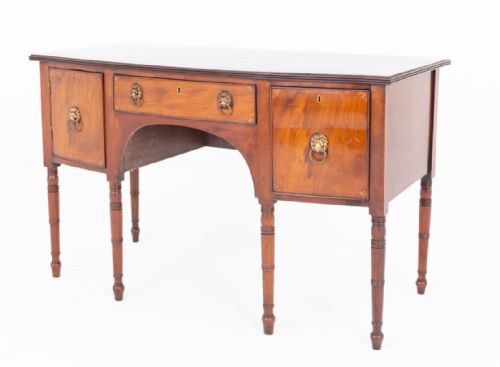
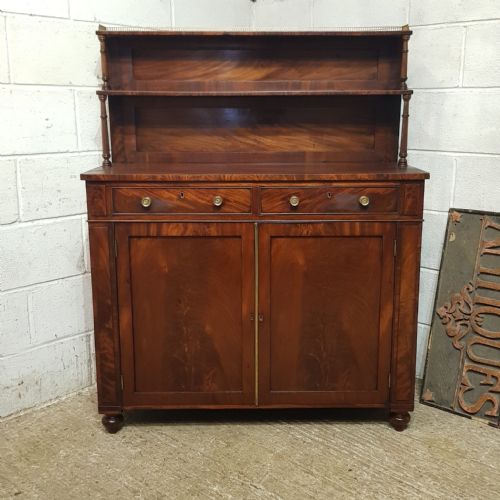
A regency wooden buffet serves as a substantial dining room furnishing designed for displaying silver and holding serving dishes during formal meals. Buyers searching for a regency wooden buffet will encounter architectural case pieces that combine deep mahogany surfaces with pedestals, cabinets, and tiered shelving formats.
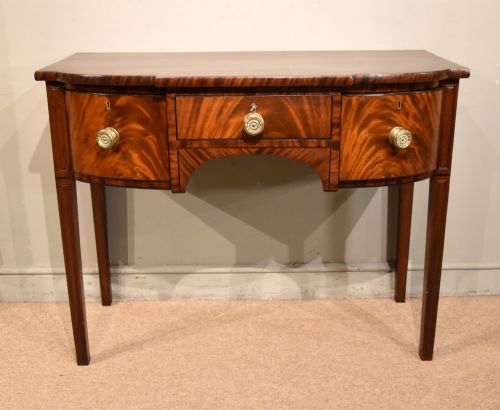
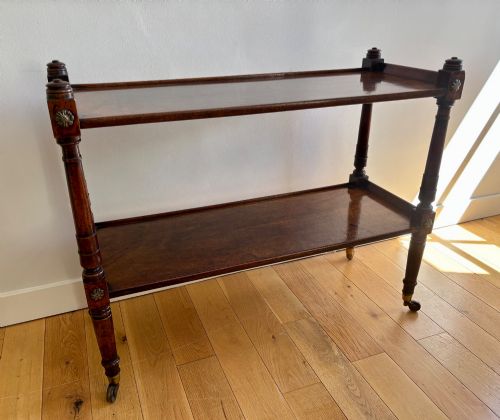
The selections span foundational Georgian and William IV eras alongside strict Regency periods, offering both bow-fronted sideboards and tiered serving tables. Most examples rely on solid mahogany construction accented by rich veneers to create deep natural figuring across the front panels.
Markers of distinction and craftsmanship
Quality separates simple utility pieces from masterwork productions through the selection of timber figures, such as highly matched flame mahogany veneers. The precision of inlay work, including delicate boxwood and ebony stringing, indicates the skill of the original workshop.
Structural complexity also defines the upper tier, seen in pedestals, brass galleries, and rise-and-fall tiers. Well-preserved original hardware and disciplined proportions elevate a piece far above standard utilitarian formats.
Listings feature 19th Century and Regency periods predominantly, constructed from mahogany, flame mahogany veneer, oak, and brass.
Gillows
The Regency Wooden Buffet Glossary
- Bow front
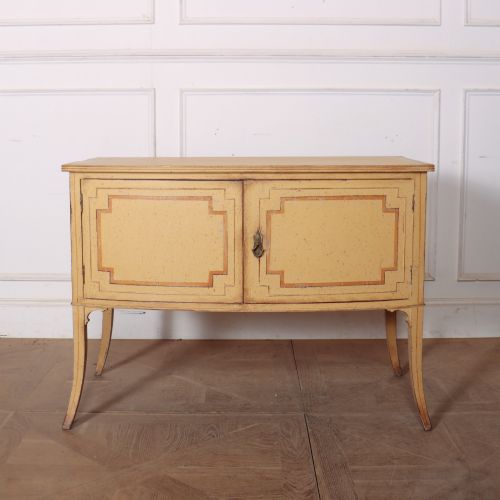
- A convex curved cabinet front that projects outward in a smooth arc. This shape softens the rigidity of formal dining rooms while maximising interior storage depth.
- Flame mahogany
- A veneer cut from the fork of the mahogany tree to produce a dramatic, flickering flame-like grain pattern. It was favoured by makers for principal drawer and door surfaces.
- Pedestal sideboard
- A form featuring two distinct columnar or pedestal cupboards flanking a central serving surface. These pieces often incorporate cellarette drawers for wine storage.
- Stringing
- Thin lines of contrasting wood inlay used to outline drawers, doors, and tabletops. Boxwood and ebony were frequently chosen for this linear decoration.
- Chiffonier
- A compact low sideboard or cabinet often fitted with shelves or a raised superstructure. It provided convenient storage for dining silver and glassware.
Regency Wooden Buffet: Frequently Asked Questions
What is a regency wooden buffet used for?
These furnishings were designed to hold serving dishes, cutlery, and wine decounters during formal dining occasions. They provided an organised surface within the dining room while keeping necessities close at hand.
Today, they serve a similar practical function in modern homes while acting as a striking focal point for displaying ceramics, lamps, or decorative objects.
How do I identify a Regency period piece?
Authentic Regency furniture often displays classical architectural influences, such as reeded columns, brass inlay, and bold mahogany grains. Proportions tend to be clean, disciplined, and balanced.
Makers of this era frequently incorporated subtle stringing lines in ebony or boxwood to frame drawer fronts and panel edges.
Where should I place a buffet in my home?
A dining room remains the traditional and most practical placement, allowing the piece to function alongside a dining table. The surface height makes it ideal for serving food or arranging drinks.
Alternatively, larger hallways or living spaces can accommodate these items, providing generous surface display area and concealed storage.
What is the difference between a sideboard and a buffet?
While terms often overlap in antique descriptions, traditional sideboards frequently incorporate pedestals or multiple drawers tailored for dining room storage. Buffets can sometimes refer to tiered serving tables or specific sideboard variations with open display tiers.
Both forms share a primary purpose of holding dining paraphernalia and presenting a finished architectural front.