
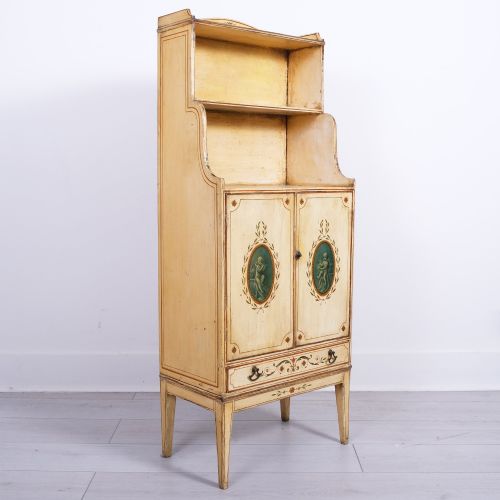
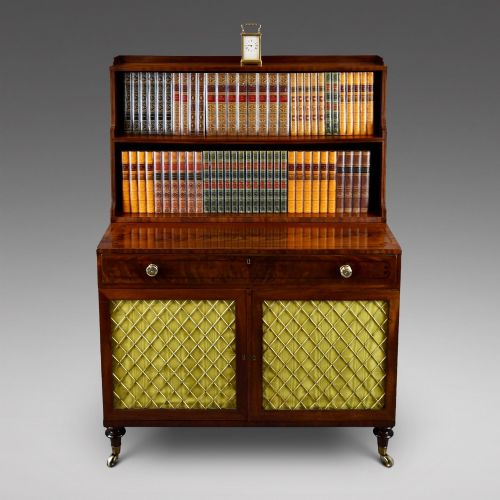
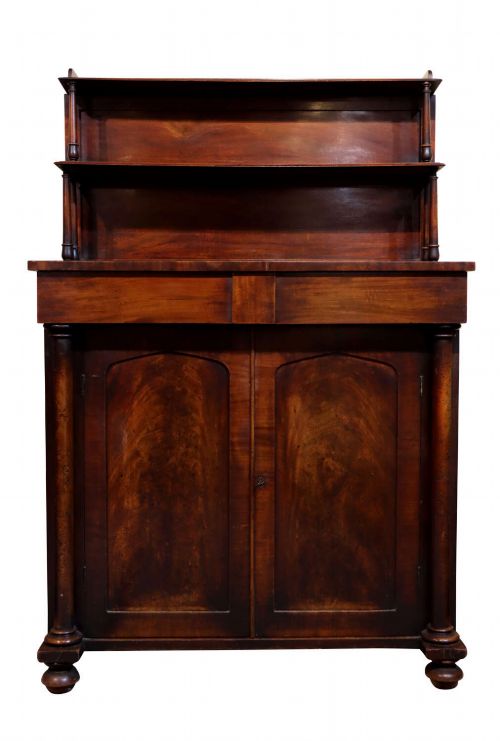
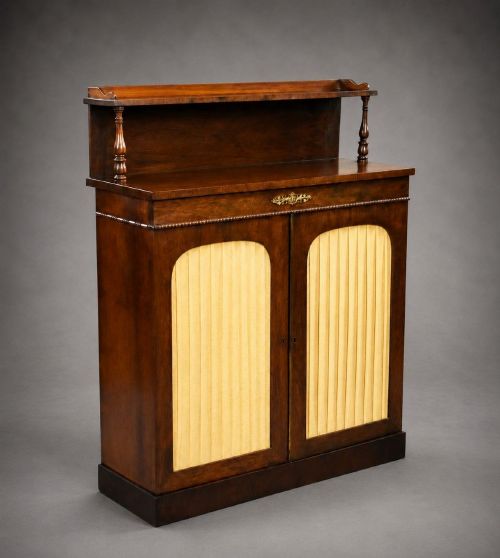
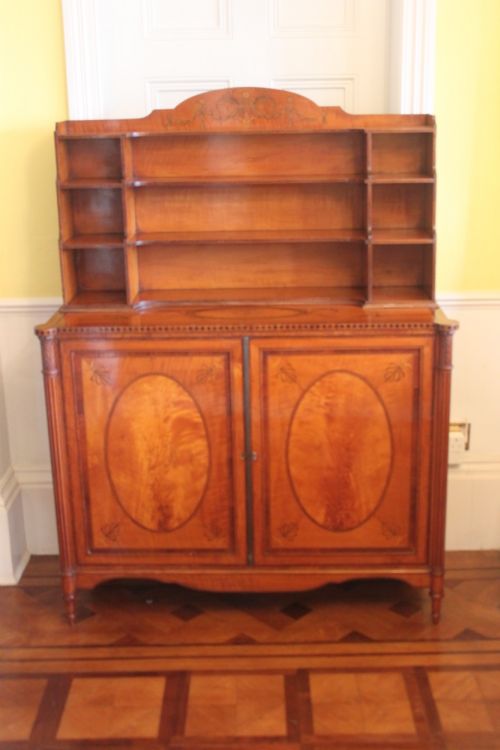
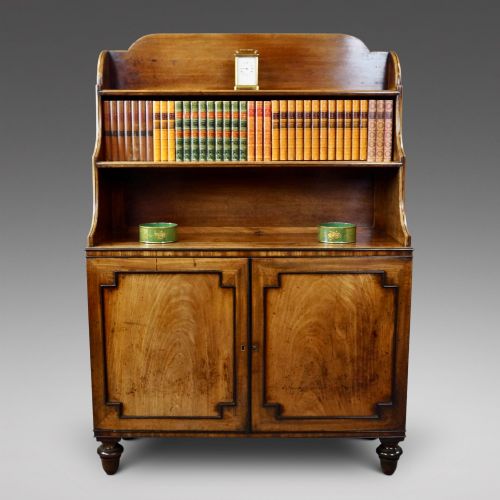

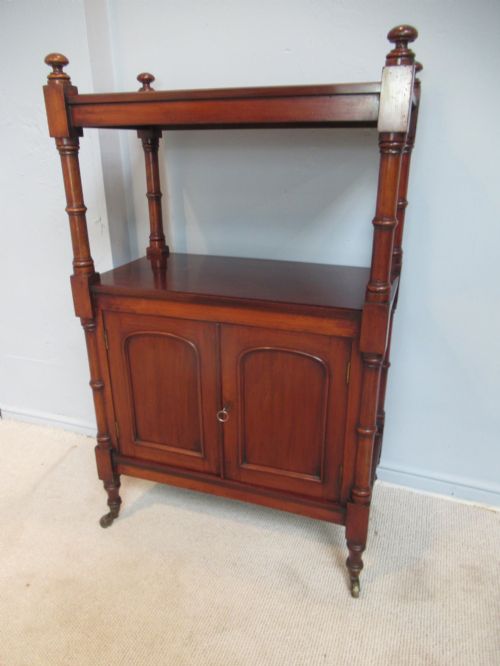
Antique Shelf Chiffonier
An antique shelf chiffonier brings practical lower storage and display shelving together in a compact footprint.
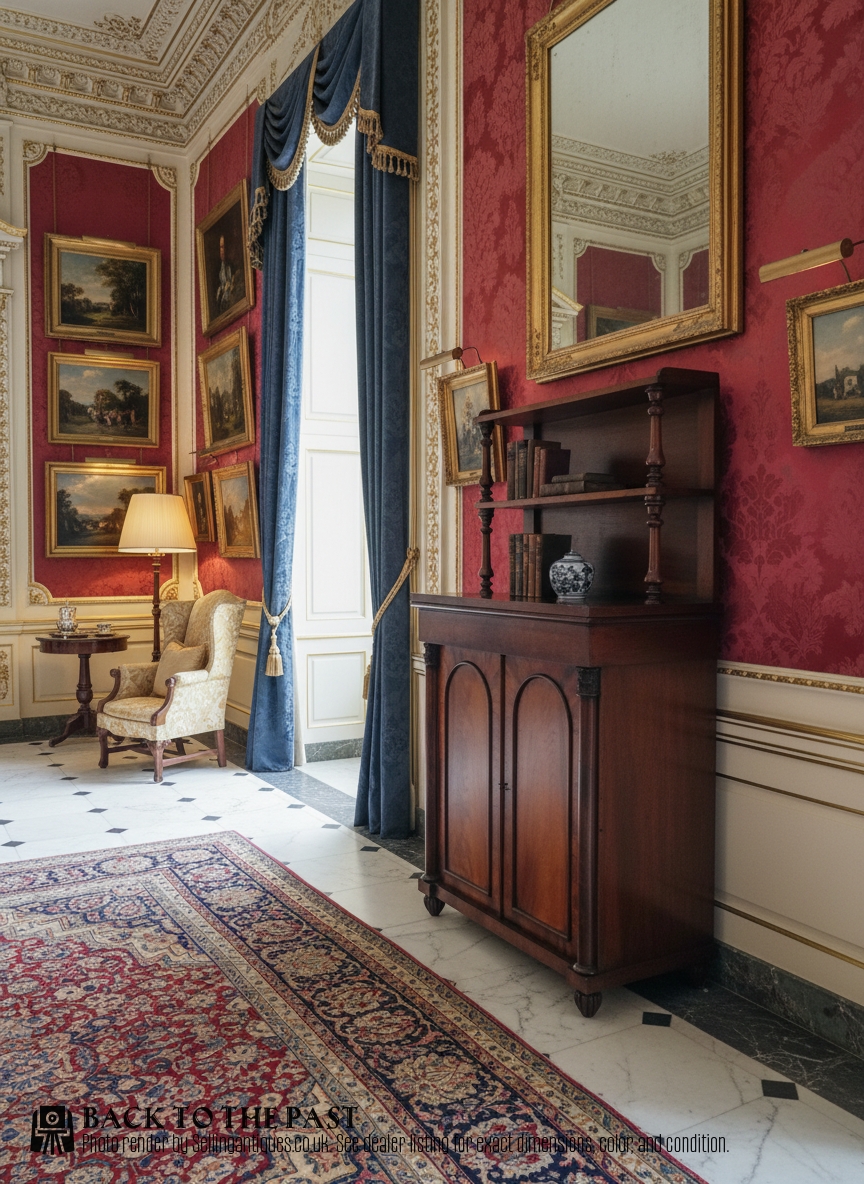
Antique Shelf Chiffonier
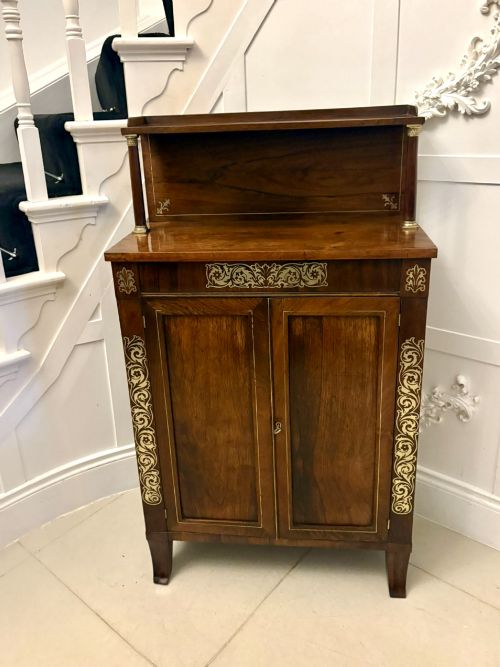
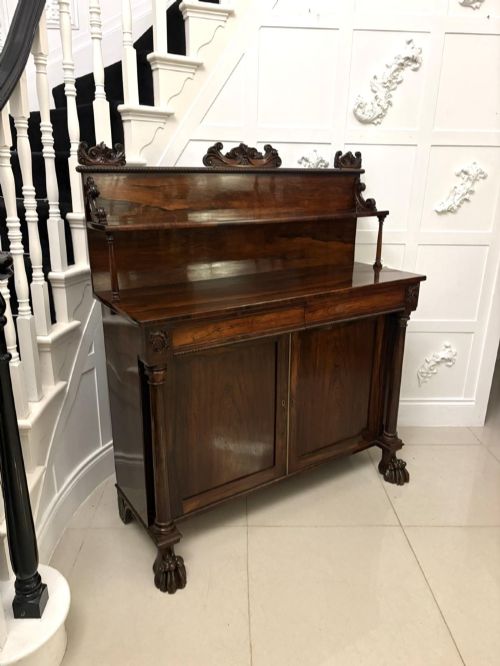
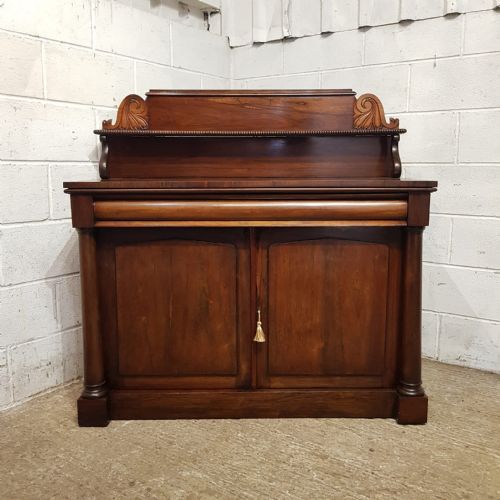
An antique shelf chiffonier combines a low enclosed cupboard base with an open shelving superstructure mounted above. These pieces serve primarily as functional side cabinets or compact bookcases designed for principal rooms.
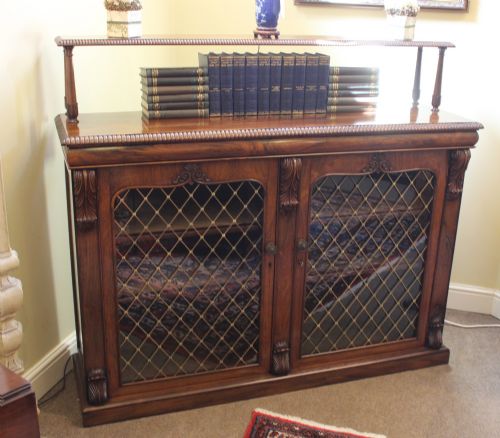
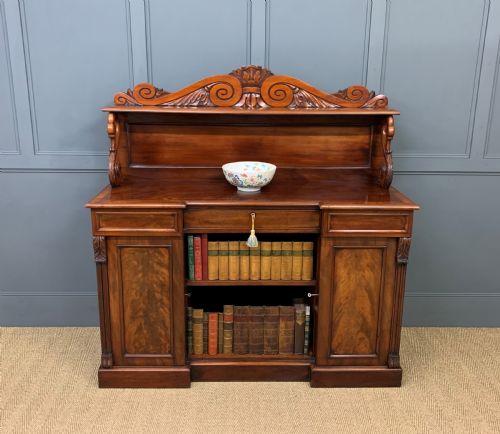
The listings span the Georgian, Regency, William IV, and Victorian periods, with standard forms appearing in mahogany, rosewood, and walnut. Many examples incorporate glazed or panelled doors beneath tiered open shelves.
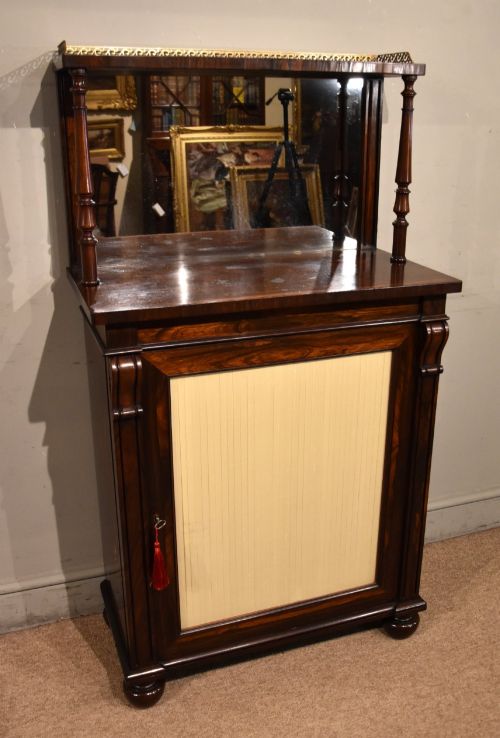
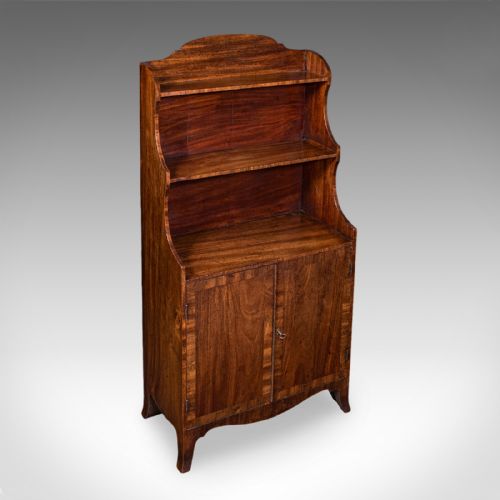
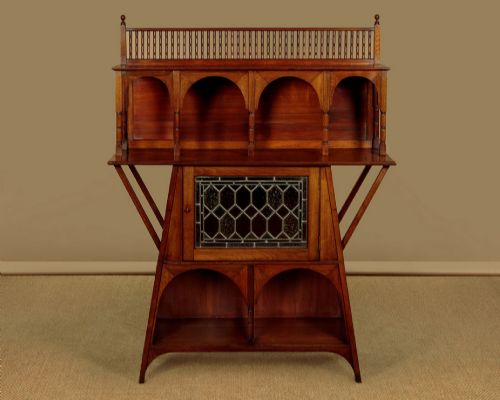
Superstructures range from simple tiered waterfall bookcases to mirror-backed architectural crests with brass gallery rails. Buyers encounter variations that bridge the gap between traditional sideboards and open display cabinets.
Materials and construction methods
Makers utilised dense hardwoods including solid mahogany, rosewood, and burr walnut, frequently applied as a fine veneer over secondary structural timbers. Flame mahogany veneer and satinwood inlay provide rich surface grain patterns across the primary facades.
Decorative detailing relies on cast brass mounts, brass inlay work, and painted panels integrated into the cupboard doors and superstructure supports. Structural joints employ traditional cabinet-making techniques suited to supporting weighted shelving tiers.
Some cabinet-makers added secret drawers tucked just beneath the top shelf for stashing love letters.
Distinctions in craftsmanship
Superior examples demonstrate meticulous timber selection, particularly in book-matched flame mahogany or burr walnut veneers across the cupboard doors. The crispness of inlaid brass work and turned wooden supports distinguishes finer workshops from standard production.
The integration of the top shelf superstructure reveals the tier of craftsmanship, where heavier architectural cornices and bevelled mirror plates indicate higher London quality. Original hardware, tight joints, and balanced proportions elevate certain pieces above simpler provincial work.
Liberty & Co.·Robert Strahan
The Antique Shelf Chiffonier Glossary
- Chiffonier
- A low cabinet with doors enclosing shelves, distinct from a sideboard by the addition of a raised shelf superstructure. It evolved during the Regency period into a versatile multi-purpose piece.
- Flame mahogany veneer
- A sliced section of mahogany timber harvested from the branch crotch, creating a distinctive flamed or feathered pattern. Cabinet-makers matched these sheets symmetrically across cupboard doors.
- Waterfall bookcase
- A tiered shelving unit where each successive shelf steps back from the one below, resembling cascading water. These open tops often surmount the enclosed cupboard base.
- Brass inlay
- Thin strips or motifs of brass fitted flush into recesses carved into the timber surface. This technique appears frequently on Regency and William IV rosewood examples.
- Superstructure
- The raised shelving or mirrored assembly positioned above the main cabinet base. It provides open display space for books and decorative objects.
Antique Shelf Chiffonier: Frequently Asked Questions
What is an antique shelf chiffonier used for?
These cabinets serve dual functions by providing concealed storage behind lower cupboard doors alongside open display space on the upper shelves. Buyers utilise them in reception rooms to display books and ceramics while keeping other items tucked away below.
The compact footprint allows the furniture to fit into smaller wall spaces where a traditional sideboard proves too long. The top shelf structure also creates a convenient focal point for decorative objects.
How do I date an antique shelf chiffonier?
Dating relies on observing the prevailing styles of timber, hardware, and structural silhouette across the Georgian, Regency, and Victorian eras. Regency and George IV examples frequently feature rosewood with brass inlay, while later Victorian versions tend towards burr walnut and mirror backs.
Secondary woods and construction marks further help confirm the period of manufacture. Examining the joinery beneath the shelves provides additional clues about the workshop traditions of the era.
Are these pieces made from solid mahogany?
Most examples utilise a combination of solid structural timbers and decorative veneers applied to the primary visible surfaces. Cabinet-makers selected woods like flame mahogany and burr walnut specifically for their rich surface grain.
The underlying carcass construction often employs secondary woods while the exterior showcases the premium figured timber. This technique prevented warping while maximising the visual impact of expensive grain patterns.
Where should I place a chiffonier at home?
A chiffonier suits a dining room, hallway, or drawing room where wall space benefits from both surface display and lower storage. The shallow depth keeps the piece from projecting too far into the floor plan.
Placing the cabinet against a clear wall allows the upper shelf structure and any integrated mirror back to reflect light around the interior. They pair naturally alongside traditional seating and occasional tables.