


Mahogany Display Sideboard
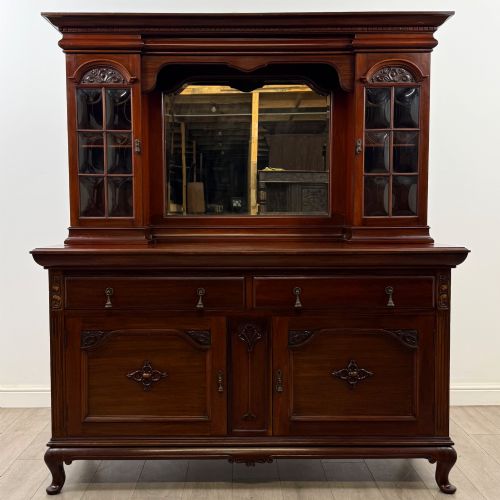
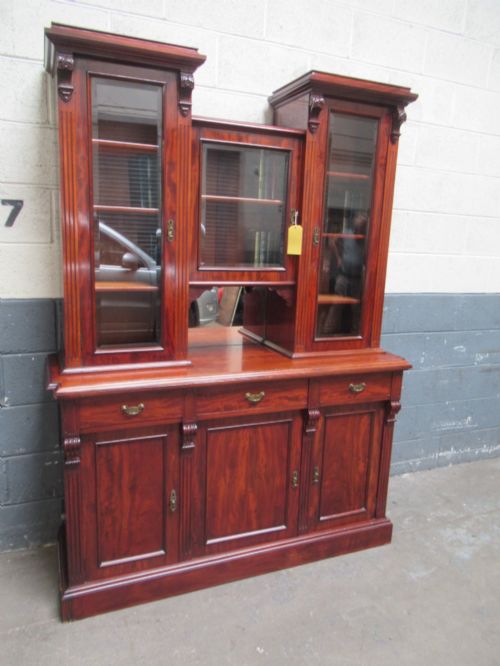
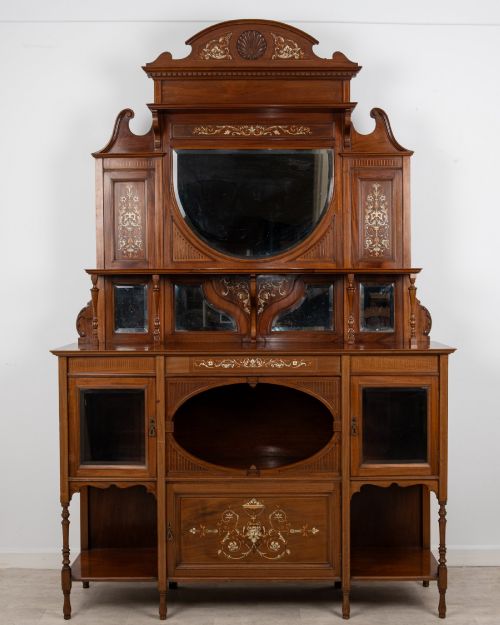
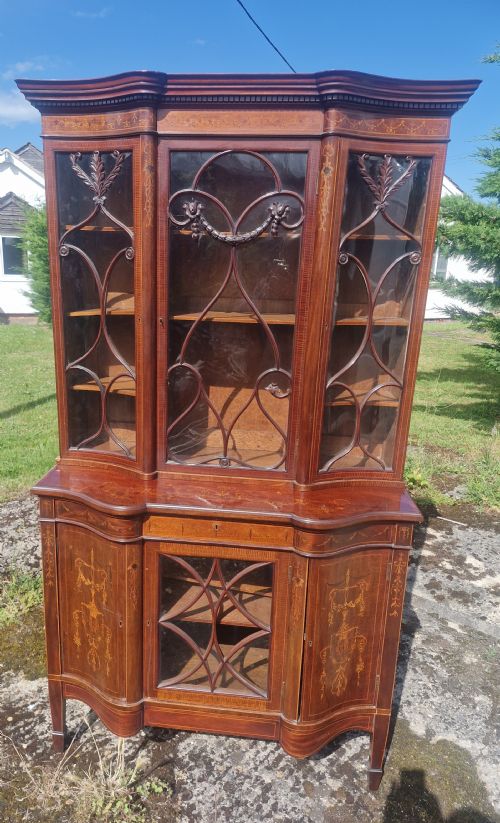
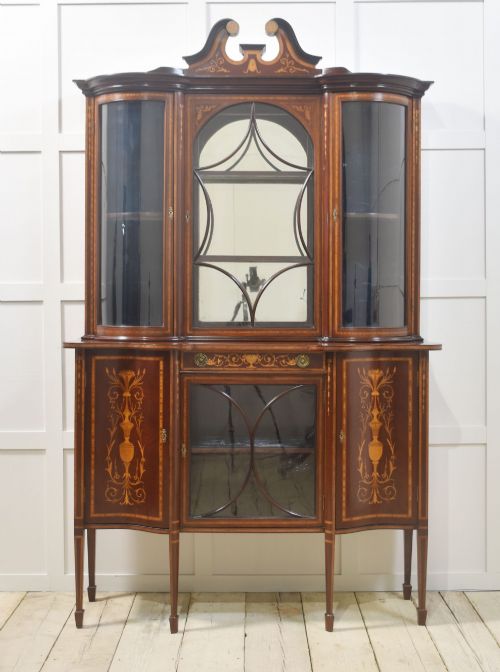
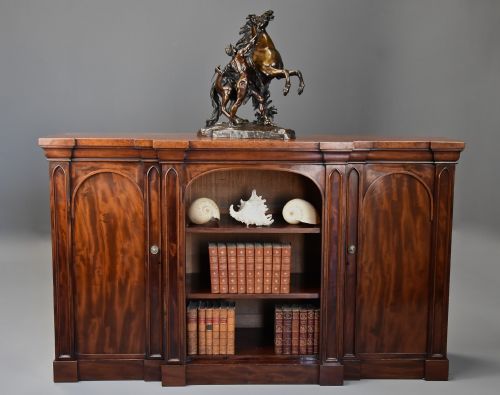
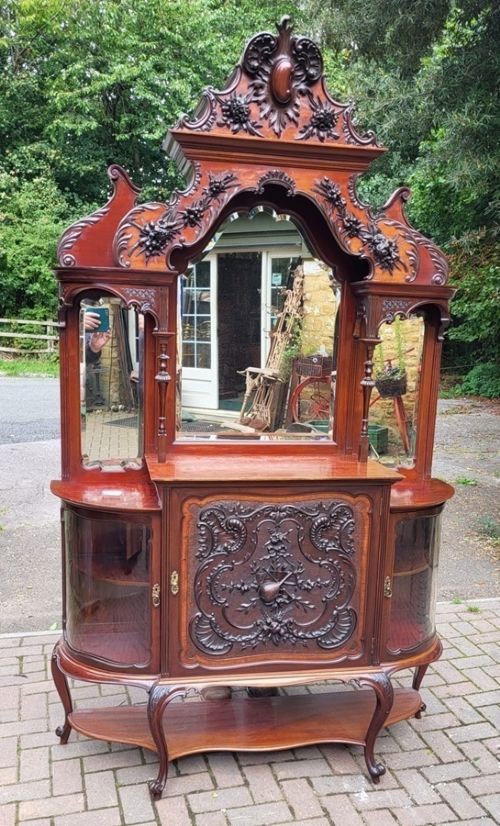
A mahogany display sideboard combines the storage of a traditional base with upper glazed sections, offering a practical display surface for dining rooms.
Mahogany Display Sideboard
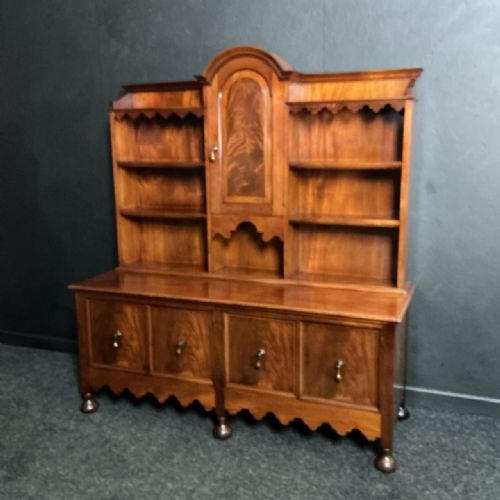
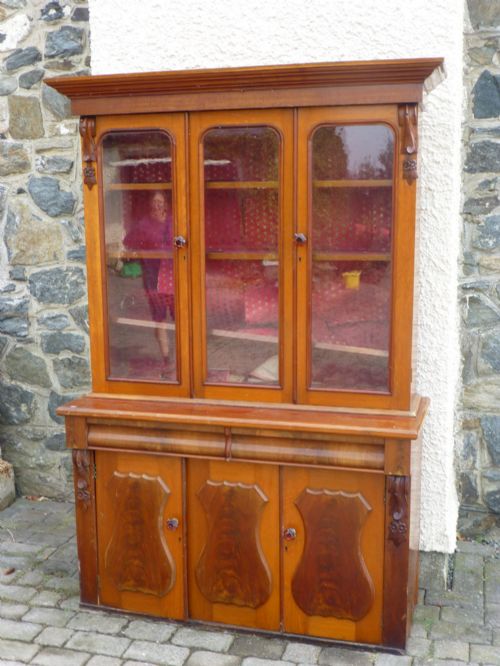
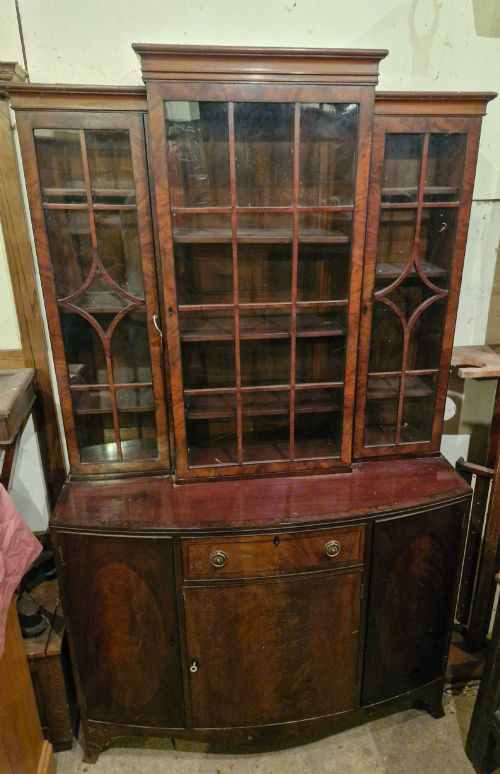
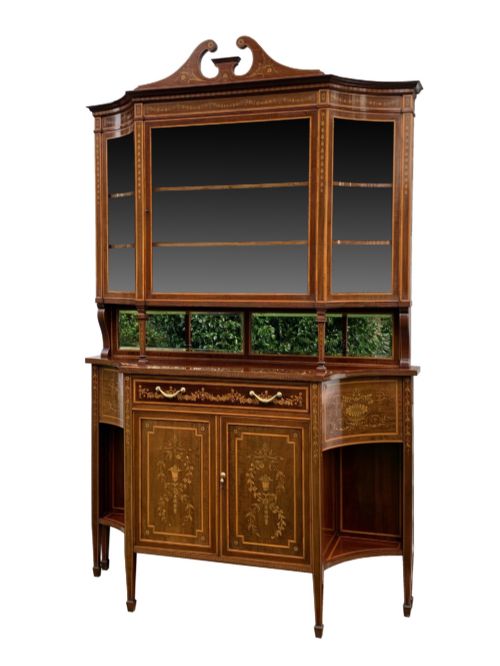
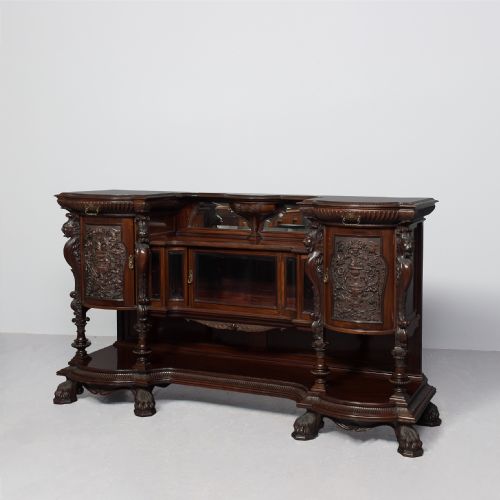
A mahogany display sideboard bridges the gap between a closed storage base and an upper display space, appearing frequently in Victorian, Edwardian, and Regency iterations across these listings. Buyers seek out these dual-purpose forms to house books, ceramics, and glassware while keeping them visible behind glass panels.
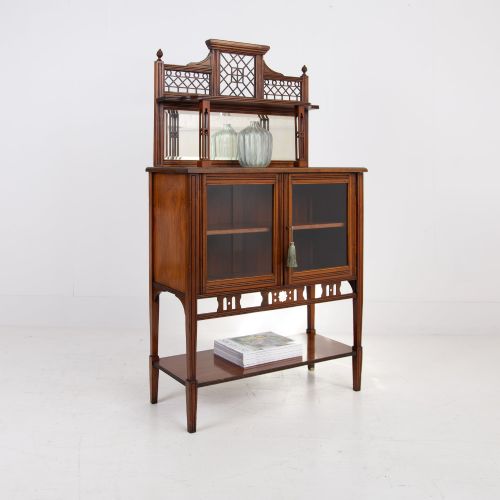
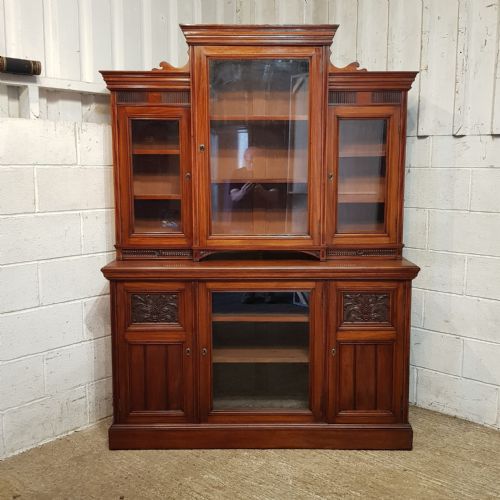
The pieces on this page span several decades of design, including Sheraton Revival, Chippendale Revival, and Arts and Crafts interpretations. Sideboards, chiffoniers, breakfront bookcases, and glazed cabinets share this architectural lineage, often incorporating mirrors and tiered shelving into the upper superstructure.
How they were made
Cabinet makers utilised solid mahogany and flame mahogany veneers over secondary timbers, often accentuating the primary wood with satinwood inlay and marquetry detail. Brass hardware, such as drop handles and key escutcheons, punctuate the dark timber surfaces alongside bevelled mirror glass.
Construction techniques include breakfront framing, hand-cut dovetails for drawer boxes, and slender glazing bars dividing the glass panels of upper cabinet doors. Carved ornamentation, from late Victorian relief work to Regency linear mouldings, defines the structural borders of the timber.
One late Victorian cabinet claims potential utility for fishermen and culinary enthusiasts alike.
What varies in quality
The hierarchy of quality rests on the selection of timber veneers, such as richly figured flame mahogany, and the crispness of inlaid satinwood banding. Finer examples display meticulous hand-carving and balanced proportions across breakfront structures rather than relying solely on applied factory mouldings.
Internal joinery standards separate standard production from master workshop output, visible in the snug fit of glazed doors and the integrity of internal shelving. Maker attribution, through stamped signatures or paper labels, further distinguishes notable cabinet makers from anonymous workshop output.
Edwards & Roberts·Gillows·Shapland & Petter·Lamb of Manchester
The Mahogany Display Sideboard Glossary
- Breakfront
- A piece of furniture whose central section projects forward from the flanking outer sections. This architectural arrangement creates depth and visual rhythm across large bookcases and sideboards.
- Chiffonier
- A low sideboard or cabinet, typically featuring enclosed cupboards beneath a drawer or surface shelf. Originating in the Regency period, these pieces served dining and drawing rooms alike.
- Marquetry
- Decorative patterns formed by inserting thin veneers of various woods, metals, or shells into a wooden surface. Sheraton Revival pieces frequently employ this technique for floral or geometric motifs.
- Vitrine
- A glass-fronted cabinet or display case designed specifically for showing porcelain, curiosities, or silver. These pieces rely on clear or leaded glass panels held by slim timber frames.
- Flame mahogany
- Timber cut from the fork of the mahogany tree, yielding a distinctive ripple pattern resembling flickering flames. Cabinet makers placed these highly figured veneers prominently on drawer fronts and door panels.
Mahogany Display Sideboard: Frequently Asked Questions
What is a mahogany display sideboard used for?
These cabinets serve as dual-purpose furniture for both storing dining accessories and displaying collections behind glass doors. The upper sections hold glassware and books while the lower cupboards conceal tableware.
Historically, they anchored the dining room or library, providing a surface for serving food alongside secure storage for household silver.
How do I date a mahogany display piece?
Dating relies on observing structural characteristics, hardware styles, and decorative motifs associated with specific periods like Regency or Edwardian. Regency pieces often feature clean architectural lines, whereas Edwardian items display lighter satinwood inlay.
Secondary timbers inside drawers and the method of glass manufacture also offer clues to the decade of construction.
How do I care for antique mahogany furniture?
Maintain a stable indoor humidity and keep the wood away from direct sunlight and heat sources to prevent veneer lifting. Regular dusting with a soft, dry cloth preserves the finish without building up wax residues.
Avoid commercial silicone sprays, opting instead for traditional beeswax applied sparingly when the timber appears dry.
What is the difference between a chiffonier and a sideboard?
A chiffonier is generally smaller and lower than a traditional sideboard, often featuring a small shelf or mirror superstructure above a cupboard base. They evolved during the early nineteenth century for compact urban rooms.
Sideboards tend to be wider structures designed primarily for large dining rooms to assist with food service and linen storage.