



Regency Transferware Plate
A regency transferware plate brings the deep cobalt scenes of early nineteenth-century printing directly to the table.

Regency Transferware Plate
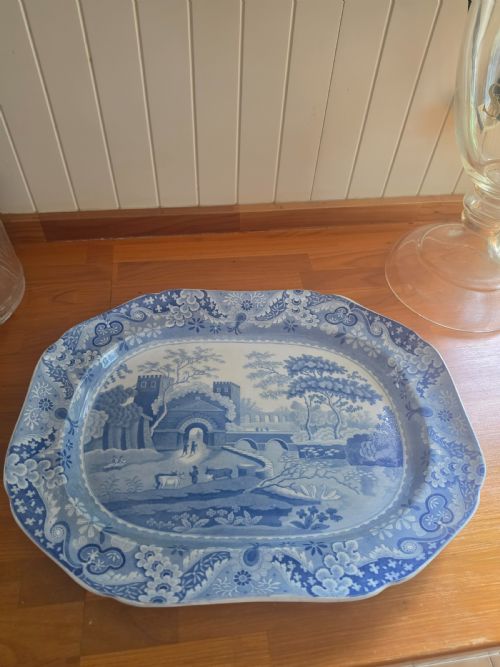
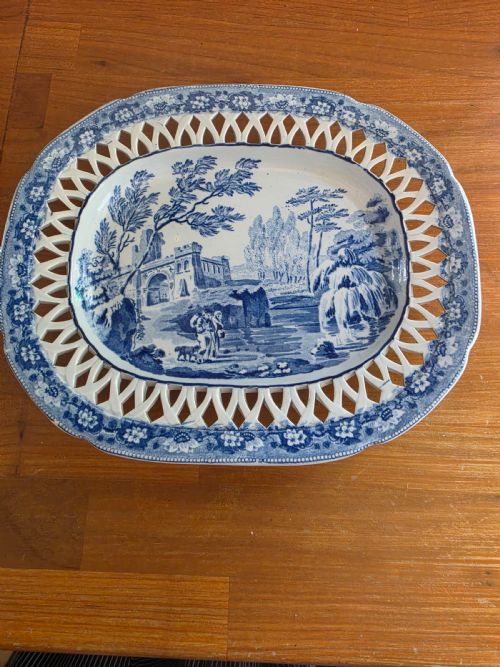
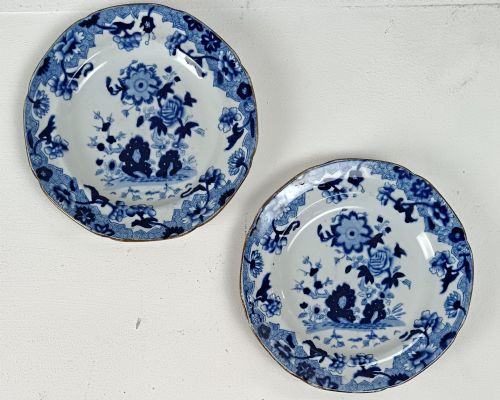
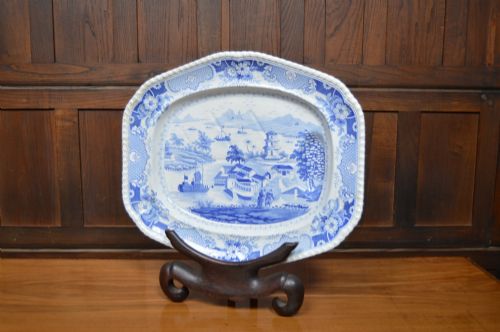
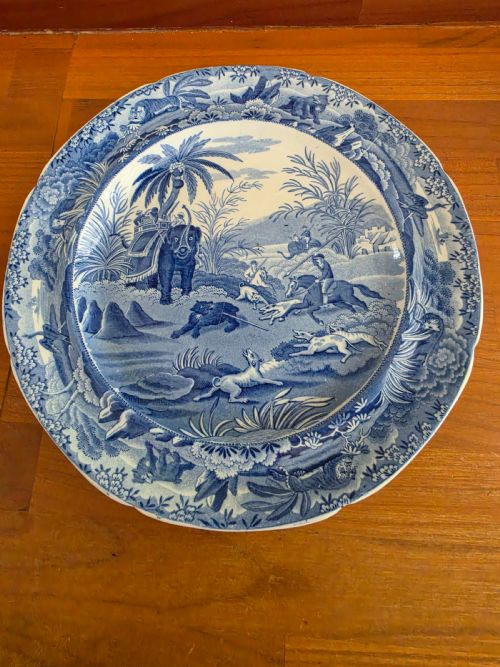
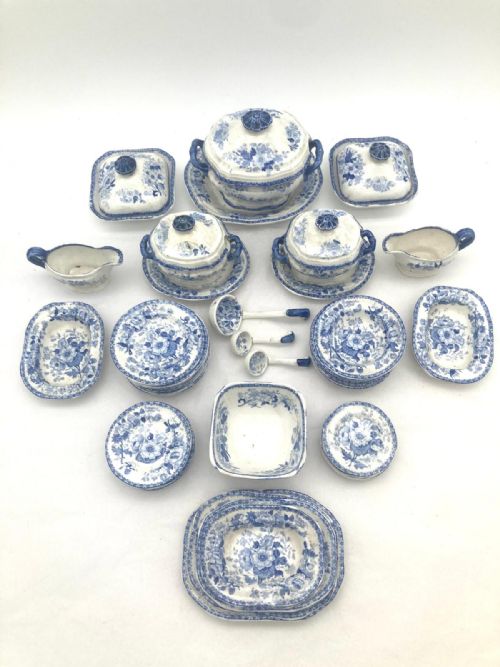
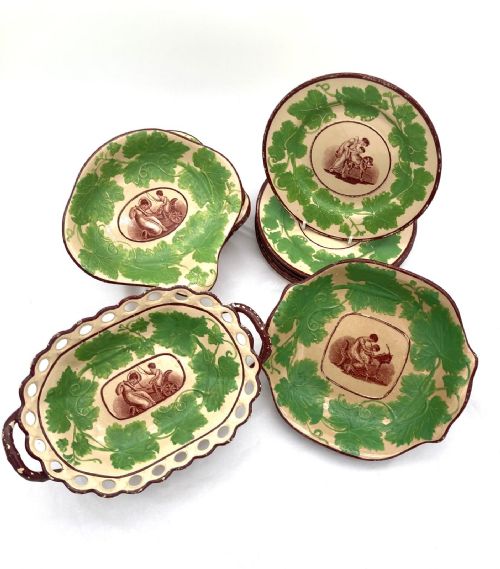
A regency transferware plate is a ceramic vessel decorated by applying a paper print from an engraved copper plate onto the biscuit body before glazing and firing. These pieces span the early nineteenth century, featuring British, topographical, and Chinoiserie subjects printed in dense blue oxide. The selection here ranges from small tea plates and dessert services to large meat platters and chargers.
Most examples you encounter on this page date from the Georgian and Regency eras, particularly around the eighteen-twenties, alongside related nineteenth-century production. Forms vary from standard dining plates to specialised items like drainers and child's service pieces. The makers span major Staffordshire potteries and independent works recorded in the titles.
Materials and production
Potters formed these items using earthenware, pearlware, and ironstone, applying a transparent ceramic glaze over the transferred cobalt design. The transfer printing technique allowed intricate pictorial scenes - such as architectural views, floral sheets, and narrative subjects - to be replicated with consistency across large services.
After the printed paper transferred the pigment onto the ceramic body, pieces underwent high-temperature kiln firing to fuse the blue oxide beneath the glossy finish. Ironstone and pearlware bodies provided durable white surfaces that made the dark blue transfer lines stand out sharply.
Several plates depict dramatic historical narratives, including the death of a bear and an Egyptian mausoleum.
Gradations in quality
Quality in these ceramics rests upon the crispness of the engraved transfer and the stability of the glaze during firing. Well-executed pieces display sharp pictorial lines without blurring or smudging where the paper met the curved ceramic surface.
The sophistication of the pattern and the renown of the factory also dictate the standing of a piece within the range. Heavier ironstone bodies and refined pearlware display superior material density compared to simpler earthenware alternatives.
Spode·Davenport·Minton·Mason·Wedgwood
The Regency Transferware Plate Glossary
- Transferware
- Pottery decorated by transferring a printed design from an engraved copper plate onto the ceramic surface using paper and cobalt pigment. This method revolutionised nineteenth-century ceramic production by enabling detailed pictorial repeats.
- Pearlware
- A refined earthenware developed in the late eighteenth century featuring a subtle bluish glaze that pooled in crevices to mimic Chinese porcelain. It served as a primary body for transfer-printed wares during the Regency period.
- Ironstone
- A dense, heavy ceramic paste patented in the early nineteenth century for its durability and resistance to chipping. Factories utilised it extensively for large meat platters and heavy-duty tableware.
- Charger
- A large decorative plate intended for ceremonial use, display, or serving rather than daily dining. These substantial pieces frequently showcase complex topographical or narrative transfer prints.
- Drainer
- A perforated ceramic insert designed to sit inside a meat platter to keep joints of meat elevated above accumulated juices. They share the same blue and white transfer patterns as their matching platters.
Regency Transferware Plate: Frequently Asked Questions
How do I date a regency transferware plate?
Dating relies on the ceramic body type, the shade of the blue transfer, and any registry marks or impressed factory stamps found on the underside. Pearlware bodies and specific pictorial themes often point toward the eighteen-twenties.
Comparing the border patterns and printed titles against known factory archives helps narrow the production window further.
Were these plates used for daily dining?
While many standard plates saw regular service at the nineteenth-century dinner table, larger chargers and specialised serving platters were reserved for formal occasions and grand meals. Smaller tea plates and child's service items served domestic and educational functions.
The durability of ironstone and glazed earthenware meant they could withstand regular handling during family meals.
What is the difference between earthenware and ironstone?
Ironstone is a much denser, heavier, and harder ceramic body formulated to resist chipping and heavy wear, whereas standard earthenware is softer and more porous. Ironstone became the preferred material for large meat platters and heavy serving pieces.
Both bodies accepted the blue transfer print beneath the glaze, but ironstone provided a sturdier foundation for large-scale dining services.
How should I display blue and white transferware?
Plates and platters are frequently displayed using wall-mounted wire hangers, plate rails, or dedicated stands on stable surfaces. Ensuring the display method securely supports the weight of heavier ironstone pieces is essential for safe exhibition.
Keeping them away from direct, prolonged sunlight helps protect the glazed ceramic surfaces over time.