

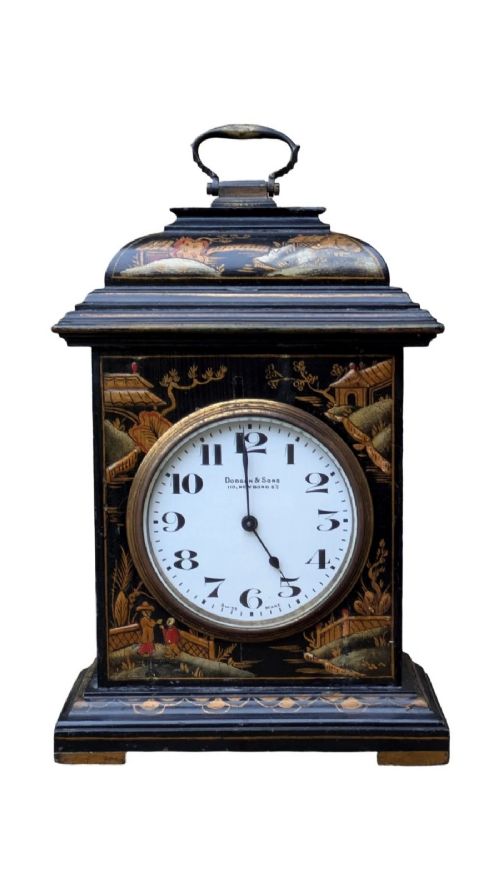
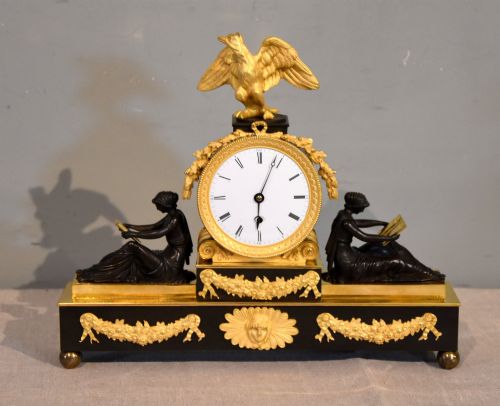
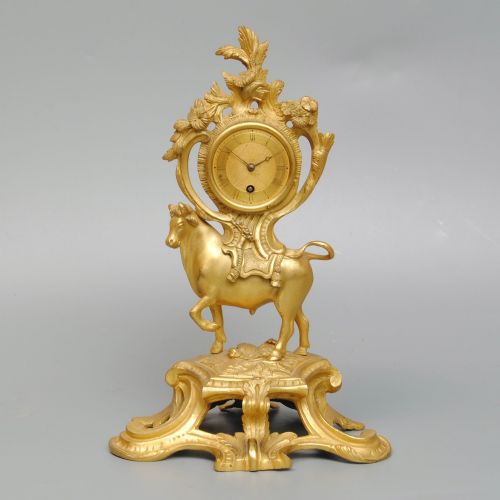


Regency Style Mantel Clock
These regency style mantel clock pieces bring together period brass, gilt bronze and mahogany forms that anchor a room with steady mechanical precision.
Regency Style Mantel Clock
A regency style mantel clock brings together classic forms and mechanical timepieces from the Regency period, the nineteenth century, and later revivals. Buyers encounter bracket clocks, balloon cased mantel clocks, and figural ormolu designs featuring motifs from French Empire to Egyptian Revival styles.
The selection ranges from small table clocks and library timepieces to substantial marble clock sets and fusee movements housed in mahogany or pollard oak. Pieces span centuries of design, with makers from London workshops creating single and double fusee movements for domestic and library use.
Materials and Construction
Craftsmen built these timepieces using brass, gilt bronze, ormolu, and patinated bronze, often mounting them upon marble bases or housing them within mahogany and pollard oak cases. Silvered dials and glass bezels protect the inner mechanisms while adding a refined finish to the exterior.
Internal construction relies on single and double chain fusee movements, which regulate the power from the mainspring to ensure accurate timekeeping. Metal components receive detailed chasing and gilding, combining structural cabinetry with intricate metalwork.
Regency Style Mantel Clock Retail Price Guide 2026
Typical asking prices for regency style mantel clock among the pieces listed under this phrase on Sellingantiques today, from the lower quarter to the upper quarter. They describe what is for sale here now, not the wider market.
Listings feature materials spanning mahogany, marble, brass, gilt bronze, glass, patinated bronze, ormolu, and enamel across multiple centuries.
Assessing Quality
Quality separates through the crispness of the gilt bronze chasing, the selection of figured woods like pollard oak, and the complexity of the fusee movement. Superior examples exhibit harmonious proportions and finely engraved dials signed by established London makers.
The integration of figural elements, such as lions, goats, and palm trees, demonstrates the sculptor's skill in handling patinated and gilded metals. Lesser pieces show softer casting details and simpler timber selection without the architectural refinement found in top-tier workshop productions.
Baetens London·John Barwise of London·Paul Philip Barraud·Pennington of Camberwell·James Murray London·Thwaites and Reed
The Regency Style Mantel Clock Glossary
- Fusee
- A conical pulley used in clockwork to maintain an even pull on the movement as the mainspring unwinds. This mechanism ensures consistent timekeeping throughout the duration of the wind.
- Ormolu
- Gilt bronze produced by applying a mercury and gold amalgam to a bronze object before heating to drive off the mercury. The technique creates a rich golden surface finish on decorative mounts.
- Bracket clock
- A portable household clock designed originally to sit on a wall bracket to aid acoustics and visibility. Later versions function as table or mantel clocks.
- Silvered dial
- A brass clock face treated with a silver compound to produce a bright, legible surface for engraved numerals. It provides contrast against gilded hands and bronze bezels.
- Timepiece
- A clock that indicates the time without striking the hours or quarters. These movements focus purely on the escapement and gear train for continuous running.
Regency Style Mantel Clock: Frequently Asked Questions
How do fusee movements work?
A fusee movement uses a conical gear to equalize the decreasing power of an uncoiling mainspring. This keeps the driving force constant as the clock runs down.
Such mechanical refinement ensures high precision across days or weeks between windings.
Where should I place a mantel clock?
These clocks sit securely on firm mantelpieces, sideboards, or dedicated wall brackets away from direct sunlight and dampness. Stable placement protects the delicate pendulum and escapement from disturbance.
Ensure the surface is level so the tick remains even and the movement does not bind.
How do I wind my clock?
Winding requires a matching key inserted into the dial arbor, turned gently until resistance indicates full tension. Care must be taken not to overwind the spring.
Following the correct rotational direction for fusee or spring-driven movements preserves the internal brass teeth.
What is the difference between a clock and a timepiece?
A clock strikes bells or gongs to announce the hours, while a timepiece simply displays the visual hours and minutes without a striking train. Timepieces often feature simpler gear layouts.
Both styles employ similar escapements and fusee mechanisms for regulating time.