


Antique Empire Clock
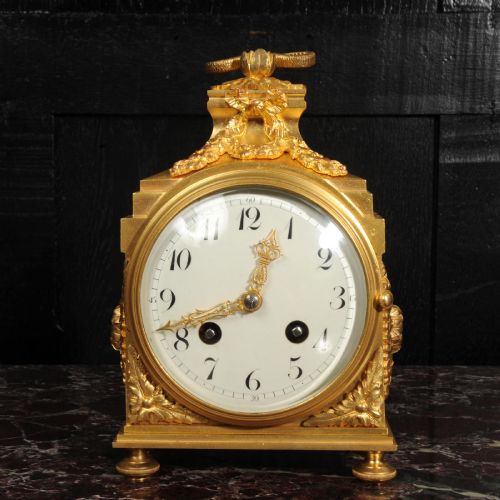
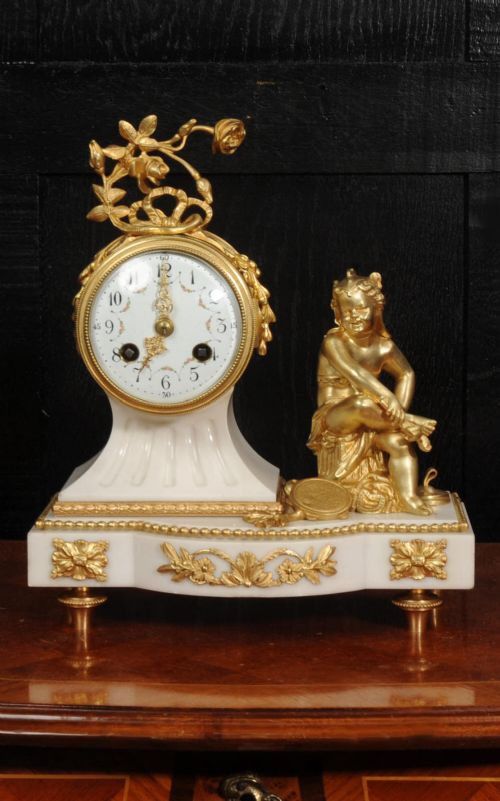
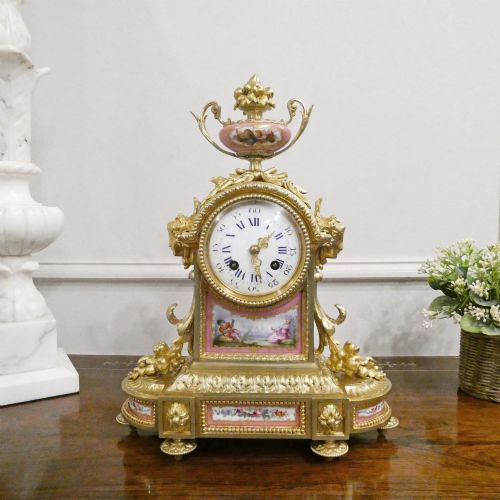
An antique empire clock brings heavy gilt bronze, classical myth and precise French mechanics into a room.
Antique Empire Clock
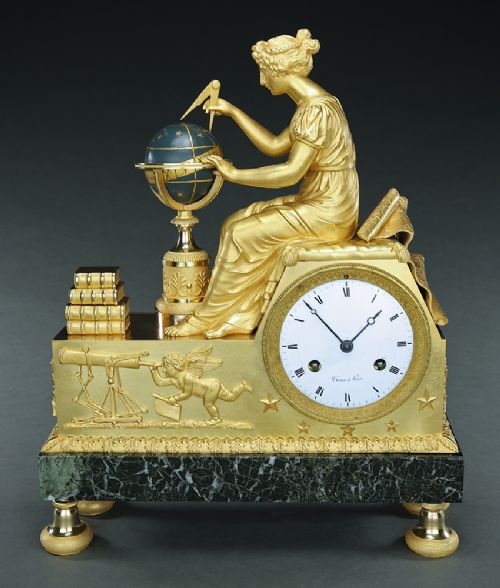
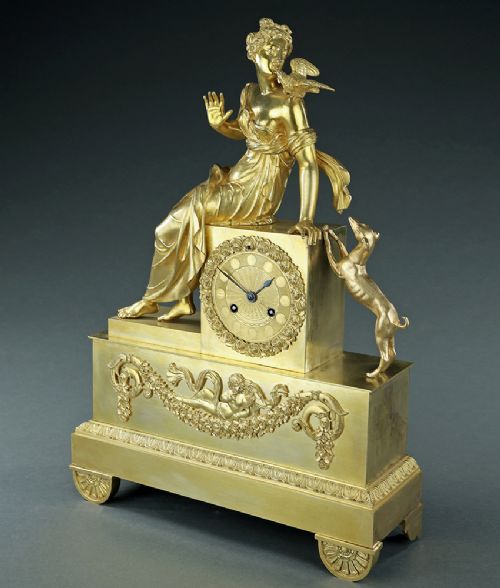
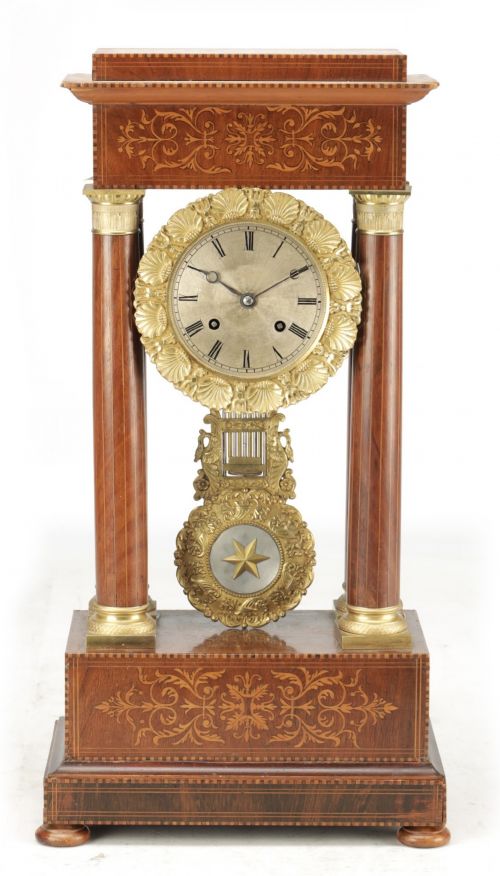
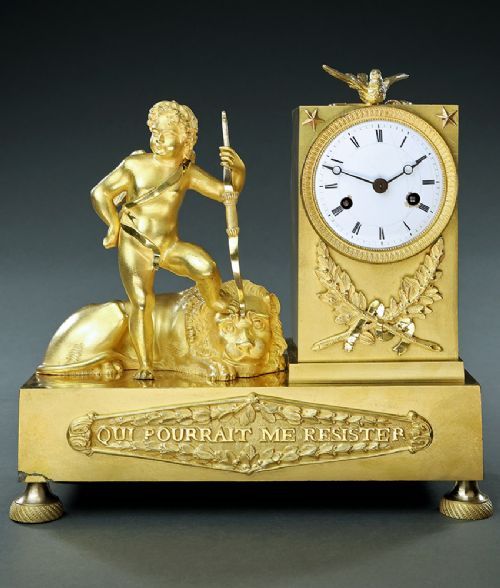
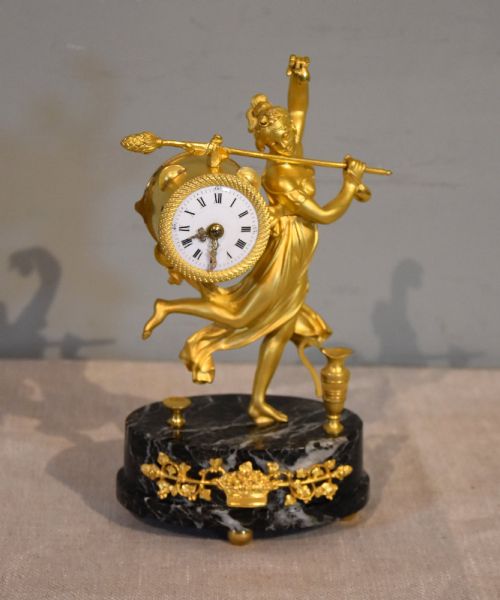
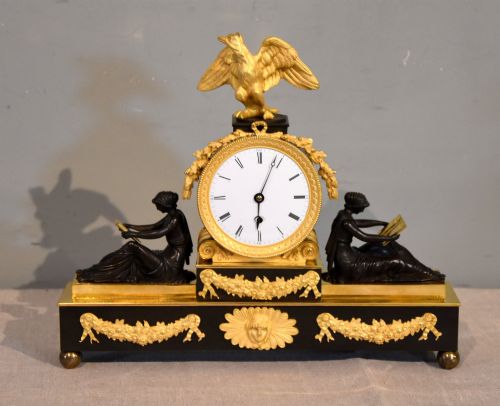
When you search for an antique empire clock, you look for formal French mantel pieces and portico designs rooted in the nineteenth century, the Regency era and the late eighteenth century. These objects typically take the form of mantel clocks, garniture sets with matching candelabras, and architectural portico models supported by slender columns.
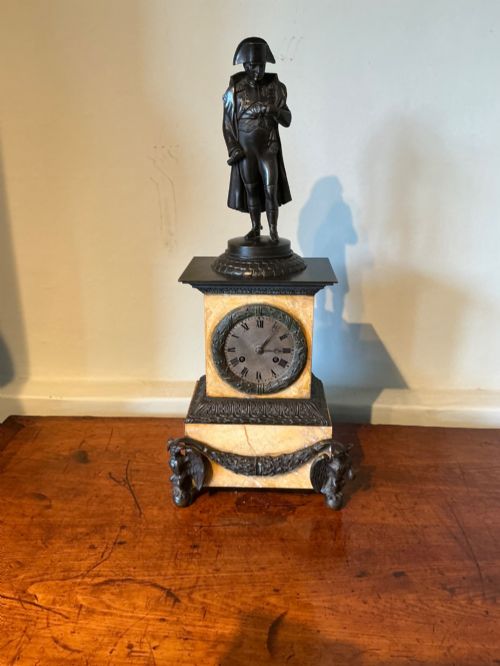
The domestic versions most commonly met on this page span the nineteenth century, including Victorian imports and earlier French workshop pieces from the eighteen-seventies and eighteen-eighties. They draw on classical subjects, displaying figures of Napoleon, Juno, and allegorical themes such as love and fidelity.
Makers and houses such as Japy Freres, Siffel and Cartier, and Canaillor of Paris produced these works in gilt bronze, ormolu, patinated bronze and marble. Alongside French output, British regency brass mantel timepieces and wall clocks also appear in the record.
Materials and Construction
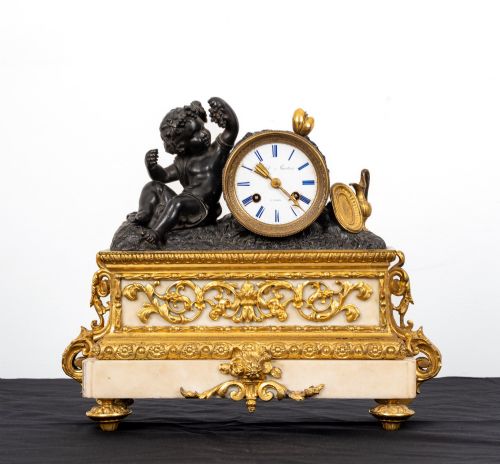
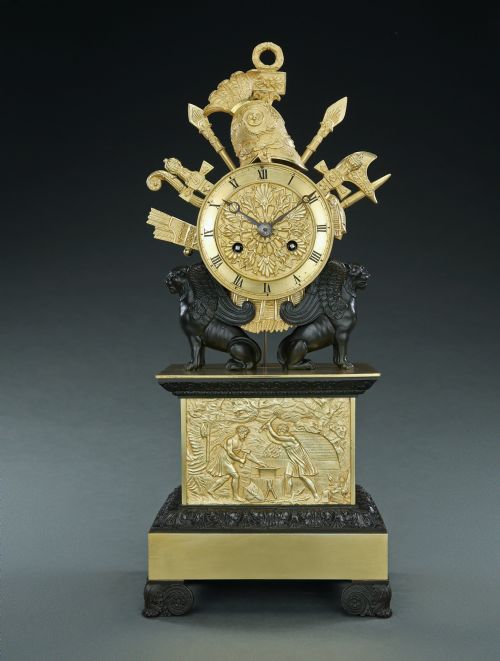
Foundry work relied on cast bronze, brass and heavy ormolu, finished with mercury gilding or gold plating to give a deep metallic lustre. The cast metal mounts were chased by hand to sharpen details on figures, military trophies and foliate borders.
Cases combined these metals with white marble, green marble, sienna marble, mahogany, rosewood and ebonised wood, often framing enamel dial faces with delicate numerals. Portico models utilised architectural columns of wood or marble supporting a central movement drum.
Time moves under the watchful gaze of Napoleon, Juno, and cherubs holding trophies of war.
Distinctions in Quality
The definition in the cast bronze separation distinguishes standard production from superior work. Crisp, hand-chased relief on ormolu figures and deep, even patination indicate skilled foundry output, whereas soft, blurred casting details show commercial shortcuts.
The harmony of materials determines the success of a piece. Heavy marble bases paired with substantial, fire-gilded bronze mounts and signed movements represent the high end of the range, while simpler timber cases and unsigned movements sit below.
Japy Freres·Siffel and Cartier·Canaillor of Paris·Rodier·Berger Paris
The Antique Empire Clock Glossary
- Ormolu
- Gilt bronze produced by applying a mercury and gold amalgam to cast brass or bronze before firing. This technique creates a rich golden surface characteristic of French decorative arts.
- Portico clock
- A mantel clock featuring an architectural frame with vertical pillars supporting the movement housing. They often date to the early nineteenth century and Charles X periods.
- Garniture
- A matching set consisting of a central clock flanked by decorative side pieces such as candelabras or vases. These sets formed symmetrical centrepieces for nineteenth-century mantelpieces.
- Pendule d'Officier
- A portable military or travel style of mantel clock equipped with a carrying handle on top. They frequently date to the early nineteenth century.
- Patinated bronze
- Darkened or chemically treated bronze surface used to create contrast against bright gilt ormolu mounts. It highlights sculptural clothing and figures.
Antique Empire Clock: Frequently Asked Questions
How do you wind these clocks?
Winding requires a dedicated key inserted into the dial face holes to tension the internal springs. Care must be taken not to overwind the movement.
Many period pieces utilise separate arbours for the timekeeping train and the striking train that sounds the hours.
What is a clock garniture?
A clock garniture is a matched decorative set comprising a central mantel clock and two matching side ornaments. These side pieces are frequently candelabras or decorative urns.
Placed together on a mantelpiece, they create a balanced neoclassical display characteristic of nineteenth-century interiors.
How do you identify an empire style?
Empire style draws directly from classical Roman, Greek and Egyptian motifs, favouring military trophies, laurel wreaths and figures from classical mythology. The visual language is formal, symmetrical and monumental.
Materials lean heavily on contrasting ormolu and patinated bronze mounted upon coloured marble bases.