
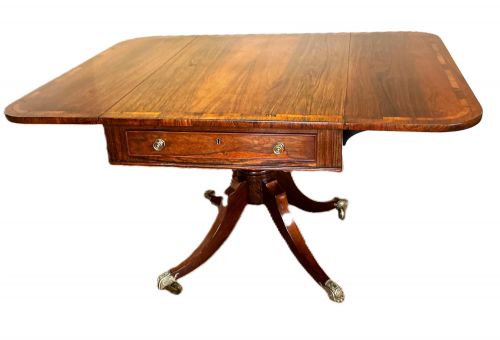
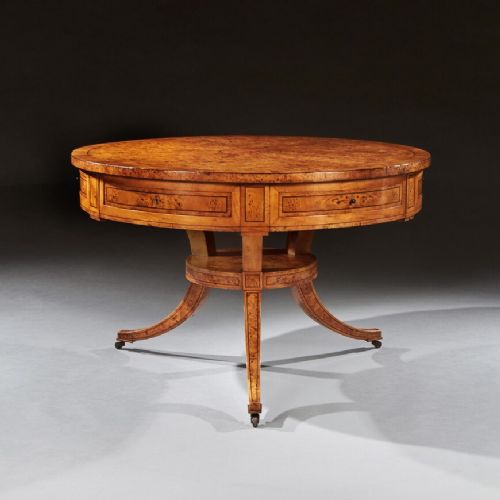
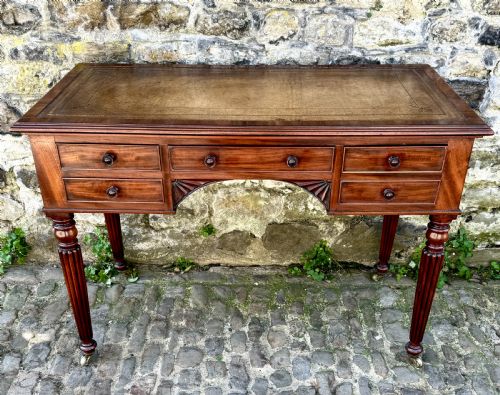
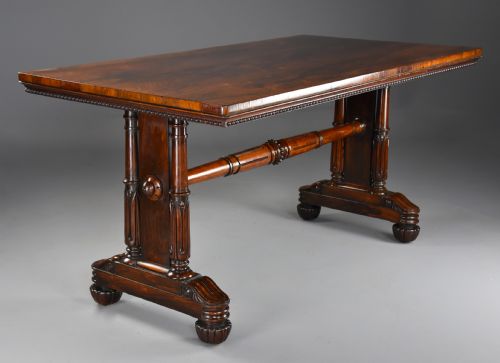
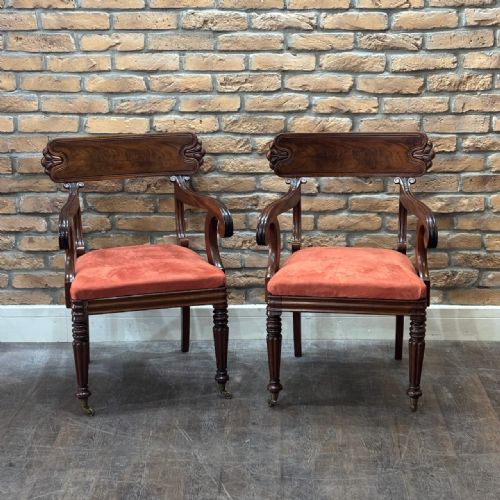


Regency Style Library Desk
Regency style library desks and writing tables bring structured elegance and rich mahogany surfaces to a study or reading room.
Regency Style Library Desk
A regency style library desk serves as a functional workspace and a commanding centrepiece, drawing on forms produced during the early nineteenth century and later revival periods.
Buyers searching this phrase encounter freestanding writing tables, drum tables with rotating tops, and partner desks designed to be used from both sides.
The pieces listed here span the Georgian, Regency, William IV, and Victorian eras, alongside twentieth-century interpretations in mahogany, rosewood, and ebonised wood.
Materials and construction
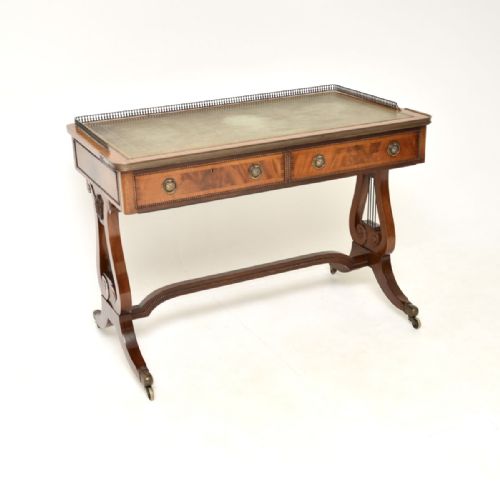
Cabinet makers utilised dense timbers such as mahogany and rosewood, often pairing them with contrasting satinwood inlay or brass mounts.
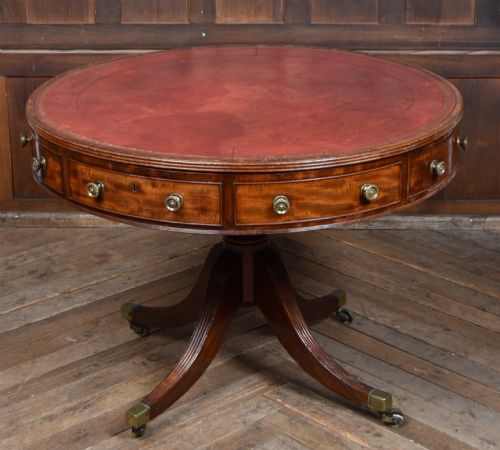
Working surfaces frequently incorporate inset leather, velvet, or fabric writing panels, bordered by subtle gold tooling.
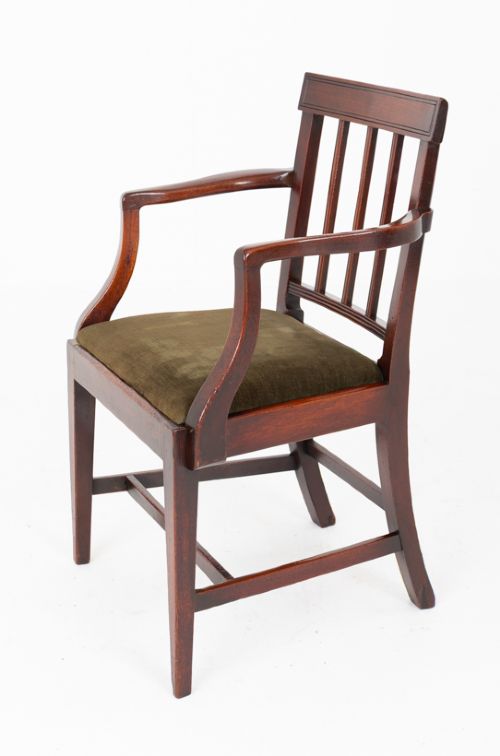
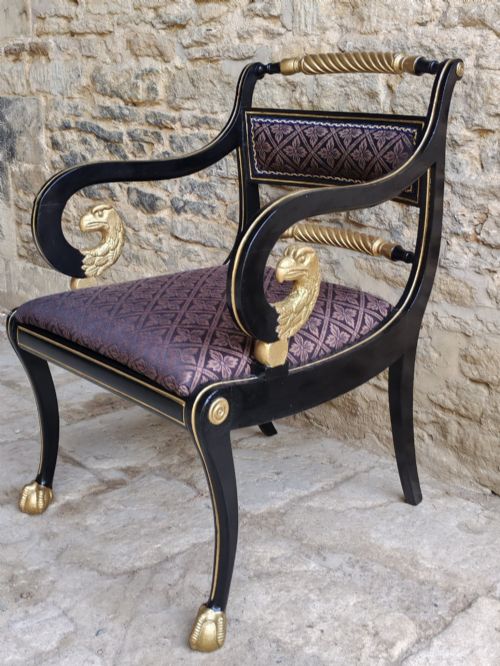
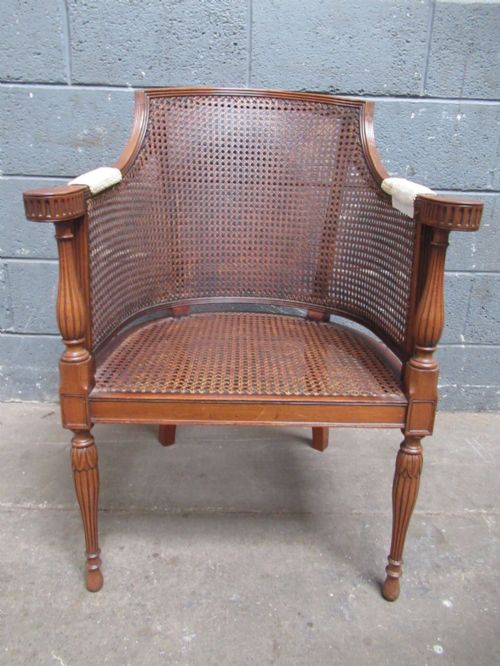
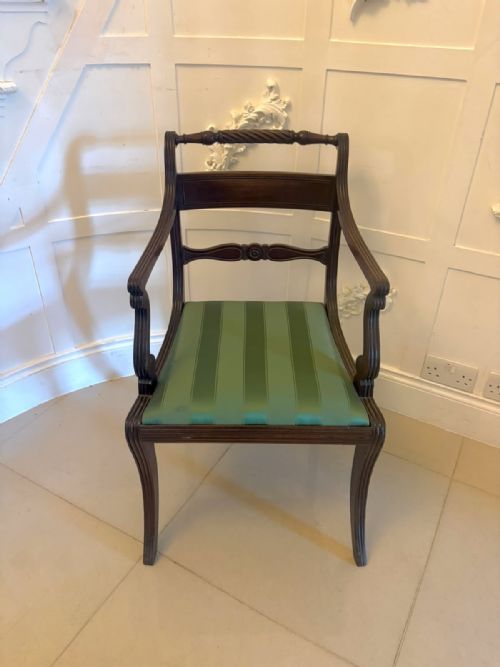
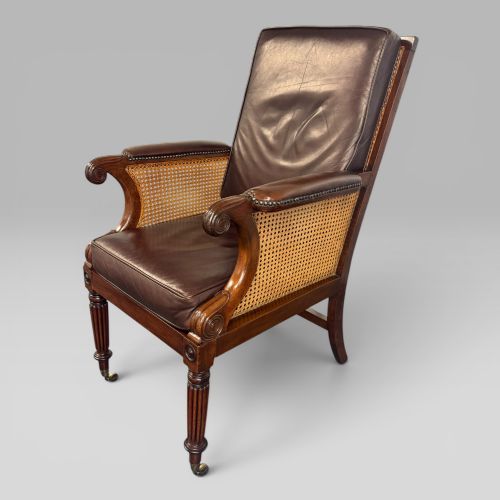
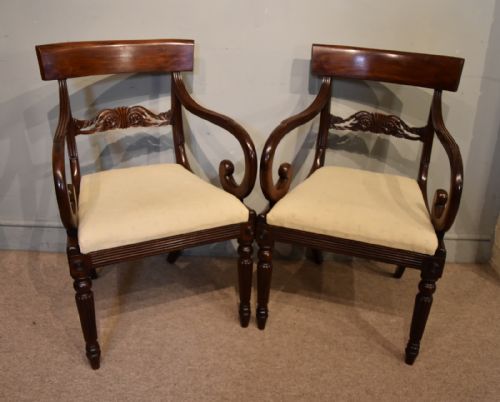
Structural support comes from turned legs, pedestal bases, or sabre legs, occasionally incorporating cane seating and bronze details.
Several library tables include concealed plan drawers deep enough to hide architectural blueprints or forgotten love letters.
Distinctions in quality
Quality rests in the selection of timber grain, the precision of drawer dovetailing, and the crispness of turned or carved wooden details.
The integration of secondary timbers and the weight of cast brass fittings separate standard production pieces from fine workshop output.
Gillows·Richard Bridgens·William Trotter
The Regency Style Library Desk Glossary
- Drum table
- A circular library table containing drawers around the perimeter of the frieze, often set on a central pedestal with pillar supports.
- Partners desk
- A large double-sided desk allowing two people to work face-to-face with drawers and cupboards on both sides.
- Bergère
- An enclosed upholstered armchair with exposed wooden framing and cane sides, frequently associated with library seating.
- Frieze
- The horizontal band beneath the tabletop that typically houses one or more writing drawers.
- Sabre leg
- A concave, outward-curving leg tapering towards the foot, characteristic of early nineteenth-century seating.
Regency Style Library Desk: Frequently Asked Questions
How do I use a drum table in a modern study?
A drum table works well placed in the centre of a room rather than pushed against a wall, offering access to its perimeter drawers from any angle.
Its circular shape softens straight architectural lines while providing a functional surface for reading materials or a laptop.
How do I care for leather desk inserts?
Leather writing surfaces require occasional treatment with specialist neutral leather balms to prevent drying and cracking.
Keep liquids away from the gold-tooled borders to preserve the metallic leaf stamping.
Are these desks suitable for daily computer work?
Many period and revival desks accommodate modern technology, provided the kneehole height and drawer clearances match your seating needs.
Measure the chair clearance carefully before pairing a vintage armchair with a shallow frieze drawer.