

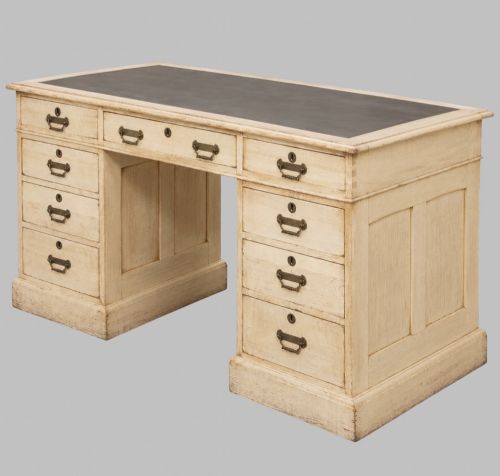
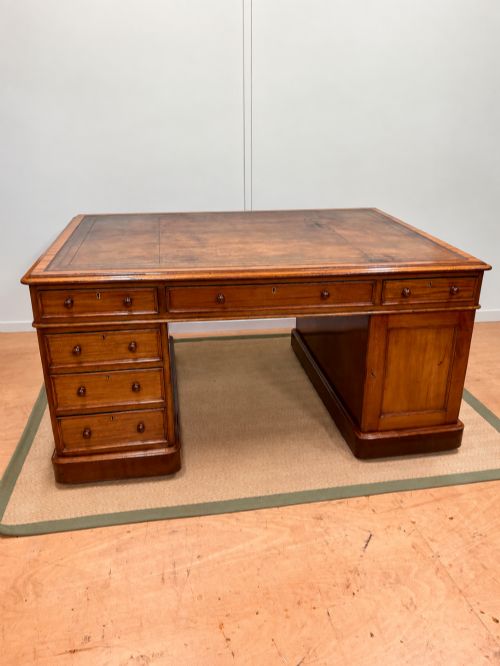
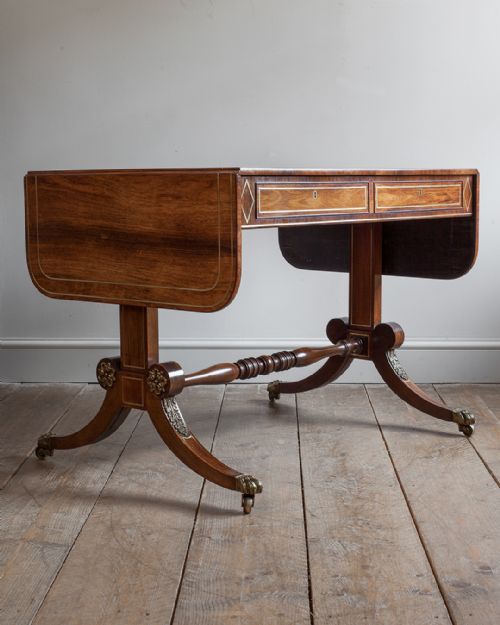

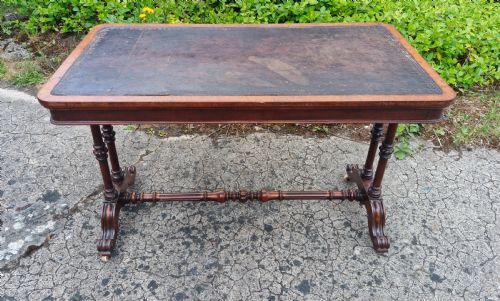


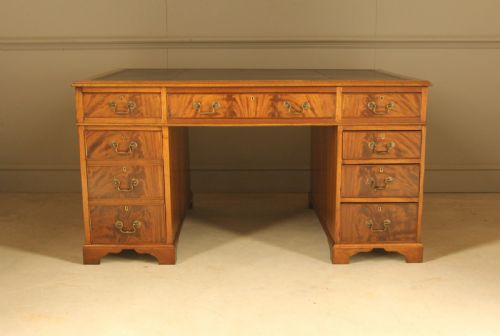


Twin Pedestal Library Table
A twin pedestal library table is a substantial piece built for heavy study, and you will find examples here in mahogany, rosewood, and oak from the Georgian, Regency, and Victorian periods.
Twin Pedestal Library Table
When you search for a twin pedestal library table, you are looking at large, freestanding desks and writing tables supported by two distinct banks of drawers or columns. The pieces on this page span the eighteenth, nineteenth, and early twentieth centuries, with a strong representation of Victorian and Regency forms.
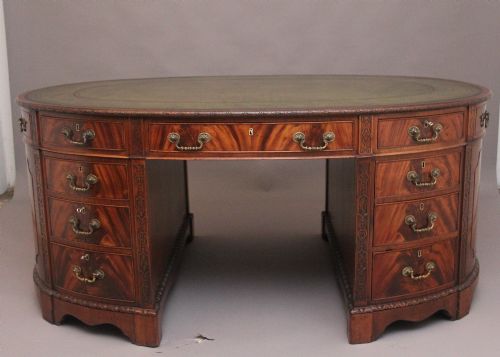
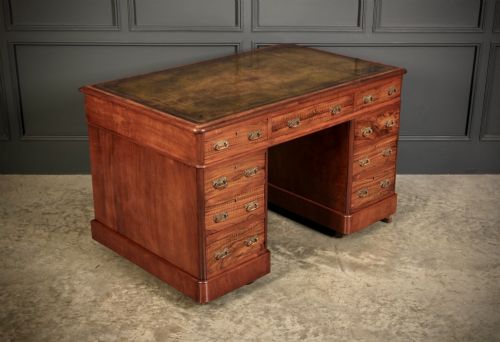
Most examples you meet are configured as partners desks or writing tables, often featuring inset leather writing surfaces and drawers on both sides. Timber selections across these listings include mahogany, burr walnut, rosewood, and oak, reflecting the formal domestic and institutional libraries they originally inhabited.
How they were made
Cabinet makers constructed these tables using dense hardwoods such as mahogany and rosewood, frequently enhanced by decorative veneers like burr walnut or flame mahogany. Secondary timbers provided sturdy internal framing for the twin pedestals and large writing surfaces.
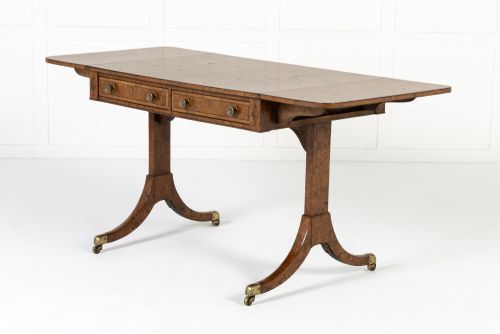
Surface ornamentation relied on precision craftsmanship, incorporating brass inlay, satinwood stringing, and hand-tooled leather writing inserts. Drop-leaf sofa tables and library desks utilised traditional joinery to support hinged flaps and freestanding multi-sided configurations.
Twin Pedestal Library Table Retail Price Guide 2026
Typical asking prices for twin pedestal library table among the pieces listed under this phrase on Sellingantiques today, from the lower quarter to the upper quarter. They describe what is for sale here now, not the wider market.
Listings feature woods spanning mahogany, rosewood, walnut, burr walnut, oak, and satinwood across multiple centuries.
What varies in quality
The distinction between standard utility pieces and top-tier examples rests in the selection of timber figures and the crispness of internal drawer construction. Finer pieces demonstrate careful matching of flame mahogany or burr walnut veneers across all visible surfaces.
Design sophistication also sets individual pieces apart, seen in specialised details like cut brass inlay, satinwood crossbanding, and lyre-ended supports. The presence of documented workshop attribution or fully finished double-sided pedestal arrangement elevates the stature of the table.
Gillows of Lancaster·Hampton & Son's
The Twin Pedestal Library Table Glossary
- Partners desk
- A large double-sided desk designed for two people to work opposite one another, featuring matching banks of drawers in both pedestals.
- Sofa table
- A small rectangular table with drop leaves on either side, traditionally placed in front of a sofa during the Regency and Victorian eras.
- Crossbanding
- A border of veneer applied around the edges of a tabletop with the grain running perpendicular to the main panel.
- Leather top
- An inset writing surface of coloured leather, frequently tooled with gilt and blind stamps around the perimeter.
- Stringing
- A thin inlay of contrasting wood used to outline drawers, legs, and tabletops for decorative definition.
Twin Pedestal Library Table: Frequently Asked Questions
What is a twin pedestal library table?
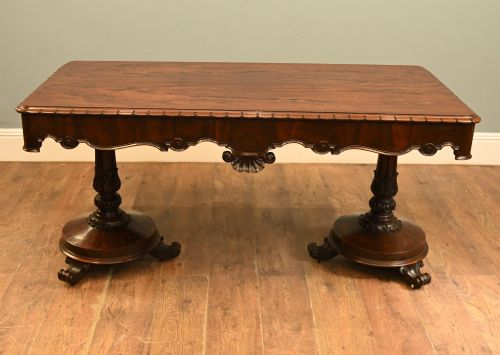
A twin pedestal library table is a heavy freestanding desk or centre table supported by two separate columns or banks of drawers. They were designed for grand rooms and libraries to provide an expansive writing surface.
These pieces typically feature finished backs and sides so they can sit in the middle of a room rather than against a wall. The configuration allows workspace access from multiple sides.
What woods were used for these tables?
Cabinet makers predominantly used mahogany during the Georgian and Victorian periods, often selecting flame or curl variations for visual depth. Rosewood and walnut also appear frequently in Regency and mid-Victorian examples.
Secondary timbers such as oak and pine provide structural stability inside the pedestals and drawer linings. Inlays often incorporate satinwood, ebony, and brass.
Where should I place a library table?
Library tables work best as freestanding centrepieces in studies, large home offices, or living rooms. Because many are finished on all sides, they do not need to anchor against a wall.
Ensure you leave enough clearance around the pedestals to pull out chairs and open lower drawers comfortably. Their substantial proportions require a room with adequate floor space.