

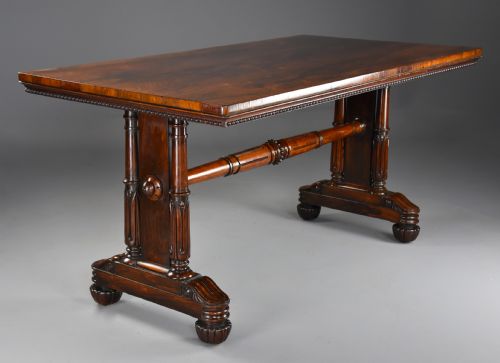


Regency Rosewood Library Desk
A regency rosewood library desk brings warmth and architectural presence to a room, offering a functional workspace rooted in nineteenth-century cabinet-making.
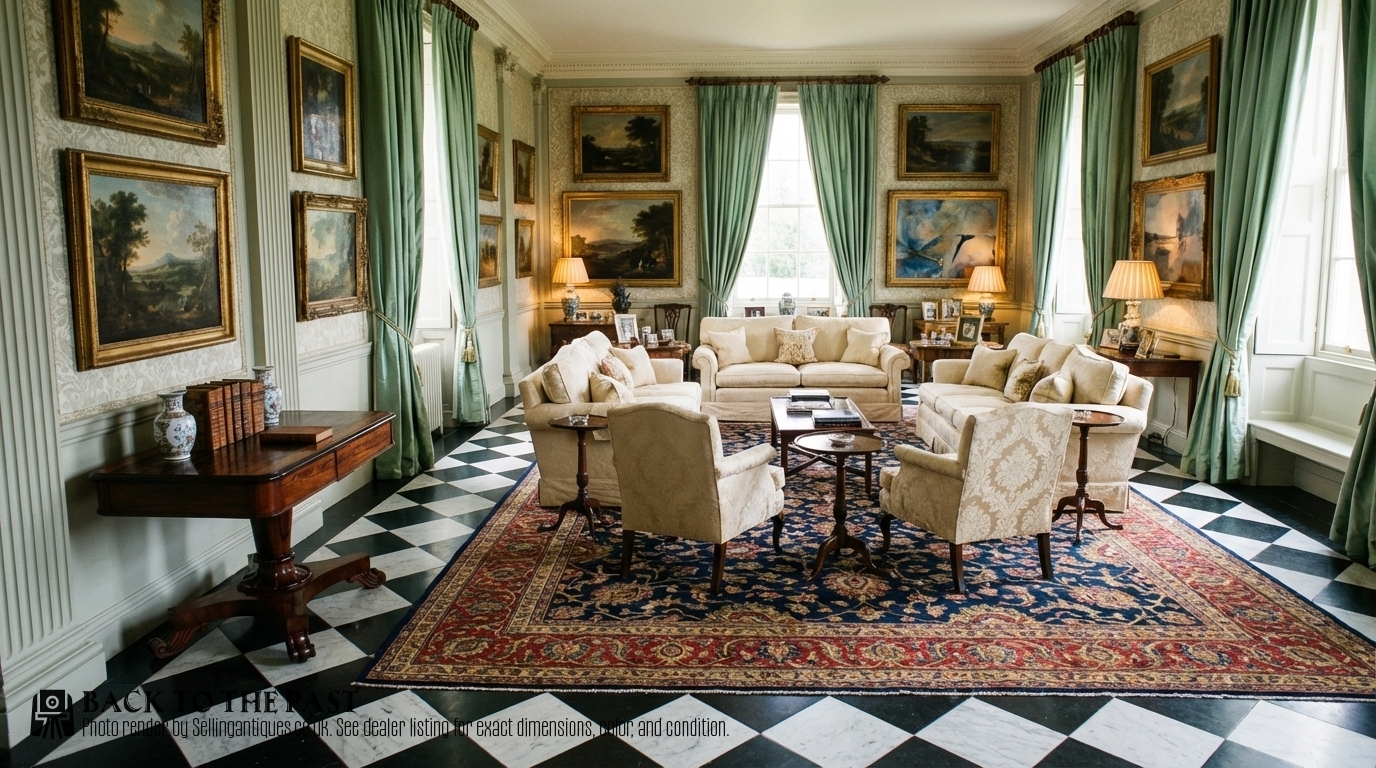
Regency Rosewood Library Desk
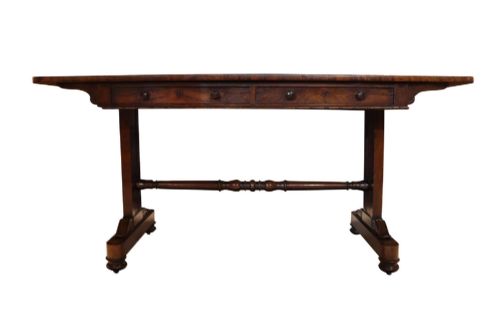
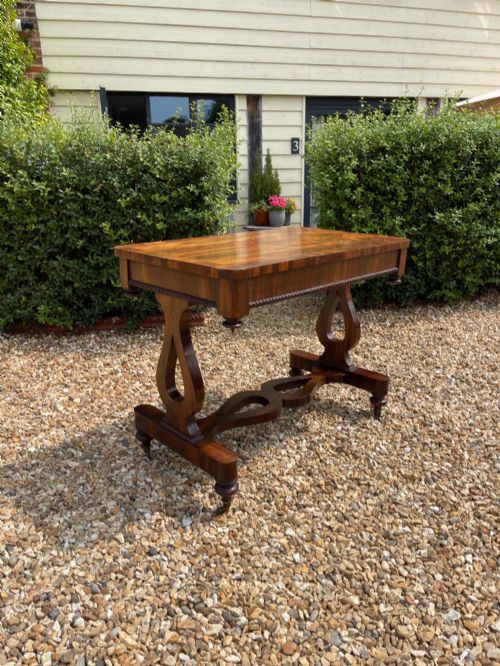
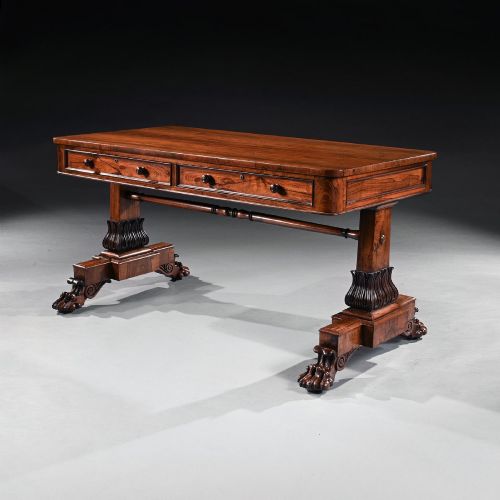
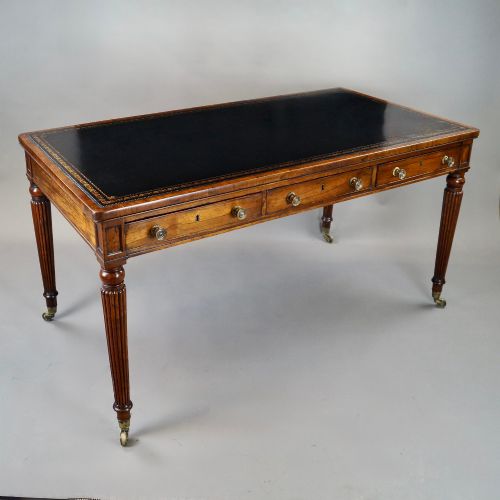
A regency rosewood library desk encompasses freestanding tables, writing tables, sofa tables, and drum tables originating from the nineteenth century, particularly the Regency, George IV, and William IV periods. These pieces were designed to sit centrally in a room rather than against a wall, finished finely on all sides for display in libraries and studies.
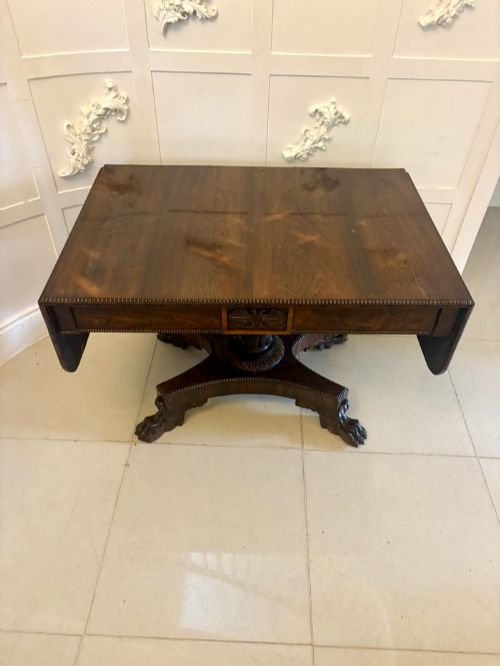
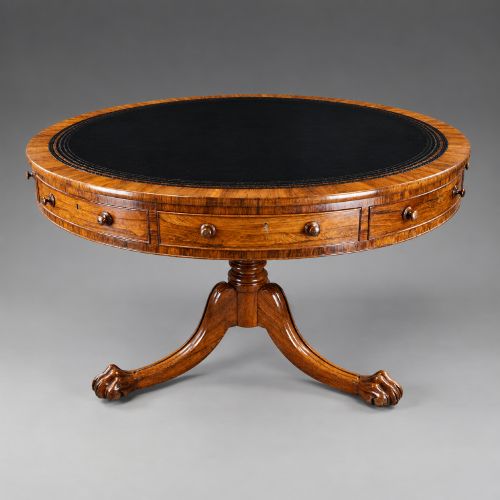
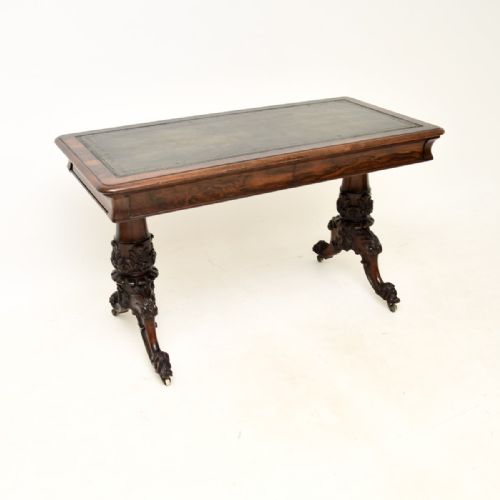
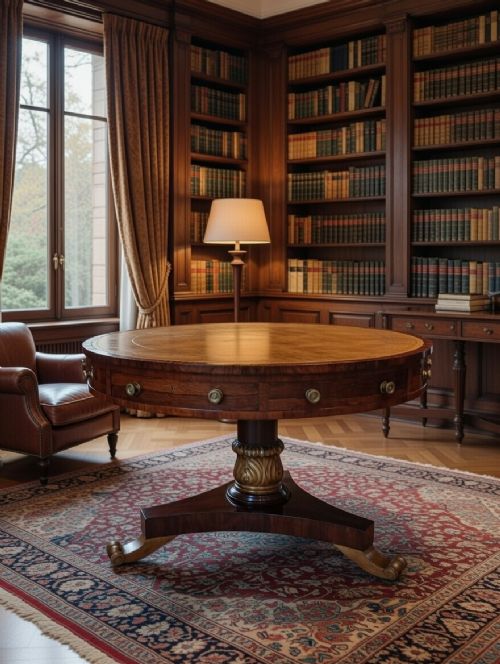
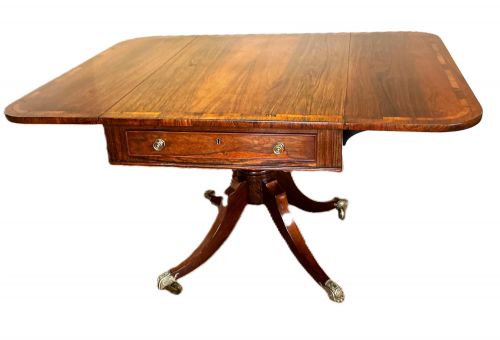
The version most commonly met on this page is the freestanding writing or library table, often featuring drop flaps, pedestal supports, or carved lion's paw feet. Alongside traditional writing desks, related forms such as sofa tables and revolving drum tables appear frequently, maintaining the same characteristic timber and period aesthetic.
Originating largely in English workshops during the early to mid-nineteenth century, these desks reflect the transition from Late Georgian severity to the bolder ornamentation of William IV and Early Victorian styles. Makers utilised rich timbers to create substantial yet elegant furniture intended for formal domestic interiors.
Materials and Technique
Cabinet-makers relied primarily on richly figured rosewood, often complemented by secondary timbers such as mahogany, oak, and occasionally exotic alternatives like goncalo alves. The timber was selected for its dense grain and deep colour, frequently enhanced through french polishing to highlight natural variations.
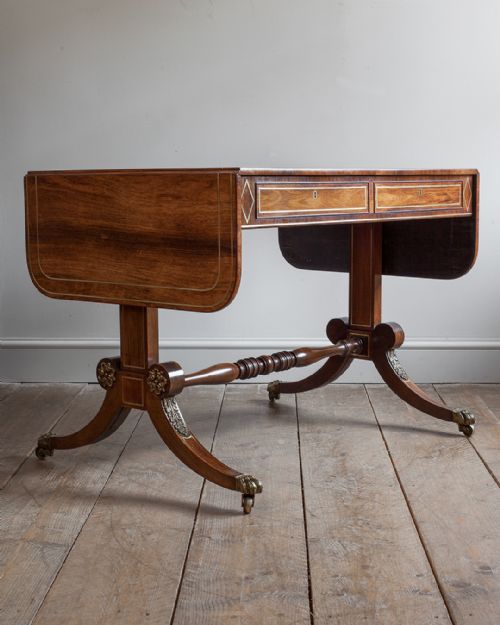
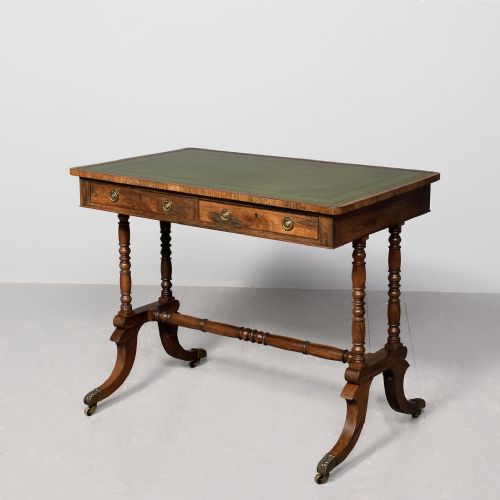
Brass ornamentation forms a defining technical feature, seen in cut brass inlay, drop handles, and mounts that trace the structural outlines of the tables. Leather writing surfaces, often tooled with gold leaf, were inset into the tops to provide a durable and tactile working area.
Construction techniques combine solid timber framing with fine wood veneers and marquetry, particularly on late Regency and William IV examples. Turned pedestals, drop flaps, and pedestal bases demonstrate sophisticated joinery designed to support heavy timber tops without losing visual balance.
Some nineteenth-century tables include hidden compartments or rotating tops designed to keep secret correspondence out of sight.
Distinctions in Execution
The standard of a piece rests heavily on the selection of the rosewood veneer and the vigour of its figuring. Finer examples display symmetrical, highly figured grain patterns that wrap cohesively around drawers and friezes, whereas simpler pieces utilise plain or unexceptional timber.
Carved details and metalwork delineate the scale of quality between standard workshop production and high-status commissions. Crisp hand-carving on elements such as lion's paw feet and precise brass inlay indicate superior craftsmanship compared to cast fittings and perfunctory mouldings.
Structural integrity and the retention of original components govern desirability. Tables that retain their original leather writing inserts, patinated brass mounts, and stable pedestal bases command greater respect than those altered by later restorations or replacements.
The Regency Rosewood Library Desk Glossary
- Regency
- A stylistic period spanning the early nineteenth century defined by classical restraint, Grecian influences, and refined cabinet-making. It follows the Georgian era and precedes the William IV style.
- Rosewood
- A dense, heavy tropical timber prized for its dark purple-brown colour and contrasting black grain. It was the premier cabinet wood of the nineteenth century.
- Drum Table
- A circular library table containing drawers around the perimeter, typically supported on a central pillar and tripod or platform base. They allowed books and papers to be stored within easy reach.
- Sofa Table
- A rectangular library or Pembroke table designed to stand in front of a sofa, featuring drop flaps on either side. They often include two small drawers and trestle supports.
- Goncalo Alves
- An exotic dense timber with striking dark brown and golden contrasting figures. Cabinet-makers used it as a luxurious alternative to rosewood during the nineteenth century.
- Marquetry
- The art of applying decorative veneer pieces to a structure to form geometric or floral designs. It adds surface ornamentation to late Regency and William IV tables.
Regency Rosewood Library Desk: Frequently Asked Questions
Where should I place a library table?
These tables are designed to be freestanding and look best positioned in the centre of a room rather than pushed against a wall. Because they are finished on all sides, they create a striking focal point when viewed from any angle.
Ensure there is sufficient clearance around the piece to walk past and pull out chairs. They function effectively in studies, living rooms, or open-plan spaces as a central writing surface or display table.
How do I care for rosewood furniture?
Rosewood requires stable environmental conditions away from direct sunlight and strong heat sources, which can dry out the timber and fade the polish. Dust regularly with a soft, dry cloth and avoid silicone-based sprays.
Feeding the wood occasionally with a quality antique wax helps maintain the lustre of the french polish. Protect leather writing surfaces from moisture by using coasters and blotters.
What is the difference between a writing table and a library table?
While the terms are often used interchangeably, a writing table typically incorporates one or more drawers beneath the top and was designed specifically for correspondence. They usually feature inset leather tops.
Library tables are generally larger and were intended for holding books, maps, and periodicals. Many drum tables and pedestal tables fall into this category, offering a generous surface area for general study.
Can I use an antique desk for daily work?
Most nineteenth-century desks can accommodate modern daily use provided they are treated with care. The writing heights are generally lower than modern office desks, so pairing the table with a suitable chair is essential for comfort.
Care should be taken with modern electronics to avoid scratching antique timber or leather surfaces. Using a protective pad under laptops and writing materials preserves the historic finish.