


Regency Study Desk
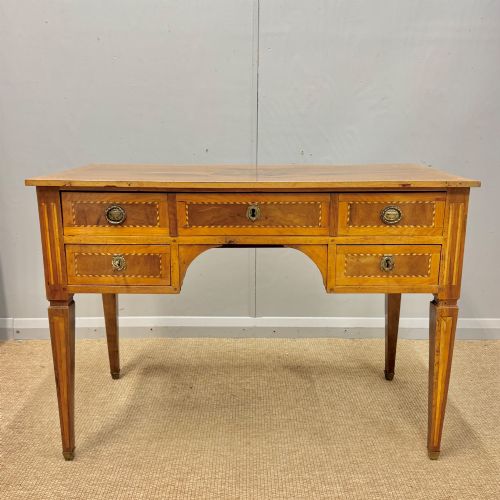
A regency study desk brings architectural proportion and figured timber to a working room, offering a disciplined surface built for correspondence.
Regency Study Desk
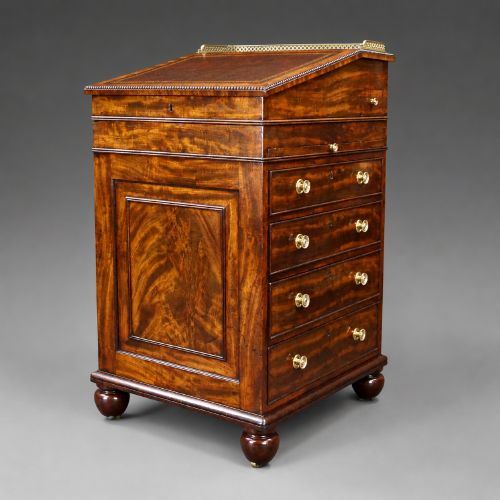
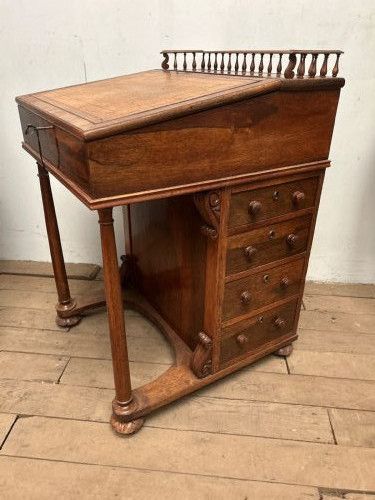
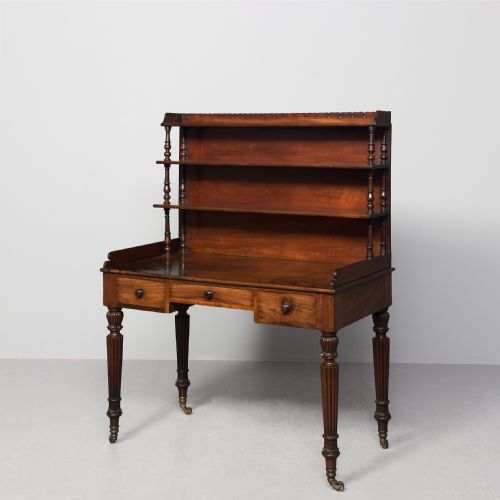
A regency study desk encompasses freestanding writing tables, compact davenports, and cylinder desks originating predominantly from the nineteenth century, including Georgian and William IV iterations.
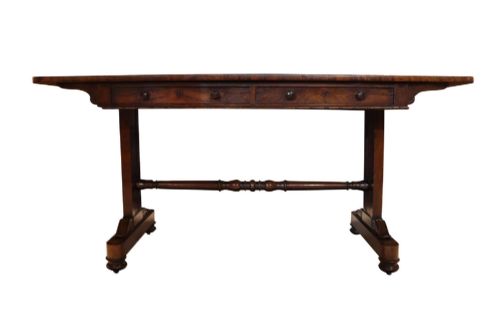
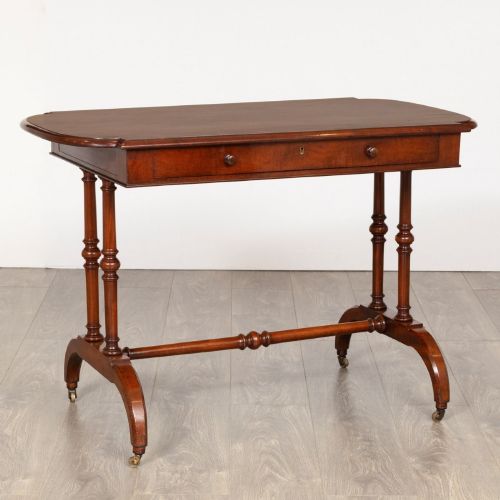
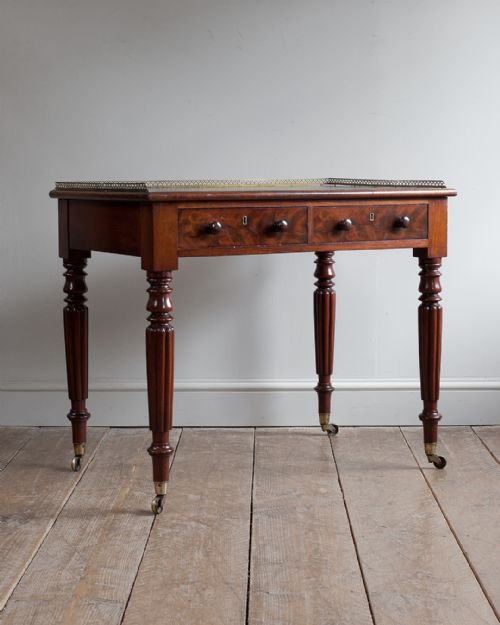
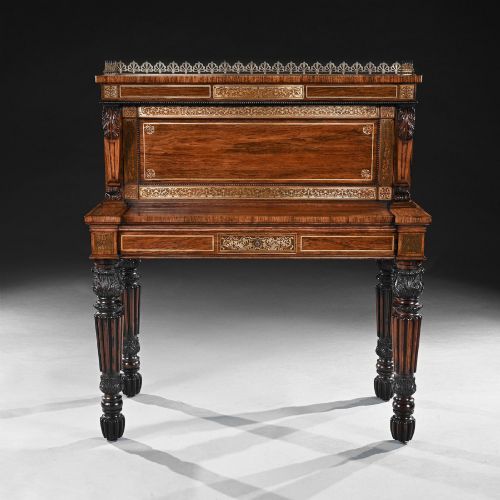
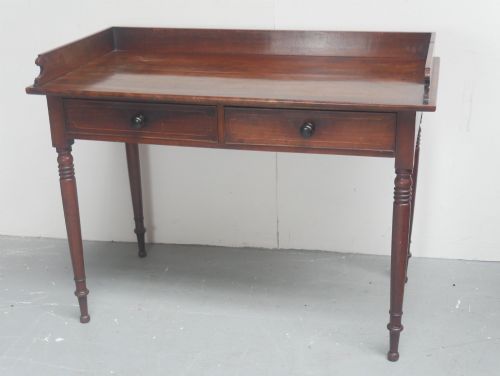
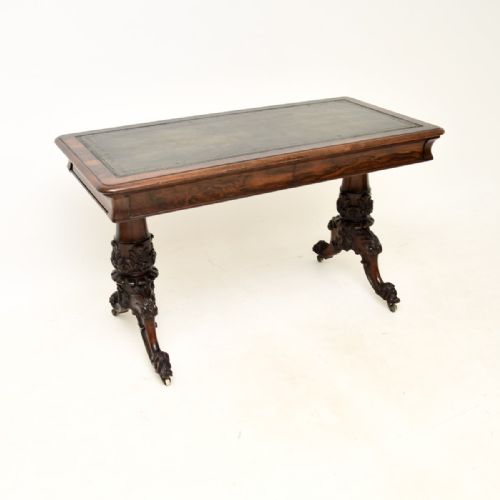
The version most commonly met on this page is the freestanding mahogany or rosewood writing table, often fitted with inset leather writing surfaces and turned legs.
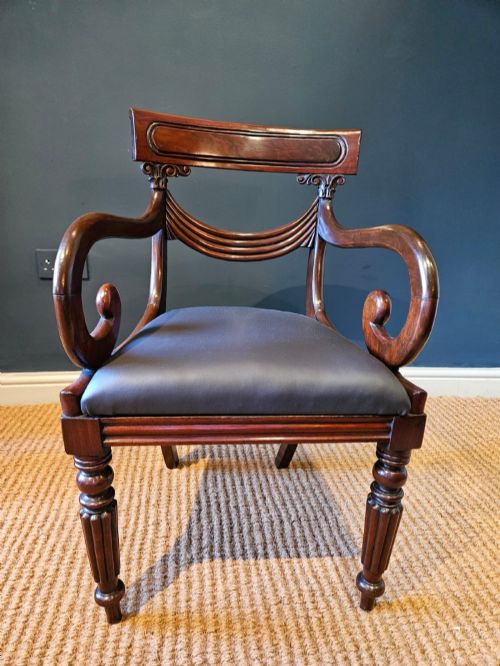
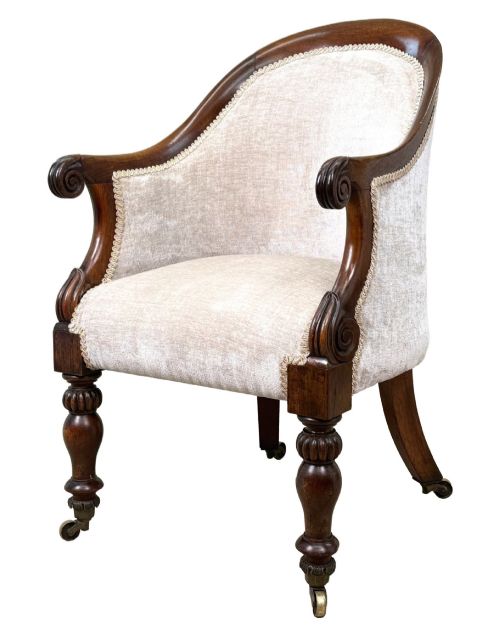
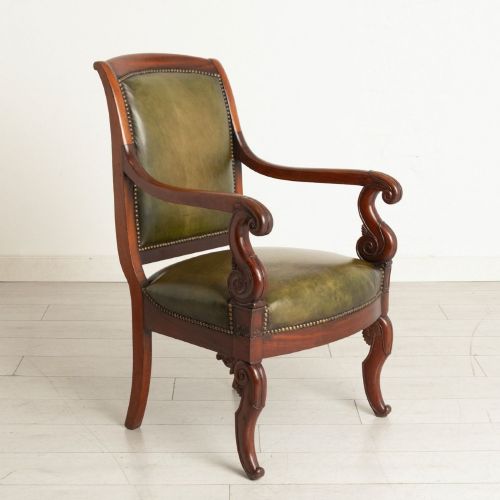
Associated seating such as tub library armchairs and scroll arm chairs frequently accompany these desks, completing the traditional study arrangement found across the inventory.
Materials and Construction
Cabinet makers utilised dense primary timbers such as mahogany, rosewood, burr oak, and satinwood, frequently selecting figured veneers for top surfaces and drawer fronts.
Brass inlays, ring handles, and cast paw feet provide structural detail, while secondary woods like pine appear in concealed framing and interior partitions.
Leather inserts, dyed green or muted tones, are tooled with gilt borders to form the writing plane, framed by solid timber borders with mitred joints.
Proportion and Timber Selection
The calibre of a piece rests upon the selection of timber, where symmetrical flame mahogany or richly figured rosewood elevates the visual weight of the furniture.
Subtlety in carved details, such as crisp reeding on legs and well-defined lions paw feet, distinguishes superior workshop output from simpler regional production.
Original brass hardware, sound drawer construction with hand-cut dovetails, and retained leather inserts indicate preservation of integrity.
Gillows Oxford Street Workshop·James Mein of Kelso
The Regency Study Desk Glossary
- Davenport
- A compact desk featuring a sloping writing surface above a pedestal of drawers, originating in the early nineteenth century.
- Cylinder desk
- A writing cabinet enclosed by a rolling quarter-cylinder shutter that conceals interior pigeonholes and small drawers.
- Library table
- A large freestanding table designed to sit in the centre of a room, finished on all sides with working or dummy drawers.
- Marquetry
- Decorative patterns formed by the insertion of contrasting veneer pieces into a solid wood ground.
- Secretaire
- A desk incorporating a drop-front writing drawer that reveals a fitted interior of pigeonholes and compartments.
Regency Study Desk: Frequently Asked Questions
What defines a regency study desk?
These pieces are formal writing tables and desks dating from the early nineteenth century, characterised by classical proportions, turned or reeded legs, and refined timber surfaces.
They were designed for correspondence and scholarly work in private libraries, featuring inset leather tops and organised drawer arrangements.
How do I use one today?
A regency study desk serves well as a writing table or a laptop workspace in a home office, bringing historical character to daily tasks.
Positioning the desk freestanding in the centre of a room showcases the finished back and polished timber grain.
How are periods distinguished?
Georgian examples often show restrained classical lines and simpler mahogany framing, while Regency pieces introduce bolder brass inlay, rosewood veneers, and neoclassical motifs.
William IV items tend toward heavier proportions, darker figured timbers, and pronounced carved feet.
Were these desks meant to stand against walls?
Many writing tables and library tables were constructed as freestanding pieces with finished backs, intended to occupy the centre of a study rather than sit flush against a wall.
This finish on all sides allows the furniture to command a room visually from any angle.