
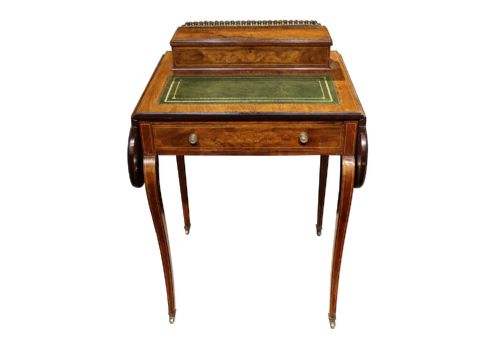
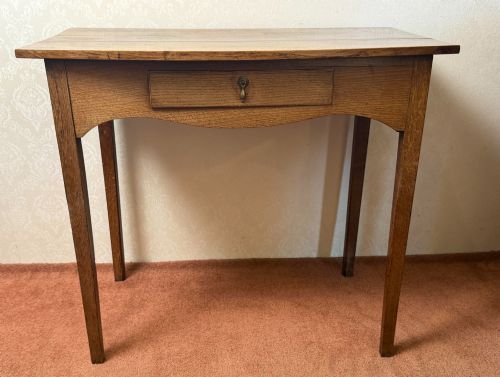
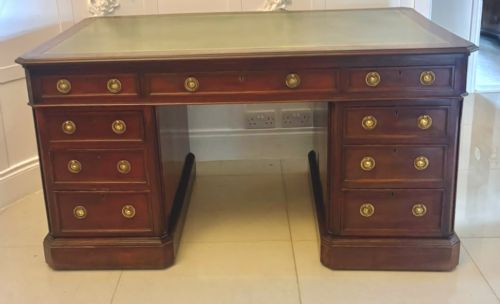
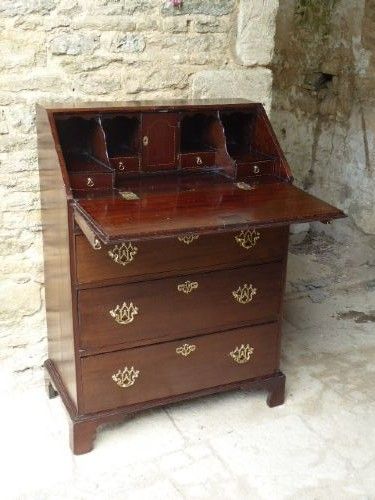
Fitted Writing Desk
When you search for a fitted writing desk, you meet everything from walnut bureaux to mahogany slope-front cabinets hiding secret compartments.
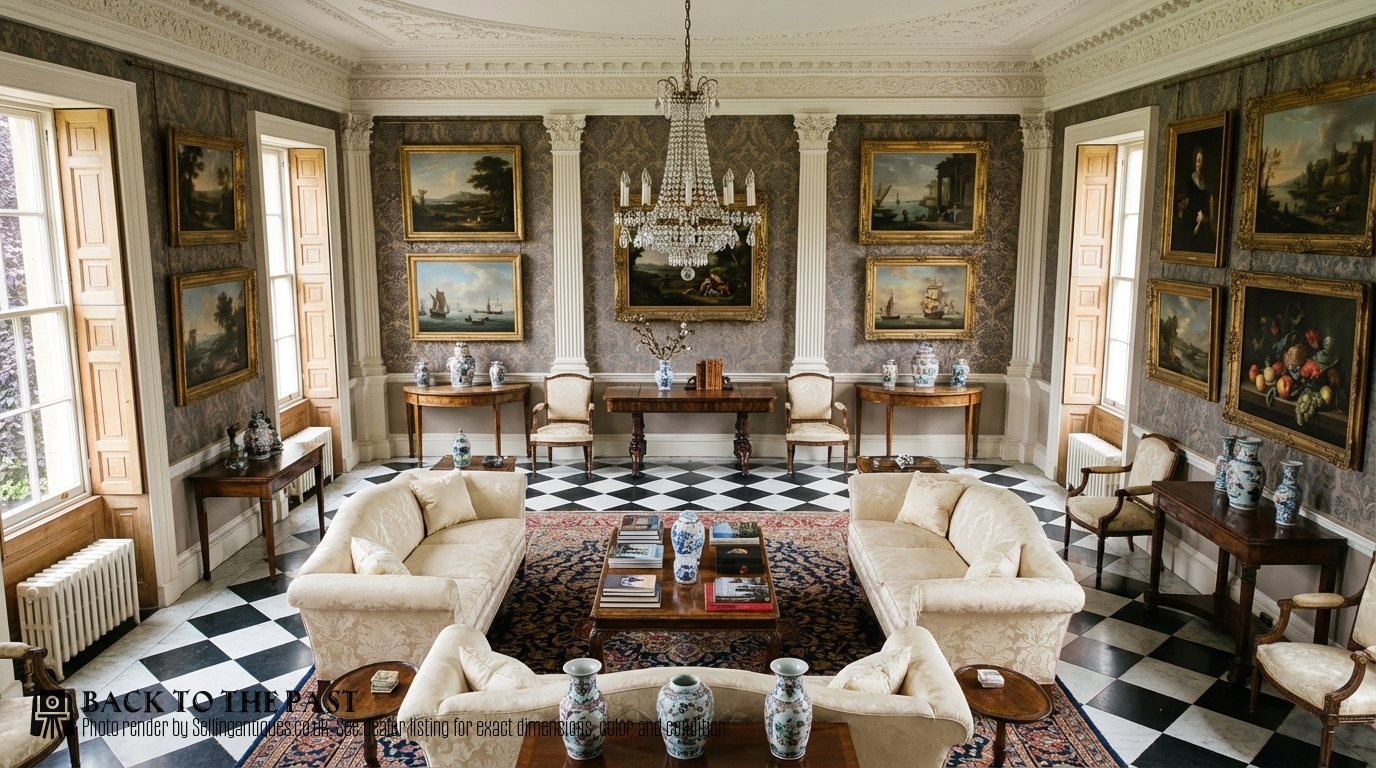
Fitted Writing Desk
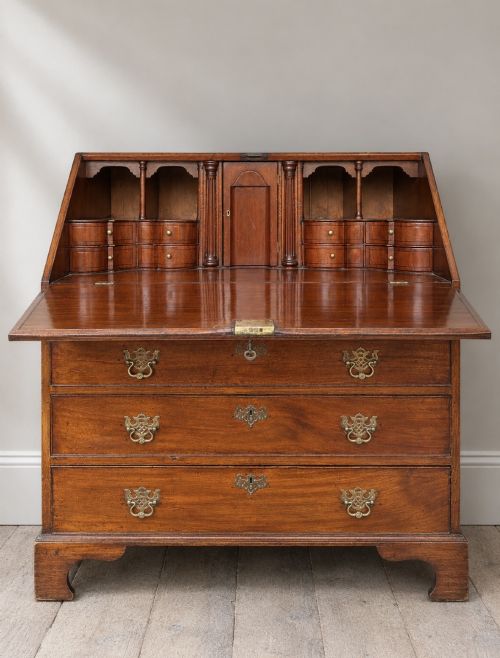
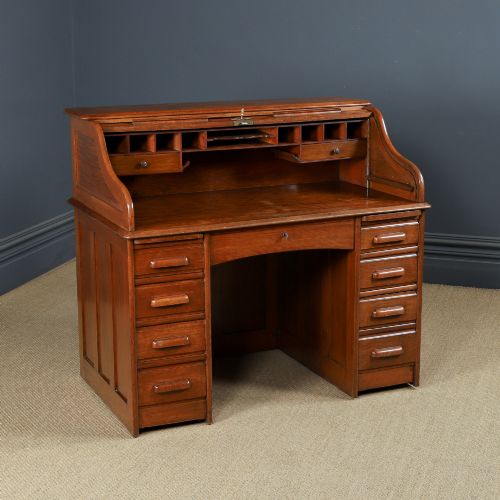
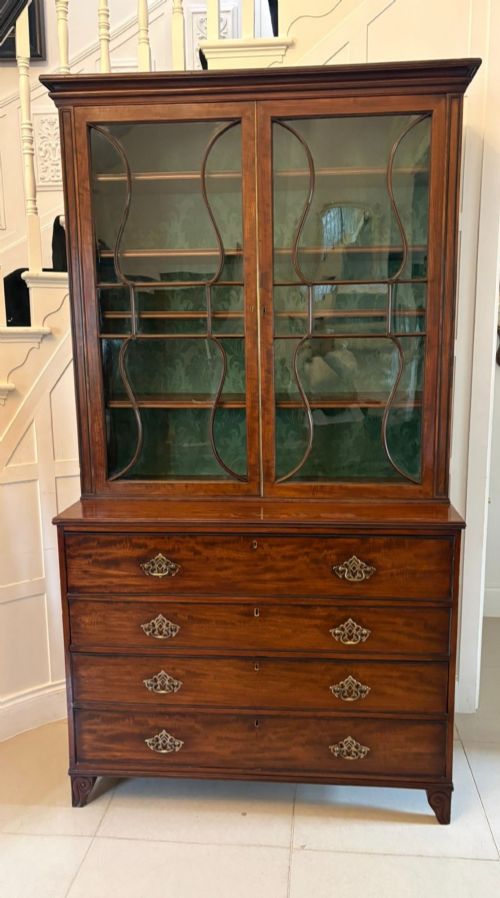
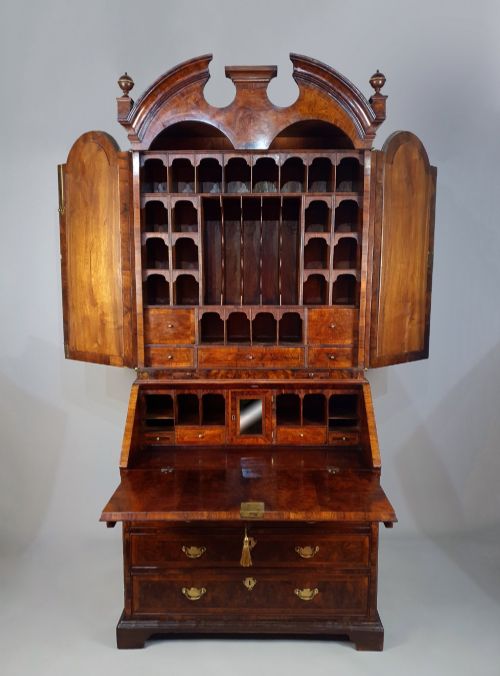
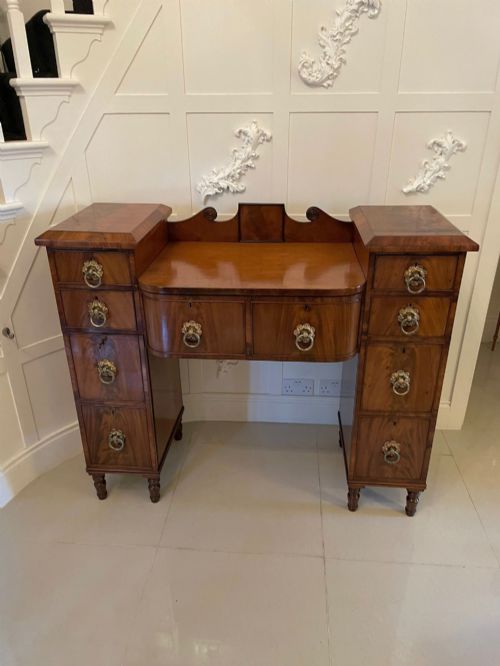
A fitted writing desk encompasses furniture designed for correspondence and document storage, appearing in forms such as bureaux, pedestals, kneeholes, and secretaire bookcases. These pieces originate across the eighteenth and nineteenth centuries, alongside Edwardian, Art Deco, and Regency examples.
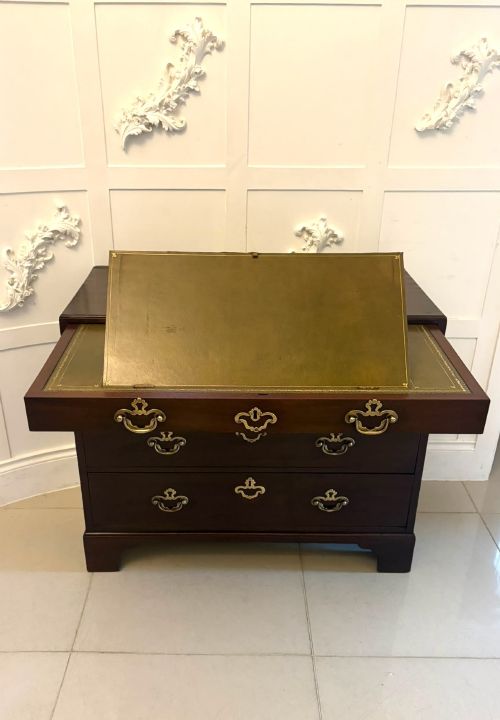
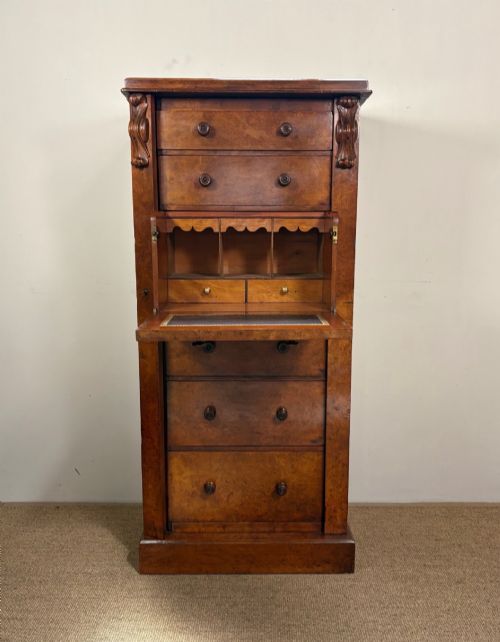
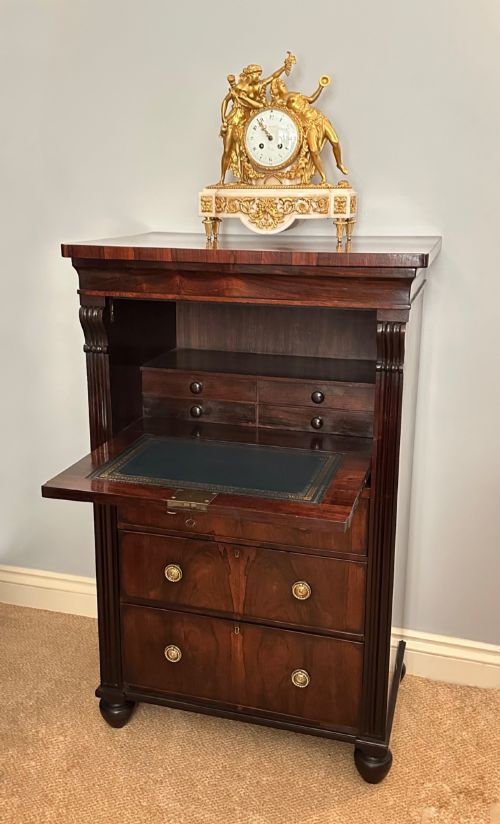
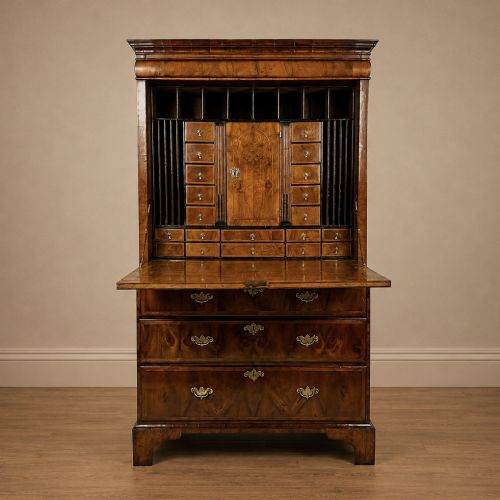
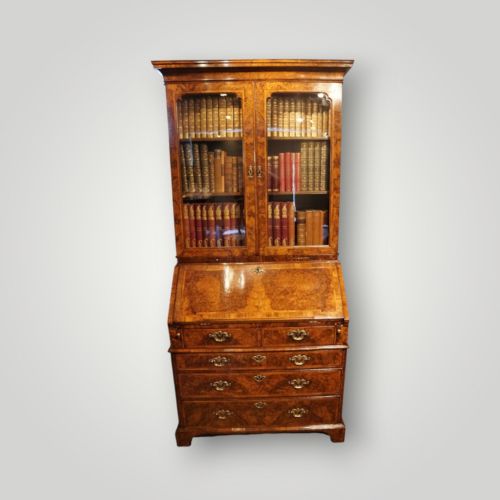
The defining characteristic is an interior fitted with small drawers, pigeonholes, and document slots, hidden behind a fall front, a cylinder top, or glazed bookcase doors. Bureau desks and secretaire chests form the largest share of the current selection, constructed in timber and detailed with brass handles.
How they were made
Cabinet makers built these desks using dense hardwoods like mahogany, oak, walnut, and rosewood, frequently selecting figured veneers or burr walnut for decorative surfaces. Secondary woods provided structural framing for internal compartments.
Brass hardware, leather inserts, and occasionally mother of pearl or bone details completed the construction, whilst glazed panels and inlaid wood lines defined the exterior styles across different decades.
Listings feature woods including mahogany, oak, walnut, rosewood, and burr walnut, alongside brass, glass, leather, and mother of pearl details.
What varies in quality
Quality rests in the precision of the internal joinery and the selection of timber veneers, such as flame mahogany or figured walnut matched across the drawer fronts. Superior pieces exhibit meticulous pigeonhole arrangements and secret compartments that operate smoothly.
The execution of brass inlays, the retention of original working keys, and the integration of the writing surface into the main body distinguish finer examples from utilitarian pieces.
Tudor & Burrey Shrewsbury·Gillows of Lancaster·Heal's
The Fitted Writing Desk Glossary
- Bureau
- A desk with a sloping fall-front that opens to reveal a fitted interior of drawers and pigeonholes. It typically sits atop chest drawers or a frame.
- Secretaire
- A piece of furniture containing a drawer or compartment that drops down to form a writing surface, hiding a fitted interior. It often masquerades as a standard chest of drawers or bookcase.
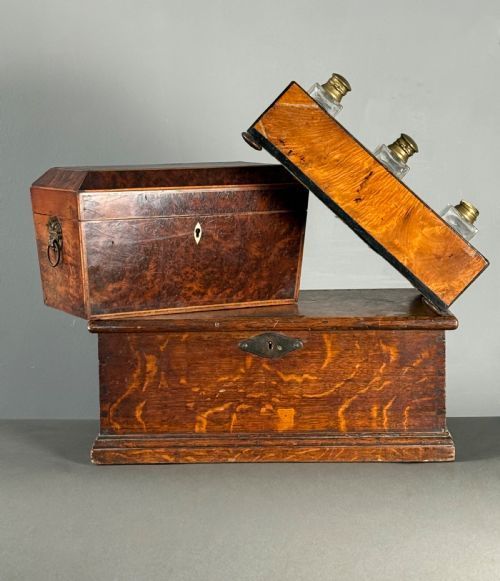
- Writing Slope
- A portable or stationary box with a slanted lid that lifts or folds open to provide a sloping writing surface and internal stationery storage. These often feature brass binding and velvet or leather liners.
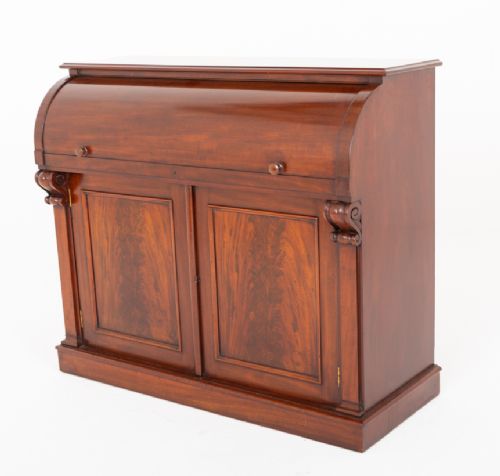
- Cylinder Desk
- A desk featuring a rolling half-cylinder shutter that conceals a pull-out writing slide and fitted interior compartments. This form gained popularity during the Georgian and Victorian periods.
- Kneehole Desk
- A freestanding pedestal desk with a central recess for the user's legs, flanked by banks of small drawers and often incorporating writing slides.
Fitted Writing Desk: Frequently Asked Questions
What is a fitted writing desk?
A fitted writing desk is any writing furniture containing internal compartments, small drawers, and pigeonholes designed for stationery. This category includes fall-front bureaux, pedestal desks, and secretaire bookcases.
The fitted interior distinguishes these pieces from standard tables, providing dedicated storage for documents and writing implements behind lockable doors or folding panels.
What woods were used for these desks?
Mahogany, oak, walnut, and rosewood dominate the construction of these desks, with burr walnut and flame mahogany reserved for decorative surfaces. These timbers were selected for their durability and grain pattern.
Cabinet makers also incorporated brass for handles and escutcheons, alongside leather writing inserts and occasional bone or mother of pearl inlay details.
How do I live with an antique desk?
Place your antique desk away from direct sunlight and heat sources to protect timber veneers and leather writing surfaces from drying out. Use mild, wax-based polishes suited to historic wood.
Ensure drawers and fall-front mechanisms are operated with care, utilising original working keys where provided to avoid straining antique locks and hinges.