

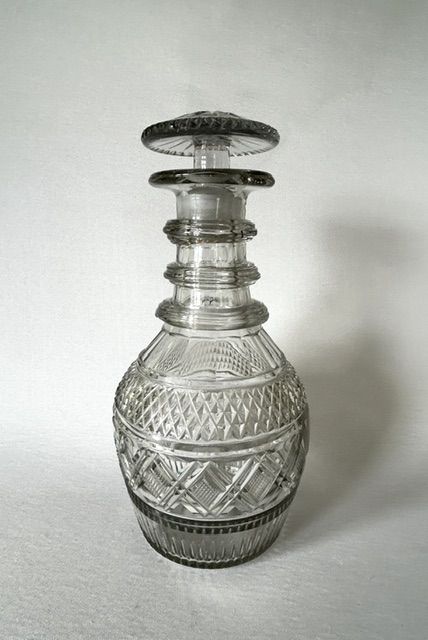


Regency Spirit Decanters
Regency spirit decanters are heavy lead vessels made to hold liquor on the dining table, offering a distinct clink and sparkle that elevates any sideboard.
Regency Spirit Decanters
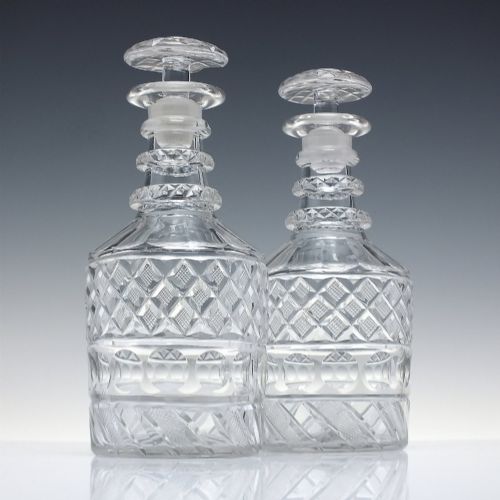
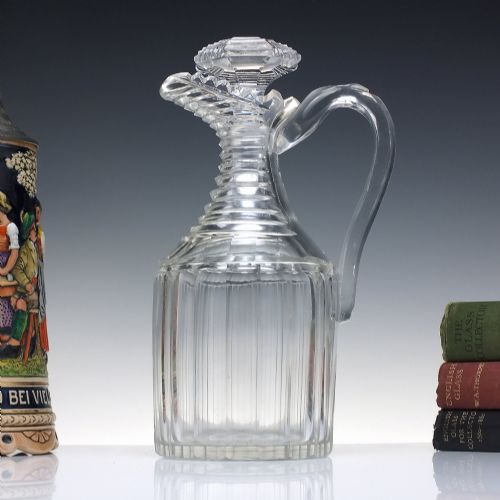
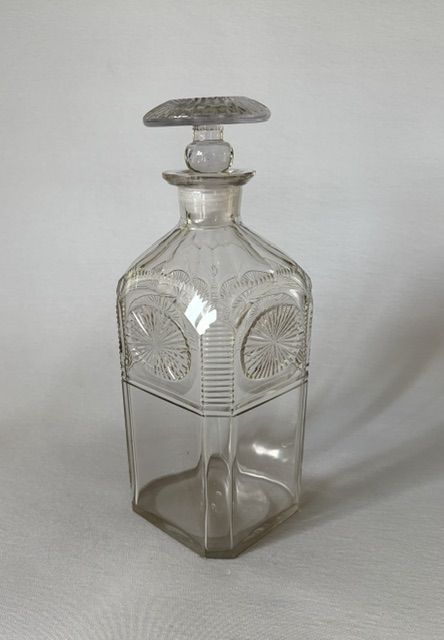
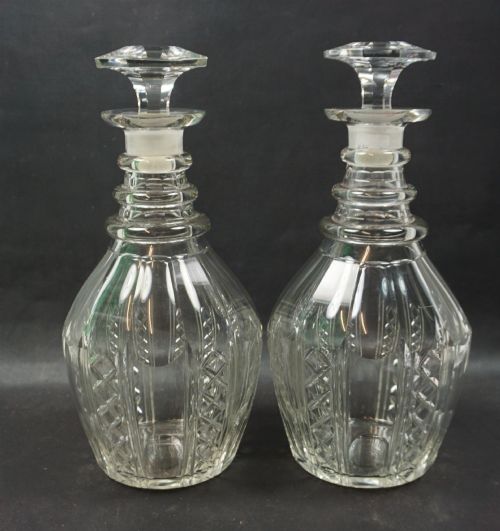
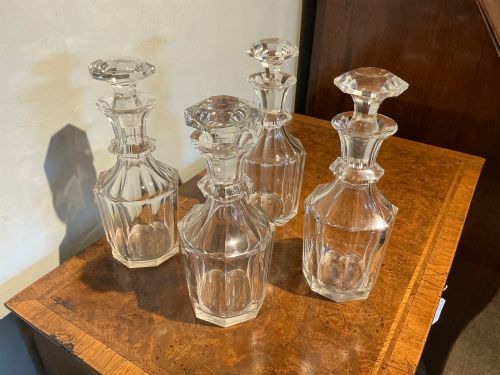
When someone searches for regency spirit decanters, they encounter heavy glass and lead crystal vessels designed specifically for serving liquors such as rum, whiskey, gin, and claret. These pieces span the Georgian, Regency, and early Victorian periods, with many English and Irish examples dating from around 1800 to 1830.
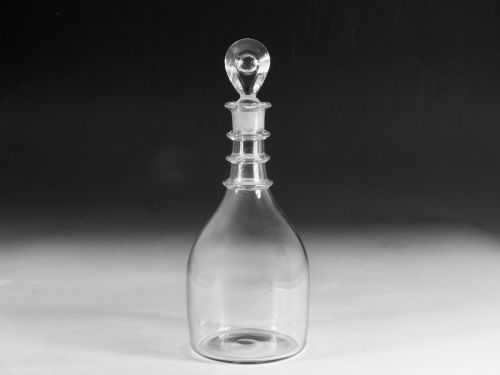
The form most frequently met on this page is the three ring or pillar cut decanter, often featuring distinct neck rings and geometric cutting. Buyers also encounter pairs, ship's decanters with broad bases for stability at sea, and smaller half-bottle or liqueur formats.
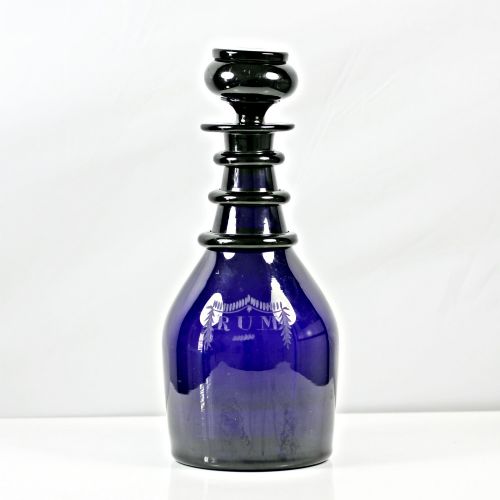
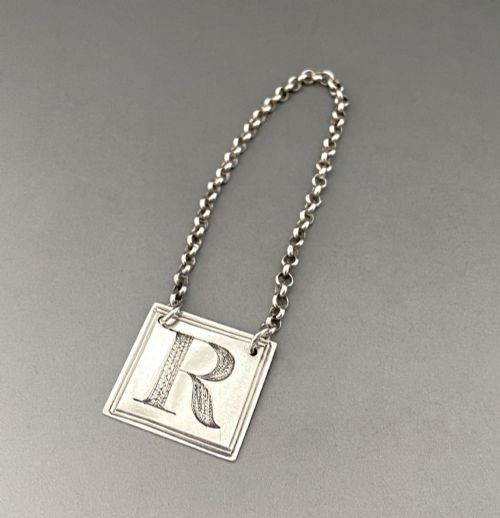
Associated barware items such as silver labels, toddy lifters, and cruet frames appear alongside the bottles, completing the traditional drinking service of the era. The materials range from clear glass and lead crystal to coloured Bristol blue and cobalt glass decorated with gold leaf.
How they were made
Makers utilised lead glass and crystal, blown into moulds or free-blown before undergoing deep wheel cutting. The weight and clarity of the material result from high lead content, which allowed artisans to carve sharp facets like flutes and pillars into the thick walls.
Neck rings were applied hot or pinched directly from the body, providing a secure grip for pouring during dinner service. Coloured vessels, including Bristol blue and cobalt examples, combined layered metal oxides with hand-painted gold leaf details.
Regency Spirit Decanters Retail Price Guide 2026
Typical asking prices for regency spirit decanters among the pieces listed under this phrase on Sellingantiques today, from the lower quarter to the upper quarter. They describe what is for sale here now, not the wider market.
A toddy lifter lets you play Victorian chemist at the punch bowl, trapping liquid with a thumb like a tiny glass pipette.
What varies in quality
The distinction between ordinary production and finer work lies in the depth and crispness of the cutting, the brilliance of the metal, and the overall heft of the piece. Superior examples display sharply defined facets that refract light evenly without blurring.
Proportion and matching stoppers elevate specific items, particularly in pairs or sets where original components must align in weight, tint, and pattern. The inclusion of original matching stoppers and clear maker hallmarks on associated silver labels further distinguishes the upper tier.
The Regency Spirit Decanters Glossary
- Lead crystal
- A type of glass containing lead oxide that increases weight, brilliance, and softness for deep cutting. This material gives Regency decanters their characteristic ring and heavy feel.
- Ship's decanter
- A bottle with a wide, low base and sloping sides designed to prevent tipping on rolling dining tables. This practical form remains stable on sideboard and table alike.
- Mell decanter
- A mallet-shaped bottle with a flat base and tapering body, popular for spirits during the Georgian period. It sits low and sturdy in cruet frames or on the mahogany board.
- Toddy lifter
- A small glass implement used to transfer punch or spirits from a bowl to a glass by thumb control. It matches the service of the decanter on the dining table.
- Old Sheffield Plate
- A fused composite material made of a thin layer of silver applied to a thicker copper core. This technique appears on cruet frames holding multiple spirit bottles.
Regency Spirit Decanters: Frequently Asked Questions
Why are some decanters blue?
Coloured glass, such as Bristol blue or cobalt, was produced by adding metallic oxides to the molten batch. These rich hues helped protect light-sensitive spirits and added vibrant colour to the formal dining room.
Such bottles were often accented with hand-painted gold leaf or paired with silver spirit labels to designate the contents.
Are ship's decanters only for boats?
Despite the name, ship's decanters were widely used in land-based homes because their broad, conical bases offered superior stability. Dinner parties in the nineteenth century often involved bustling dining rooms where a stable bottle prevented accidents on the sideboard.
Their wide footprint makes them remarkably practical for everyday home use today.
How do I identify a Regency period piece?
Regency pieces are identified through a combination of heavy lead crystal weight, characteristic pillar or diamond cutting, and distinct neck ring formations. The profiles tend to be robust, reflecting the manufacturing styles of English and Irish glasshouses between 1810 and 1830.
Associated elements like Old Sheffield Plate cruet frames or silver gin and rum labels often share stylistic cues from the same decades.