

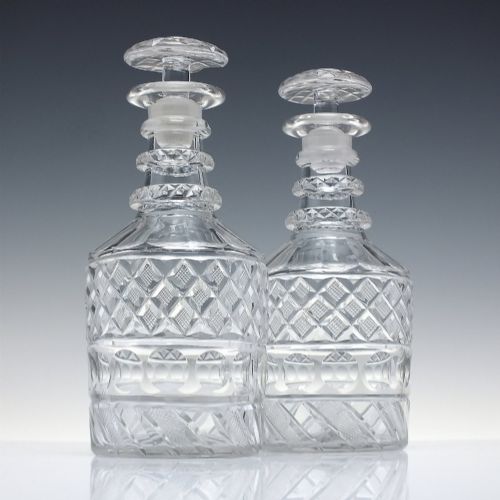
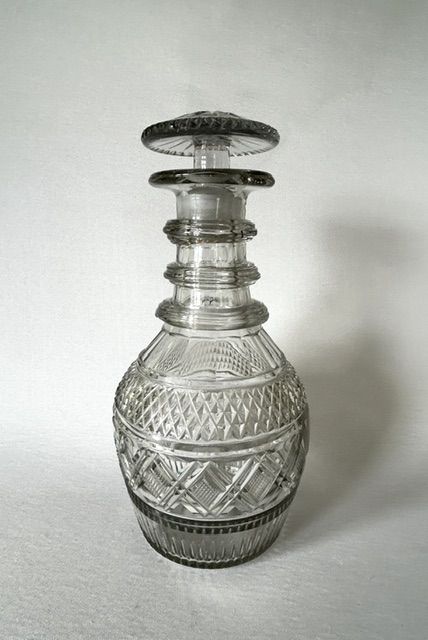


Georgian Mushroom Stopper Decanter
Georgian mushroom stopper decanter examples bring tactile heft and brilliant cut facets to the table, offering a glimpse into early nineteenth-century dining rooms.
Georgian Mushroom Stopper Decanter
A georgian mushroom stopper decanter typically presents as a heavy vessel designed for serving spirits or wine, distinguished by its characteristic flat or slightly domed rounded stopper resembling a mushroom cap. Buyers searching for a georgian mushroom stopper decanter will most commonly encounter lead glass and crystal examples spanning the eighteenth century, the Regency period, and around eighteen hundred.
The inventory on this page demonstrates that these vessels frequently appear in pairs or as single serving decanters with cut glass decoration. Forms range from traditional shaped bodies to three ring variations and ship decanter silhouettes originating from English and Irish workshops.
Collectors focus on these specific configurations because they embody the domestic glassware of the Georgian era. The combination of heavy metal content and precise geometric cutting defines the visual character of the objects available in this category.
Manufacturing methods
Makers produced a georgian mushroom stopper decanter using lead glass or crystal, a heavy material composition achieved by adding lead oxide to the molten batch. This increased density allowed artisans to cut deep facets into the surface without compromising the structural integrity of the vessel.
Craftsmen shaped the bodies by blowing the glass into moulds or free-blowing the metal before applying wheel-cut decoration such as horizontal rings and flutes. The stoppers were then ground by hand to ensure a precise, airtight fit within the neck of each individual decanter.
Georgian Mushroom Stopper Decanter Retail Price Guide 2026
Typical asking prices for georgian mushroom stopper decanter among the pieces listed under this phrase on Sellingantiques today, from the lower quarter to the upper quarter. They describe what is for sale here now, not the wider market.
Decanter necks often wear three glass rings so slippery fingers could manage a heavy pour after dinner.
Assessing quality
The distinction between standard examples and the finest pieces lies in the clarity of the metal and the crispness of the cutting. Superior decanters exhibit sharp, clean facets that catch the light directly, whereas lower-quality pieces show softer, more rounded edges from hasty polishing.
Weight and balance also indicate standard. A heavier lead glass vessel with a well-proportioned mushroom stopper demonstrates greater skill in the glasshouse than a lighter, more rudimentary container.
The Georgian Mushroom Stopper Decanter Glossary
- Lead Crystal
- Glass containing a high percentage of lead oxide, which increases brilliance, weight, and the refractive index of the material. This composition was standard for fine serving vessels of the period.
- Three Ring Decanter
- A serving bottle featuring three applied glass rings around the neck, often used for a secure grip during pouring. These rings are characteristic of Regency and Georgian designs.
- Ship Decanter
- A decanter with a broad, stable base and a conical body designed to prevent tipping on rolling dining tables at sea. The wider footprint kept the contents secure during movement.
- Wheel-Cut Glass
- Decoration carved into the hardened glass surface using rotating stone or copper wheels fed with an abrasive slurry. This technique produced deep geometric patterns and flutes.
Georgian Mushroom Stopper Decanter: Frequently Asked Questions
What is a mushroom stopper?
A mushroom stopper is a solid glass closure shaped with a flat top and a short stem that sits flush against the rim of the decanter neck. Its design provides a secure seal to preserve the contents.
These stoppers were ground individually to fit each bottle during manufacture. Collectors look for matching stoppers that share the same glass tint and cutting style as the body.
How do I date a glass decanter?
Dating relies on observing manufacturing traits such as pontil marks on the base, the composition of the metal, and the style of the neck rings. Eighteenth-century and Regency pieces often display heavier lead content and hand-cut facets.
Comparing the shape of the body and the form of the stopper against documented examples helps narrow down the decade of production. English and Irish glasshouses utilised distinct cutting patterns during specific eras.
Were these decanters made in Ireland?
Irish glasshouses produced significant quantities of heavily cut crystal decanters during the Georgian and Regency periods. Irish glass was celebrated for its exceptional clarity and heavy weight.
Pieces attributed to Ireland often feature deep diamond cutting and intricate motifs. These vessels served wealthy households across Britain and Ireland.
Can I use antique decanters today?
These glass vessels remain functional for serving wine and spirits provided they receive gentle handling and hand washing. Sudden temperature changes should be avoided to protect the aged material.
Proper maintenance ensures the lead crystal retains its brilliance. Many collectors enjoy using their pieces for formal dinners or display.