

Glass Whisky Decanter
A glass whisky decanter brings substance and ceremony to a sideboard, turning the evening pour into a deliberate ritual.
Glass Whisky Decanter
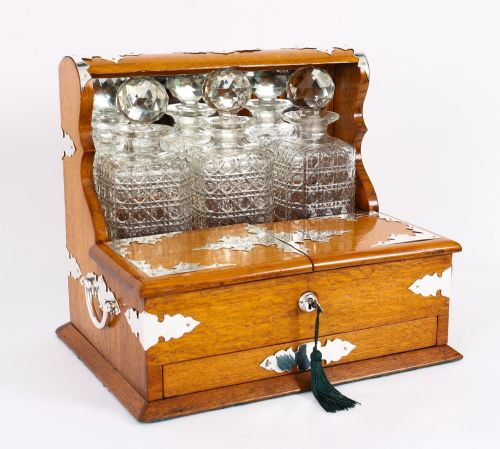
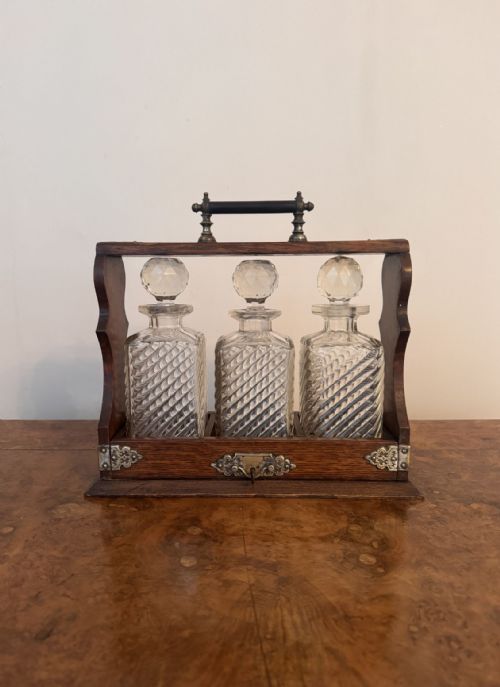
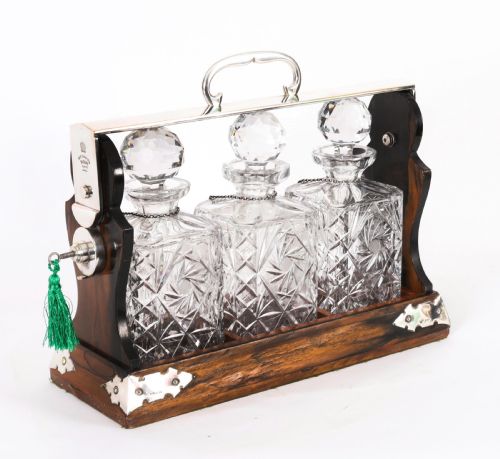
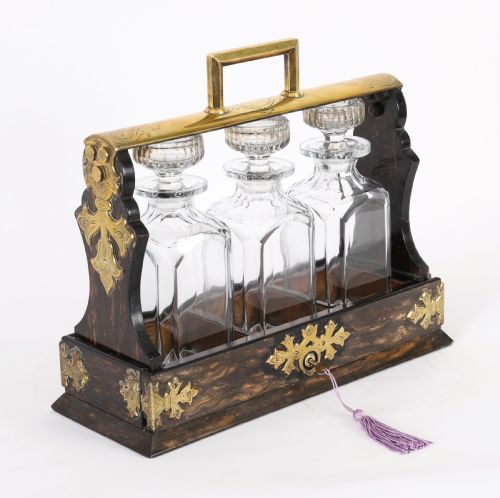
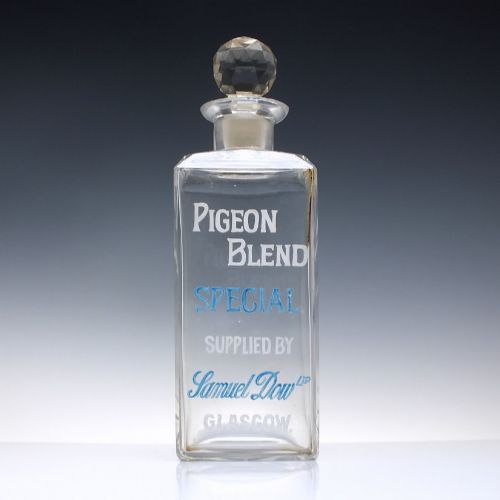
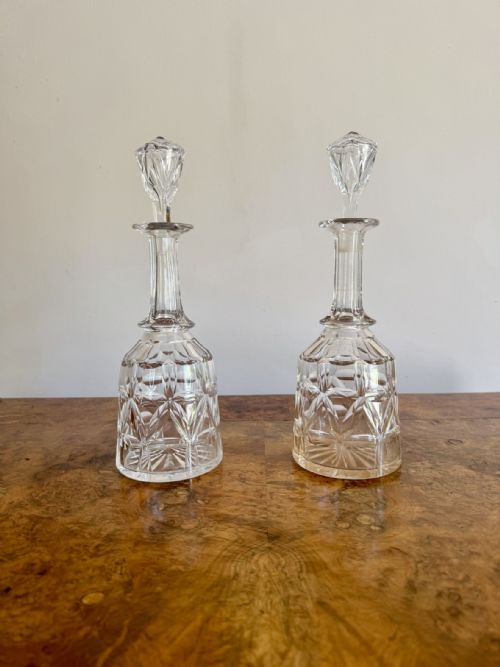
A glass whisky decanter ranges from straightforward domestic vessels to elaborate locking tantalus sets housed in oak or coromandel wood. When exploring these pieces, the buyer encounters various historic forms, from heavy Victorian cut glass bottles to sleek Art Deco geometric sets.
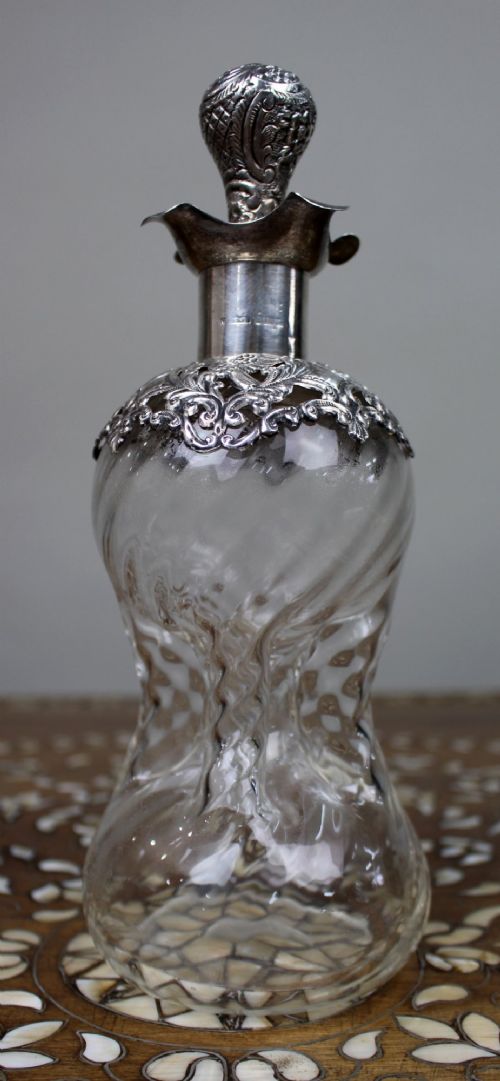
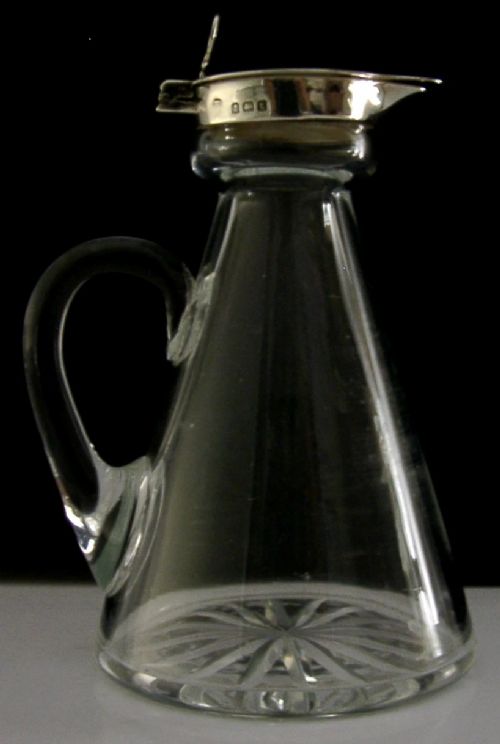
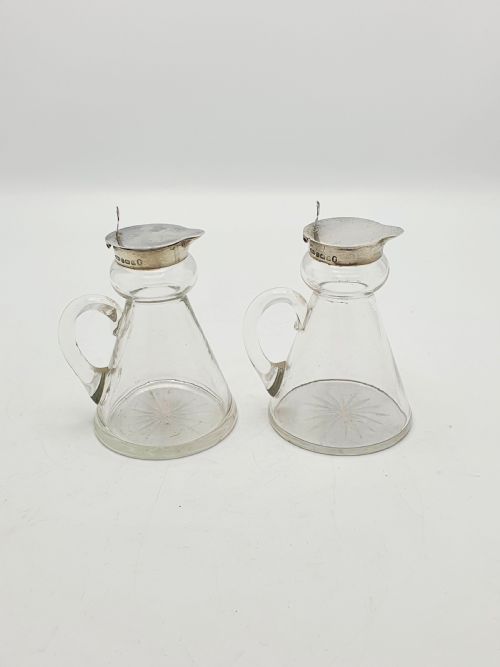
The selection leans heavily toward late nineteenth and early twentieth-century examples, including Edwardian silver-collared jugs and compact whisky noggins fitted with sterling silver mounts. These items reflect the social habits of their periods, designed for home studies, dining rooms, and private bars.
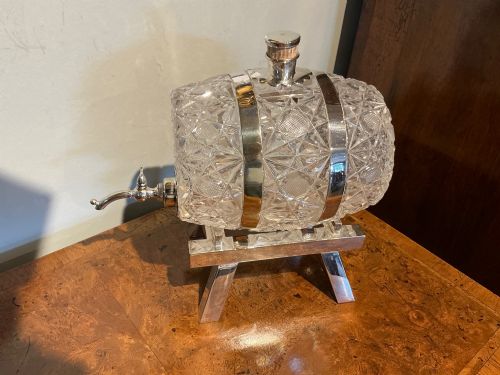
Beyond the standard standalone bottle, the category embraces matching sets complete with glasses, hip flasks, and multi-bottle barware combinations. Each variant serves the same fundamental purpose while demonstrating the prevailing design tastes of Georgian, Victorian, and later makers.
Materials and Construction
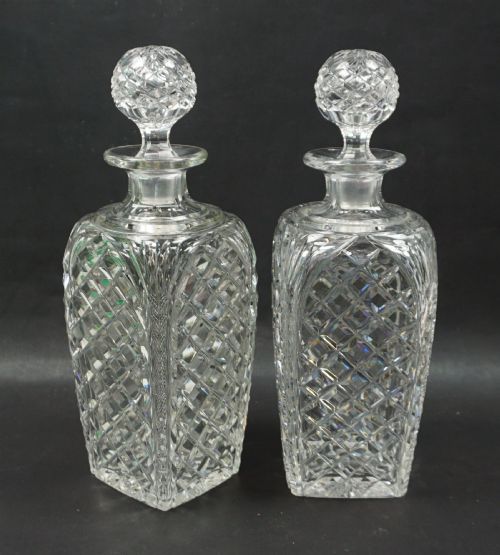
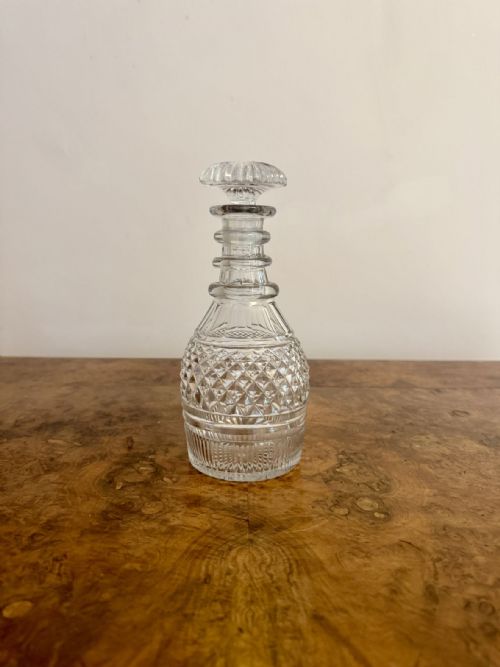
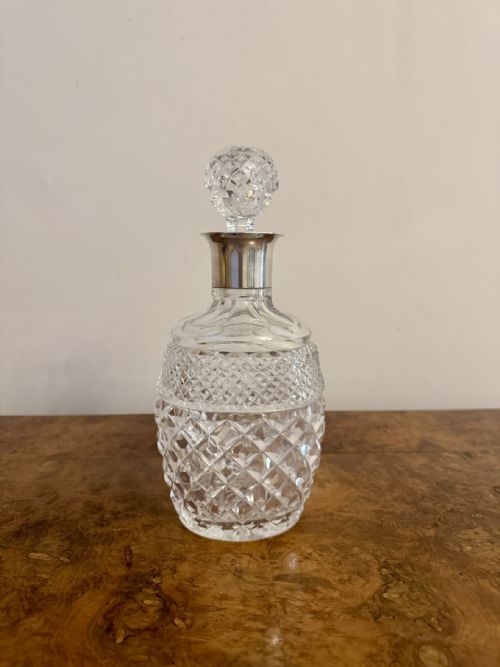
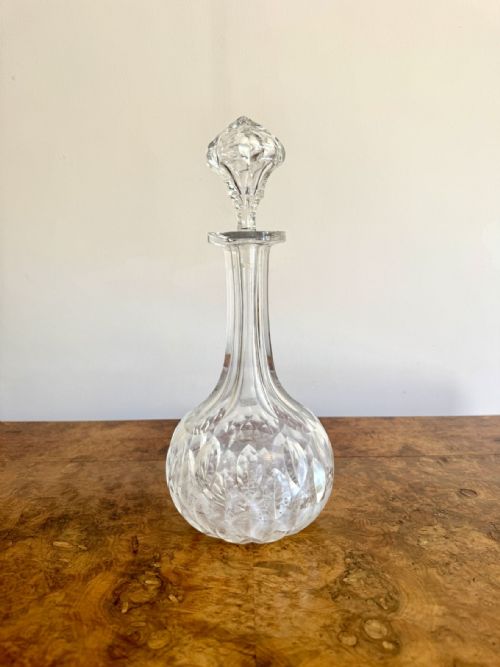
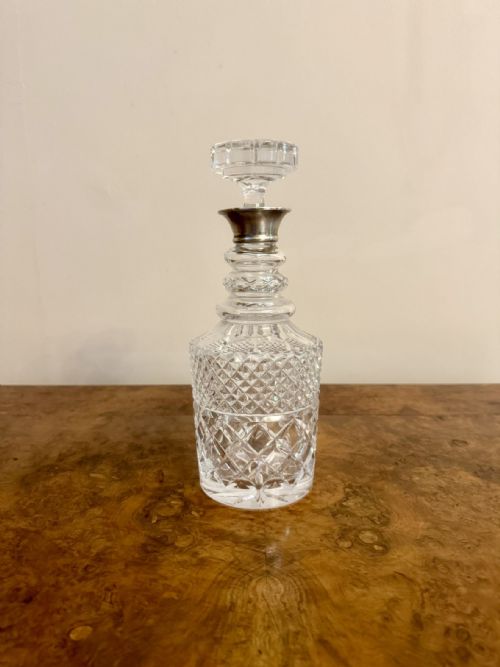
Heavy lead crystal and cut glass form the structural body of these pieces, often shaped with deep hobnail cutting or tapered geometric facets to catch the light. Artisans shaped the molten glass by hand or in moulds before polishing the surfaces to a high clarity.
Metal mounts in sterling silver and silver plate provide functional collars, hinged lids, and protective frames, frequently bearing hallmarks that date the piece precisely. Timber housings utilise seasoned oak, satinwood, and coromandel, combined with brass locks and mounts to secure the bottles within a tantalus.
Glass Whisky Decanter Retail Price Guide 2026
Typical asking prices for glass whisky decanter among the pieces listed under this phrase on Sellingantiques today, from the lower quarter to the upper quarter. They describe what is for sale here now, not the wider market.
The selection includes individual whisky noggins alongside multi-bottle tantalus sets and complete Czech glass barware groupings.
Markers of Distinction
Quality rests in the weight and clarity of the crystal, alongside the crispness of the hand-cut facets and the snug fit of the matching stopper. Superior pieces display clean glass free from internal cloudiness and feature heavy metal mounts with clear, legible hallmarks.
The sophistication of the housing elevates a piece significantly, particularly when fitted with working locks, matching keys, and finely inlaid woodwork. Complete sets featuring matching glasses or original silver spirit labels demonstrate a higher level of original preservation.
Betjemann·Karl Palda·Thomas Webb·Richardson
The Glass Whisky Decanter Glossary
- Tantalus
- A locking wooden frame that holds decanters securely in place while displaying the contents, preventing unauthorized access through a barred top bar.
- Noggin
- A small individual spirit jug, typically featuring a single handle and a lip, designed to hold a single serving of whisky.
- Hobnail cut
- A decorative pattern of faceted projections cut into the surface of the glass, resembling the hobnails used on heavy boots.
- Hallmark
- A official stamp applied to precious metal mounts indicating the standard of silver, the assay office, and the year of testing.
- Decanter label
- A small metal tag suspended by a chain around the neck of the bottle to identify the specific spirit held within.
Glass Whisky Decanter: Frequently Asked Questions
What is a whisky noggin?
A whisky noggin is a miniature personal jug designed for a single generous measure of spirit. These compact vessels often include a silver mount and a matching label.
They were popular in domestic settings for individual evening drinks, offering a smaller alternative to full-sized decanters.
How does a tantalus work?
A tantalus secures decanters inside a wooden frame fitted with a locking metal bar across the stoppers. When locked, the stoppers cannot be removed and the bottles cannot be lifted out.
The clever design allows guests to admire the whiskey while keeping the contents safe from unauthorized pouring by household staff.
Are stoppers original to the decanter?
Original stoppers are ground to fit the specific neck of each individual bottle during production. They often share matching cut patterns or numeric tallies corresponding to the base.
Checking for a snug fit and matching glass tint helps confirm whether the stopper has stayed with the piece over the decades.
How do I clean an old decanter?
Historic glass benefits from gentle washing with warm water and soft bottle brushes rather than harsh chemical detergents. Avoiding sudden temperature changes prevents thermal shock to fragile antique crystal.
Allowing the interior to dry completely upside down prevents water spots from forming inside the narrow neck.