





Silver Mounted Noggin
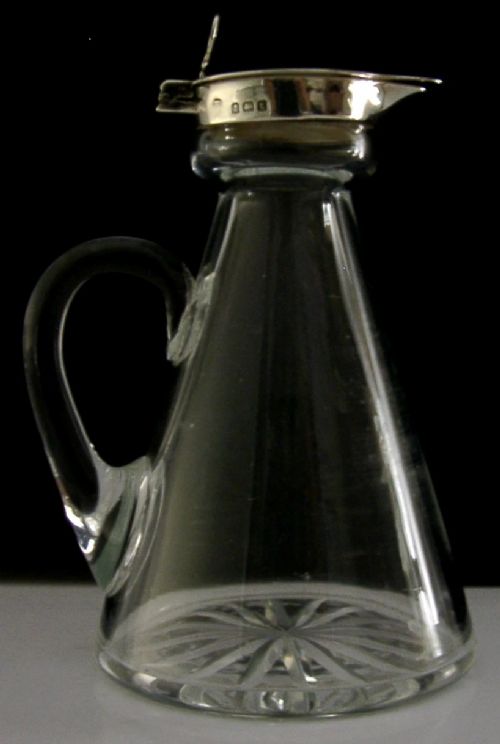
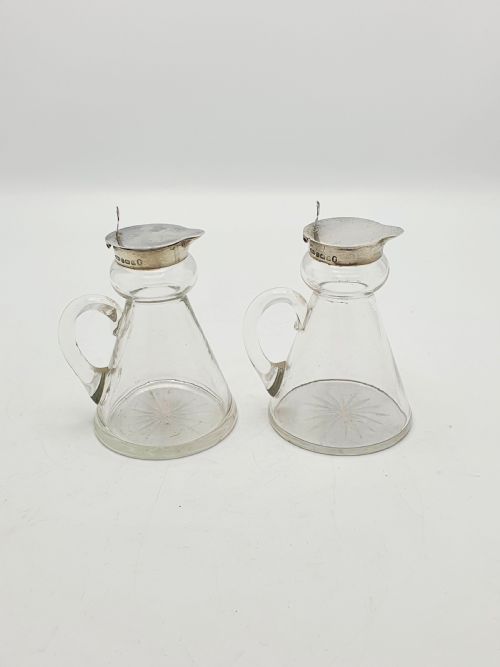
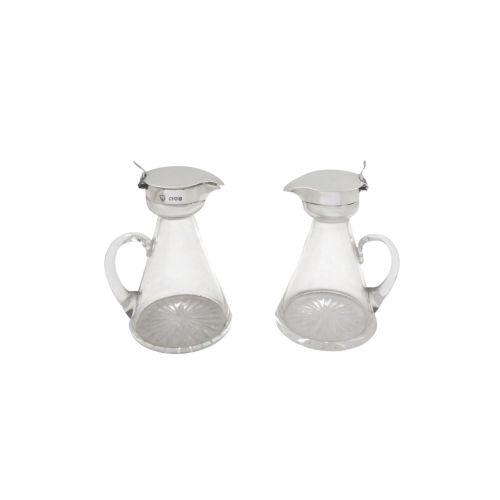
A silver mounted noggin is a small personal decanter designed for spirits, combining cut glass with hallmarked metalwork.
Silver Mounted Noggin
A silver mounted noggin serves as a single-serving vessel for whisky, port, or other spirits, typically holding a modest measure for an individual drinker. These pieces are frequently encountered from the Edwardian period through the George V era and into the 1930s, reflecting the social habits of early twentieth-century entertaining.
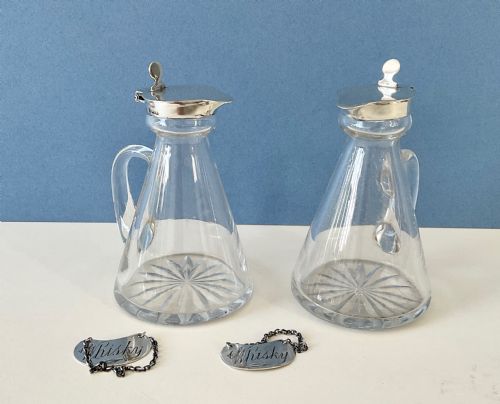
The standard form comprises a small glass body fitted with a hinged silver mount, a handle, and often a matching silver label designating the contents. Examples span plain cylindrical glass to heavily cut designs, sometimes appearing alongside specialised barware or larger claret jugs.
How silver mounted noggins were made
Makers shaped the glass bodies using clear or cut glass techniques, producing sturdy vessels designed to withstand daily use on the sideboard. Silversmiths then fashioned the mounts, collars, and hinged lids from sterling silver, securing them firmly around the neck and handle of the glass.
Makers often paired these vessels with small hanging labels inscribed for whisky or port, attached by a silver chain around the neck of the mount. Hallmarks stamped into the silver provide precise assay office locations and dates of manufacture.
Materials recorded across these listings include sterling silver, clear glass, cut glass, and mother of pearl.
What varies in quality
Quality rests upon the weight and crispness of the sterling silver mount, alongside the precision of the hinge and thumbpiece. Substantial metalwork by recognised silversmiths elevates a piece above standard commercial production.
The clarity and depth of the glass cutting also define the standard of the vessel, with sharply faceted patterns offering greater visual weight than plain blown glass. The presence of an original matching silver label completes a higher-tier composition.
Hukin and Heath·Mappin and Webb·Asprey and Co·Hamilton and Inches
The Silver Mounted Noggin Glossary
- Noggin
- A small mug or vessel for holding a measure of liquor, commonly adapted in the twentieth century as a miniature decanter. These pieces are typically paired with a silver mount and handle.
- Sterling silver
- An alloy of silver containing ninety-two point five percent silver and seven point five percent other metals, chiefly copper. This standard material appears across all authentic mounts and labels.
- Hallmark
- An official stamp applied by an assay office indicating the purity of the metal, the maker, and the year of production. These marks allow collectors to date the silver precisely.
- Decanter
- A vessel used for holding and serving liquids, scaled down in these instances to personal proportions for spirits. They combine glass bodies with protective metal rims.
- Cut glass
- Glass decorated by cutting facets or patterns into the surface using a wheel, adding texture and brilliance. This technique appears frequently on the bodies of the vessels.
Silver Mounted Noggin: Frequently Asked Questions
What is a silver mounted noggin used for?
These vessels were designed to hold a single measure of whisky, port, or other spirits for individual consumption at the table or desk.
They allowed hosts to serve drinks without utilising a full-sized decanter, keeping a modest quantity of liquor close at hand.
How do I date a silver mounted noggin?
Dating relies primarily on the hallmarks stamped into the sterling silver mounts by official assay offices during manufacture.
Style indicators such as Edwardian proportions or George V commemorative marks also help narrow down the period of production.
Are labels always included with these noggins?
Many examples retain their original matching silver spirit labels suspended by a chain around the neck, though others survive independently.
Labels specifying whisky or port are common accompaniments found across pieces from the early twentieth century.
What periods do these pieces come from?
The majority of surviving examples date from the Edwardian era through the 1930s, encompassing the George V period.
Earlier Victorian pieces occasionally appear, alongside examples produced up to the outbreak of the Second World War.