



Cut Glass Whisky Decanter
These cut glass whisky decanter pieces bring nineteenth and early twentieth century drinking culture straight to the sideboard.
Cut Glass Whisky Decanter
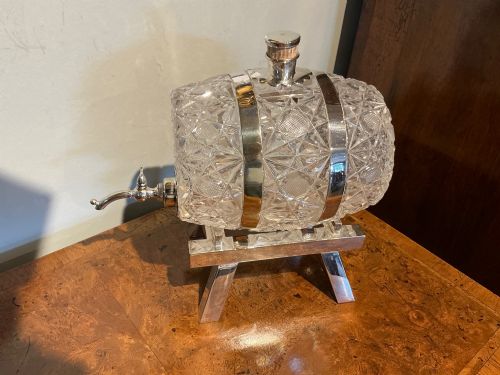
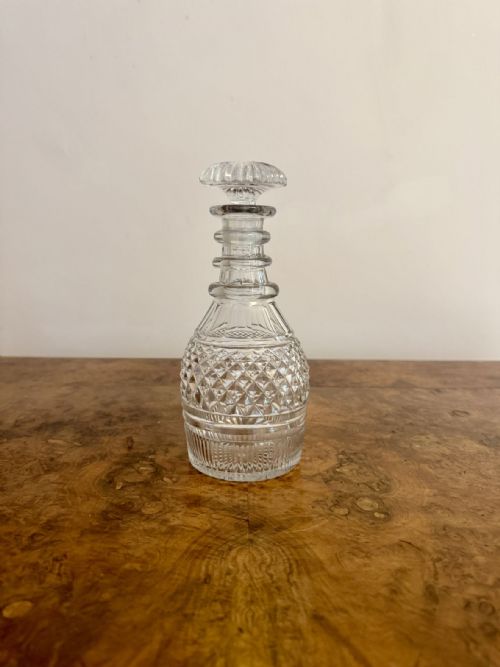
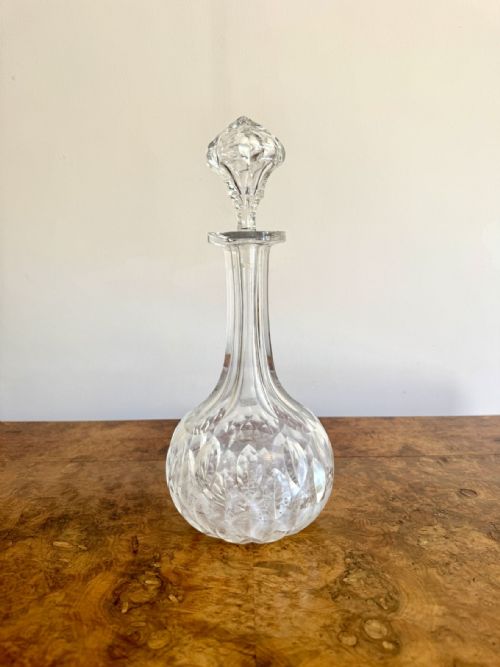
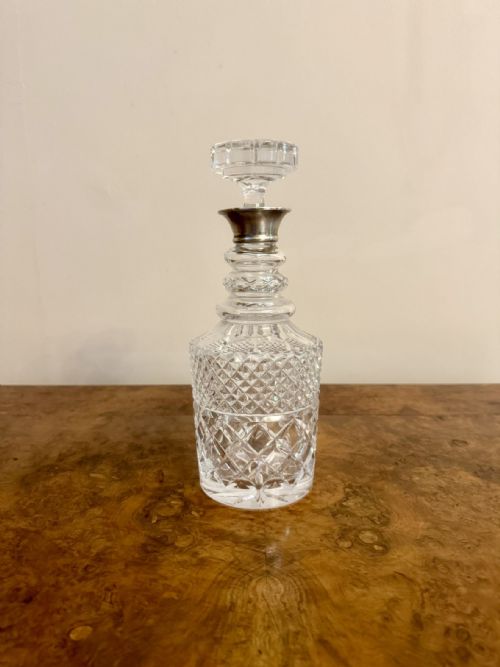
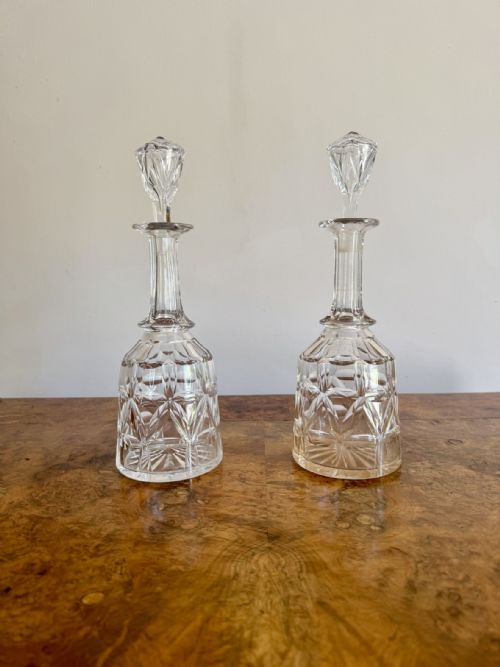
A cut glass whisky decanter sits at the centre of antique barware, taking the form of square section tapered bottles, bell shaped vessels, and spirit barrels. Buyers encountering this phrase will frequently find Edwardian and Victorian examples, alongside George V and Art Deco pieces designed for holding spirits.
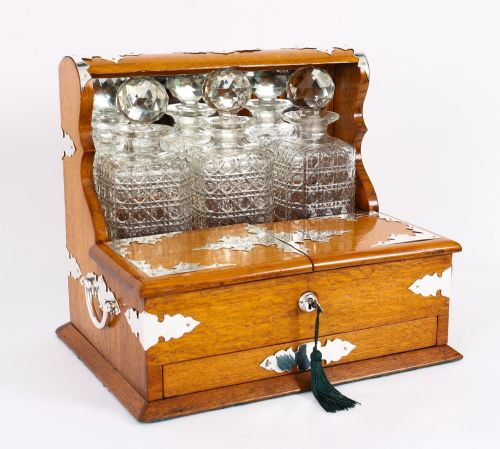
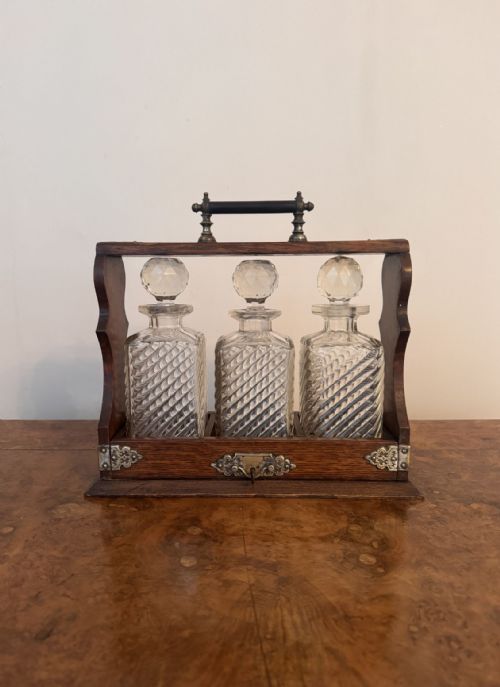
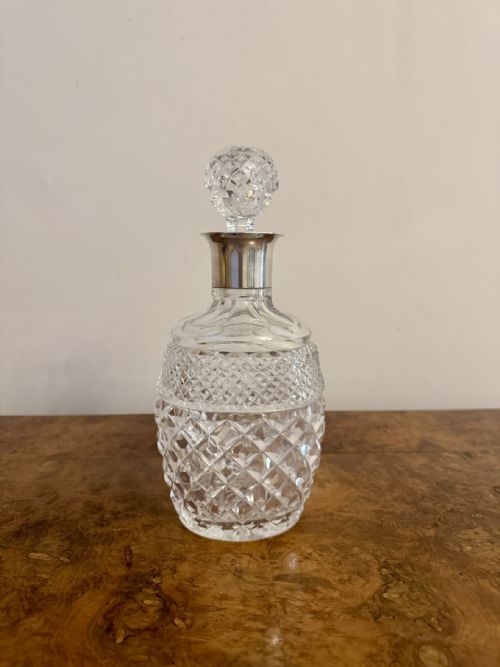
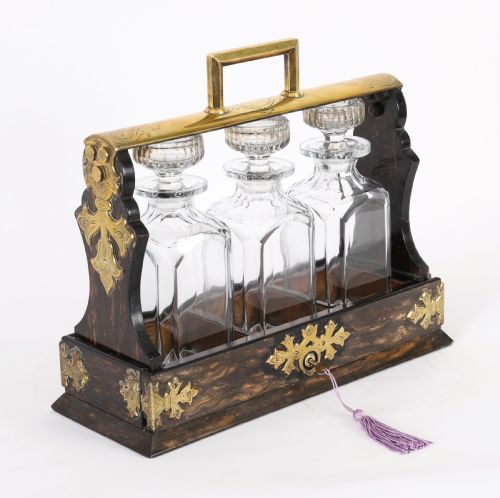
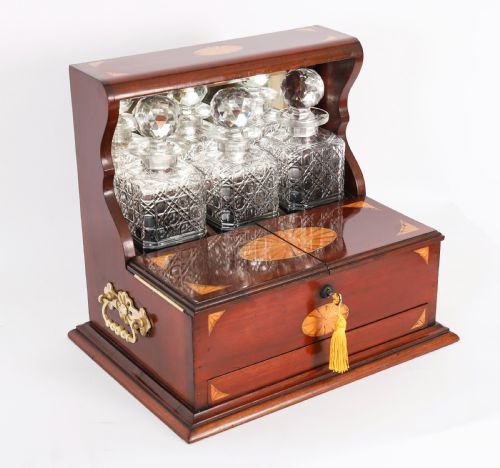
Many of these vessels are housed within oak, coromandel, or satin wood tantalus frames secured with brass or silver plated mounts, often accompanied by games compendiums or matching labels. Individual noggins and whisky jugs also appear, sometimes fitted with sterling silver collars or lids from makers such as James Powell and Hukin & Heath.
How they were made
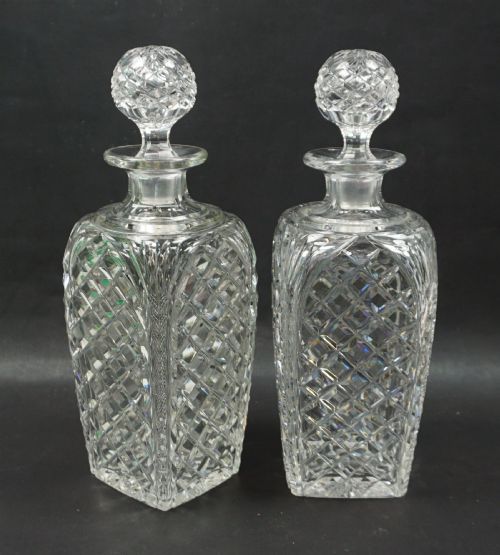
The vessels themselves utilise cut glass, lead crystal, and optically blown crystal, shaped into heavy forms and decorated with deep hobnail cutting or engraved lettering. Metalwork components combine sterling silver, silver plate, and brass to form collars, mounts, and locking mechanisms.
Cabinet work relies on timbers like oak, coromandel, blonde oak, and satin wood, frequently finished with inlay work and housing multiple matching bottles.
Some tantalus sets double as games compendiums, ensuring guests could lose their wits and their money in equal measure.
What varies in quality
Quality rests on the depth and crispness of the glass cutting, the weight of the crystal, and the presence of fully functioning locking mechanisms on tantalus frames. Pieces featuring hallmarked sterling silver collars, mounts, or matching spirit labels sit apart from simpler silver plated or unmounted versions.
The sophistication of the enclosing cabinetwork also defines the tier, where fine timber inlays, integrated games compendiums, and original matched sets of three bottles elevate the composition.
James Powell·Hukin & Heath
The Cut Glass Whisky Decanter Glossary
- Tantalus
- A locking wooden frame designed to hold decanters securely while displaying their contents without allowing them to be removed without a key.
- Noggin
- A small personal spirit bottle or jug, frequently fitted with a silver mount and a hinged lid, made for individual servings of whisky.
- Hobnail cut
- A sharp, faceted decorative pattern cut into the surface of glass or crystal that catches the light and adds tactile weight.
Cut Glass Whisky Decanter: Frequently Asked Questions
What is a tantalus decanter?
A tantalus decanter is a bottle held within a locked wooden frame that prevents guests from pouring a drink without the key. The frame exposes the spirit while keeping it secure.
These pieces typically date from the Victorian and Edwardian periods, often constructed from oak with brass or silver plated mounts designed for multiple bottles.
How do I date a decanter?
Dating relies on the style of the glass cutting, the shape of the bottle, and any accompanying metal mounts. Victorian and Edwardian examples often feature heavy lead crystal and hallmarked silver collars.
Later pieces from the George V era and the 1920s introduce sleeker profiles and specific silver hallmarks that pinpoint the year of manufacture.
What is a whisky noggin?
A whisky noggin is a small, single serving jug or bottle fitted with a silver lid and handle. These miniature vessels were used for personal portions of spirits.
They frequently appear with matching silver labels and date from the late nineteenth and early twentieth centuries.
Are the stoppers original?
Stoppers on antique decanters are hand ground to fit each individual neck during manufacture. Checking the fit and matching cut patterns helps determine if the stopper belongs to the vessel.
Many listings specify whether the stopper and bottle form an original matched pair.