

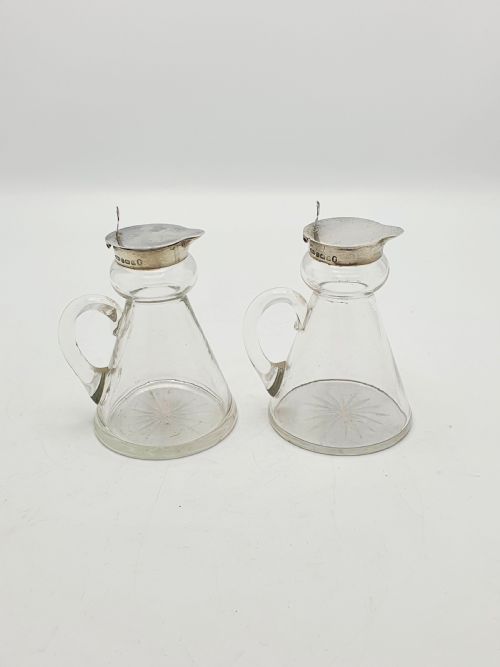


Silver Whisky Decanter
When you handle a silver whisky decanter, you hold a tangible piece of late Victorian, Edwardian or George V barware designed for the formal pour.
Silver Whisky Decanter
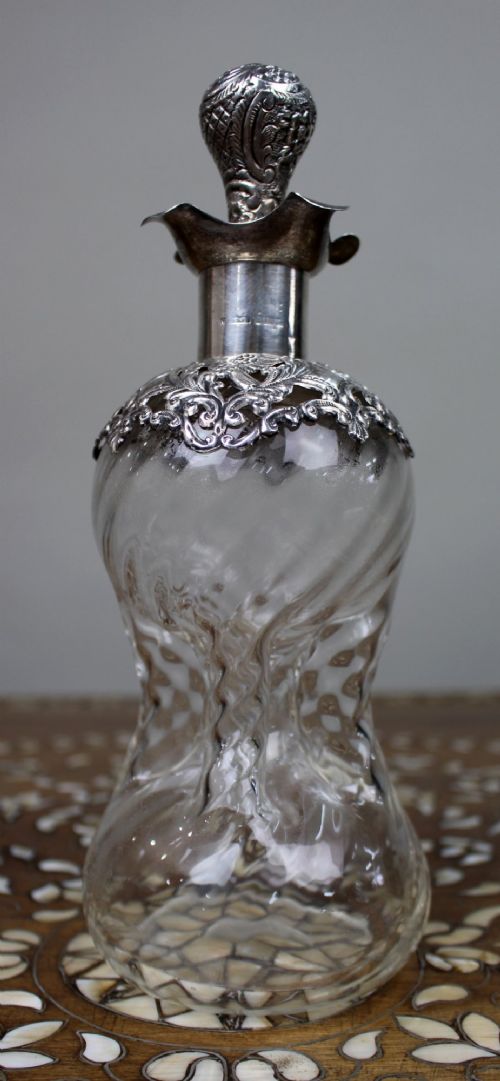
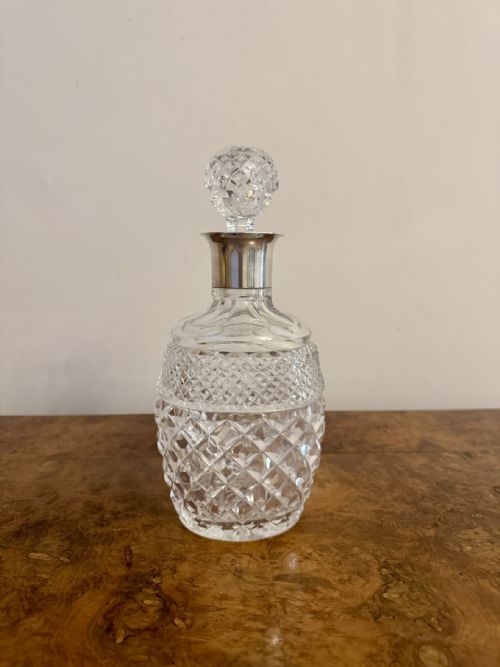
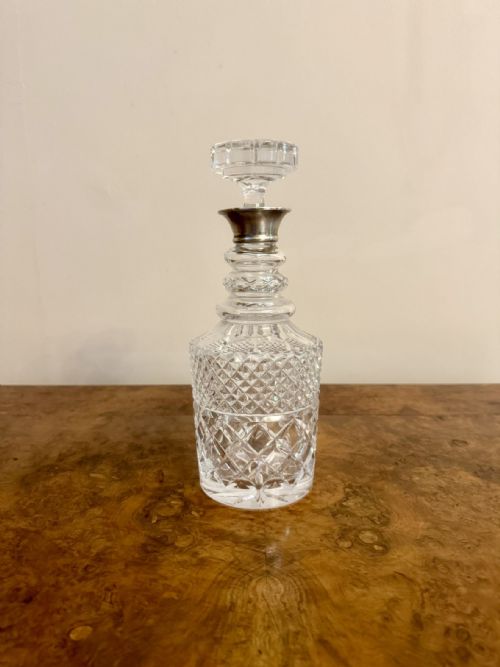
A silver whisky decanter encompasses several distinct forms found in period homes, most frequently appearing as the compact single-portion whisky noggin or the taller collared crystal bottle. These items date primarily from the Victorian and Edwardian eras through to the George V period, reflecting the changing social rituals of the late nineteenth and early twentieth centuries.
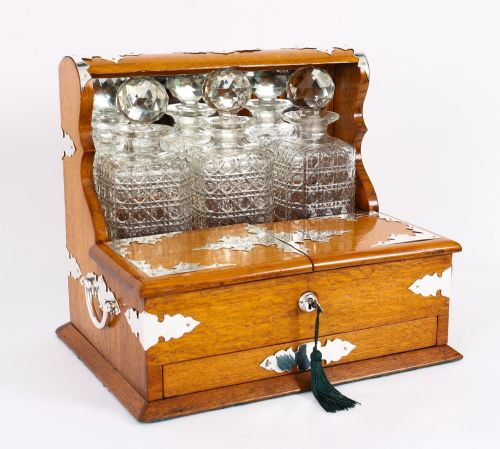
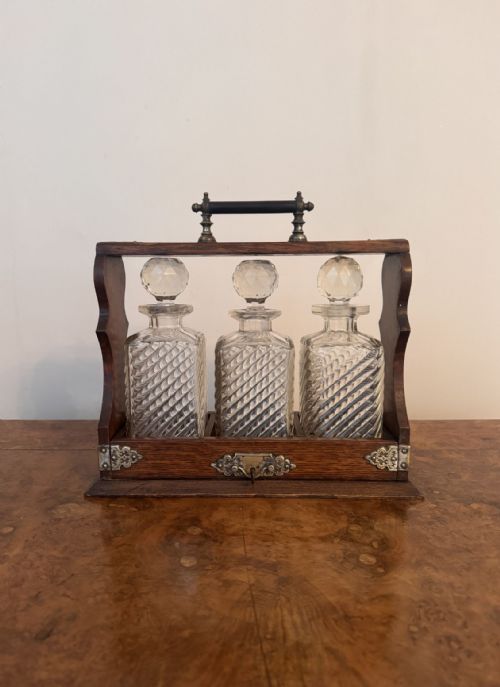
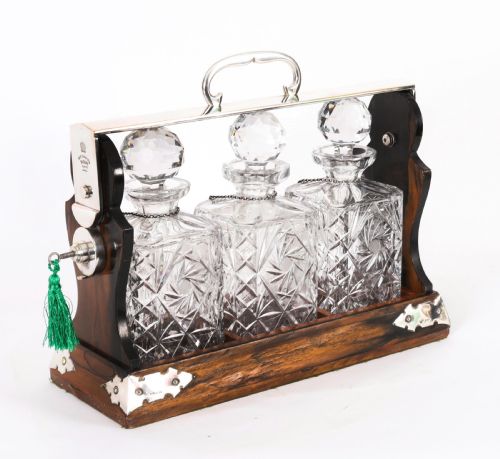
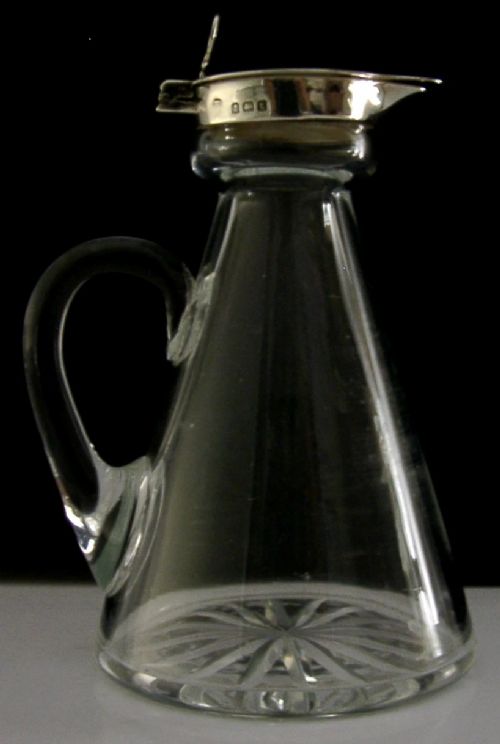
Buyers also encounter multi-bottle tantalus sets housed in oak or blonde wood frames, alongside smaller spirit jugs, flagons and associated silver bottle labels. The single-bottle whisky noggin with its star-cut base and hinged silver thumbpiece remains the most recurrent and recognisable format on this page.
How they were made
Makers combined heavy lead crystal, cut glass or coloured glass with sterling silver collars, mounts and hinged lids, often utilising silver plate for larger tantalus frames. Glass bodies were mould-blown, heavy-cut or dimpled, then fitted with hallmarked silver mounts secured by specialised adhesives and pins.
Silver components were cast, spun or stamped, bearing hallmarks that record the assay office, maker's mark and year of assay. Wood cases for tantalus sets utilised oak, coromandel or blonde oak, fitted with lockable brass mechanisms to secure the decanters within.
Some nineteenth-century decanters feature clever figurine tops that double as stoppers, watching over your scotch with stern Victorian dignity.
What varies in quality
The crispness of the glass cutting and the weight of the metal distinguish finer examples from standard production pieces. Deep wheel-cut patterns, heavy cast silver mounts with clear Birmingham or London hallmarks, and integrated matched silver labels elevate an item above ordinary utilitarian barware.
The integrity of the hinged mechanisms on noggin lids and the preservation of original stoppers significantly affect the desirability of a piece. Finer specimens display precise assembly, robust silver gauge, and undamaged crystal free from internal clouding.
Hukin and Heath·Elkington and Company·Betjemann·Sampson Mordan·George Unite
The Silver Whisky Decanter Glossary
- Noggin
- A small single-portion drinking vessel or decanter holding a quarter of a pint, typically featuring a ster-cut base and a silver lip with a hinged lid.
- Tantalus
- A locked cabinet frame holding decanters visibly behind a wooden bar that prevents removal without a key.
- Hallmark
- An official stamp applied by an assay office indicating the purity of the metal, the maker, and the year of production.
- Glug glug decanter
- A vessel with a constricted neck designed to slow the pour and produce a distinctive sound when liquid is dispensed.
- Decanter label
- A small metal tag suspended by a chain around the neck of a bottle to identify the contents such as whisky or brandy.
Silver Whisky Decanter: Frequently Asked Questions
How do I date my silver whisky decanter?
Examine the silver mounts for hallmarks stamped into the metal, which include symbols for the assay office, the maker, and a date letter.
Matching these letters against official assay office tables reveals the exact year the silver mount was tested and registered.
What is a whisky noggin?
A whisky noggin is a small, individual glass decanter fitted with a silver lip and a hinged lid, made to hold a single measure.
They became popular during the Edwardian period for bedside or study use, allowing a gentleman to pour a private dram.
How do I clean an old decanter?
Fill the vessel with warm water and specialised cleaning beads or rice, avoiding harsh detergents that might damage the antique glass.
Allow the interior to soak before rinsing thoroughly, and ensure the piece dries completely upside down without the stopper inserted.
Are original stoppers important?
Original stoppers that match the cut and colour of the glass body contribute significantly to the completeness of the piece.
Replacements are common due to breakage over the decades, so checking the fit and glass tone helps determine originality.