


Regency Snap Table
A regency snap table provides a clever space-saving action alongside the deep timber tones of the early nineteenth century.
Regency Snap Table
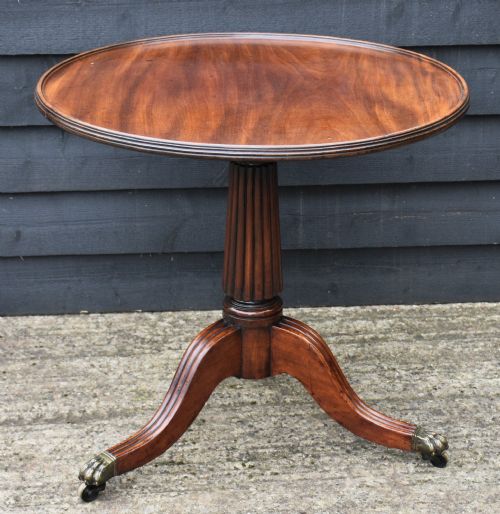
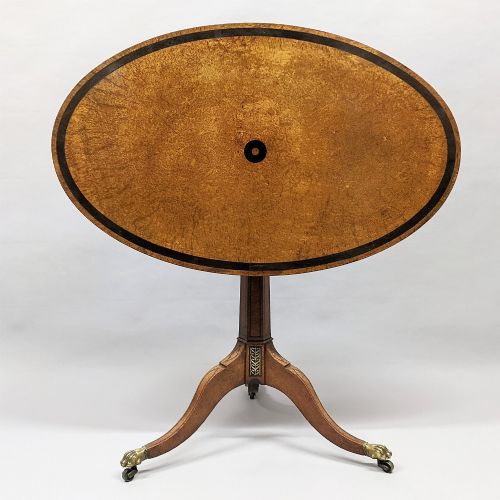
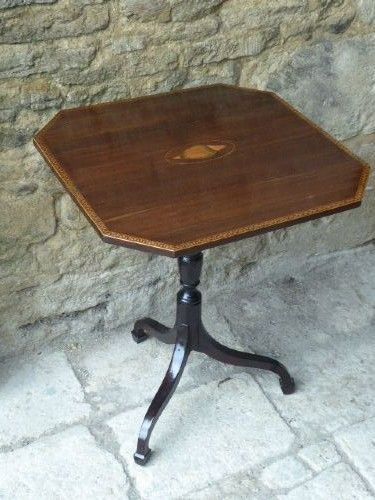
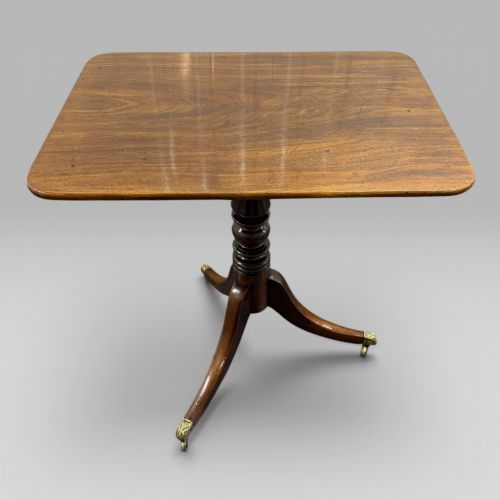
When you search for a regency snap table, you are looking at practical furniture designed to tilt flat when not in use. These pieces appear most frequently in mahogany, rosewood, and amboyna, spanning the Georgian, Regency, and William IV periods.
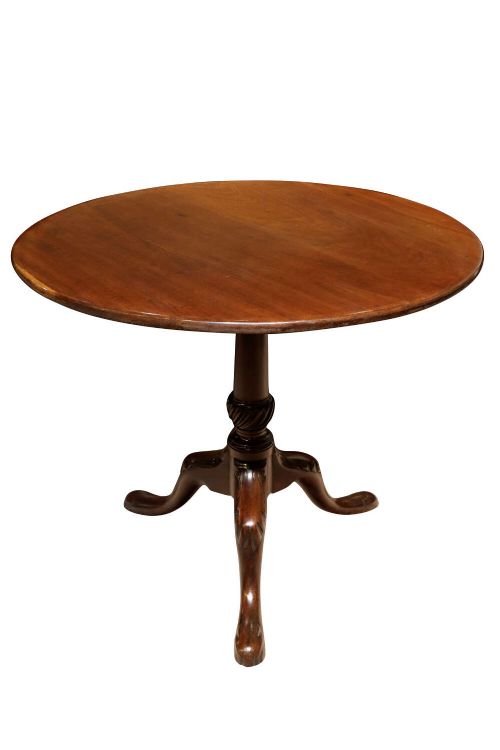
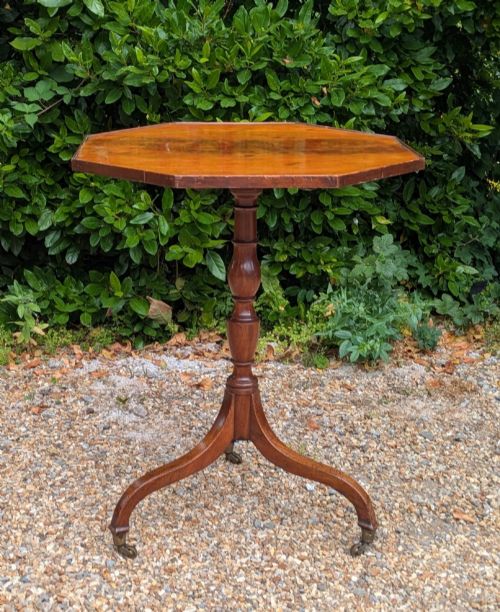
The selections on this page range from compact wine and occasional tables to larger breakfast and dining tables. Most examples rest upon a central turned column supported by splayed tripod legs, occasionally fitted with brass casters.
How they were made
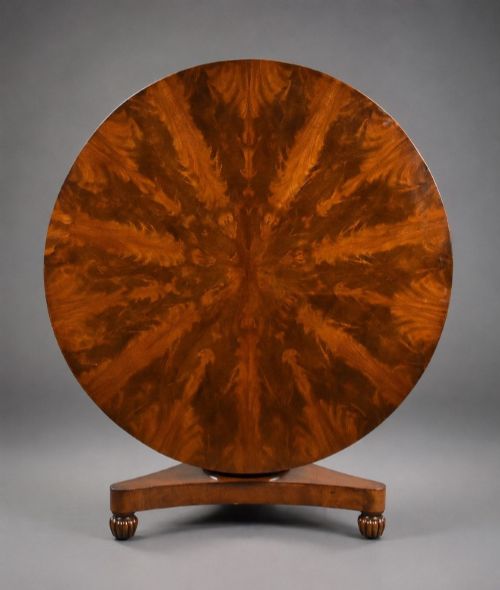
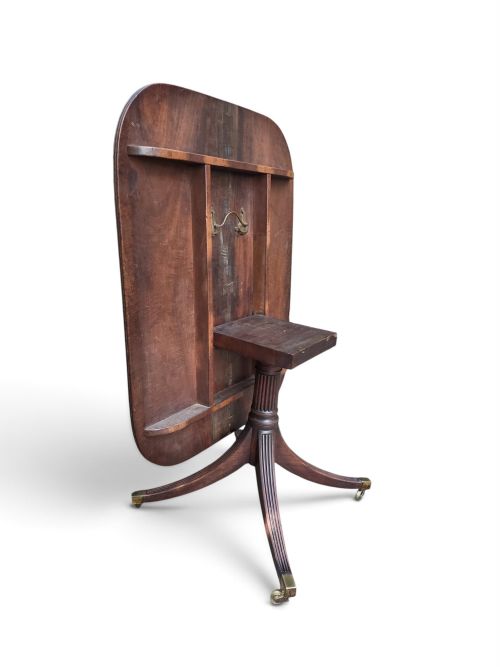
Cabinetmakers constructed these tables using solid timbers and rich veneers such as flame mahogany, burr wood, and satinwood. The tilting mechanism relies on a clever catch and block system fixed beneath the circular or rectangular top.
Support columns are frequently turned from single blocks of mahogany or rosewood, meeting sturdy tripod or pedestal bases. Brass inlay and metal casters add functional detail to select examples from the period.
Listings feature woods including mahogany, rosewood, amboyna, satinwood, ebony, birch, elm, and burr yew.
What varies in quality
The distinction between ordinary and superior pieces rests in the selection of timber figures and the crispness of the turning. Tables featuring finely figured flame mahogany or exotic amboyna sit at the upper end of the range.
Mechanism design and structural integrity also separate fine examples from simpler ones. A well-fitted snap action that locks securely into place without wobble demonstrates superior period craftsmanship.
The Regency Snap Table Glossary
- Snap-top
- A table mechanism allowing the surface to tilt vertically when not in use. This clever design enabled tables to be stored flat against walls to save floor space.
- Tilt-top
- An alternative term for a snap table. It describes the hinged construction connecting the tabletop to the central pedestal.
- Tripod table
- A piece supported by three splayed legs branching from a central pillar. This configuration ensured stability on uneven floors.
- Flame mahogany
- Timber cut to reveal a flickering, wavy grain pattern. Cabinetmakers prized this figure for prominent tabletops during the Regency era.
- Casters
- Small wheels attached to the base of table legs. They allowed heavy dining and breakfast tables to move across carpets with ease.
Regency Snap Table: Frequently Asked Questions
What is a regency snap table used for?
These tables served multiple functions throughout the nineteenth century, acting as dining tables, breakfast tables, or occasional lamp stands.
Because the top tilts flat, the table could easily move out of the way to clear floor space in smaller rooms when dining or entertaining concluded.
How do I operate the tilt mechanism?
A small brass or wooden catch beneath the tabletop releases the locking mechanism.
Once unlatched, the surface pivots on its central block to rest in a vertical position against the pedestal column.
Are all these tables from the Regency period?
While the search phrase points to Regency designs, the evidence includes related pieces from the Georgian, William IV, and Victorian eras.
Later nineteenth-century revival pieces also appear alongside genuine early nineteenth-century examples, reflecting enduring popularity for the style.
How do I fit one into a modern room?
A tripod base allows these tables to tuck neatly into corners or beside seating without dominating a room.
You can keep the top tilted against a wall as a decorative panel when floor space is needed.