
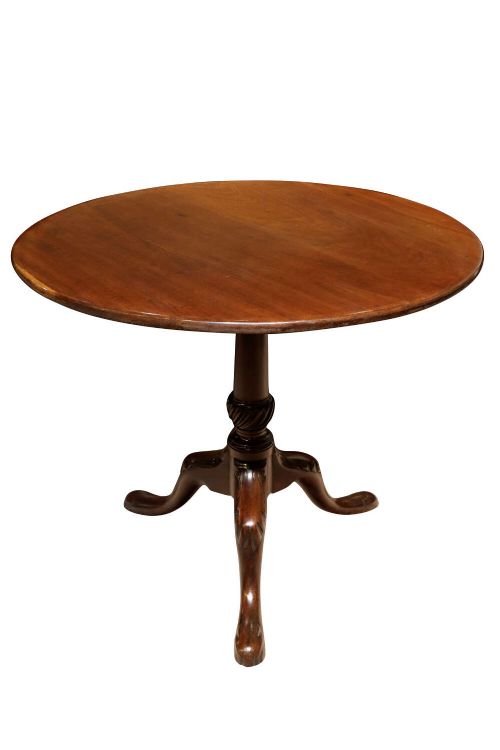
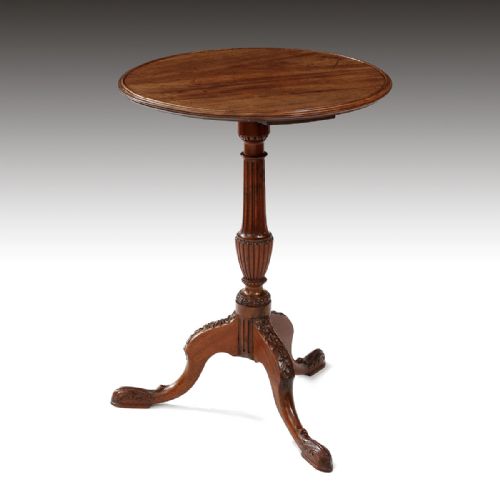
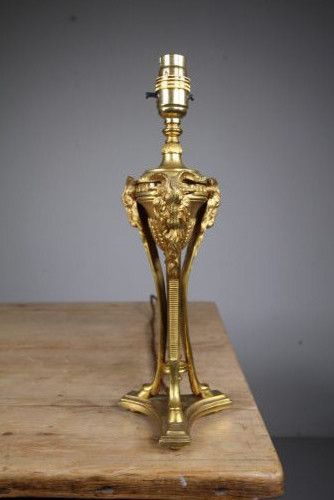
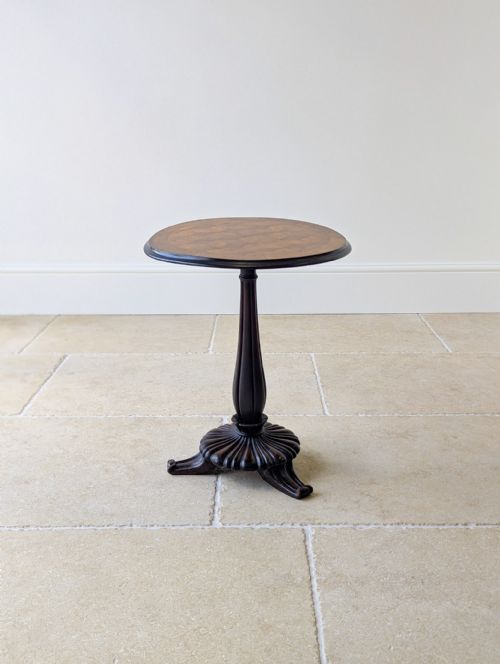

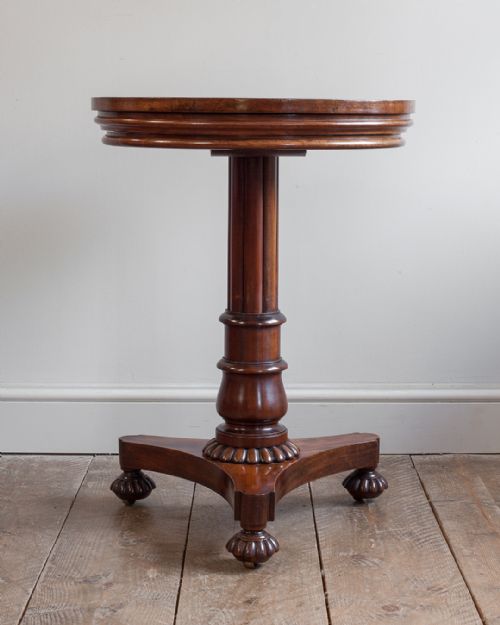
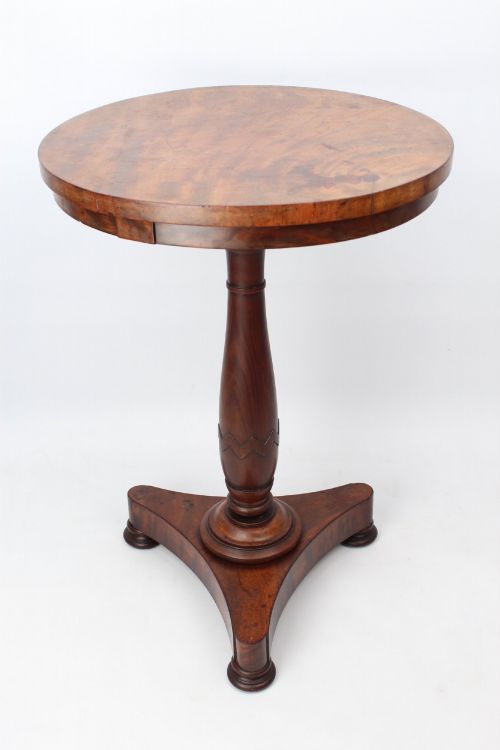
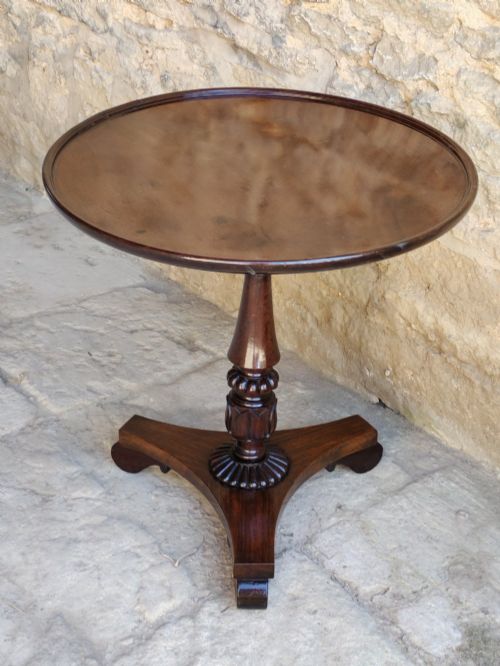
Regency Carved Tripod Table
A regency carved tripod table brings architectural proportion and steady three-legged balance to a room.
Regency Carved Tripod Table
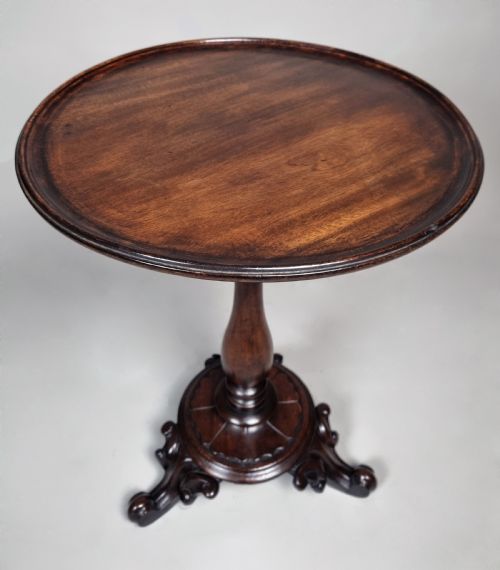
A regency carved tripod table is a compact pedestal piece designed for occasional use as a wine, lamp, or tilt-top table. These items emerge primarily from the nineteenth century, spanning periods from Georgian through William IV and Regency styles.
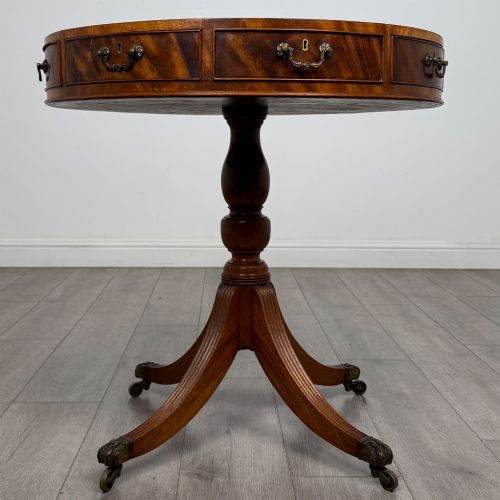
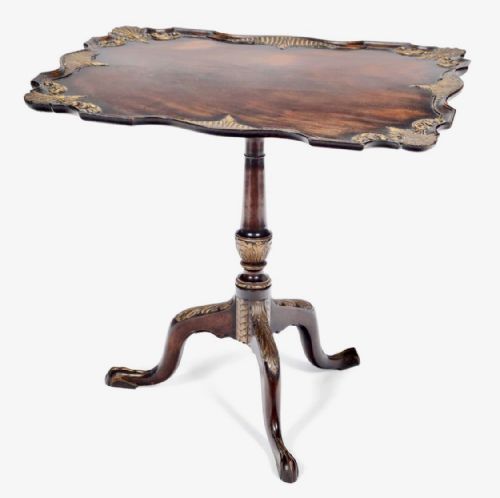
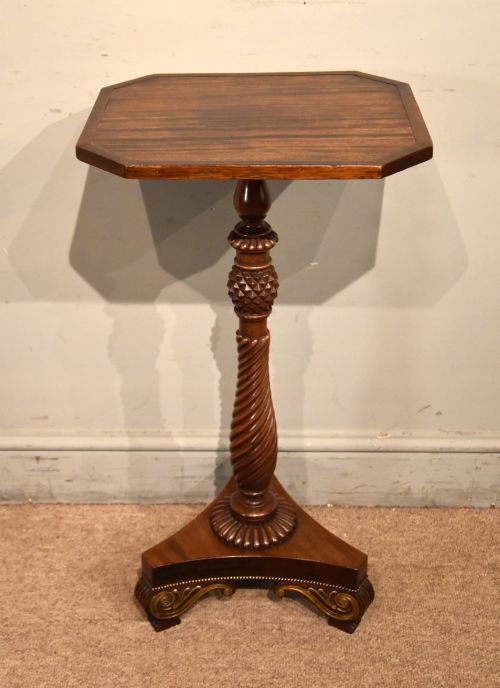
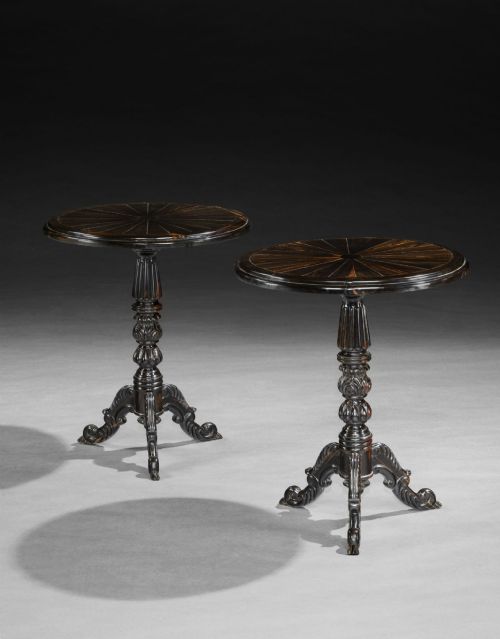
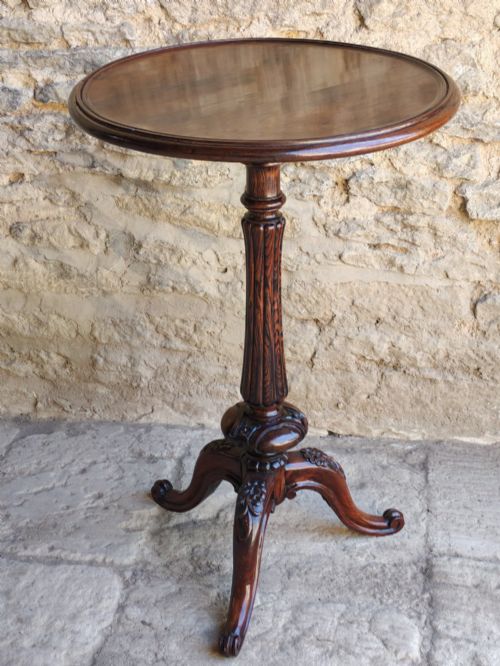
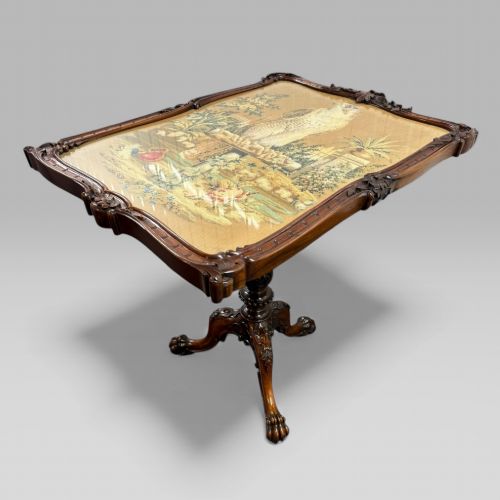
The form relies on a central pillar supported by three splayed legs, often featuring carved details on the base or pillar. Buyers encounter circular tops, some hinged to tilt upright, alongside octagonal and occasional variants.
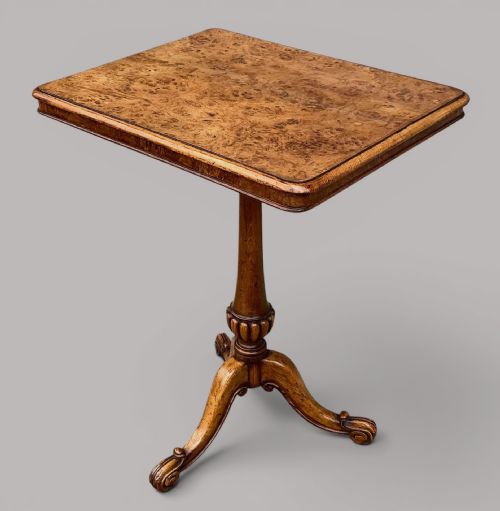
Timbers such as mahogany, rosewood, and burr oak dominate the selection, occasionally augmented by brass mounts or boxwood stringing. Most examples function flexibly as side pieces or centre tables within domestic spaces.
Materials and construction
Cabinetmakers utilised dense hardwoods like mahogany and rosewood, frequently applying flame veneers or burr oak to create rich surface grain patterns. Turning lathes shaped the central pedestals, while hand-carving defined the pillars, knees, and feet.
Tilt-top mechanisms incorporated clever wooden catches and brass fittings to allow tops to fold flat when stored against a wall. Joinery relied on sturdy pegged tenons and pillar blocks to secure the three splayed legs to the central shaft.
Listings feature woods spanning mahogany, rosewood, burr oak, satinwood, and yew wood across nineteenth-century periods.
Assessing craftsmanship
The crispness of the hand-carving on the pedestal and legs distinguishes finer examples from simpler production. Sharp, deep relief work indicates a skilled hand, whereas softened edges suggest secondary execution.
Selection of timber grain fundamentally alters the visual weight of the piece, with matched flame mahogany or figured burr woods commanding attention. Structural integrity at the tripod junction dictates long-term stability and usability.
Gillow·James Mein of Kelso
The Regency Carved Tripod Table Glossary
- Tripod table
- A small freestanding table supported by a central pillar and three legs. This construction prevents wobbling on uneven floors.
- Tilt-top
- A table top hinged to pivot vertically so the piece stores compactly against a wall. Such mechanism requires precise brass or wooden catches.
- Wine table
- A diminutive occasional table designed to hold glassware or bottles beside a chair. They frequently feature circular or dished tops.
- Boxwood-strung
- Inlaid with narrow strips of contrasting pale boxwood to outline panels or edges. This technique creates a delicate linear border.
- Gueridon
- A small ornamental stand or table, often of French inspiration, used for holding lamps or decorative objects. The form arrived in British interiors during the Regency period.
Regency Carved Tripod Table: Frequently Asked Questions
What is a tilt-top table used for?
A tilt-top table functions as a standard occasional or wine table during evening gatherings and social events. When not in use, the hinged mechanism allows the surface to lock vertically so it occupies minimal floor space.
Historically, owners pushed these folded tables against room perimeters to clear space for dancing or other activities. This dual nature combined decorative display with practical adaptability in period interiors.
How do I distinguish Regency from William IV?
Regency pieces often display restrained neoclassical elegance with slender proportions, delicate stringing, and parcel gilding. The influence draws heavily on ancient Greek and Roman motifs.
William IV furniture tends to be heavier and more robust, favouring bolder mahogany grains, substantial pedestals, and scrolling leaf carvings. Proportions grow thicker to project an impression of solid architectural strength.
Where should I place a tripod table?
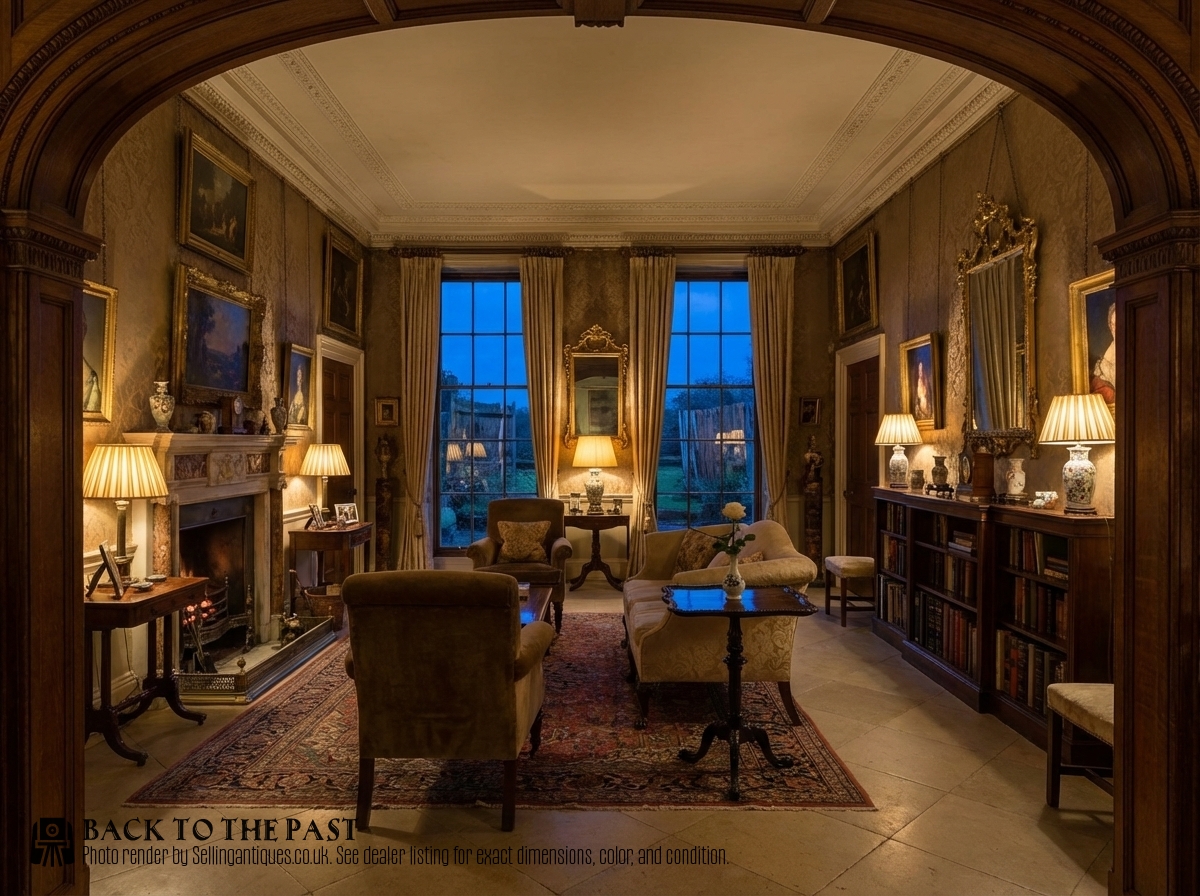
These tables suit placement beside seating areas where a compact surface is needed for a lamp, book, or glass. Their small footprint allows them to tuck easily into corners or beside fireplace hearths.
Avoid positioning them in direct sunlight or close to active heat sources, as historical wood veneers can dry and warp. The three-legged base also sits securely on most carpets and flat floorboards.
Are these tables sturdy enough for daily use?
Solid hardwood construction ensures these tables handle normal placement of lamps and decorative objects without issue. The three-legged tripod design naturally adjusts to minor floor irregularities.
Care should be taken when moving them to lift by the central pillar rather than the outer top edge. This prevents undue stress on the joinery connecting the legs to the shaft.