
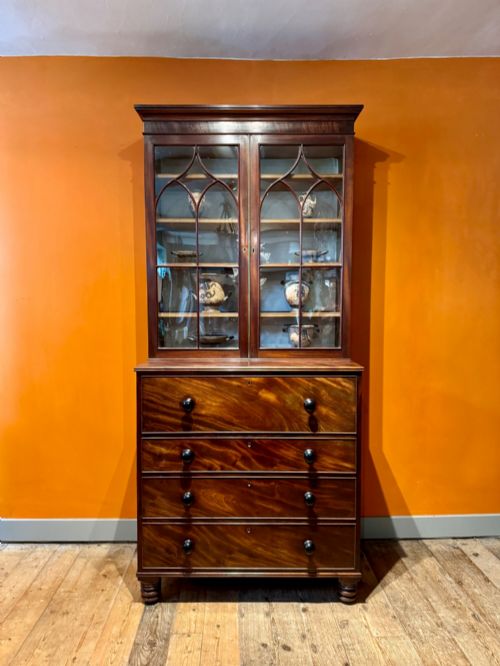
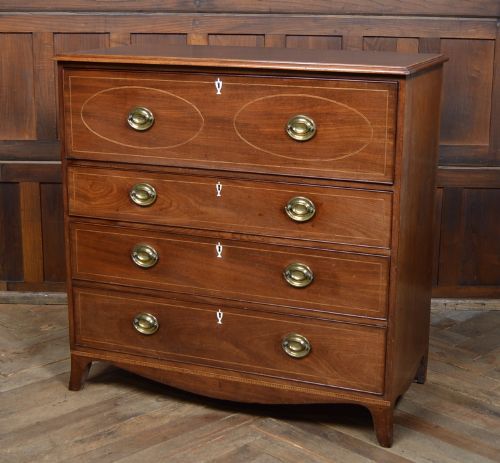


Regency Secretaire Chest
A regency secretaire chest combines the practical storage of a chest of drawers with a clever drop-down writing desk for daily correspondence.
Regency Secretaire Chest
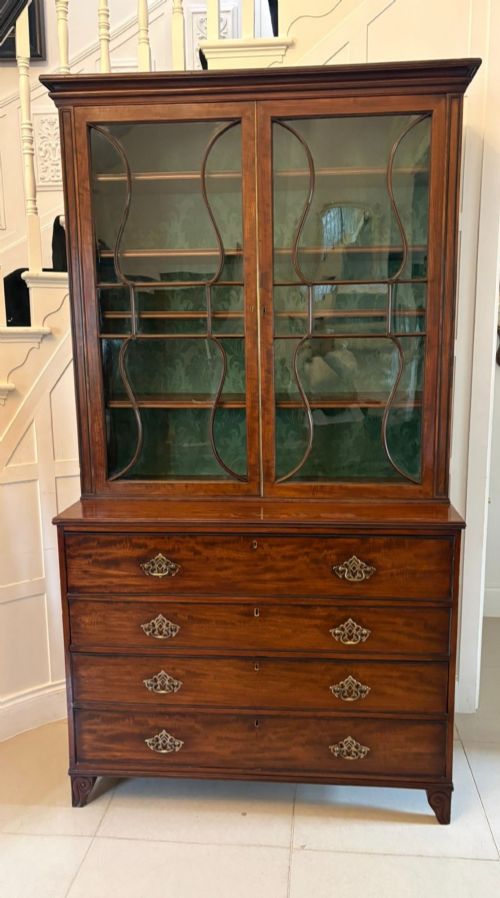
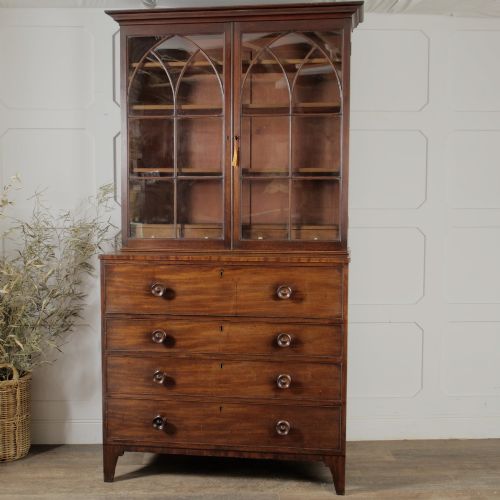
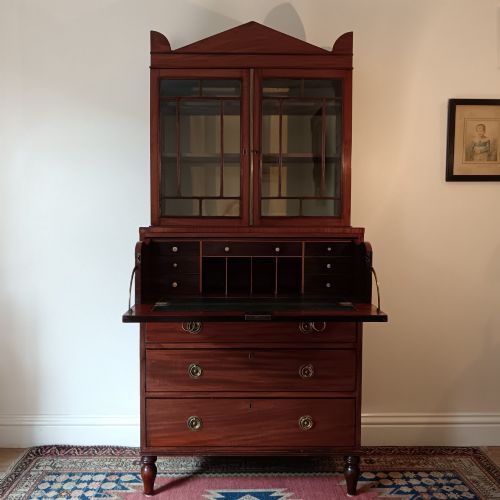
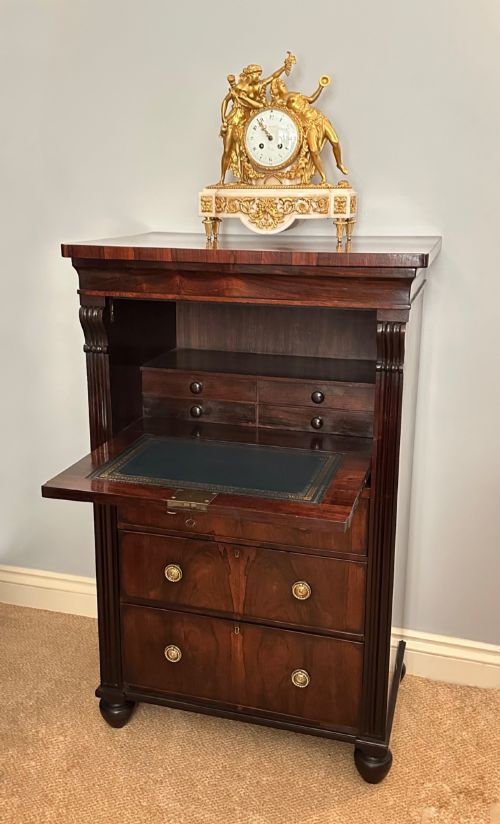
A regency secretaire chest presents as a standard set of drawers from the exterior, yet conceals a fitted writing compartment within the upper drawer tier. The drop-front drawer opens to reveal small drawers, pigeonholes, and frequently green baize or leather writing surfaces.
Most examples encountered on this page date from the Regency and Georgian periods through to the mid nineteenth century. Alongside standalone drawer units, buyers regularly meet taller secretaire bookcases and compact Wellington chests.
How they were made
Cabinet makers selected dense timbers such as mahogany, rosewood, walnut, and pollard oak, often choosing figured flame veneers for primary drawer fronts. Secondary framing timbers commonly include oak and softer pine linings.
Brass fittings, campaign hardware, and bone escutcheons punctuate the polished timber surfaces, while internal writing compartments integrate leather or baize inserts alongside delicate small drawers.
Regency Secretaire Chest Retail Price Guide 2026
Typical asking prices for regency secretaire chest among the pieces listed under this phrase on Sellingantiques today, from the lower quarter to the upper quarter. They describe what is for sale here now, not the wider market.
Secret drawers hidden behind dummy pigeonholes reward curious owners with miniature hiding spots for tiny keepsakes.
What varies in quality
The refinement of internal cabinet work largely separates standard drawer units from exceptional pieces. Superior examples showcase meticulously arranged small drawers, secret compartments, and finely tuned fall-front hinges that operate smoothly.
Timber selection dictates visual depth, with master cabinet makers utilising highly figured flame mahogany or exotic rosewood matched symmetrically across the facade. Original handles, clean oak linings, and crisp brass inlays further elevate the standing of a piece.
George Oakley·Gillows of Lancaster·WILLIAM TROTTER Edinburgh·Gillington of Dublin
The Regency Secretaire Chest Glossary
- Secretaire
- A cabinet or chest incorporating a disguised writing drawer with a drop-down front. This clever dual-purpose form became especially popular during the Regency era.
- Campaign
- Portable furniture built in sections with brass corners and recessed carrying handles for military transport. These pieces dismantle easily for travel.
- Wellington chest
- A tall, narrow chest of drawers secured by a locking side flap hinged to the right stile. It typically houses numerous shallow drawers.
- Baize
- A coarse woollen material resembling felt used traditionally to line writing surfaces and desk interiors. It provides a soft, durable pad for pen work.
- Escutcheon
- A protective plate surrounding a keyhole, usually fashioned from brass or bone. It prevents the timber surround from splitting with repeated key use.
Regency Secretaire Chest: Frequently Asked Questions
How do I use a secretaire daily?
Pull out the top locking drawer using the key or release mechanism, then lower the fall-front flap downward to reveal the writing surface. This exposes the internal pigeonholes and small stationery drawers for active letter writing.
Once finished, lift the writing flap back into place and lock the main drawer to secure the interior contents and preserve the clean chest facade.
Where were these chests placed originally?
Bedchambers, libraries, and private drawing rooms housed these versatile cabinets during the Regency period. Their dual function saved valuable floor space in fashionable townhouses.
Today, they adapt readily to modern home offices or living rooms where surface writing space and concealed storage are both desired.
What timber variations should I expect?
Mahogany dominates the surviving inventory, ranging from straight-grained cuts to highly figured flame patterns. Rosewood, pollard oak, and satinwood appear on select high-status pieces.
Secondary internal elements frequently utilise durable oak or pine linings, while decorative details incorporate contrasting satinwood stringing and brass inlays.
How do I distinguish regional styles?
Scottish and Irish workshops often applied distinct local timbers and bolder architectural proportions to their secretaire furniture. Pieces attributed to Edinburgh or Dublin makers exhibit unique internal layout arrangements.
English provincial workshops favoured classic mahogany and rosewood veneers, adhering closely to prevailing Regency design books.