
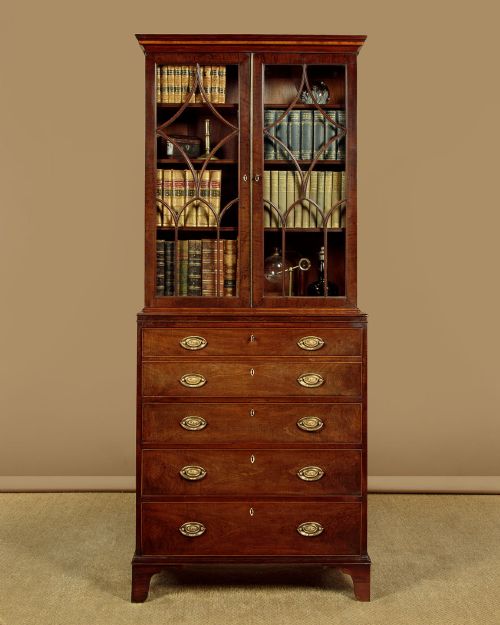
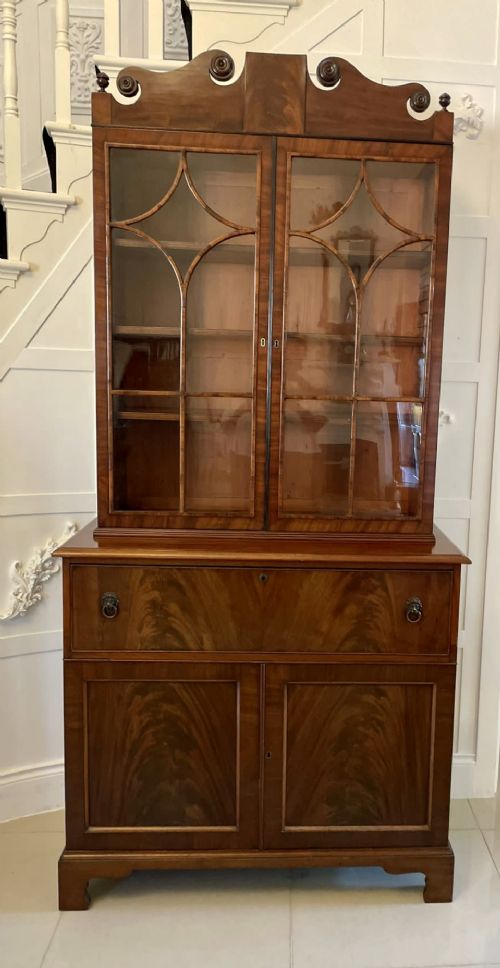
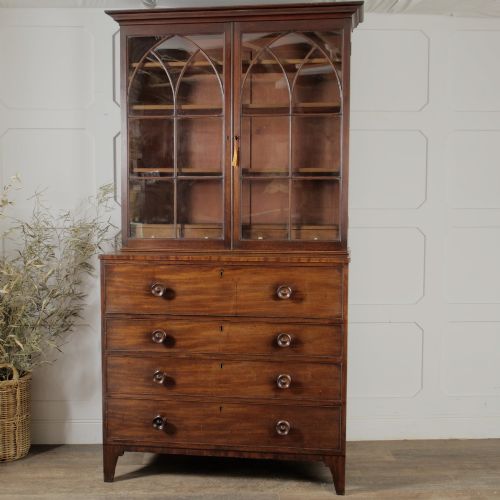
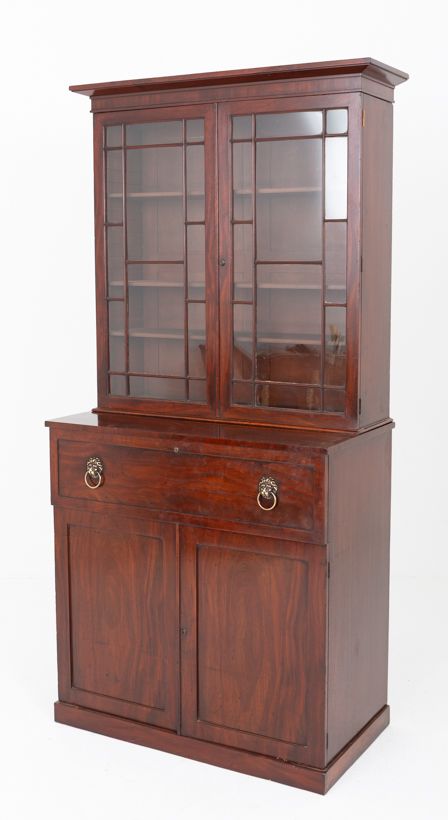
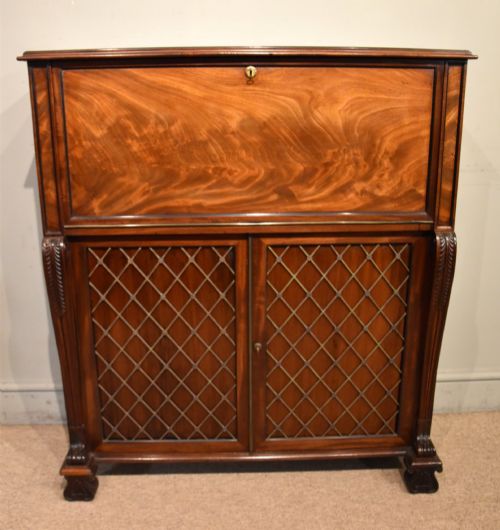
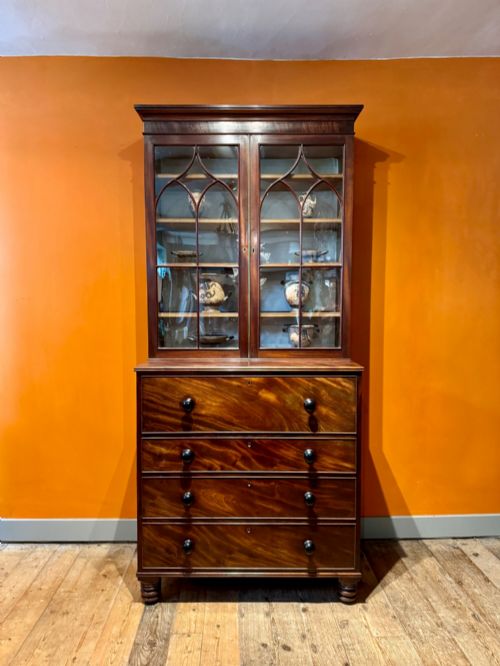


Regency Secretaire Bookcase
When you select a regency secretaire bookcase, you are acquiring a dual-purpose piece of antique furniture designed for writing and display.
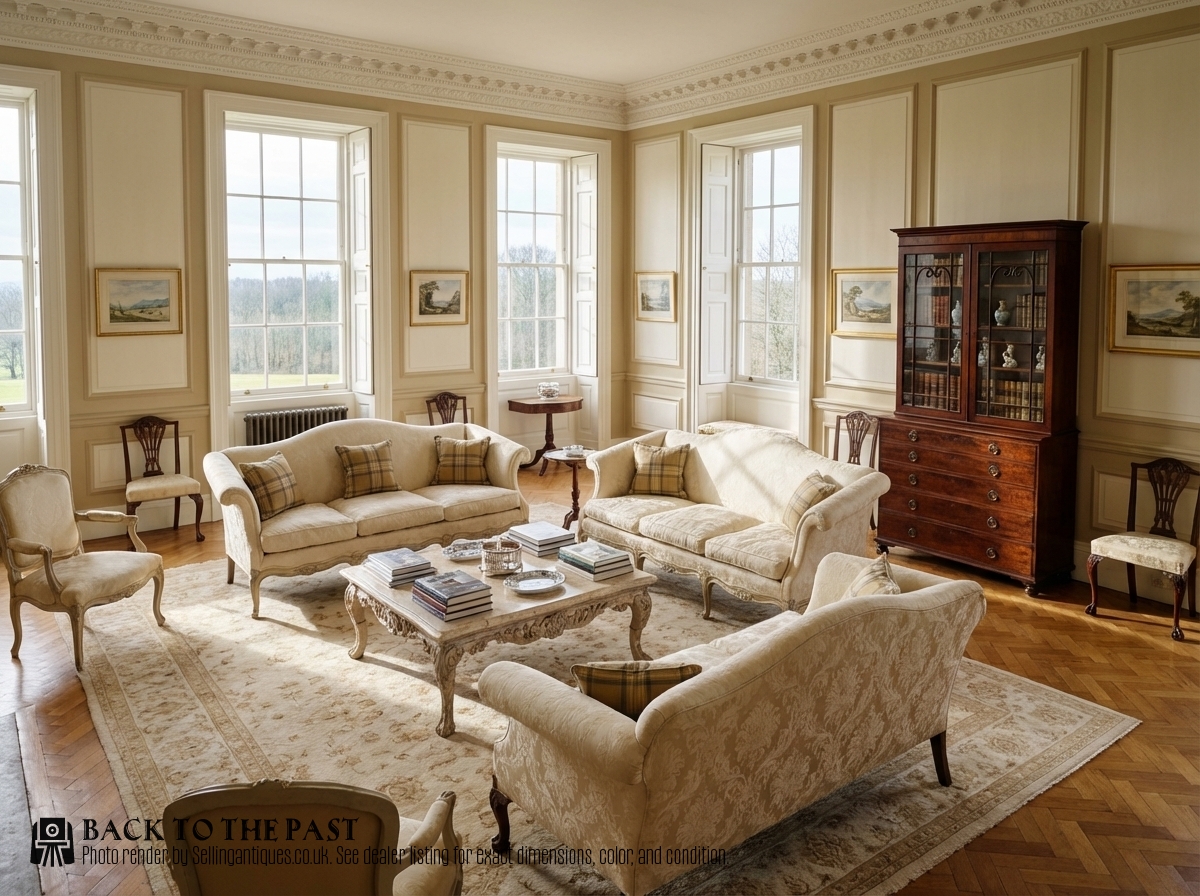
Regency Secretaire Bookcase
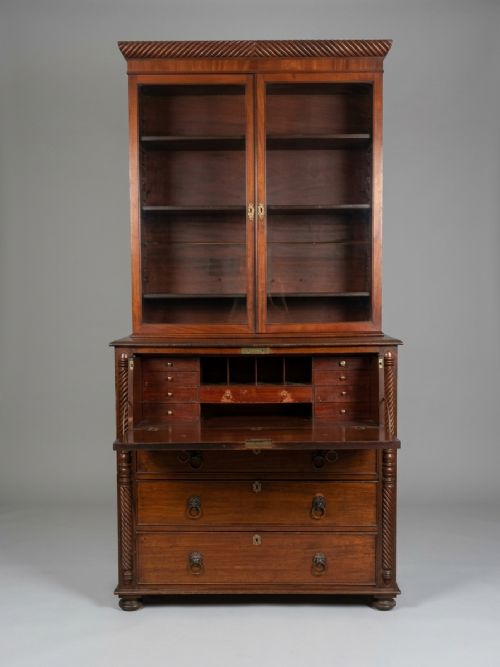
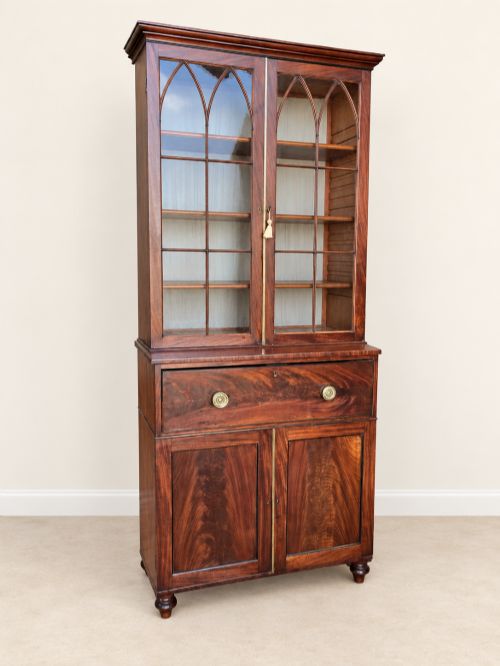
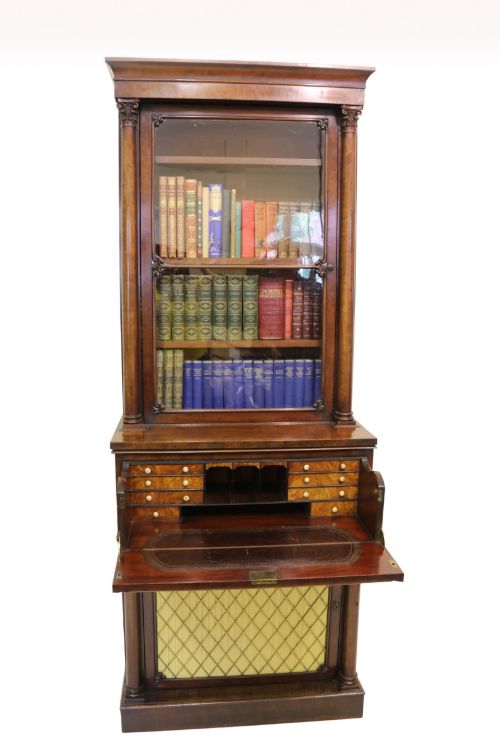
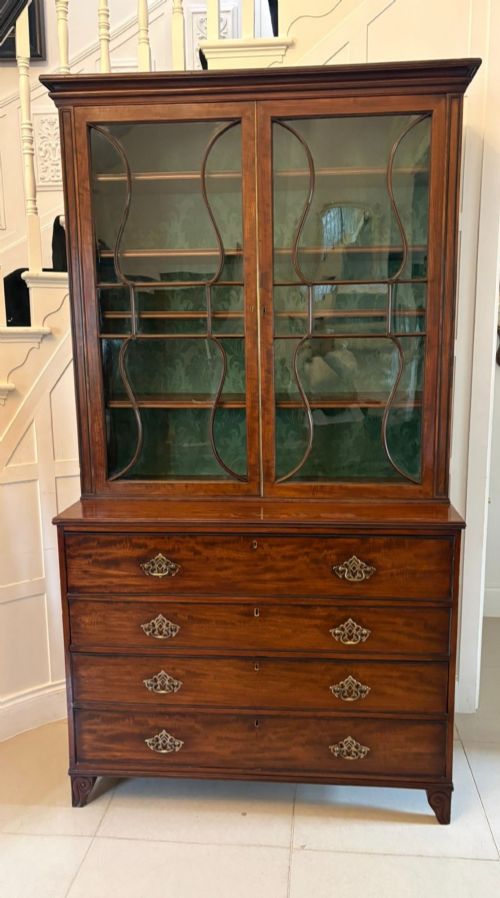
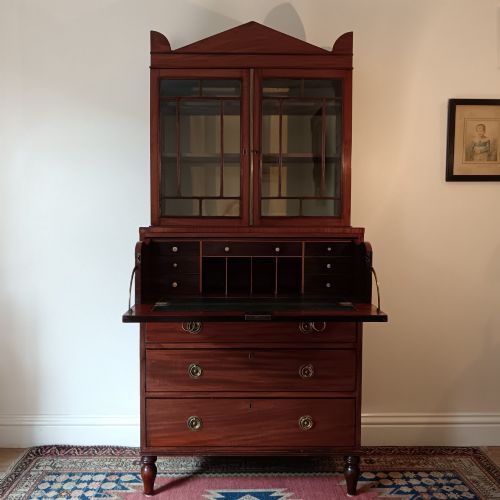
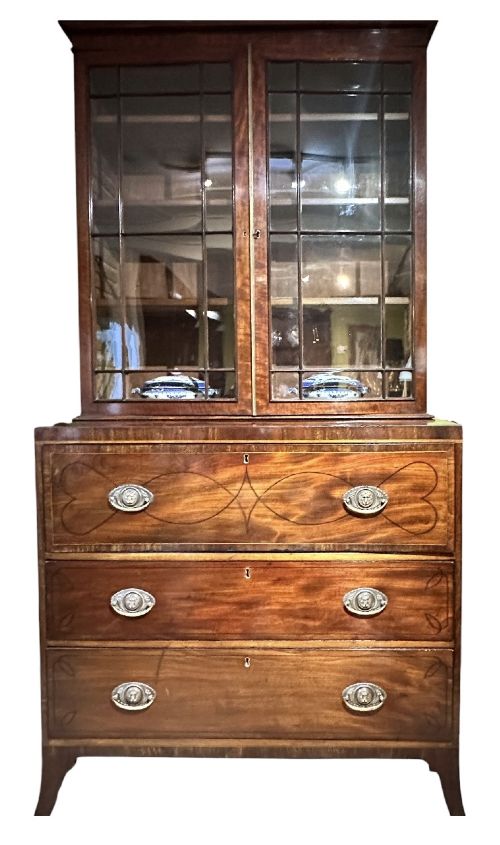
A regency secretaire bookcase combines an upper glazed or panelled display section with a lower chest base housing a fitted pull-out writing drawer. These multifunctional pieces appeared frequently during the Regency, George III, George IV, and William IV periods, extending into the Victorian era.
Originating from workshops across England, including notable cabinet makers in Lancaster and London, these pieces served practical domestic and study needs in period homes.
How They Were Made
Cabinet makers utilised solid timbers alongside figured veneers, applying flame mahogany and satinwood across primary surfaces to create dramatic grain patterns. Secondary construction frequently incorporated lesser hardwoods for internal drawer linings and carcass framing.
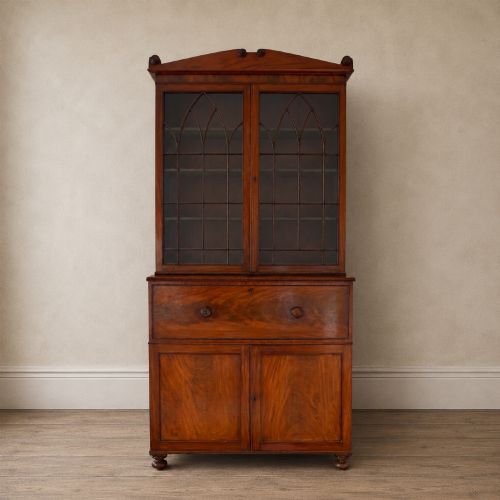
Glass was fitted into upper doors using wooden glazing bars, often arranged in geometric or astragal patterns, while brass hardware secured doors, cupboards, and secretaire drawers. Leather inserts provided a durable writing surface within the fold-down or pull-out desk section.
Joinery techniques relied on dovetailed drawer construction and mortise and tenon frames, ensuring structural stability for heavy books and daily use.
Regency Secretaire Bookcase Retail Price Guide 2026
Typical asking prices for regency secretaire bookcase among the pieces listed under this phrase on Sellingantiques today, from the lower quarter to the upper quarter. They describe what is for sale here now, not the wider market.
Many secretaire drawers include secret compartments hidden behind miniature pigeonholes for stashing confidential love letters.
What Varies In Quality
The selection and matching of wood veneers dictate much of the visual impact, with symmetrical flame mahogany and contrasting satinwood inlays marking higher grades of cabinet work. Plain, utilitarian timber surfaces placed on secondary models reflect a more modest standard of production.
Internal complexity within the fitted secretaire drawer separates standard examples from exceptional ones. Elaborate arrangements of small pigeonholes, hidden compartments, and miniature drawers demonstrate superior craftsmanship.
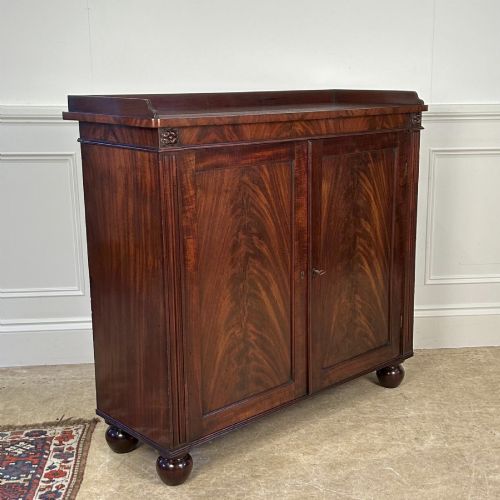
Proportion and scale also define the piece, from grand breakfront bookcases down to small, refined dwarf cabinets produced by prominent regional workshops.
Gillows of Lancaster·George Oakley·Thomas Hope·Walker of Lancaster
The Regency Secretaire Bookcase Glossary
- Secretaire
- A writing drawer or compartment featuring a drop-front panel that conceals small interior drawers and pigeonholes. This component transforms a standard cabinet into a compact desk.
- Astragal
- A small moulded bar or strip used to divide panes of glass within cabinet doors. These mouldings often form intersecting geometric or gothic arches.
- Breakfront
- A large cabinet design where the central section projects forward from the flanking wings. This architectural arrangement creates depth and visual balance across large library bookcases.
- Flame mahogany
- A veneer cut from timber where the grain resembles flickering flames. Cabinet makers prized this figure for its decorative movement on primary display surfaces.
- Dwarf cabinet
- A low-standing bookcase or storage unit produced in smaller dimensions. These pieces suited parlour rooms where tall library furniture would have overwhelmed the space.
Regency Secretaire Bookcase: Frequently Asked Questions
What is a regency secretaire bookcase?
A regency secretaire bookcase is a tall cabinet featuring upper glass doors for displaying books alongside a lower pull-out writing drawer. The central writing drawer drops down to reveal a fitted interior of small compartments.
These pieces date primarily from the early nineteenth century and combine storage, display, and writing functions into a single item of furniture.
How were secretaire drawers used?
The secretaire drawer served as a dedicated writing desk that could be closed up when not in use to conceal correspondence and papers. The front hinged downward to rest horizontally on support arms.
Inside, users found small drawers, pigeonholes for letters, and a leather-lined writing surface suited for standing or sitting.
Where did these bookcases stand?
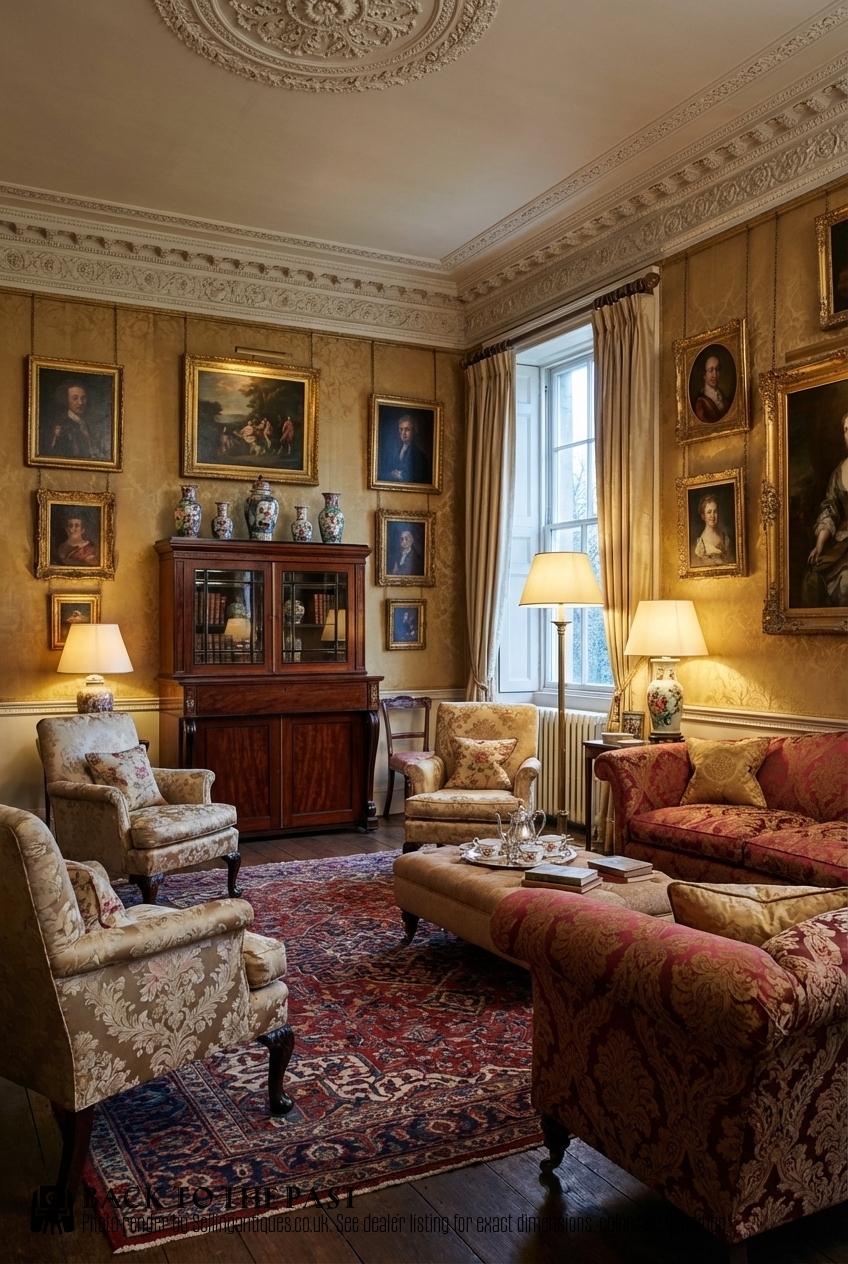
These bookcases stood primarily in domestic libraries, drawing rooms, and studies of Regency and Georgian homes. Their dual purpose made them practical for managing household accounts and reading.
Grand breakfront versions anchored large formal rooms, while smaller dwarf cabinets fitted into more intimate parlours.
How do I identify Regency style?
Regency style is characterised by classical architectural influences, balanced proportions, and decorative use of figured veneers. Cabinet makers utilised mahogany, rosewood, and satinwood alongside brass mounts and inlay.
Glazed doors often featured intricate astragal bars, while the overall silhouette remained clean and structured without excessive ornamentation.