

Satinwood Inlay Cabinet
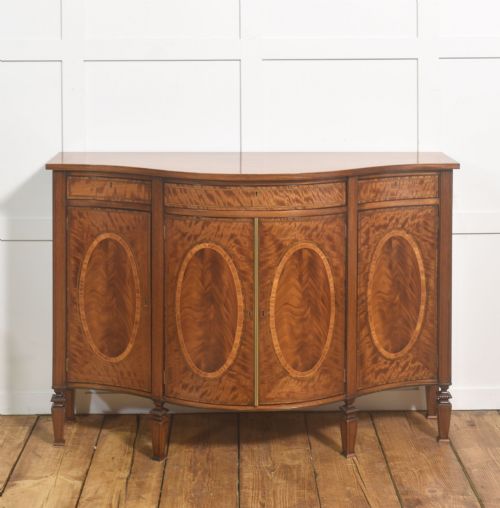
These satinwood inlay cabinet pieces bring figured timber and delicate stringing together, offering refined display space for collections.
What these cabinets are
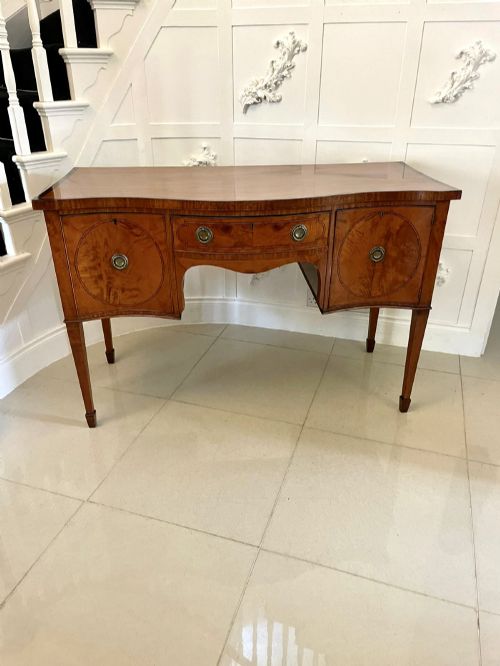
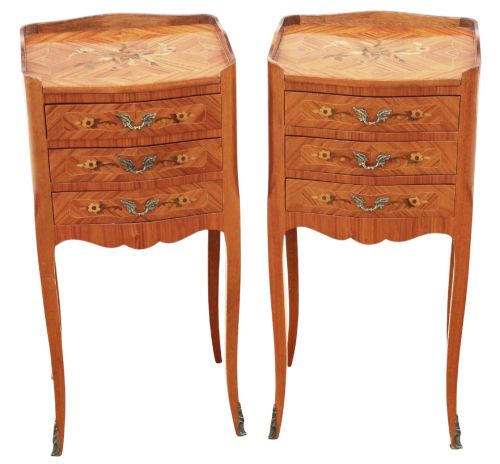
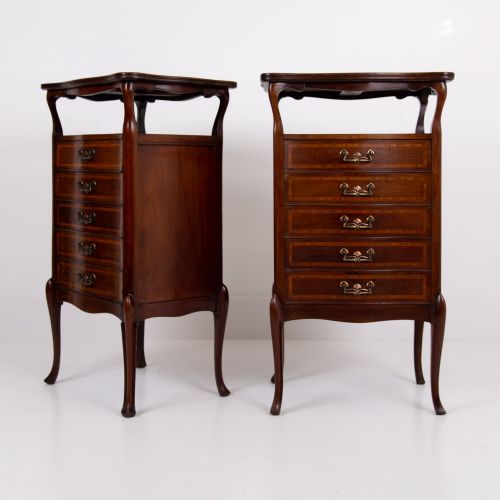
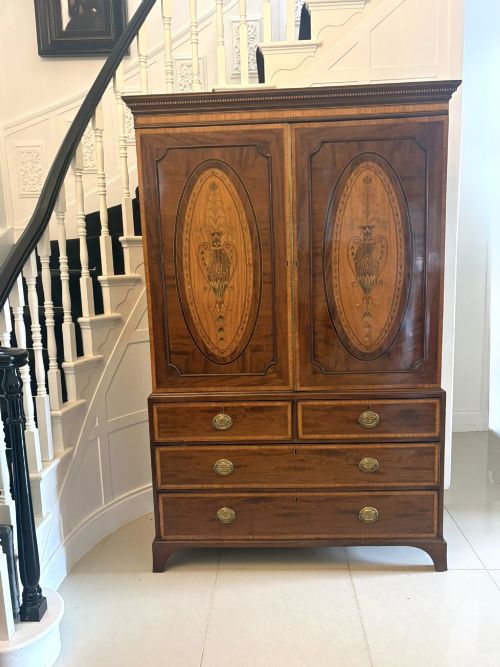
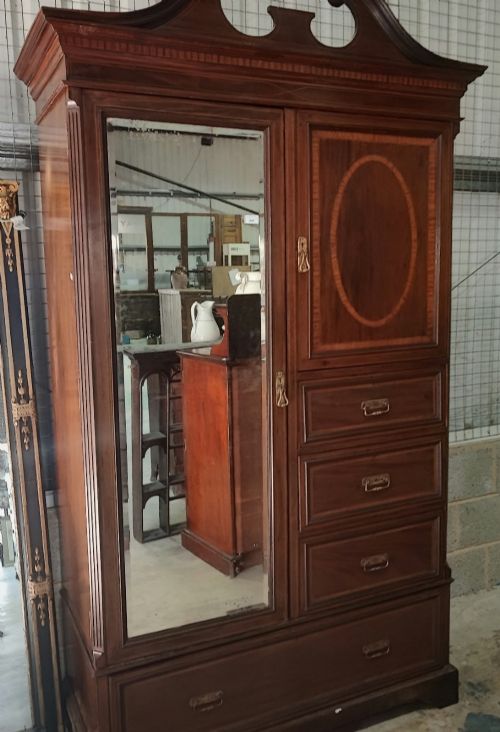
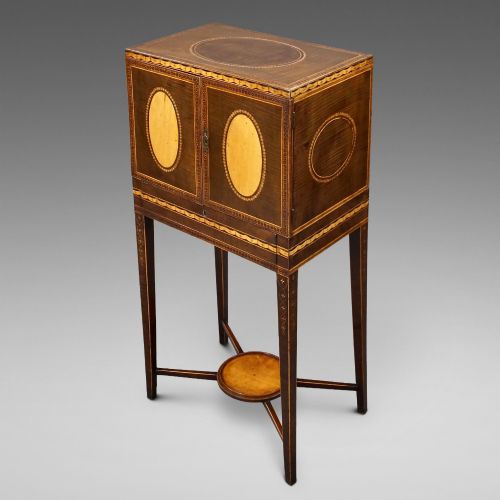
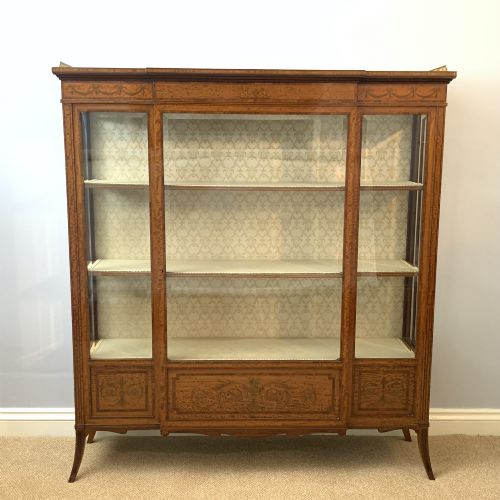
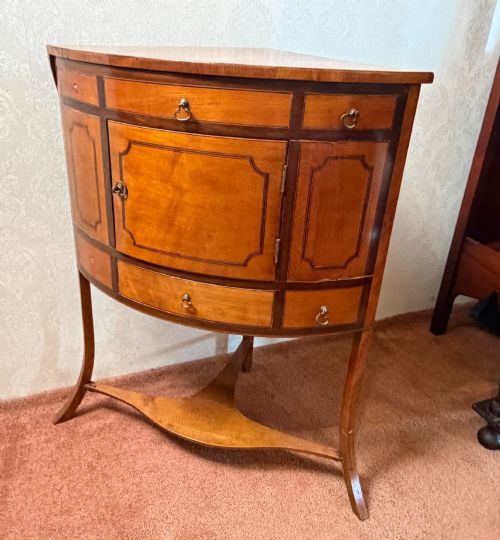
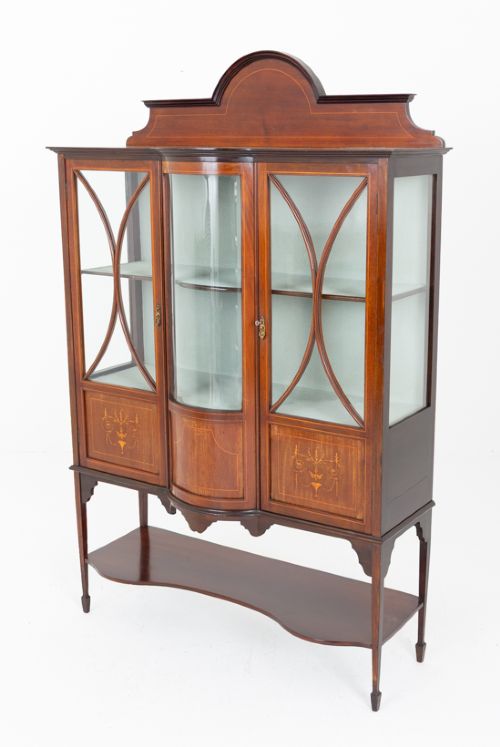
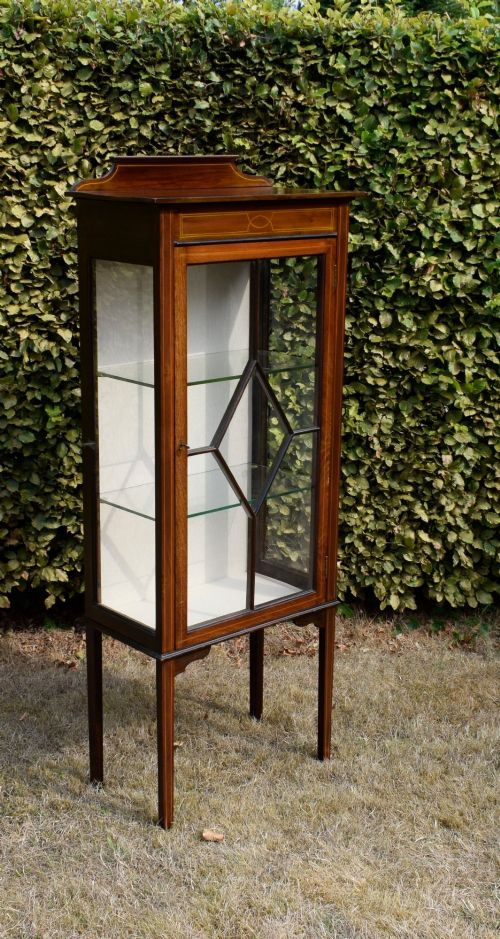
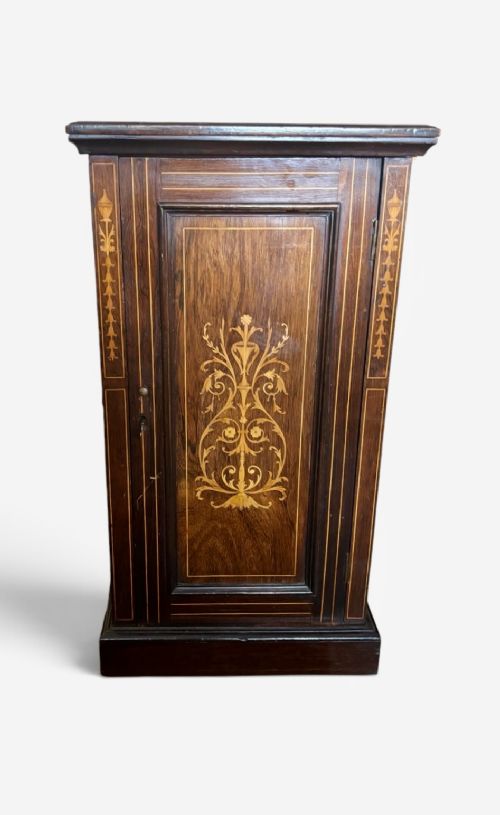
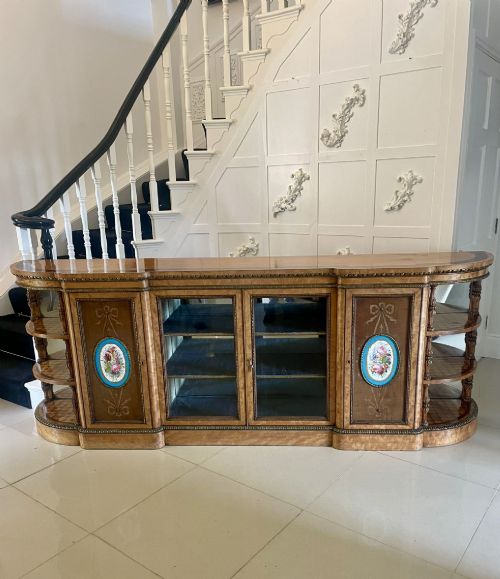
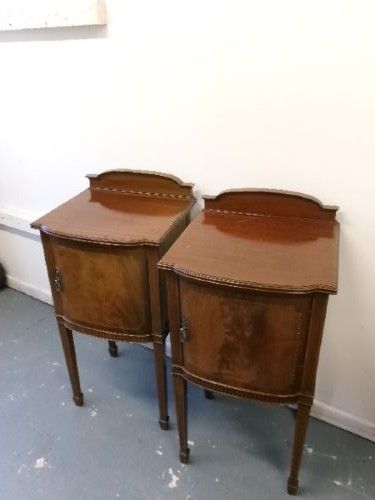
A satinwood inlay cabinet combines mahogany carcases with contrasting pale timber stringing and neoclassical motifs, appearing primarily in Edwardian interpretations and Sheraton Revival revivals alongside genuine George III pieces. Buyers searching for a satinwood inlay cabinet will encounter display cabinets, secretaire bookcases, side cabinets, and corner cupboards designed to showcase porcelain and books.
The surviving pieces bridge the eighteenth century and the early twentieth century, showing how cabinetmakers reused classical vocabulary across generations. Most examples on this page date from around nineteen hundred, executed in the lighter aesthetic favoured during the Edwardian era.
How they were made
Workshops built these carcases using solid and veneered mahogany, applying fine satinwood inlay and marquetry panels to door fronts and friezes. Glass panels, brass mounts, and occasional mirror backs completed pieces intended to catch the light in formal reception rooms.
Cabinetmakers utilised hand-cut dovetails for drawer construction and delicate timber stringing to frame central panels. Surface finishes relied on traditional polishing techniques that deepened the contrast between dark mahogany grounds and bright satinwood details.
Retail Price Guide 2026
Typical UK retail prices for satinwood inlay cabinet, calculated from the Sellingantiques database of over a million retail prices indexed since 2003. This retail price guide relies exclusively on Sellingantiques data; no external sources or auction records are used, so the figures do not describe the wider market.
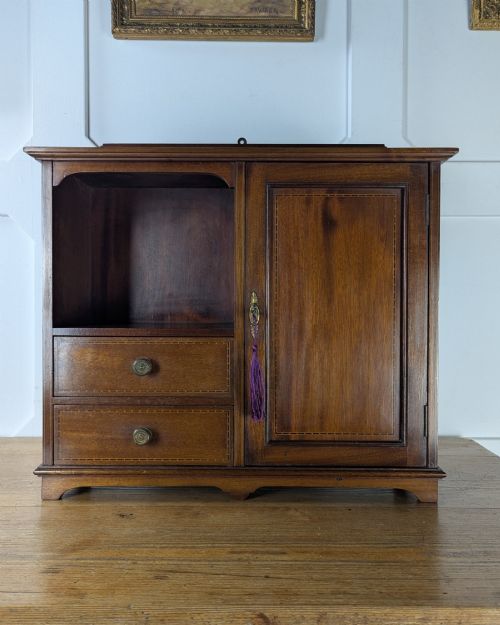
Miniature cabinets appeared alongside full-sized secretaires, proving that miniature ambitions pleased Victorian and Edwardian collectors just as much.
What varies in quality
Quality rests on the crispness of the inlay work and the choice of figured timber veneers across the principal surfaces. Superior examples display finely differentiated botanical or neoclassical motifs rather than stamped transfers or simplified linear banding.
Proportion and architectural balance separate standard production from exceptional cabinetmaking, particularly in glazed doors where individual glazing bars form harmonious geometric patterns. The integration of original brass hardware and well-figured mahogany carcases further distinguishes finer items.
Edwards & Roberts
The Satinwood Inlay Cabinet Glossary
- Satinwood inlay
- A decorative technique where contrasting pale satinwood is inserted into recesses cut into a darker wood ground to form geometric or pictorial patterns. This defines the visual character of the category.
- Sheraton Revival
- A late nineteenth and early twentieth century design movement that reinterpreted the neoclassical furniture forms of George III designer Thomas Sheraton. Pieces often feature lighter proportions and satinwood banding.
- Marquetry
- The art of creating decorative patterns and pictures on furniture surfaces by fitting together thin veneers of various woods. It differs from inlay by covering the entire surface rather than inserting motifs into solid timber.
- Astragal glazed
- A method of dividing glass door panels into smaller panes using slender wooden mouldings called astragals. This structural approach is typical of finer display cabinets and bookcases.
- Serpentine
- A furniture front or edge shaped with a central convex curve flanked by two concave curves. This contour requires precise woodworking skills.
Frequently Asked Questions
How do I date a satinwood inlay cabinet?
Dating relies on timber selection, construction methods, and stylistic cues such as Sheraton Revival influences or Edwardian proportions.
While George III originals date around eighteen hundred, the majority of pieces found here reflect later revivals around nineteen hundred.
Where were these cabinets used?
They were principal furnishings in formal drawing rooms, libraries, and parlours of well-to-do homes.
Their glass doors and polished wood surfaces were intended to display prized porcelain, silver, and leather-bound volumes.
How do I care for satinwood inlay furniture?
Keep the wood away from direct sunlight and sudden temperature changes to protect delicate veneers and stringing.
Apply traditional beeswax occasionally to nourish the timber and maintain a soft, protective sheen.