
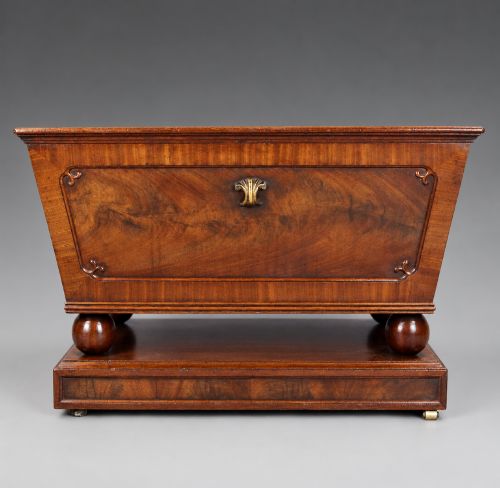
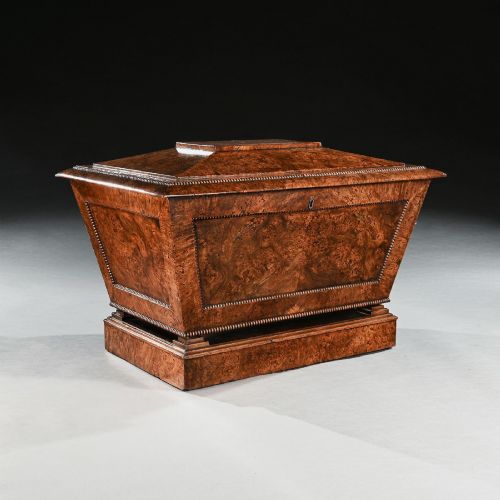

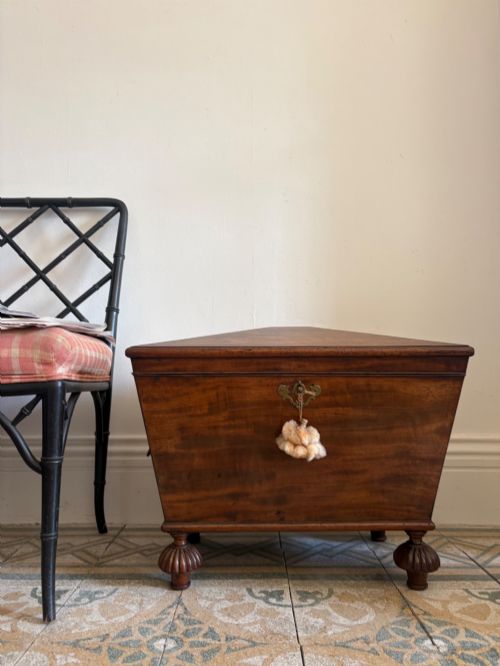


Regency Period Wine Cooler
A regency period wine cooler brings classical proportion and grand hospitality to a dining room, designed to keep bottles chilled at the table.
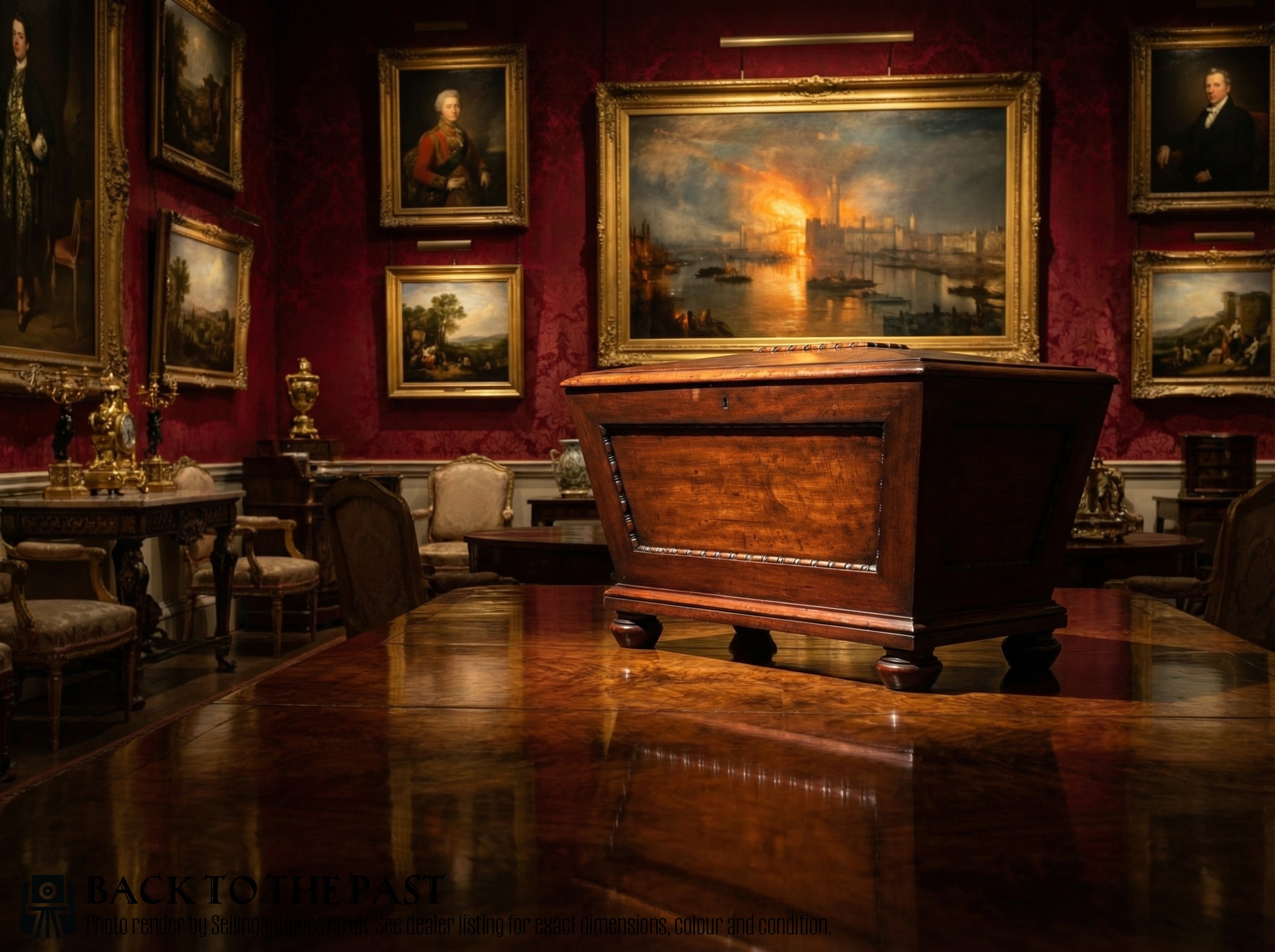
Regency Period Wine Cooler
A regency period wine cooler takes several distinctive forms, most commonly appearing as a sarcophagus-shaped cellarette in rich timbers. These pieces date from the early nineteenth century and reflect the classical architectural taste of the period, often standing on carved paw feet or resting on low pedestals.
The materials span native and exotic hardwoods, including flame mahogany, pollard oak, burr elm, and padouk. This variety reflects the grand furnishing choices of Regency interiors, where dark timbers were contrasted with brass mounts and decorative inlay.
Materials and Construction
Cabinetmakers utilised dense timbers like mahogany, selecting veneers with strong flame figures to wrap around sturdy oak carcases. Metal vessels were fashioned from copper or formed through the Old Sheffield plate technique, fusing thin sheets of silver to a copper base.
Internal compartments often relied on lead, zinc, or copper linings to contain melting ice and water without damaging the surrounding woodwork. Brass fittings, including carrying handles, lion mask rings, and paw feet, were cast and chased to secure the classical aesthetic.
Regency Period Wine Cooler Retail Price Guide 2026
Typical asking prices for regency period wine cooler among the pieces listed under this phrase on Sellingantiques today, from the lower quarter to the upper quarter. They describe what is for sale here now, not the wider market.
Evaluating the Pieces
Quality rests in the choice of timber figure and the crispness of classical details like carved paw feet and brass mounts. Pieces displaying rich natural patination and well-matched flame mahogany veneers stand above plainer examples.
The survival of original internal metal linings, whether lead, copper, or zinc, distinguishes a well-preserved vessel. Structural refinement, such as architectural mouldings and fine inlay, marks the work of superior workshops.
Matthew Boulton Co·Thomas Hope·Gillows·Wilkinson London·Chamberlain Worcester
The Regency Period Wine Cooler Glossary
- Cellarette
- A lockable container used to store bottles of wine beneath the dining room sideboard. These boxes often mirror the sarcophagus shape common in Regency furniture.
- Sarcophagus
- A monumental tomb-like shape with a steep lid, heavily favoured for Regency wine coolers and cellarettes. The design draws directly on classical antiquity.
- Campana
- An inverted bell shape used for metal wine coolers and ice pails. This classical silhouette derives from ancient Roman garden vases.
- Old Sheffield Plate
- An early method of fusing silver and copper together to create plated metalware. It shows a rich warm tone as the underlying copper subtly shows through high points.
- Padouk
- A dense exotic hardwood with a deep reddish colour, imported for high-end Regency furniture. It provides a striking alternative to standard mahogany.
Regency Period Wine Cooler: Frequently Asked Questions
How were regency period wine coolers used?
These vessels sat beneath the dining table or sideboard, filled with ice and water to chill wine bottles before they were served to guests.
Servants would retrieve bottles directly from the cooler during long formal dinners, keeping the dining table clear of bulky glassware.
Are original metal linings still intact?
Many examples retain their original lead, copper, or zinc liners which protected the timber from melting ice. Some have lost these liners over the decades through heavy use or cleaning.
Buyers often check the interior to see whether the original watertight lining survives beneath the lid.
Where should I place a wine cooler today?
They work well as standalone decorative objects in a dining room, often positioned beneath a mirror or large sideboard. Their generous proportions also make them suitable for holding logs by a fireplace.
Some collectors utilise open versions as indoor planters or jardinières for large house plants.
How do I spot a true regency piece?
Look for authentic early nineteenth-century construction methods, such as hand-cut dovetails on the carcase and genuine flame mahogany veneers. The presence of classical motifs like paw feet, lion masks, and brass ring handles points directly to the period.
Good examples display a deep, warm patina developed over two centuries of careful polishing.