




Regency Period Clock
A regency period clock brings precise mechanical movement and rich timber cases into a room, combining practical timekeeping with striking decorative presence.
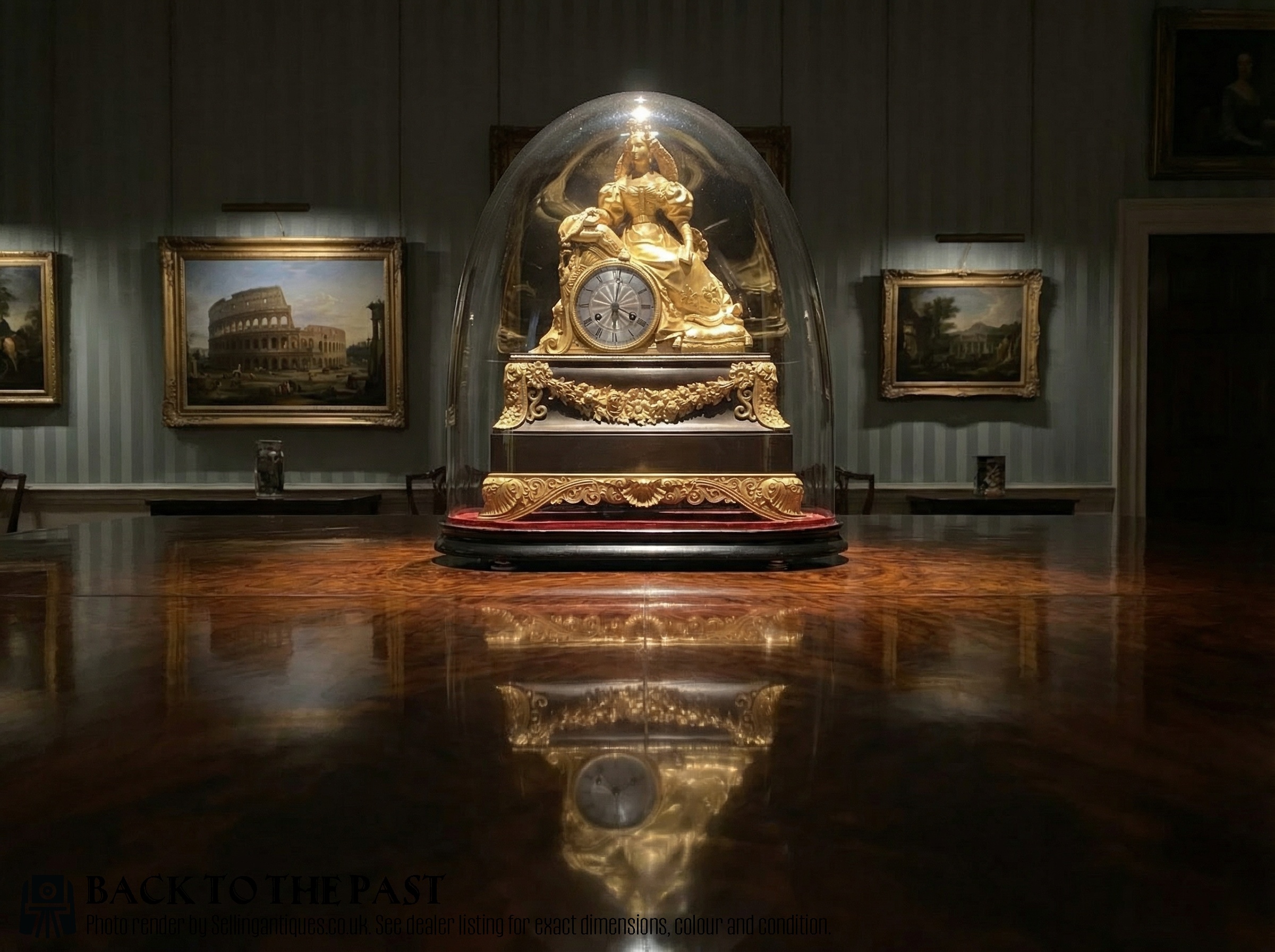
Regency Period Clock
When you search for a regency period clock, you encounter timepieces spanning mantel, wall, bracket, and longcase formats originating from the late eighteenth century through the mid nineteenth century. These objects served domestic and public utility while displaying the distinct design idioms of the Georgian, Regency, and French Empire eras.
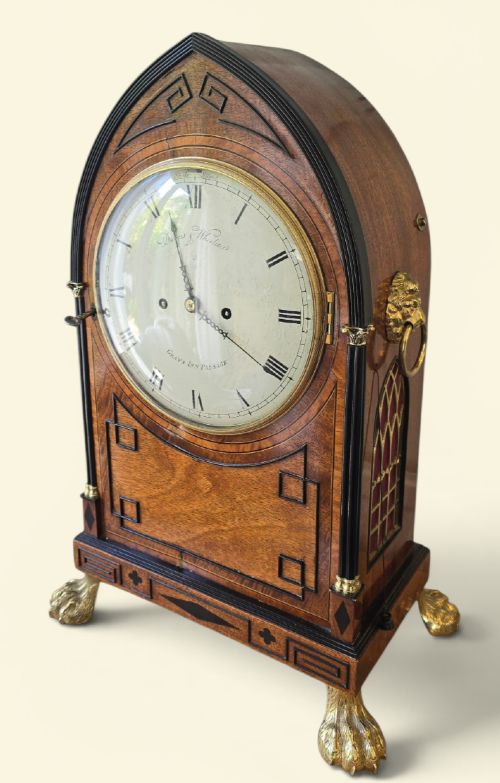
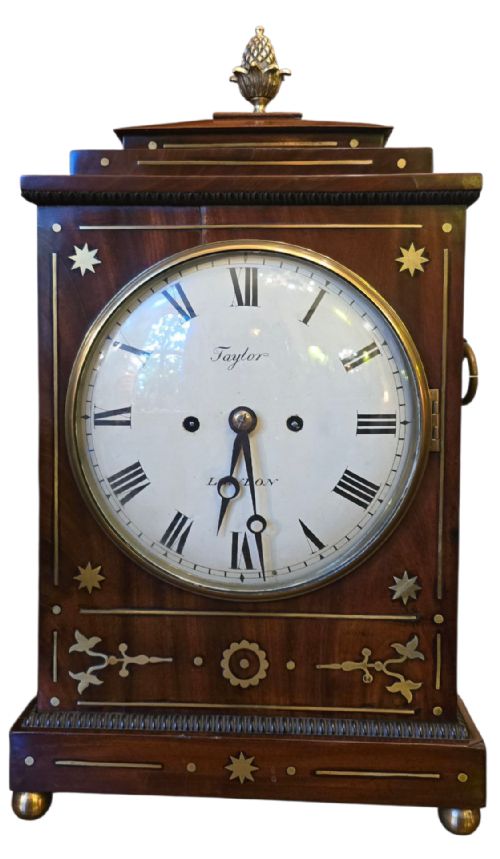
The most common form on this page is the bracket clock, frequently housed in mahogany, rosewood, or ebonised wood with brass inlay. Such pieces sat on table brackets or mantelpieces, driven by fusee movements to regulate time reliably across eight days or more.
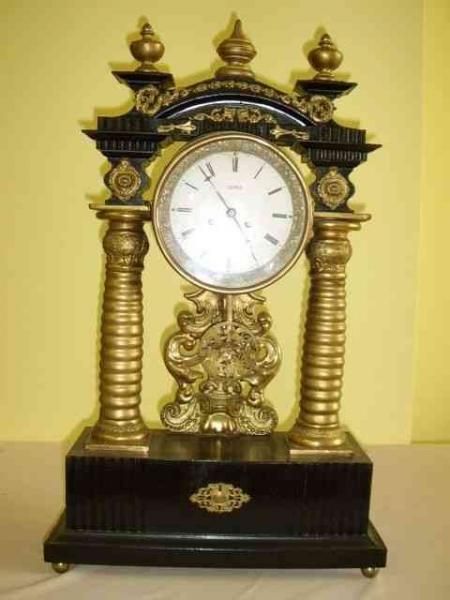
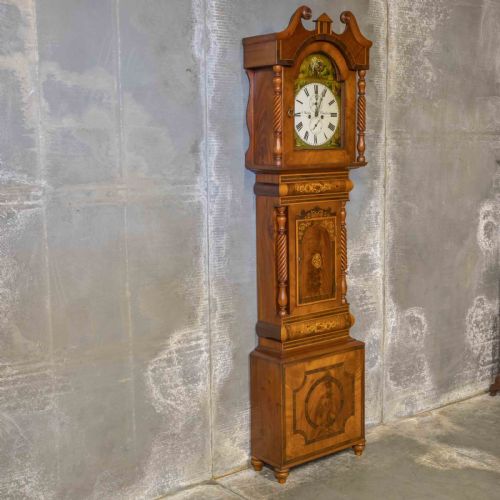
Alongside English bracket clocks, French ormolu and bronze figural works appear, alongside drop-dial wall clocks and tall longcase clocks. These diverse formats reflect both London workshops and continental makers active during the height of the Regency style.
How They Were Made
Cabinetmakers utilised dense timbers like mahogany, rosewood, and ebony, often shaping them into chamfer-top, lancet, or architectural portico forms. Brass stringing, inlay, and cast ormolu mounts decorated these wooden chassis, binding structural joinery with ornamental contrast.
Clockmakers constructed the internal mechanisms using brass gears, steel arbors, and fusee cones to maintain even tension on the chain or gutline as the mainspring unwound. Enamel, painted wood, or silvered metal dials displayed the hours, frequently protected behind convex glass bezels.
Certain bracket clocks manage to squeeze goats, palm trees, and cherubs reaching for birds into a single mantelpiece arrangement.
What Varies in Quality
The sophistication of the movement dictates much of the standing, with single or double chain fusee mechanisms representing higher levels of English horological execution compared to simpler spring-driven alternatives. Signed dial plates and backplates bearing documented London or provincial makers connect the physical object directly to a recorded workshop tradition.
Cabinetwork execution separates standard production from superior examples, visible in the precision of brass inlay work, the selection of figured mahogany or rosewood veneers, and the crispness of cast bronze or ormolu mounts.
Desbois & Wheeler·L. Vick·Taylor of London·Pons de Paul·William Hardy London·FB Adams London·Baetens London·Fatton Eleve de Breguet London·Finer & Nowland·James Howden & Co Edinburgh
The Regency Period Clock Glossary
- Fusee
- A conical pulley used inside spring-driven clocks to equalise the torque of the mainspring as it winds down. This mechanical addition ensures steady timekeeping throughout the running cycle.
- Bracket clock
- A portable tabletop or shelf clock traditionally placed upon a matching wall bracket. They commonly feature robust fusee movements and wooden cases.
- Ormolu
- Gilt bronze created by applying a mercury and gold amalgam to cast bronze before heating. The technique produces a rich golden finish found on French Empire and English Regency decorative mounts.
- Drop-dial wall clock
- A wall-mounted timepiece featuring a circular dial above a short wooden trunk or drop case. They were widely used in public spaces and domestic halls during the nineteenth century.
- Verge escapement
- An early mechanism that controls the release of the gear train using a rocking pallet and crown wheel. It governs the beat of the pendulum or balance.
Regency Period Clock: Frequently Asked Questions
What is a fusee movement?
A fusee movement uses a conical pulley connected to the mainspring by a chain or cord. This clever arrangement compensates for the diminishing power of the spring as it unwinds.
By evening out the force delivered to the gear train, the clock maintains consistent accuracy throughout its running period.
Where were these clocks placed?
Bracket clocks sat on wooden wall brackets or heavy furniture surfaces in principal rooms, while smaller drop-dial clocks hung on walls in hallways and offices. Longcase clocks stood upright in stairwells or main rooms to serve the entire household.
Each format suited the spatial and architectural demands of the domestic interior during the period.
How do I wind a bracket clock?
Winding requires inserting a small key into the winding holes on the dial face to tension the mainspring via the fusee mechanism. Care must be taken not to overwind the movement.
Most traditional fusee clocks require winding once every week to maintain continuous operation.