
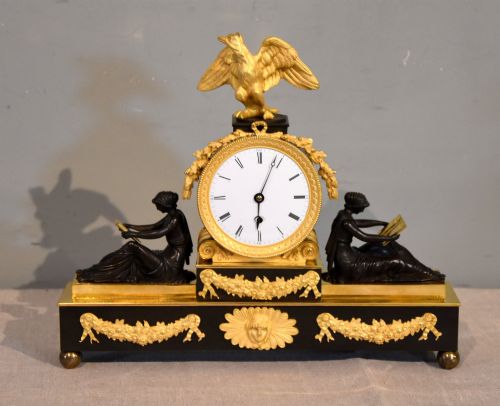


Regency Figural Mantel Clock
A regency figural mantel clock brings classical sculpture and precision horology together on the shelf, driven by fusee movements and cast bronze figures.
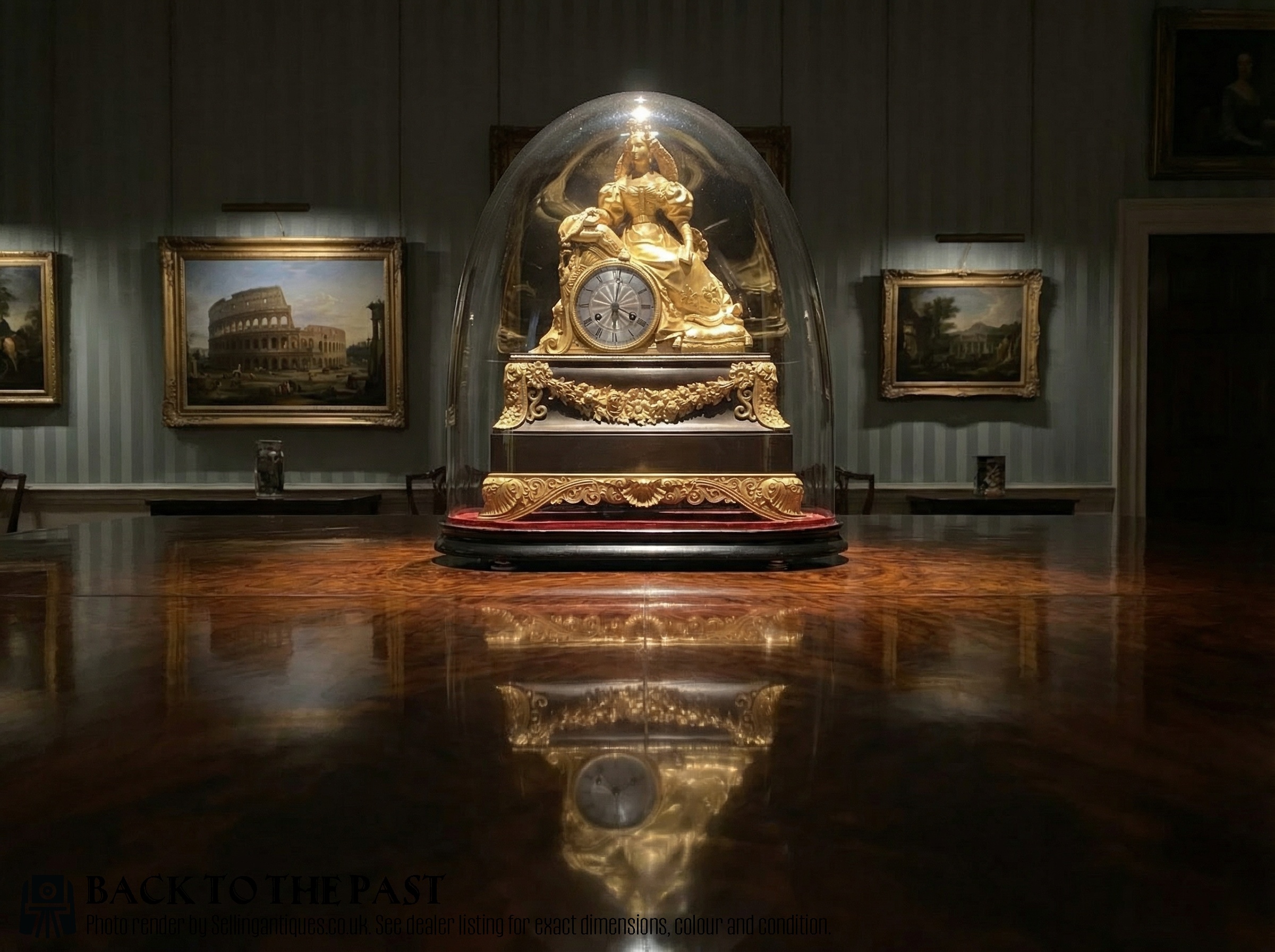
Regency Figural Mantel Clock
A regency figural mantel clock combines sculptural bronze or brass figures with dependable clockwork, typically houseable on a principal room mantelpiece. These domestic timekeepers emerge primarily from the Regency and nineteenth-century periods, showing clear links to French Empire and English Regency design preferences.
The objects take several forms, from single timepieces to elaborate clock sets flanked by matching ornaments. Figures range from mythological cherubs and goats beside palm trees to lions and allegorical subjects like the sacred alliance of eighteen-fifteen.
Makers and retailers of the era, including London watchmakers and continental workshops, housed these movements in architectural marble bases and detailed metalwork cases. Buyers encounter both English fusee mechanisms and French-influenced ormolu creations as the standard formats on this page.
Materials and construction
Foundry workers shaped these cases using gilt bronze, patinated bronze, and ormolu, applying chemical treatments and gold amalgamation to create contrasting metallic finishes. Marble provided heavy, stable foundations for complex figural compositions.
Horologists fitted the metal cases with chain fusee or eight-day striking movements, pairing the mechanical gear trains with enamelled dials to register the hours. Glass covers protected the delicate dial faces from dust and damage.
A gilded cherub reaches persistently toward bronze birds nesting in a detailed tree canopy.
Factors of quality
The sophistication of the internal movement dictates the standard of the piece, with complex single or double chain fusee mechanisms representing high-grade London watchmaking. Untouched patination on the patinated bronze and unblemished gilding separate works of ambition from routine production.
Baetens London·James Murray London·Perigal and Duterrau·Bently and Beck London
The Regency Figural Mantel Clock Glossary
- Fusee
- A conical pulley used in clock movements to maintain even tension on the chain as the mainspring unwinds. This mechanism improves timekeeping accuracy across the power reserve.
- Ormolu
- Finely ground high-carat gold mercury-gilded onto a bronze base. The technique creates a durable, warm metallic surface characteristic of luxury Regency metalwork.
- Patinated bronze
- Bronze treated with acids or heat to produce a dark, protective surface layer. Makers used this dark finish to create visual contrast against bright ormolu mountings.
- Enamel
- Fused glass powder baked onto a metal dial face to provide a smooth, white background for painted numerals. Enamelled dials require careful firing to prevent cracking.
- Mantel clock
- A freestanding clock designed to sit on the shelf above a fireplace. These domestic objects combined decorative sculpture with practical timekeeping.
Regency Figural Mantel Clock: Frequently Asked Questions
How do fusee movements work?
A fusee uses a conical drum and a chain to equalise the declining power of the mainspring as it unwinds. This keeps the driving force constant throughout the running period.
Such mechanical refinement ensures the clock maintains steady timekeeping from the moment of full wind until the spring exhausts.
Where were these clocks placed?
Owners positioned these figural pieces prominently on mantelpieces in formal drawing rooms or libraries where guests could admire the sculpture. Their compact scale allowed them to sit comfortably on marble or wooden mantel shelves.
Beyond domestic rooms, they served as functional status objects in professional studies and fashionable London townhouses.
How do I distinguish English and French styles?
English pieces often house robust fusee movements signed by London watchmakers inside restrained architectural or figural cases. French Empire examples lean towards dramatic mythological subjects rendered in bright ormolu and patinated bronze.
Examining the backplate signatures and the winding system generally clarifies the origin of the movement and case.
What maintenance do these clocks need?
Mechanical clocks require professional cleaning and oiling every few years to prevent wear on the brass pivots and gear trains. Keeping the movement free from dust ensures the chain fusee operates smoothly.
Handling the bronze and marble cases gently with dry cloths preserves the original fire gilding and surface patination.