


Ebonised Ormolu Clock
An ebonised ormolu clock brings together dark polished wood and bright gilded bronze in a striking nineteenth-century domestic centrepiece.
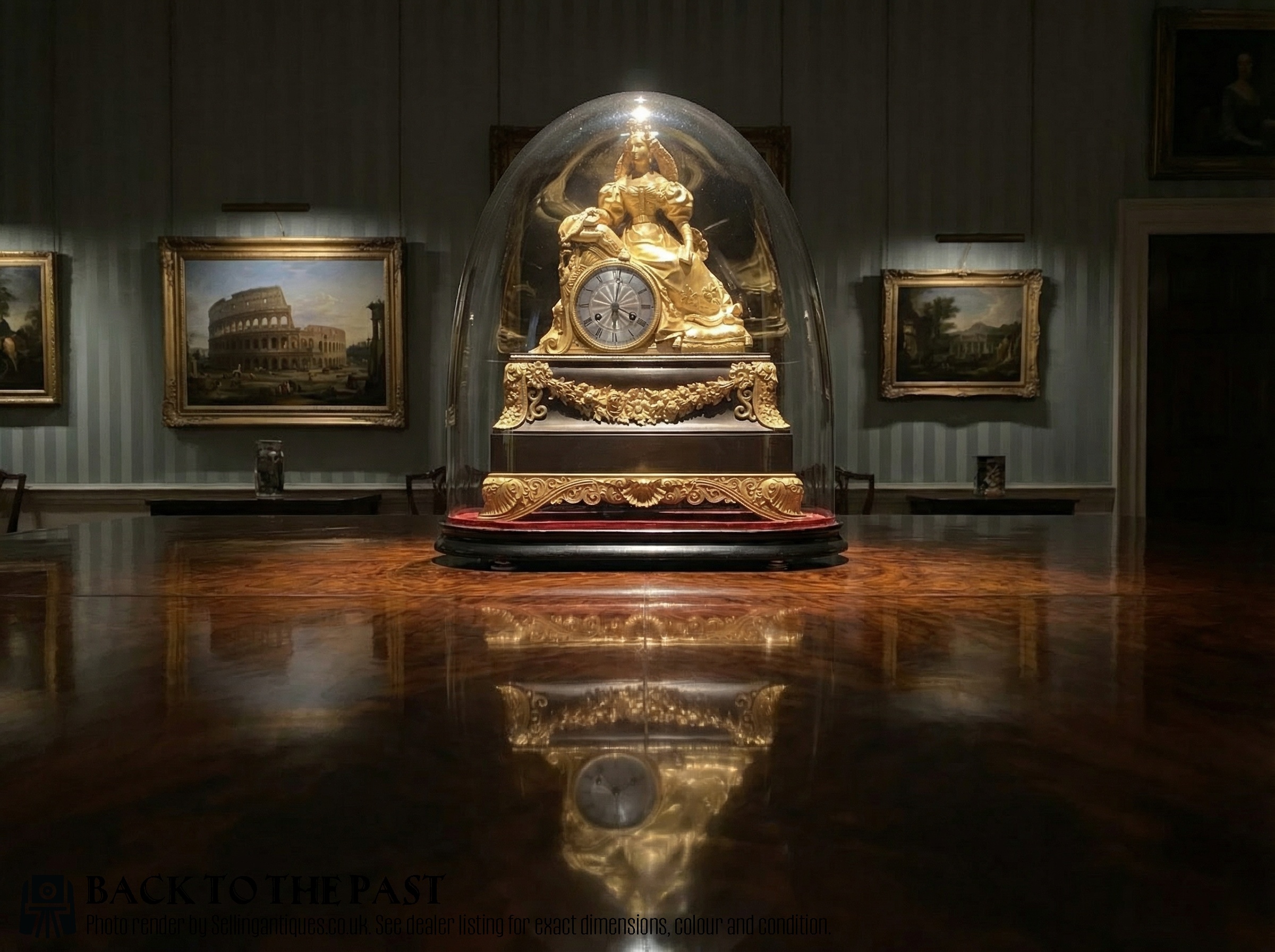
Ebonised Ormolu Clock
An ebonised ormolu clock is a timepiece housed in dark, treated wood and decorated with cast, gilded bronze mounts. These objects date predominantly from the nineteenth century, drawing on French and English design traditions.
The form appears most frequently as a mantel clock or a bracket clock, designed to sit steadily on a shelf or furniture top. Wall clocks and portico clocks also occur within this group, offering alternative ways to display the combination of dark timber and metallic lustre.
Makers and workshops from London and Paris shaped these pieces during the Regency and Victorian eras. The physical evidence on this page shows surviving examples span the middle and late decades of the nineteenth century.
How they were made
The foundation of each piece relies on timber treated to resemble ebony, paired with brass and gilt bronze ormolu mounts. Enamel dials and glass panels protect the internal movements.
Makers employed mechanical systems such as fusee movements and eight-day striking trains to regulate time accurately. Metal casters shaped the ormolu details through traditional foundry techniques before applying gilding.
Listings feature pieces from the Regency and Victorian eras, spanning the mid to late nineteenth century in wood, brass, and gilt bronze.
What varies in quality
The refinement of the cast bronze mounts separates standard pieces from exceptional ones. Sharp, deeply chased details in the ormolu reflect greater labour by the artisan.
The precision and reputation of the clockmaker dictate the standing of the movement. Signed London and Paris mechanisms indicate higher workshop standards.
Le Roy Paris·Henri Marc of Paris·Payne and Co London·Barraud and Lunds·Henri Dasson·Honore Pons
The Ebonised Ormolu Clock Glossary
- Ebonised wood
- Timber stained or painted to imitate true ebony, commonly used in nineteenth-century clock cases.
- Ormolu
- Gilt bronze created by applying a gold amalgam to a bronze base, providing a bright metallic finish.
- Fusee
- A conical pulley used in clock movements to equalise the power of the mainspring as it unwinds.
- Bracket clock
- A portable clock designed originally to sit on a wall bracket or a table surface.
Ebonised Ormolu Clock: Frequently Asked Questions
Where should I place an ebonised ormolu clock?
These clocks suit prominent locations like mantelpieces or sturdy side tables where their dark timber and bright metal mounts catch the light. Keep them away from direct sunlight and damp environments to protect the wood finish and internal brass work.
Ensure the surface is completely level so the pendulum swings evenly. A stable base prevents timekeeping errors and protects delicate internal components from unnecessary wear.
How do I wind an antique clock?
Use the correct winding key gently and turn it only until you feel firm resistance. Overwinding can damage the delicate springs inside nineteenth-century movements.
Establish a regular weekly routine for winding if the movement requires it. Consistency helps maintain accurate timekeeping across eight-day striking trains.
How do I tell a Regency clock from a Victorian one?
Regency pieces often display cleaner lines influenced by classicism, dating from the early decades of the nineteenth century. Victorian examples frequently embrace revival styles like Louis XV or Rococo, showing more exuberant ornamentation.
Examining the maker signature and the specific style of the ormolu mounts often provides clear clues to the exact period of manufacture.
What maintenance does the movement need?
Mechanical clocks benefit from professional cleaning and lubrication every few years to remove dust and dried oils. Regular servicing prevents friction from wearing down the brass gears.
Avoid applying household oils or lubricants yourself, as incorrect products attract dust and gum up the delicate mechanism.