


Black Brass Mantel Clock
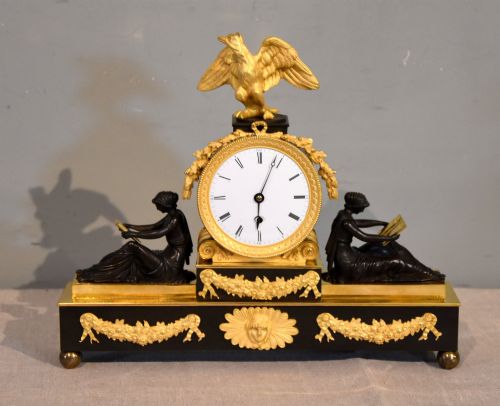
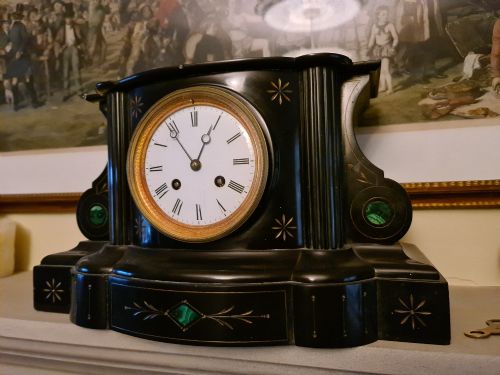
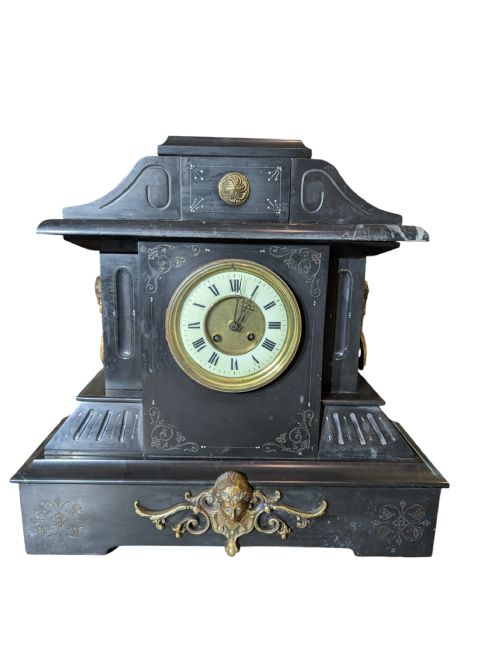
A black brass mantel clock combines dark stone or ebonised timber with gilt metal mountings, offering a steady weight and architectural presence for a room.

Black Brass Mantel Clock
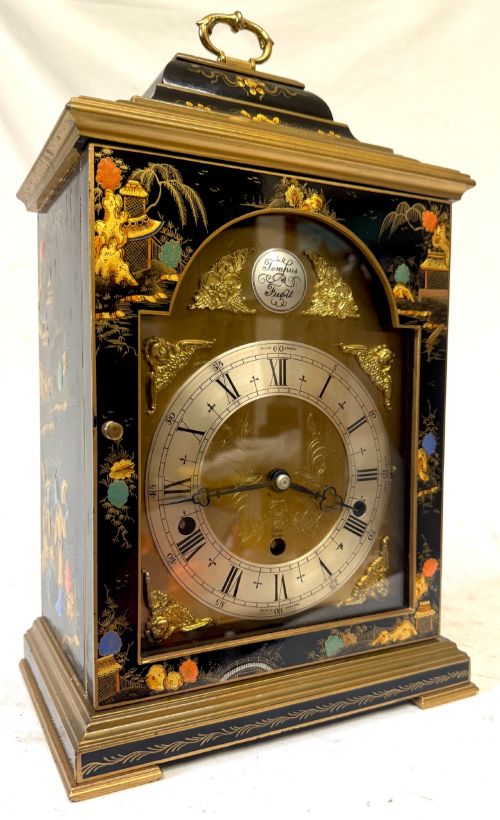
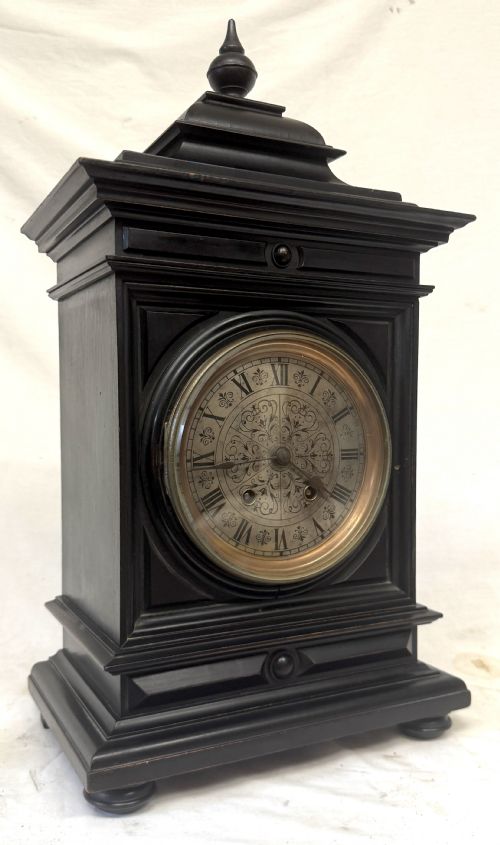
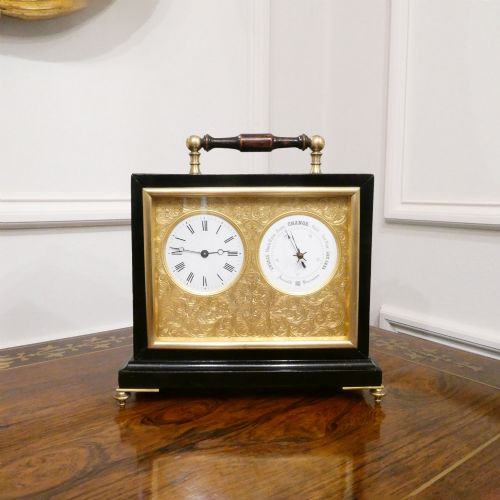
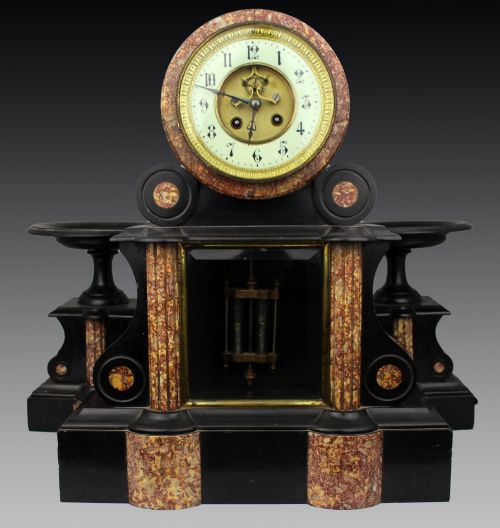
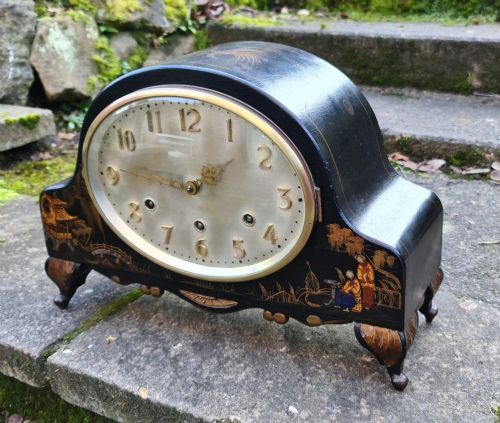
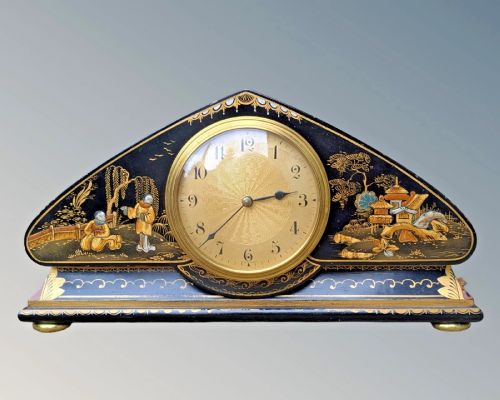
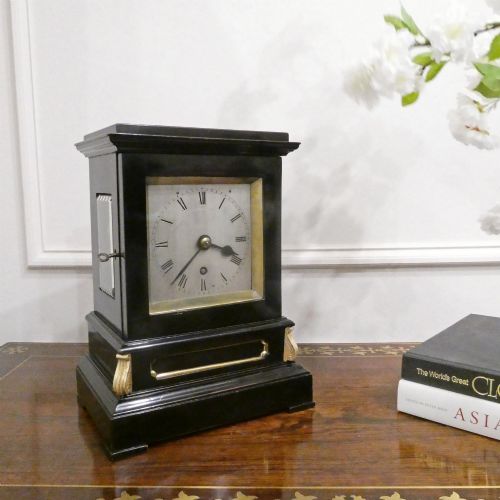
When you search for a black brass mantel clock, you encounter heavy architectural cases built from black marble, slate, or ebonised wood, often elevated by cast brass or ormolu mounts. The pieces appearing here span from seventeenth-century bracket clocks in ebony to nineteenth-century French garniture sets and later twentieth-century interpretations.
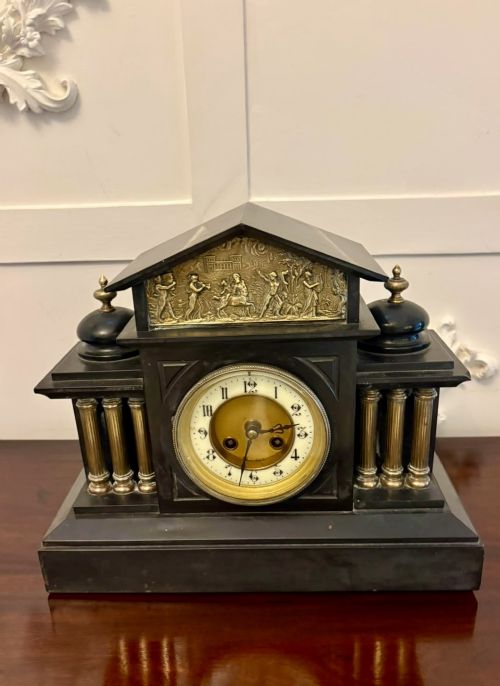
The version you are most likely to meet on this page is a Victorian model constructed from black slate or marble, sometimes inlaid with contrasting stone or fitted with gilt dial surrounds. These heavy items sit solidly on a shelf or tabletop, housing mechanical movements that range from simple timepieces to striking eight-day mechanisms.
How they were made
Maker workshops combined dense dark materials such as slate, black marble, and ebonised timber with cast brass, gilt bronze, and ormolu. Cases were carved or turned into architectural shapes like porticos and drumheads, then polished to a smooth finish.
Dials received silvered or enamelled treatment, protected behind bevelled glass panes. Brass movements, including fusee and anchor escapement mechanisms, were fitted internally to drive the hands and striking trains.
Some industrial series models disguised standard timekeeping as miniature machinery, bringing Victorian engineering straight to the sitting room shelf.
What varies in quality
The distinction between ordinary and superior examples lies in the crispness of the bronze or brass cast work and the depth of polish on the slate or marble. Better models integrate their mountings securely without gaps, and feature finely engraved or silvered dials that retain their legibility and detail.
Internal mechanics separate standard production clocks from those by notable makers. A finely finished movement with clean plates and well-cut teeth runs more reliably and maintains its value over time compared to a basic commercial assembly.
Lenzkirch·Japy Freres·Philippes Paris·John Witherston of Hereford·Sacre·William Speakman·John Bull of Bedford·Henry Jones·Des Granges·Thomas A Paris·Baby and Jannings·D Munsey of Cambridge·Smiths·Guilmet·Louis Recordon·Richard Rooker·Payne and Co·Jaeger LeCoultre
The Black Brass Mantel Clock Glossary
- Fusee
- A conical pulley used in older clock movements to maintain an even pull as the mainspring unwinds. This device helps the clock keep more accurate time.
- Garniture set
- A clock accompanied by matching decorative side pieces, such as urns or vases, designed to sit together on a mantelpiece.
- Ormolu
- Gilded bronze produced by applying a mercury and gold amalgam to cast bronze and heating it. It yields a rich golden surface that contrasts against black stone.
- Bracket clock
- A portable table clock originally designed to sit on a wall bracket to aid resonance and visibility. Many later examples sat directly on furniture.
- Ebonised
- Timber treated with a stain or finish to imitate ebony. This process gives lighter woods a uniform black appearance while retaining the grain.
Black Brass Mantel Clock: Frequently Asked Questions
Where should I place a heavy marble clock?
Choose a sturdy, level surface such as a mantelpiece, sideboard, or heavy table that can support substantial weight. Slate and marble cases are surprisingly heavy and require stable foundations to prevent tipping.
Avoid positioning the clock in direct sunlight or near active heat sources like radiators, as extreme temperature shifts can affect the movement and discolour polished wooden or stone surfaces.
Why does my clock run fast or slow?
Clock timing is regulated by the pendulum or balance wheel, which can be adjusted using a small regulating nut or screw. Seasonal temperature changes and normal mechanical wear alter how the metal parts expand and contract, requiring occasional fine-tuning.
If the clock gains or loses several minutes a day, adjust the pendulum bob up to speed it up or down to slow it down. Allow the movement twenty-four hours to settle after any adjustment.
How do I clean the brass and marble case?
Dust the marble or slate regularly with a soft, dry cloth to prevent grime accumulation. Avoid harsh chemical cleaners or abrasive pads that can strip the polish from the stone or damage ebonised wood finishes.
Clean exposed brass mounts sparingly with a dry cloth, keeping polishes away from the stone surfaces and the clock dial. Enamelled and silvered dials require extreme care to avoid rubbing off the painted numerals.