
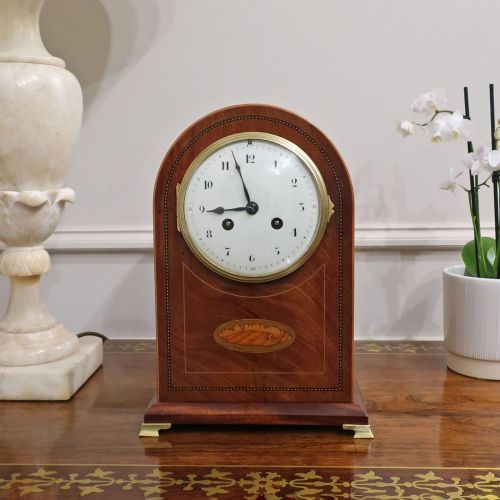


Arched Dial Bracket Clock
An arched dial bracket clock brings the precise rhythm of eighteenth and nineteenth century workshops into a room.

Arched Dial Bracket Clock
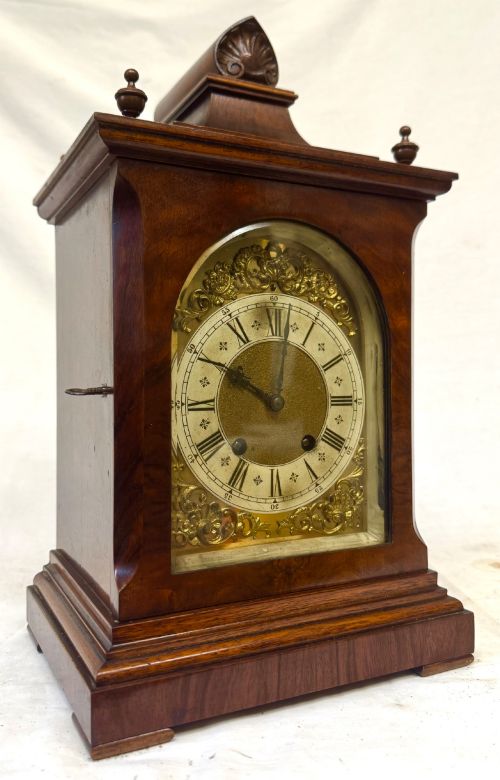
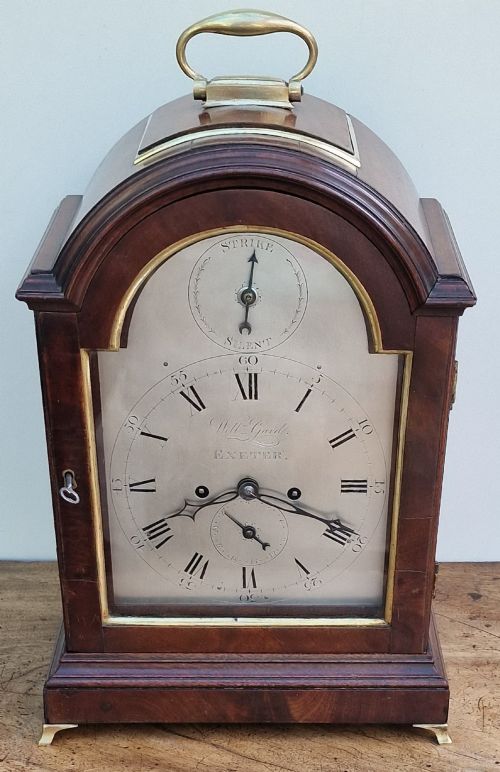
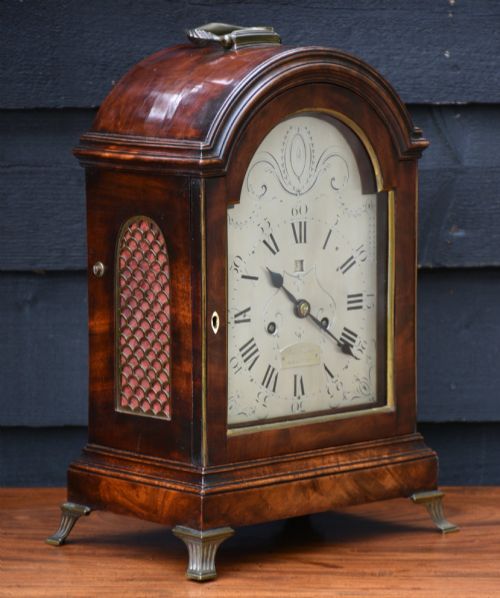
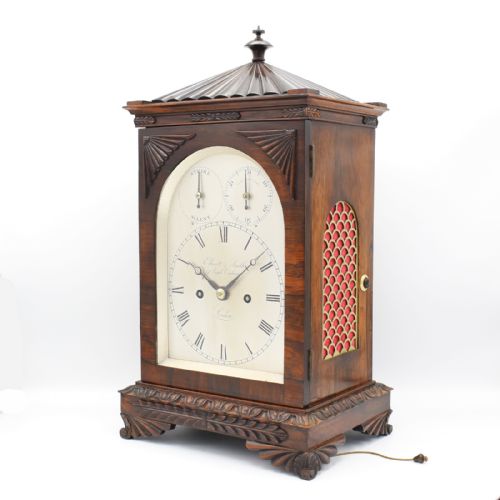
An arched dial bracket clock is a portable timekeeper designed to sit on a bracket or table, featuring a distinct curved top to the dial or case. The pieces found here span the eighteenth, nineteenth and early twentieth centuries, taking the form of mantel clocks, table clocks and library timepieces.
How they were made
Cabinetmakers built the wooden cases using solid and veneered mahogany, walnut, oak and ebonised woods, often shaping them into bell-top or break-arch profiles. These housings protected intricate brass mechanical movements driven by springs and fusee or verge escapements.
Dials were finished in brass, silvered metal or enamel, carrying engraved numerals and fine hands behind glazed doors. Workshops fitted bells and gongs to strike the hours, half-hours and quarters.
Arched Dial Bracket Clock Retail Price Guide 2026
Typical asking prices for arched dial bracket clock among the pieces listed under this phrase on Sellingantiques today, from the lower quarter to the upper quarter. They describe what is for sale here now, not the wider market.
Some of these clocks pack eight bells and multiple chimes inside a compact wooden box, ready to serenade the household every quarter hour.
What varies in quality
Quality rests in the fidelity of the cabinetwork and the refinement of the interior mechanism. Thick mahogany or figured walnut veneers, crisp brass mounts and cleanly engraved silvered dials separate substantial workshop output from simpler production.
The complexity of the movement dictates the standing of the piece. Simple single fusee timepieces differ markedly from triple fusee musical movements playing chimes on multiple bells.
Ellicott and Smith·Des Granges of London·Winterhalder and Hofmeier·John Seddon of London·James Maitland London
The Arched Dial Bracket Clock Glossary
- Bracket clock
- A portable table or mantel clock originally designed to sit on a matching wall bracket. They developed in the seventeenth century as mechanical improvements allowed accurate timekeeping away from tall floor-standing cases.
- Fusee
- A conical pulley used inside spring-driven clocks to maintain an even pull as the mainspring unwinds. This mechanism ensures consistent force reaches the escapement throughout the running cycle.
- Verge escapement
- An early type of clock escapement using a crown wheel and pallets on a rocking axis. It produces a distinct ticking rhythm and allows the use of a short pendulum or balance spring.
- Silvered metal
- A brass dial plate treated with a silver solution to create a matte white finish. The numbers and maker details are then engraved into the surface and filled with dark wax.
- Bell-top
- A case design where the upper wooden moulding curves inward towards a central handle, resembling the silhouette of a handbell. This shape appeared frequently on Georgian and Victorian bracket clocks.
Arched Dial Bracket Clock: Frequently Asked Questions
Where should a bracket clock sit?
These pieces suit stable surfaces such as sideboards, tables or dedicated wall brackets where vibrations are minimal. Placement away from direct sunlight and drafts helps protect the wood and internal mechanics.
Level positioning is essential for the pendulum or balance wheel to beat evenly. A firm foundation ensures the striking train operates correctly without stalling.
How do fusee movements work?
A fusee uses a spirals-grooved cone connected to the mainspring by a cord or chain. As the spring loses tension, the cord pulls on a wider part of the cone to maintain constant torque.
This clever mechanical device compensates for the weakening spring. It results in steady energy delivery to the escapement for improved timekeeping accuracy.
What is a ting-tang clock?
A ting-tang movement strikes two different notes on two bells to indicate the passing quarters. One note sounds for the first and third quarters, while both sound for the second and fourth.
This distinct auditory pattern offers a gentle alternative to full hour-striking or musical chimes. German workshops produced many examples of this type during the nineteenth century.
How do I identify a Georgian clock?
Georgian pieces, dating from the eighteenth and early nineteenth centuries, typically feature rich mahogany cases with brass carrying handles and silvered dials. Their proportions tend to be robust and architectural.
Interior inspection often reveals verge or fusee movements signed by London makers. The casework relies on traditional joinery without modern machine-cut elements.