


Black Table Clock
A black table clock brings gravity and architectural discipline to a room, ranging from heavy nineteenth-century stone to polished ebonised wood.
Black Table Clock
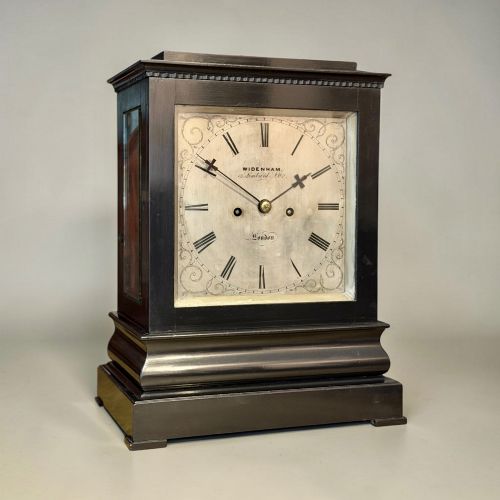
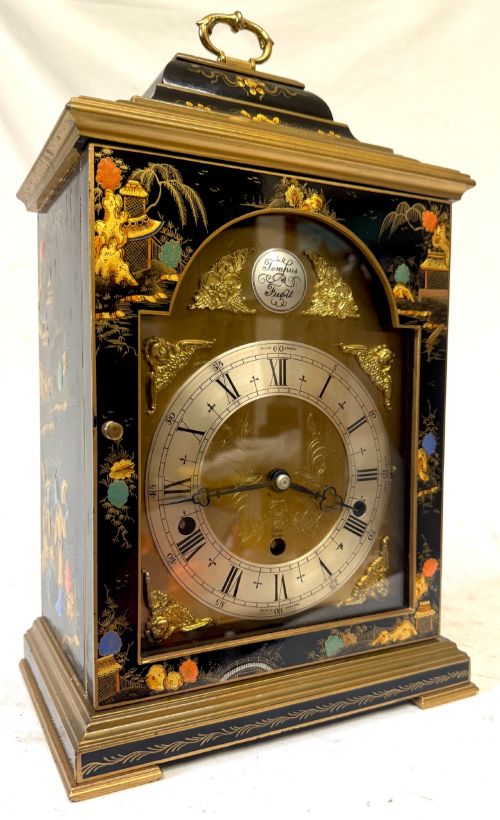
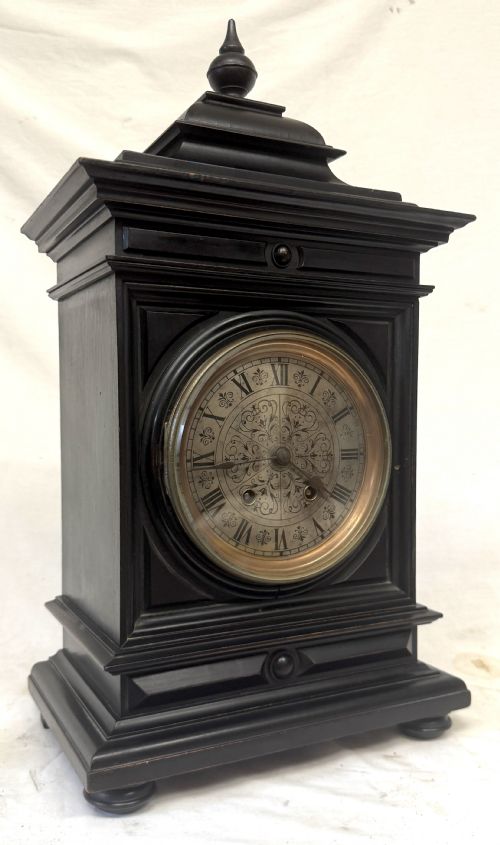
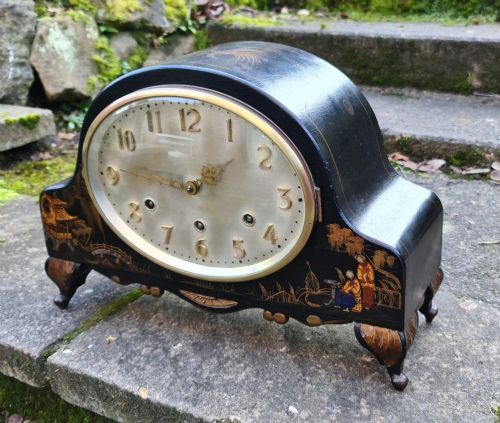
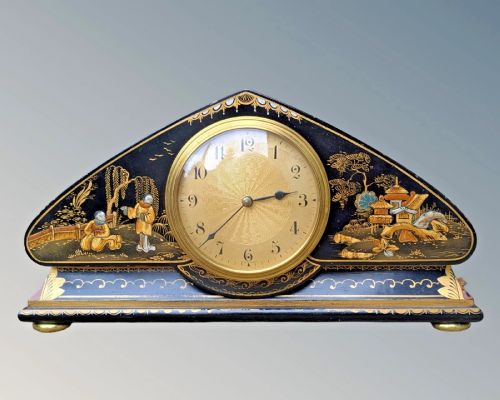
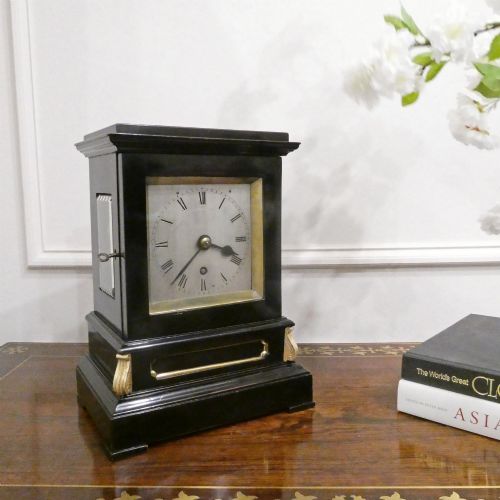
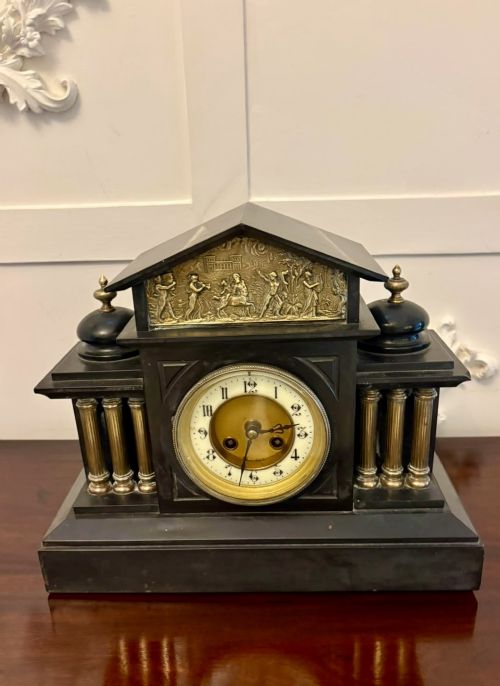
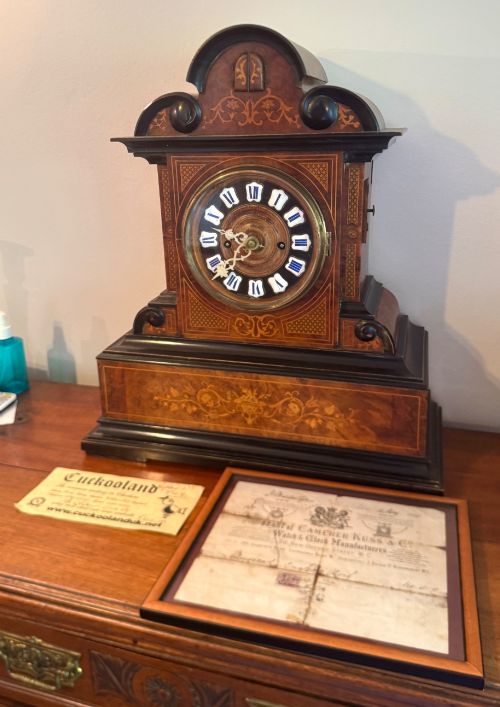
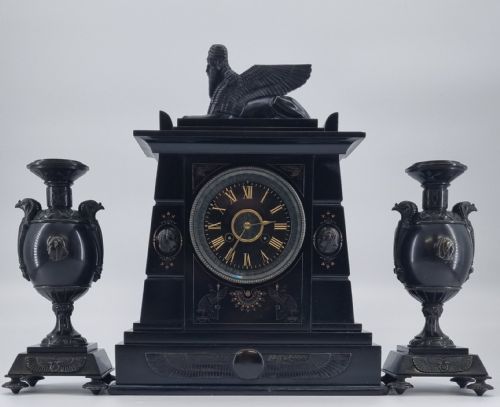
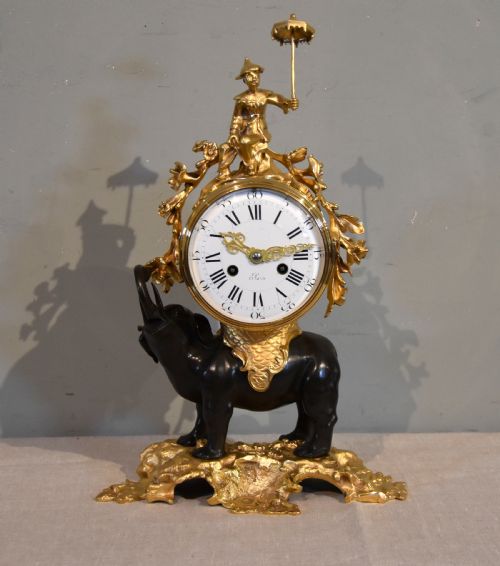
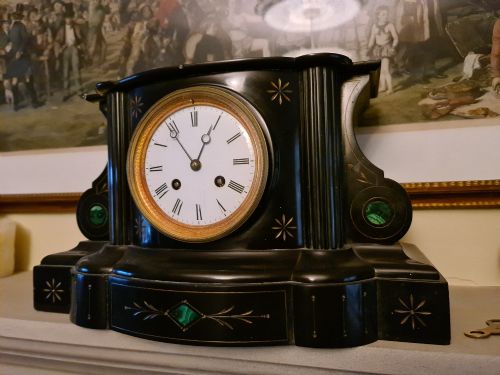
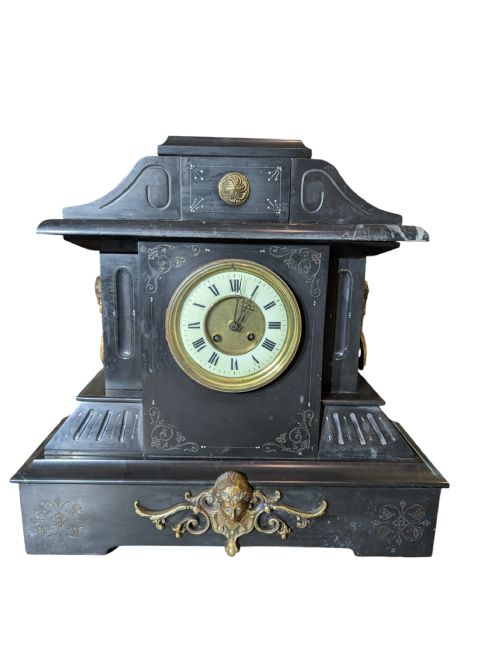
When you search for a black table clock, you encounter timepieces designed for mantels, desks, and brackets spanning several centuries of domestic life. The examples you meet on this page appear in various formats, from architectural marble and slate cases to ebonised wood and lacquered Chinoiserie.
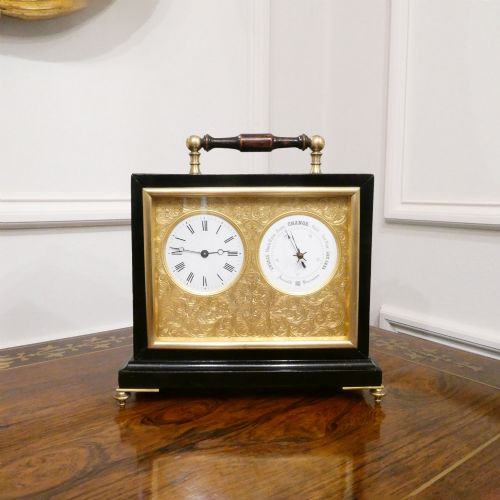
The materials reflect changing tastes from the seventeenth century through the Victorian era and into the Art Deco period. Pieces take the form of mantel clocks, library clocks, desk clocks, and bracket clocks, often accompanied by garnitures or barometers.
Origins span English workshops, French makers, and Black Forest carvers, demonstrating diverse regional approaches to dark-cased horology. Buyers select these objects for their strong silhouettes and reliable mechanical movements.
How they were made
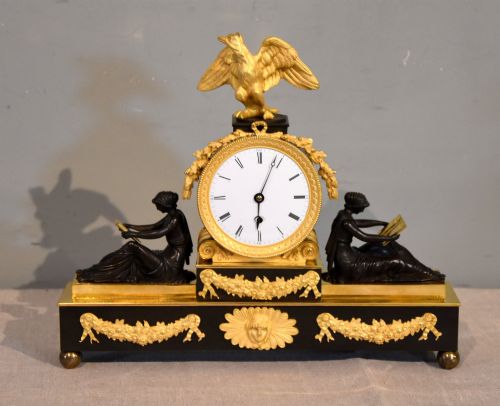
Maker workshops built heavy cases using black slate, marble, and faux marble, alongside timber frames treated with ebonising or black lacquer. Brass, ormolu, and gilt bronze mounts provided contrast against the dark stone and wood surfaces.
Movements relied on brass gear trains, ranging from single and double fusee mechanisms to eight-day and quarter-striking configurations. Dials incorporated silvered chapter rings, enamel numerals, and visible escapements behind glass panels.
Black Table Clock Retail Price Guide 2026
Typical asking prices for black table clock among the pieces listed under this phrase on Sellingantiques today, from the lower quarter to the upper quarter. They describe what is for sale here now, not the wider market.
Listings feature black table clocks spanning the seventeenth century to the 1960s, executed in marble, slate, ebonised wood, and brass.
What varies in quality
The standard of a black table clock depends on the precision of the case stonework or cabinetmaking and the execution of the metal mounts. Heavy slate and marble cases with crisp architectural mouldings and integral inlaid decoration represent superior craft.
Movement quality separates standard production pieces from high-grade workshop output, seen in signed backplates, complex chiming trains, and refined escapements. The integration of quality dials with clear silvering or clean enamel further distinguishes the better examples.
Widenham of London·Elliott London·Lenzkirch·Baetens London·Philippes Paris·John Witherston·Henry Jones·Bergen and Co·Des Granges·George Blackie
The Black Table Clock Glossary
- Fusee
- A conical pulley used in spring-driven clocks to maintain equal power as the mainspring unwinds. This mechanism ensures more consistent timekeeping throughout the power reserve.
- Garniture
- A set of matching decorative objects, typically a central clock flanked by matching urns or vases. These sets were designed to sit symmetrically on a mantelpiece.
- Ebonised
- Timber treated with a chemical stain or finish to imitate ebony. This technique was widely utilised on Victorian and Regency clock cases.
- Bracket clock
- A portable table clock originally designed to sit on a wall bracket or a chest. Many later examples functioned as large mantel clocks.
Black Table Clock: Frequently Asked Questions
Where should I place a heavy marble clock?
Heavy slate and marble cases require a sturdy surface such as a solid mantelpiece or a low sideboard that can support substantial weight.
Ensure the foundation is level to allow the pendulum to swing evenly and keep accurate time.
What is a fusee movement?
A fusee movement uses a conical drum and a cord or chain to equalise the pull of the mainspring as it loses tension.
This traditional mechanism appears in many better-quality English table clocks from the seventeenth to the nineteenth centuries.
How do I identify a Victorian slate clock?
Victorian slate and marble clocks usually feature architectural temple designs with incised gilt details, columns, and heavy plinths.
They often appear alongside matching side garnitures or marble inlaid panels.
What maintenance do old mechanical clocks need?
Mechanical table clocks benefit from periodic professional servicing to clean old oils and check gear wear.
Regular setting by the minute hand and careful handling of the pendulum during moving will protect the movement.