
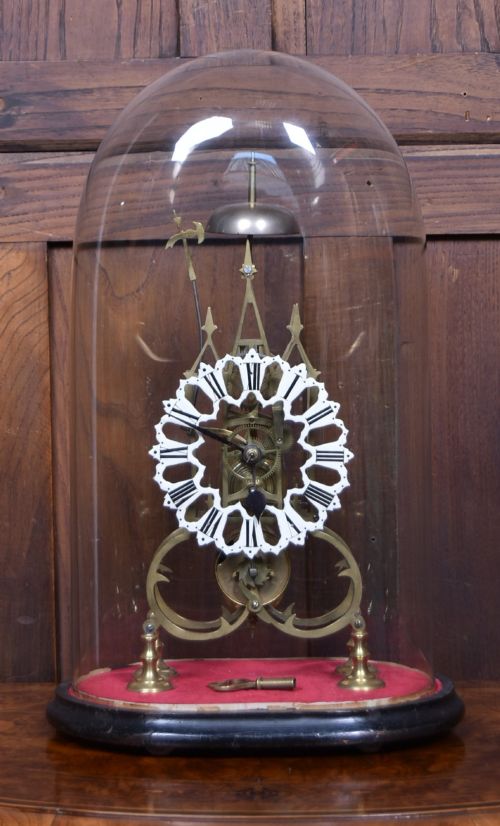
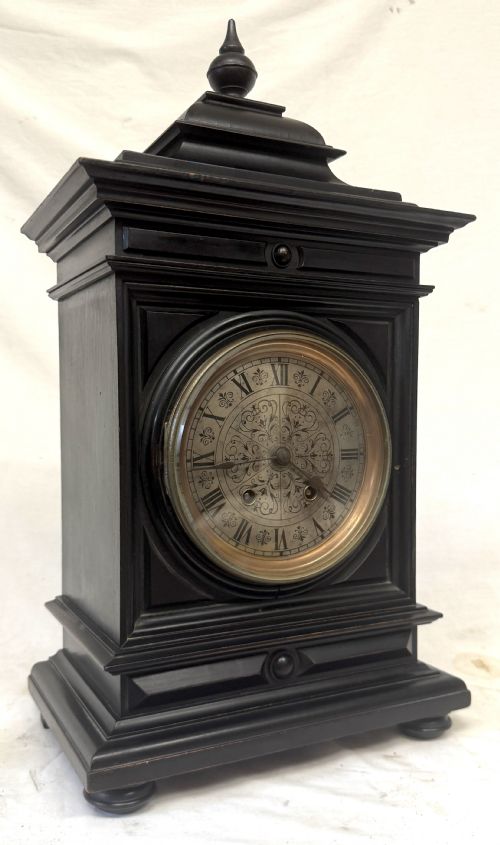
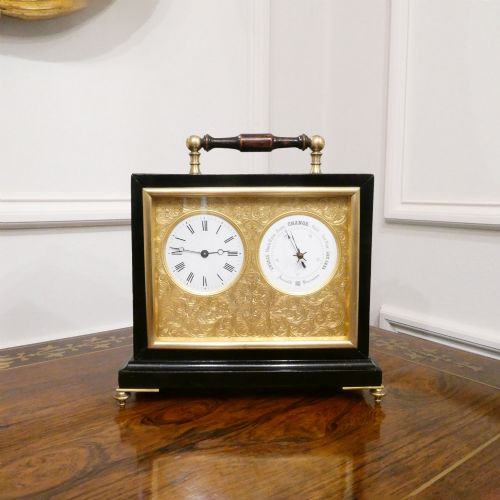
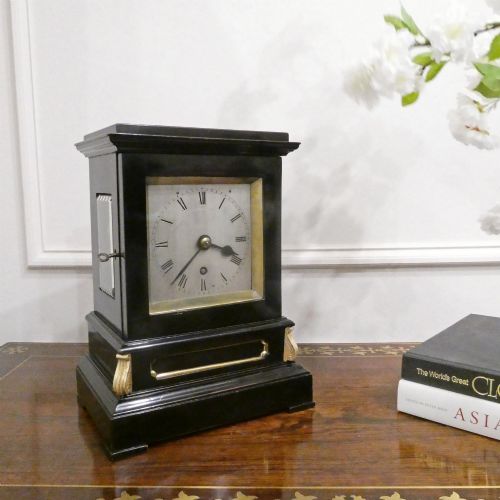
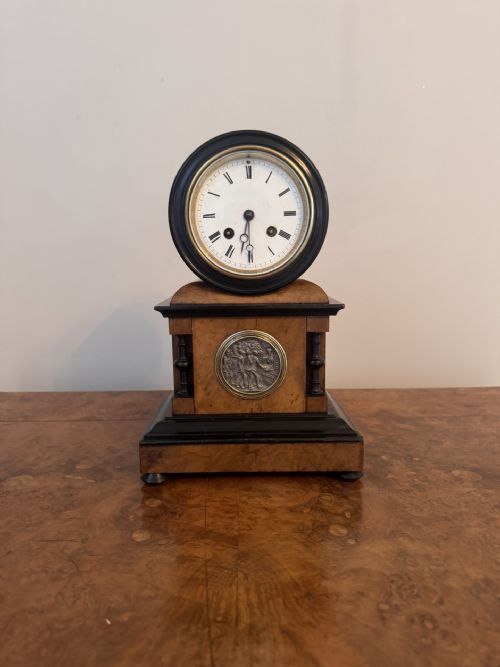
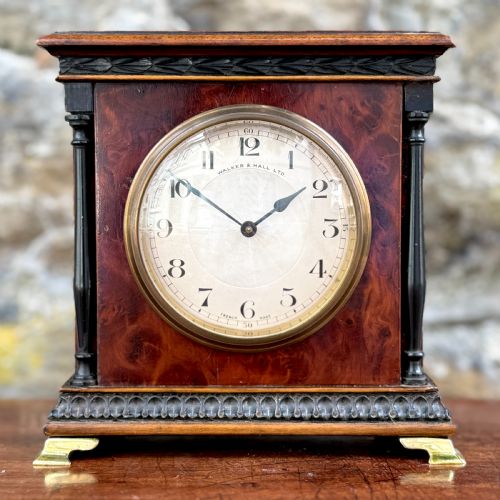
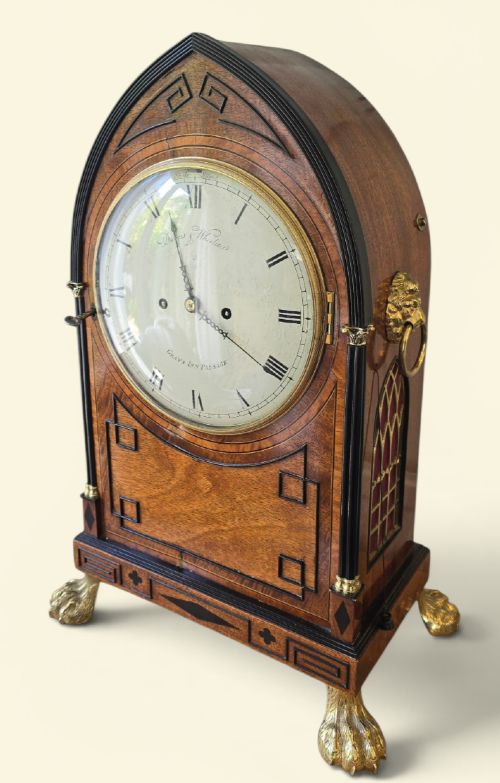


Ebonised Brass Mantel Clock
An ebonised brass mantel clock brings dark timber and polished metal together on a shelf, built to mark the hours with steady mechanical precision.
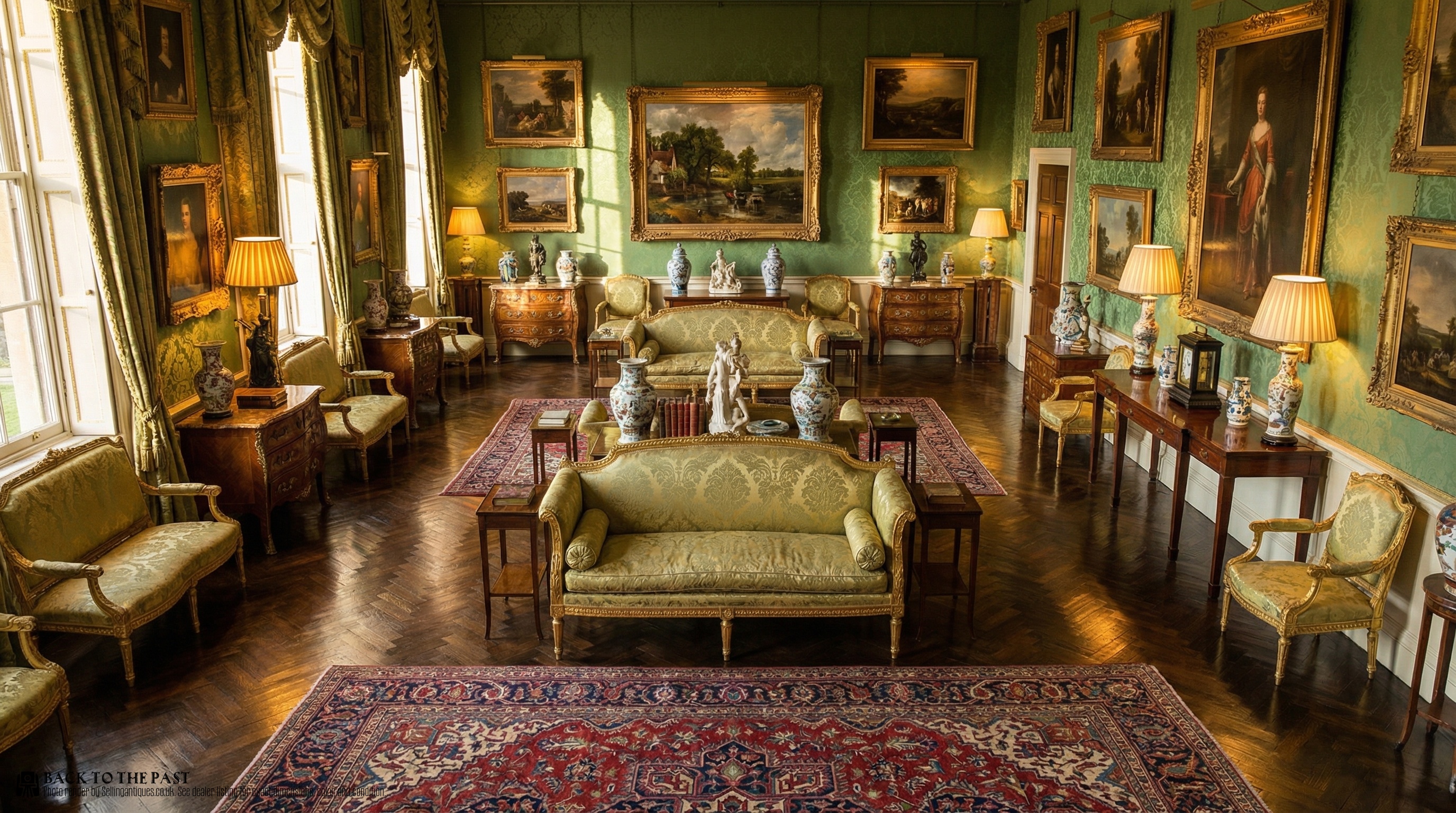
Ebonised Brass Mantel Clock
When you search for an ebonised brass mantel clock, you are looking at timepieces that combine blackened timber cases with brass dials, bezels, and mounts. These objects range from compact bracket clocks to larger Victorian library and chiming forms.
The versions you are most likely to meet on this page date primarily from the Victorian and 18th to 19th centuries, appearing alongside earlier examples from the 17th century. Their forms include lancet tops, balloon cases, and architectural portico designs.
Makers housed these movements in ebonised wood, ebony, or burr walnut, often enriching the dark surfaces with gilt bronze, ormolu, and glass domes. They serve as functional sculptures designed for domestic interiors.
Materials and Craftsmanship
Craftsmen built these clocks using dense hardwoods treated with an ebonising process to simulate expensive ebony, paired with substantial cast brass and gilt bronze mounts. Dials frequently feature silvered brass chapters protected by curved glass bezels.
Movements rely on fusee or verge escapements, driven by brass gear trains housed within sturdy timber frames. Ormolu and inlay details were applied to enhance the visual contrast between the dark casework and the polished metal fittings.
Materials documented across these listings include ebonised wood, brass, ormolu, burr walnut, and enamel.
Distinctions in Quality
The calibre of the mechanical movement largely determines the hierarchy of these pieces, separating simple timepieces from complex triple fusee musical bracket clocks with multiple bells. Precision in the gear cutting and the reputation of the original horologist elevate an example above standard production.
Casework execution defines the visual standard, seen in the crispness of the brass casting, the depth of the ebonised finish, and the integration of delicate marquetry or ormolu mounts. Original components and surviving matching brackets indicate superior preservation.
Desbois and Wheeler·Jonathon Lowndes·John Witherston·Le Roy·John Bull·Henry Jones·Des Granges·Arnold and Frodsham·Thomas A Paris·Richard Rooker·Payne and Co·Holingue Freres·Grimaldi and Johnson·John Seddon·Andrew Marchant·Berguer·William Withers·John Leroux
The Ebonised Brass Mantel Clock Glossary
- Fusee
- A conical pulley used in spring-driven clocks to maintain equal power as the mainspring unwinds. This mechanism ensures consistent timekeeping throughout the duration of the wind.
- Verge escapement
- An early type of escapement mechanism that controls the release of power in the gear train. It governs the swing of the pendulum or balance wheel with distinct mechanical action.
- Ebonised
- Timber treated to resemble natural ebony through staining or painting. This finish provides a uniform black surface popular in various historical periods.
- Ormolu
- Gilded bronze mounts applied to furniture and clock cases for decorative effect. The technique involves fusing gold to a base metal using mercury.
- Bracket clock
- A portable table clock originally designed to sit on a matching wall bracket. These pieces often feature striking mechanisms and elaborate brass carrying handles.
Ebonised Brass Mantel Clock: Frequently Asked Questions
What is a single fusee movement?
A single fusee movement uses a conical pulley and chain to equalise the pull of the mainspring as it unwinds. This system delivers steady force to the escapement for more accurate timekeeping.
Clocks with this mechanism usually tell time without chiming or striking complications.
Where should I place a bracket clock?
Position your clock on a stable, level surface away from direct sunlight, drafts, and sudden temperature fluctuations. A solid mantelpiece or dedicated wall bracket ensures the case remains plumb.
Proper placement helps the pendulum beat evenly and prevents unnecessary wear on the escapement.
How do I identify the period of an ebonised clock?
Examine the architectural style of the case, the construction of the backplate, and the design of the brass dial. 17th and 18th-century examples often feature basket tops and verge escapements, while later Victorian versions display heavier ebonised timber and elaborate ormolu mounts.
Signatures or maker names engraved on the dial or movement provide definitive chronological markers.