


Gold Fusee Timepiece
A gold fusee timepiece is a precision mechanical clock or watch driven by a chain and conical pulley, combining dependable timekeeping with ornamental metalwork.
Gold Fusee Timepiece
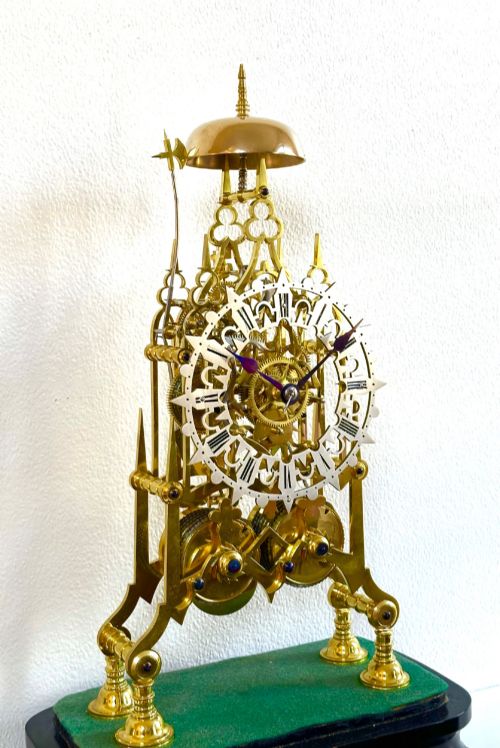
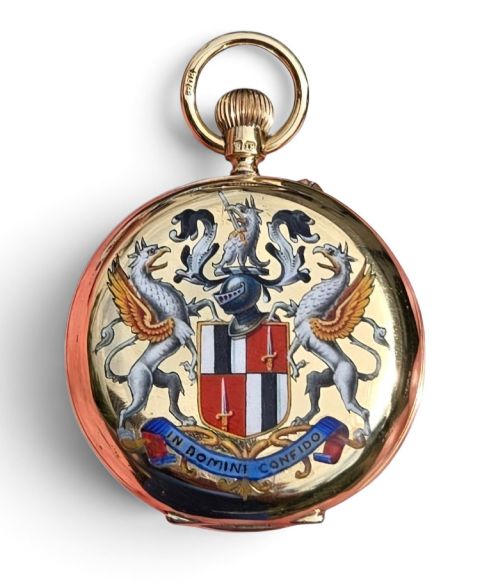
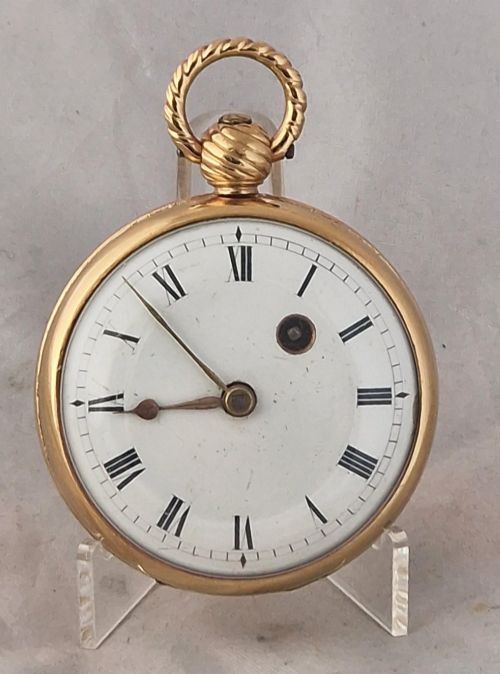
A gold fusee timepiece is primarily represented here by pocket watches and mantel clocks originating from the Georgian, Regency, and Victorian periods. These objects range from pocket watches in eighteen-karat gold cases to architectural mantel clocks in gilt bronze, ormolu, and brass.
The term encompasses portable watches with verge or standard escapements alongside domestic shelf and table clocks. Examples span simple single chain fusee movements to complex double fusee and quarter striking mechanisms.
Materials and construction
Makers constructed the exterior cases and dials using eighteen-karat gold, gilt bronze, ormolu, and patinated bronze, often paired with white enamel for clock faces and pocket watch dials. Structural internal components relied upon durable brass, steel, and glass to protect the delicate gear trains.
The defining mechanical element is the fusee movement, a conical pulley paired with a fine steel chain designed to equalise the mainspring's decreasing torque as it unwinds. Master horologists housed these mechanisms inside precision-machined housings styled in Regency, Victorian, and French Empire aesthetics.
Listings feature periods spanning Georgian, Regency, and Victorian eras, utilising brass, gilt bronze, ormolu, and eighteen-karat gold materials.
Assessing quality in a gold fusee timepiece
Quality rests in the precision of the mechanical movement and the crispness of the cast metalwork. Clocks and watches signed by established makers command attention for their meticulous gear cutting, delicate hand-engraving, and robust chain fusee performance.
The refinement of the exterior case decoration - whether figural gilt bronze motifs, delicate enamel dials, or solid eighteen-karat gold pocket watch cases - distinguishes standard production from exceptional horological examples.
R. Stewart, Glasgow·J Lyndsey Antique·William Hardy London·FB Adams London·Baetens London
The Gold Fusee Timepiece Glossary
- Fusee
- A conical pulley used in mechanical clocks and watches to maintain even tension on the gear train as the mainspring winds down. It connects to the barrel via a fine steel chain.
- Verge escapement
- An early type of mechanical escapement employing a vertical rod with two pallets that engage with a crown wheel. It regulates the release of power in older pocket watches.
- Ormolu
- Finely ground high-carat gold mercury-gilded onto a bronze base object. It creates a rich, durable metallic finish typical of Regency and French Empire mantel clocks.
- Quarter striking
- A clock complication that chimes the hours and the intermediate quarters on bells or gongs. It requires a twin fusee movement to power the additional striking train.
- Skeleton clock
- A timepiece designed with an open frame that exposes the brass gear train and escapement to view. They were popular in the nineteenth century for domestic display.
Gold Fusee Timepiece: Frequently Asked Questions
How does a fusee movement work?
A fusee uses a conical grooved pulley attached by a tiny chain to the mainspring barrel. As the spring unwinds and loses strength, the chain pulls higher up the wider part of the cone, providing greater leverage.
This ingenious mechanical compensation ensures the driving force remains constant throughout the running period, resulting in superior timekeeping accuracy.
How do I wind a chain fusee clock?
Winding requires a dedicated key inserted into the dial aperture to turn the arbour, pulling the chain back onto the conical fusee drum. Care must be taken not to overwind the mechanism.
Consulting the specific movement instructions prevents strain on the historical steel chain and internal gear teeth.
Are these clocks suitable for daily use?
While operational, antique fusee timepieces require professional setup and gentle handling due to their age and delicate mechanical construction. Regular servicing by a horologist keeps the brass gears and steel chains functioning correctly.
Most owners run them occasionally or maintain them as decorative mantel centrepieces rather than relying on them as primary daily clocks.
How do I identify a Regency gilt bronze clock?
Regency gilt bronze clocks typically display classical motifs, figural groupings such as goats or cherubs, and rich ormolu surfaces characteristic of the early nineteenth century. Movement signatures from London watchmakers often appear on the backplate.
The combination of heavy cast bronze cases and chain fusee movements defines this distinct period of British horology.