


Georgian Ormolu Clock
A georgian ormolu clock brings glittering gilt bronze and precise mechanical work together, offering the quintessential centrepiece for a mantelpiece.
Georgian Ormolu Clock
Makers working in London produced these clocks using premium movements like the single chain fusee, housed in cases of mahogany, burr walnut, tortoiseshell, or patinated bronze. Forms range from diminutive mantel pieces to substantial musical bracket clocks by noted makers.
How they were made
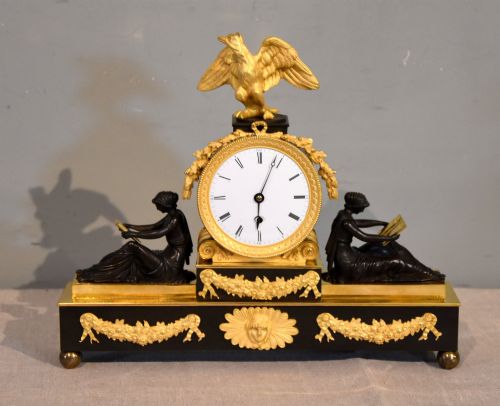
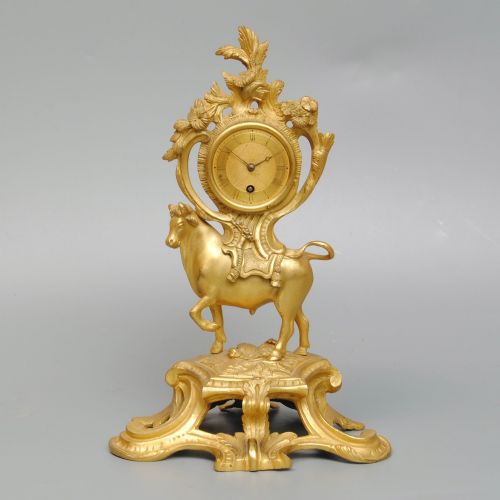
The construction of a georgian ormolu clock relies heavily on fire-gilt bronze, brass, and patinated bronze, shaped into elaborate decorative cases and mounts. Movement construction required advanced mechanical skill, utilising chain fusee mechanisms to ensure even power delivery.
Clockmakers paired these metal housings with delicate enamel dials and protective glass panels, occasionally combining exotic woods like burr walnut or tortoiseshell with polished marble and gilt metal fittings.
Miniature mantel clocks sometimes feature gilded bronze figures of Cupid holding watch over the passing hours.
What varies in quality
Quality in a georgian ormolu clock is determined by the crispness of the gilt bronze chasing and the complexity of the internal movement. Clocks featuring musical complications or signed by prominent London makers command greater attention from serious collectors.
The choice of secondary materials, such as tortoiseshell or burr walnut cases paired with fine patinated bronze figures, also distinguishes the finest examples from standard production pieces.
Baetens London·Viner London·Francis Perigal·William Hardy London·FB Adams London·Adams of Lombard Street·Perigal and Duterrau·Bently and Beck London
The Georgian Ormolu Clock Glossary
- Ormolu
- Gilded bronze, produced by applying a mercury and gold amalgam to a bronze base and heating it until the mercury vaporised. This technique creates a rich, durable golden surface characteristic of fine period metalwork.
- Fusee
- A conical pulley used in clock movements to maintain an even pull on the gear train as the mainspring unwinds. It ensures consistent timekeeping throughout the power reserve.
- Bracket clock
- A portable household clock designed to sit on a bracket or table, typically featuring a brass carrying handle on top. Many English examples include quarter-striking or musical capabilities.
- Timepiece
- A clock that indicates the time of day but does not strike the hours or quarters. These simpler movements focus purely on accurate time measurement.
- Patinated bronze
- Bronze that has been chemically treated or aged to achieve a dark, lustrous surface finish. It often provides a striking textural contrast against bright ormolu mounts.
Georgian Ormolu Clock: Frequently Asked Questions
What is a single chain fusee movement?
A single chain fusee movement uses a conical pulley and a fine steel chain to regulate the pull of the mainspring. This ingenious mechanical device compensates for the dropping tension of the spring as it winds down.
Clocks equipped with this mechanism maintain steady power delivery to the gear train, resulting in more reliable and accurate timekeeping across the running period.
How do I wind a fusee mantel clock?
Winding requires a matching winding key inserted into the dial aperture to turn the fusee arbor. Care must be taken not to overwind the movement, stopping as soon as resistance indicates the spring is fully tensioned.
Most chain fusee movements require attention once a week, though regular servicing by a qualified horologist keeps the delicate brass gears and chain functioning smoothly.
Where should I place an ormolu clock?
These clocks look best displayed on a sturdy mantelpiece, console table, or bracket shelf away from direct sunlight and damp environments. A stable surface prevents vibrations that can disrupt the delicate pendulum or balance wheel.
Because the fire-gilt ormolu and patinated bronze catch the light differently throughout the day, positioning them where ambient light can play across the surface enhances their visual depth.
How do I tell Regency clocks apart from earlier George III pieces?
Regency clocks often lean towards bolder architectural forms, crisp patinated bronze figures, and classical revival motifs. George III pieces frequently incorporate more traditional bracket clock silhouettes with ornate wooden veneers and musical capabilities.
Examining the signature style of the London maker and the specific combination of brass, mahogany, or tortoiseshell usually reveals the transitional shift in taste from the eighteenth to the nineteenth century.