

Regency Period Carver Chair
A regency period carver chair brings architectural line and generous elbow room to a dining table.

Regency Period Carver Chair
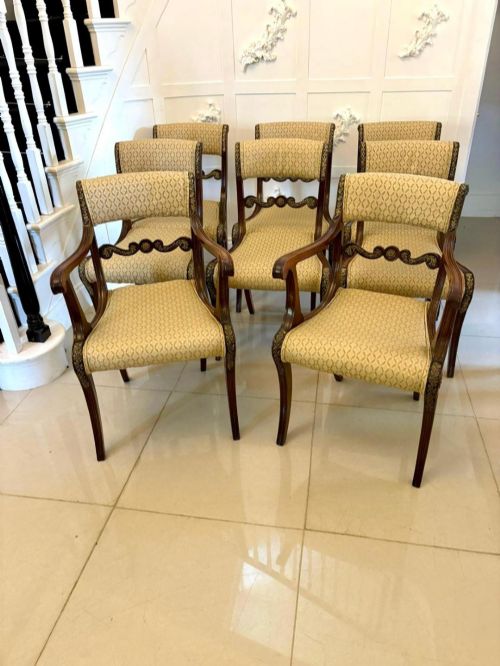
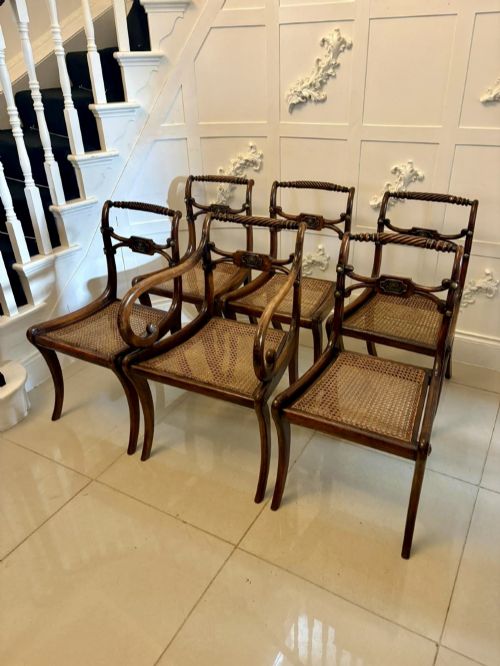
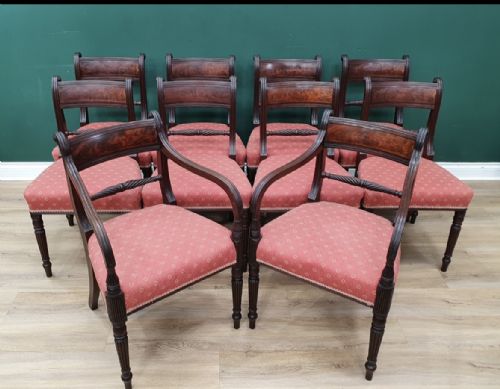
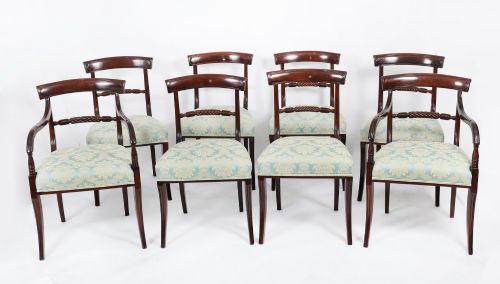
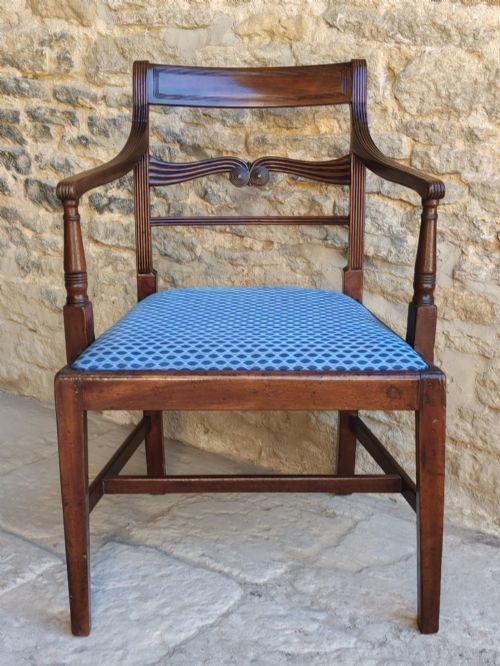
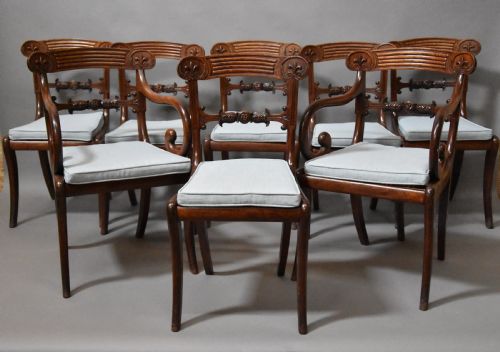
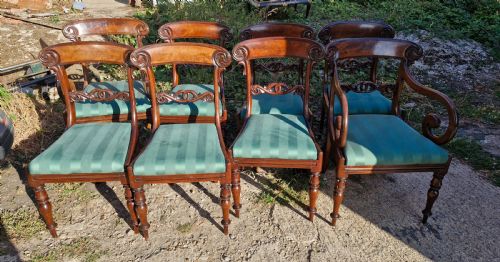
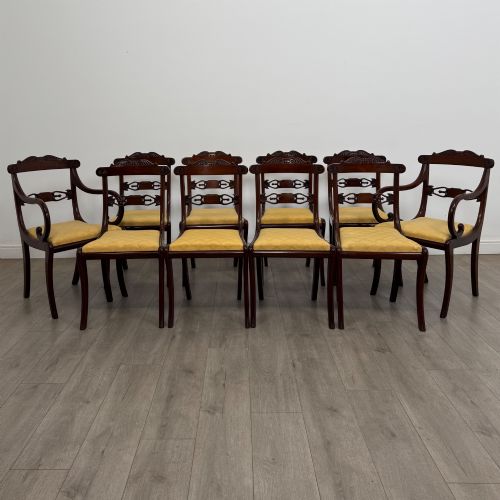
A regency period carver chair is a substantial dining armchair designed to stand at the head of a table or to pair as elbow chairs alongside matching single chairs. The pieces on this page span the Regency, Georgian, William IV, and Edwardian eras, with a strong representation of authentic early nineteenth-century mahogany forms.
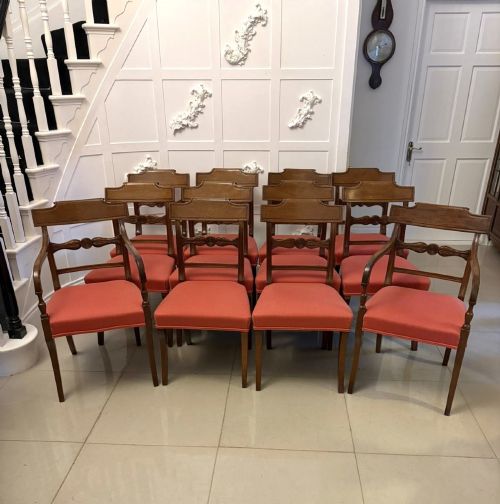
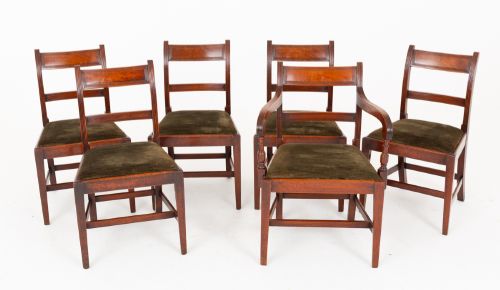
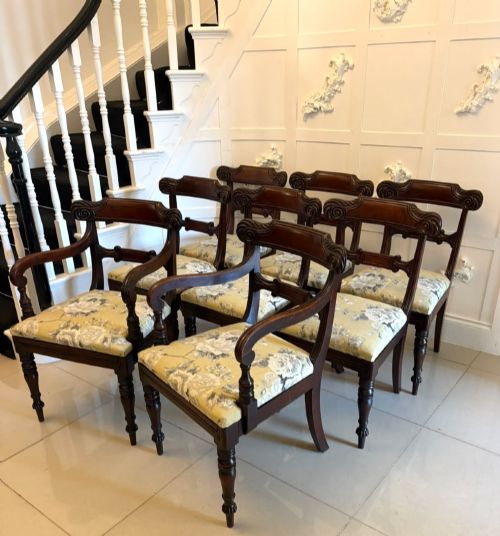
Buyers will encounter single armchairs, matched pairs, and larger suites where a set of six or eight dining chairs includes one or two corresponding carvers. These range from robust bar back and scroll arm designs to lighter caned seat models and occasional revival pieces.
How they were made
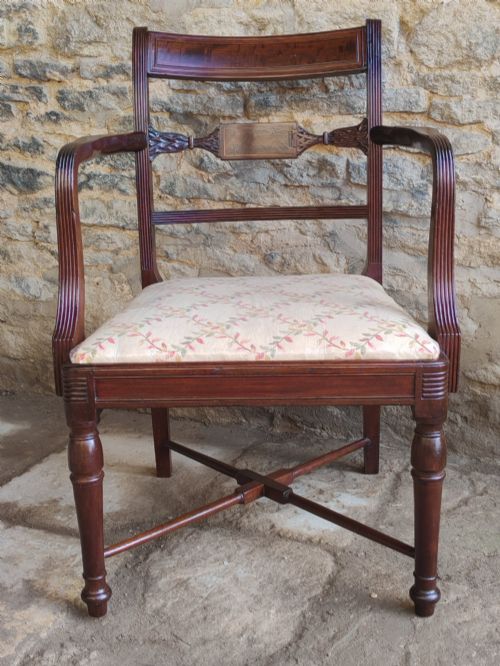
Cabinetmakers built these carvers primarily using dense mahogany, alongside occasional fruitwood, elm, and rosewood, often enriching the timber with subtle brass inlay. Structural integrity relied on traditional joinery to support the curved backrests and sweeping elbow supports characteristic of the period.
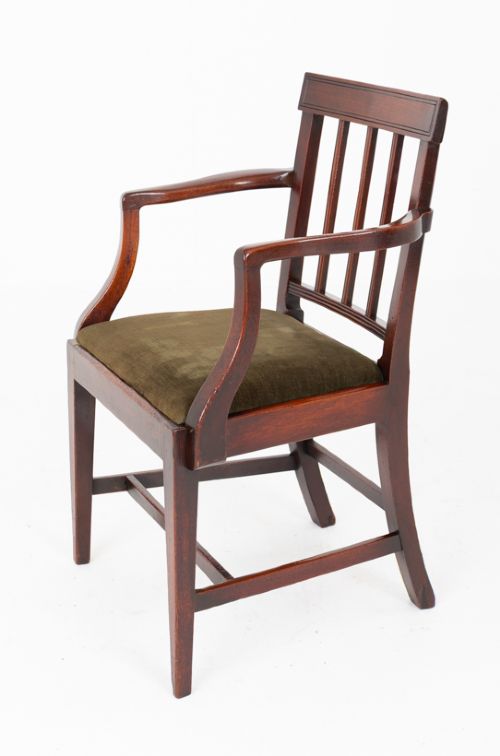
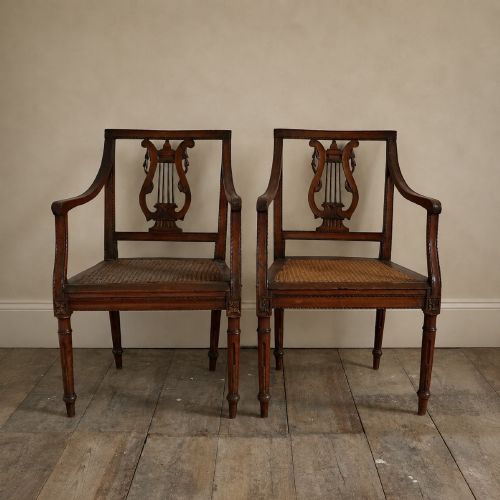
Seating surfaces involved woven cane panels or drop-in frames upholstered in fabrics such as velvet and textile, providing a firm base before modern cushioning materials became common.
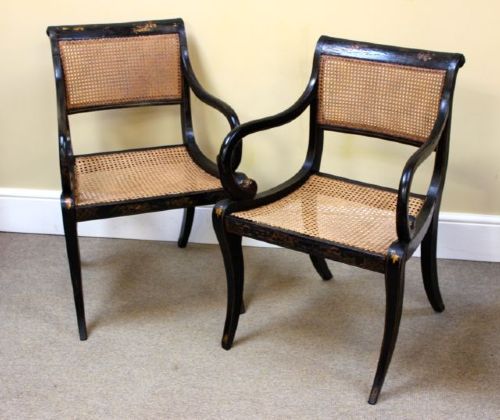
Seating surfaces alternate between traditional upholstered pads and woven cane panels set into wooden frames.
What varies in quality
The distinction between ordinary and superior carvers lies in the crispness of the timber carving and the architectural balance of the frame. Selected mahogany shows deep grain figuration, while finer examples exhibit meticulous turning, delicate brass detailing, and robust joinery that survives centuries of use without wobble.
Proportion and comfort also dictate standing; superior workshop output maintains an elegant rake to the back legs and smooth curves to the armrests without appearing heavy or clumsy.
The Regency Period Carver Chair Glossary
- Carver chair
- An armchair designed specifically for use at a dining table, typically featuring open arms that fit beneath the table rim. These often accompanied sets of single dining chairs for the host.
- Bar back
- A horizontal curved top rail resembling the shape of a yoke or bar, frequently seen in Regency dining chair designs. This style provides solid lumbar support.
- Cane seat
- A seating surface woven from peeled rattan strips in an open mesh pattern, offering a resilient and airy platform. It is often paired with a loose squab cushion.
- Sabre leg
- A gently curved, outward-sweeping leg that tapers toward the foot, mimicking the line of a cavalry sabre. This form is a hallmark of Regency seating design.
- Scroll arm
- An armrest that curls inward or outward in a tight circular scroll at the terminal point. It adds a sculptural flourish to the top of the arm supports.
Regency Period Carver Chair: Frequently Asked Questions
How do I spot a true regency chair?
True pieces display period timbers like dense mahogany with natural patination and hand-cut joinery. Look for classic design motifs such as sabre legs, bar backs, and brass inlay.
Construction details on older chairs reveal traditional pegging and wear patterns consistent with age. Revival pieces from later periods often show machine finishing or different timber weights.
Are carver chairs comfortable for daily use?
Carver chairs provide generous seating space and supportive armrests, making them comfortable for long meals. Many historical versions utilise cane seats or upholstered pads.
Adding a tailored squab cushion allows these chairs to function comfortably in modern dining rooms. Their sturdy wood frames ensure they handle daily sitting with ease.
Can I mix carver chairs with modern tables?
These classic chairs pair exceptionally well with contemporary or antique dining tables due to their neutral mahogany tones. Their open arms generally slide beneath standard table heights.
Placing a pair of carvers at opposite ends of a table creates a grounded focal point. The clean architectural lines of the period bridge traditional and modern interiors smoothly.