
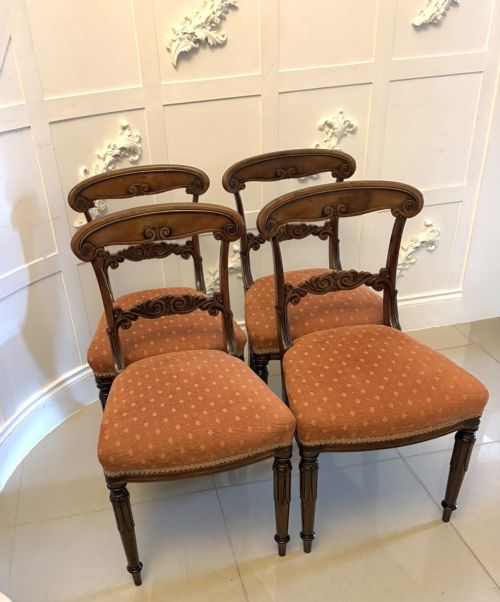
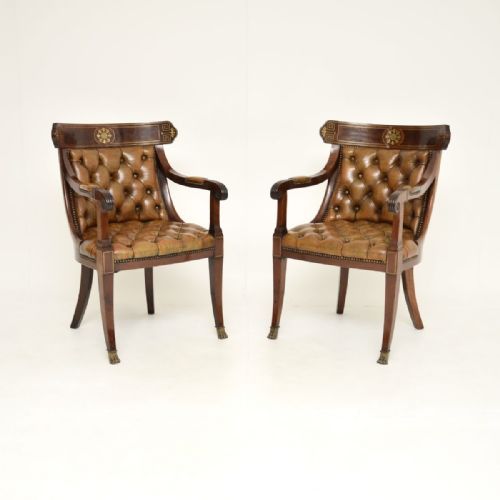


Brass Inlaid Desk Chair
A brass inlaid desk chair brings unmistakable warmth and sharp linear detail to a room, offering both sturdy seating and fine Regency or Georgian cabinet-work.

Brass Inlaid Desk Chair
A brass inlaid desk chair typically spans the Regency and Georgian periods, alongside later 19th century and Edwardian interpretations. These seating forms range from library armchairs and elbow chairs to side chairs and occasional tub seats.
The materials recorded in these pieces include mahogany, rosewood, satinwood, and fruitwood, often paired with leather or fabric upholstery. The brass inlay work defines the aesthetic, catching the light against dark or figured timber veneers.
How they were made
Cabinet-makers channelled solid timber or applied delicate veneers of mahogany, rosewood, and satinwood to form the primary structure of each chair. Brass stringing and figurative inlays were then carefully set flush into hand-cut grooves across the crest rails, splats, and frame borders.
Seating portions were constructed with dropped-in frames or upholstered pads layered with fabric or leather. Frames relied on traditional joinery techniques, uniting curved elbow supports, raked back legs, and saber or turned front legs.
Listings feature pieces spanning the Georgian, Regency, and Edwardian periods, constructed primarily in mahogany, rosewood, and satinwood with brass inlay.
What varies in quality
Quality rests primarily in the precision of the brass inlay work and the choice of cabinet timbers. Tighter, more complex brass stringing integrated cleanly into figured rosewood or flame mahogany indicates superior workshop production.
Structural integrity and timber selection also divide standard examples from finer pieces. Chairs retaining their original patination, crisply turned members, and balanced proportions command greater appreciation among collectors.
The Brass Inlaid Desk Chair Glossary
- Brass stringing
- Thin lines of brass inlaid into grooves cut into the wooden surface to form geometric or linear patterns. This decorative technique highlights the contours of the frame.
- Elbow chair
- A seating form featuring supportive arms, often used at a desk or library table. These chairs provide a wider seat than standard side chairs.
- Satinwood
- A pale, hard timber featuring a natural sheen, frequently utilised for contrasting inlay work on darker woods like mahogany. It adds brightness to Regency and Georgian furniture.
- Rosewood
- A dense, heavily figured exotic timber showing dark brown and black grain patterns. It served as a primary show wood for many library and desk chairs.
Brass Inlaid Desk Chair: Frequently Asked Questions
Are these chairs comfortable for daily desk work?
Many of these pieces feature supportive elbow rests and upholstered leather or fabric pads designed for seated tasks. Their ergonomic comfort varies depending on the specific period and whether the seat height matches a modern desk.
Buyers often pair them with traditional writing tables or use them occasionally in studies and libraries. Adding a supportive cushion can make older forms more practical for extended sitting.
How do I date a brass inlaid chair?
Dating relies on examining the timber species, the style of the legs, and the complexity of the brass inlay. Regency and Georgian examples display specific architectural motifs and cabinet-making traits.
Later Edwardian or 19th-century interpretations often repeat these earlier styles but utilise different secondary woods and manufacturing methods. Comparing the joinery against period conventions helps clarify the age.
How do I care for the brass inlay?
Maintaining the inlay requires gentle dusting with a soft cloth and avoiding harsh polishes that can discolour the surrounding wood. Keeping the timber nourished with appropriate wax prevents the wood from shrinking and loosening the brass stringing.
Direct sunlight and sudden temperature changes should be avoided to protect both the brass and the underlying veneer. Regular, careful maintenance preserves the contrast between the metal and the timber.