

Edwardian Style Carver
An Edwardian style carver brings robust proportions and classical revival carving to the dining table, offering generous arm support alongside period character.
Edwardian Style Carver
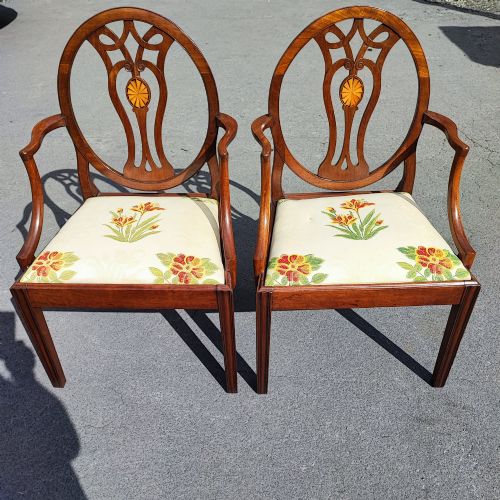
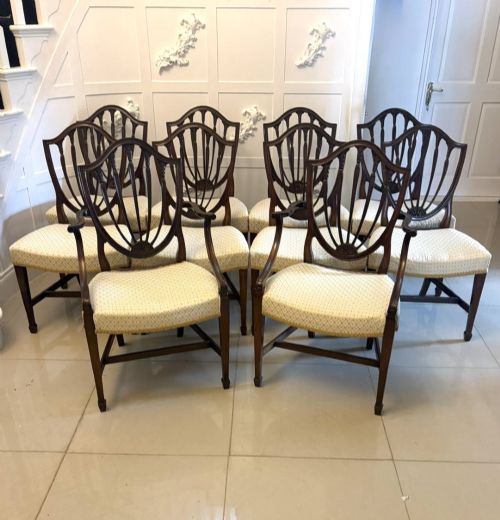
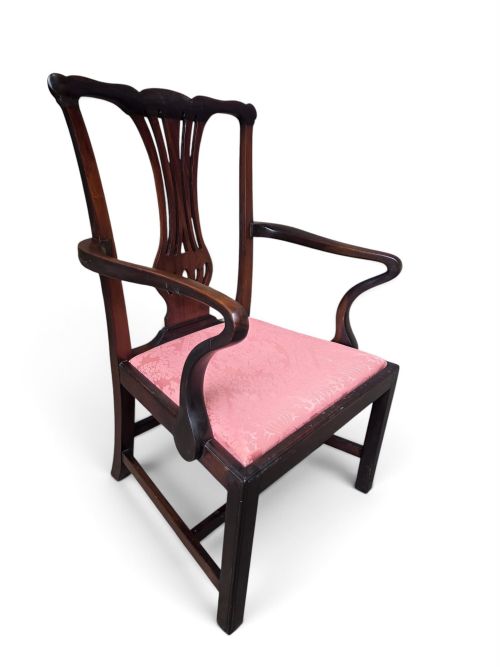
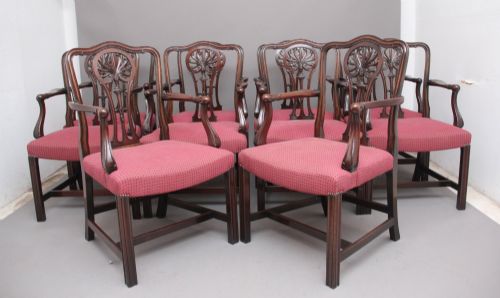
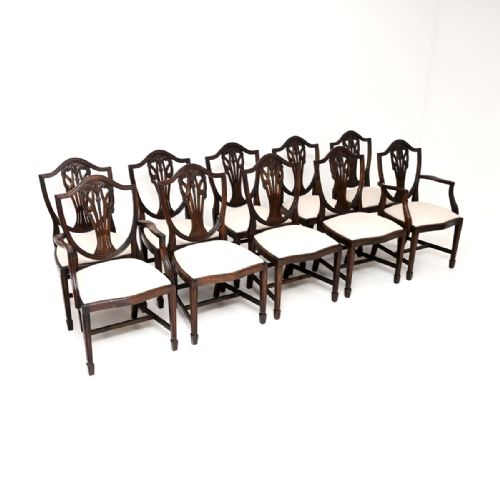
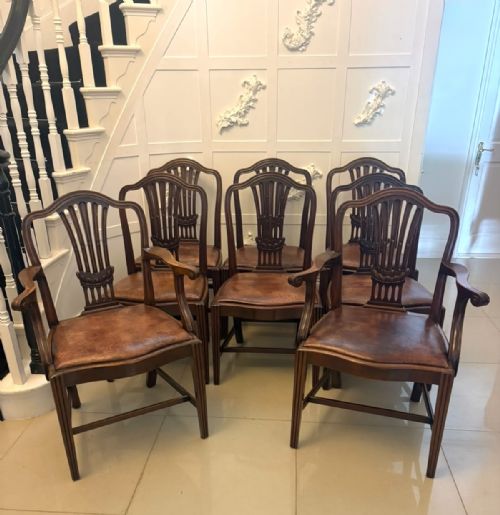
When you search for an edwardian style carver, you encounter armchairs designed to sit at the head of a dining table or function as standalone library seats. These pieces draw heavily on earlier vocabularies, appearing in Chippendale, Hepplewhite, and Georgian revival idioms.
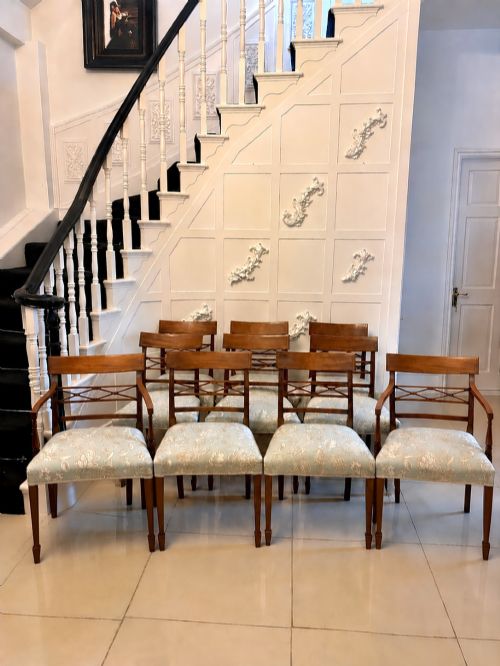
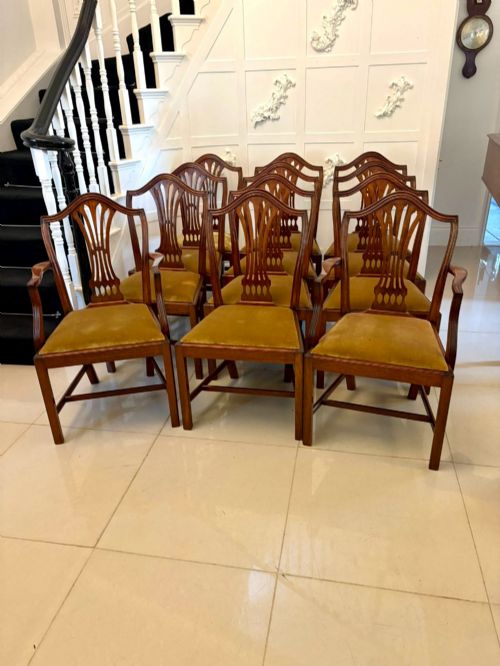
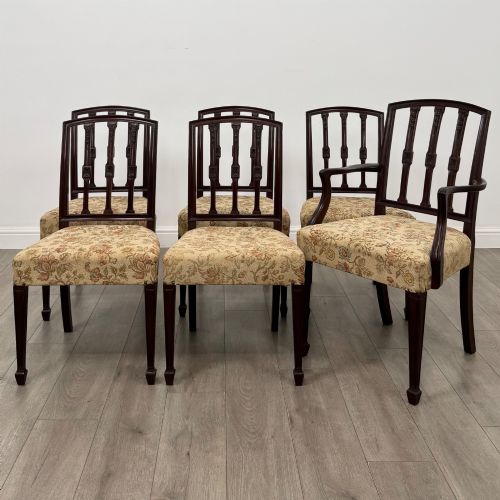
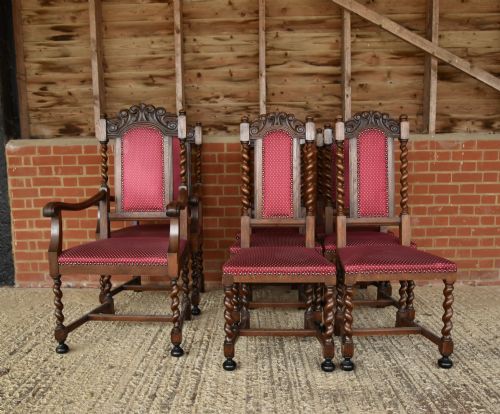
The versions most commonly met on this page date from around nineteen hundred to the nineteen twenties, constructed in mahogany, oak, or satinwood. They range from single open armchairs to matched sets of dining chairs incorporating two matching carvers.
Makers of this era looked back to eighteenth-century models, reinterpreting shield backs, pierced splats, and scroll terminals with mechanical precision and dependable joinery.
How they were made
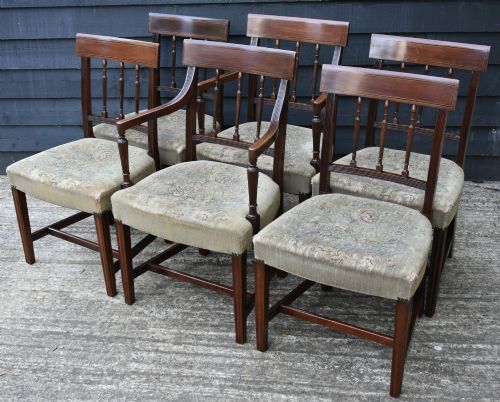
The primary timbers utilised across these listings are mahogany and oak, occasionally complemented by satinwood veneers or maple framing. Joinery relied on sturdy mortise and tenon construction to withstand the daily stresses placed on dining armchairs.
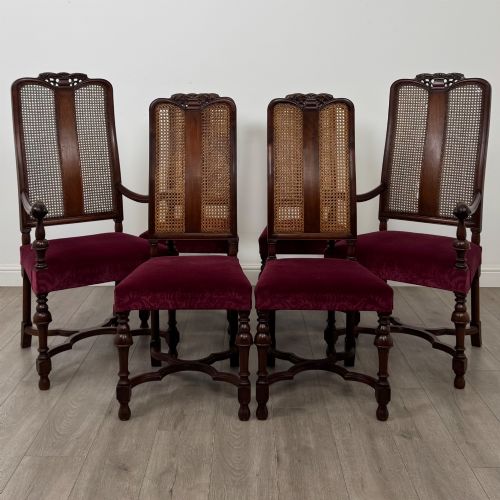
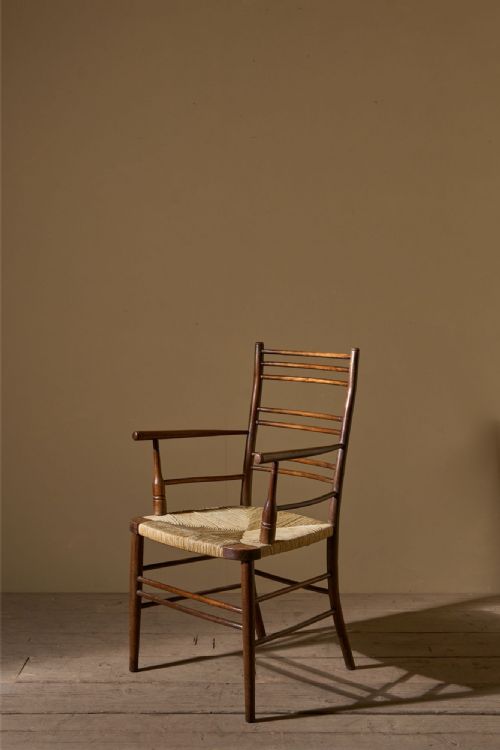
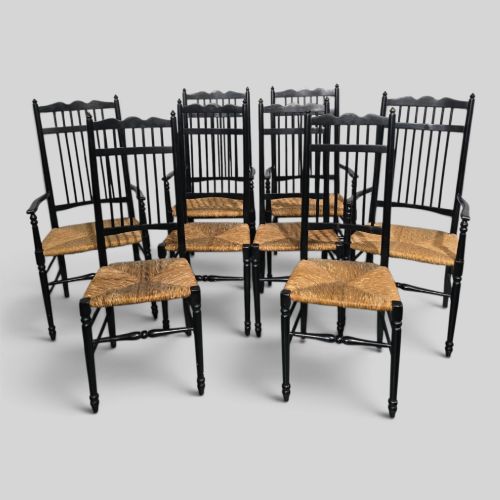
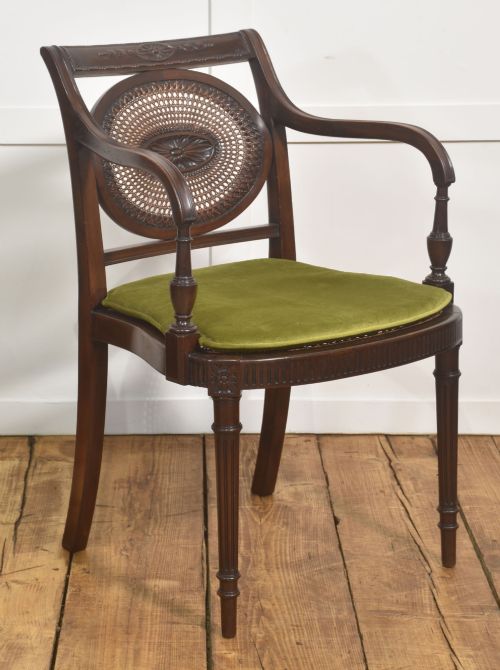
Seating support varied between drop-in upholstered pads, cane panels, and traditional rush weaving. Upholstery fabrics included original leather, velvet, and various woven textiles fixed with traditional tacks.
Some Edwardian carvers hide centuries of historical identity inside their frames, masquerading as pure Georgians until a modern fastener gives the game away.
What varies in quality
Quality in an edwardian style carver rests upon the crispness of the hand-carving and the selection of timber figures. Superior examples display deep, sharp relief on the splats and arms rather than soft, mechanical moulding.
Weight and structural integrity also divide the tiers, with finer chairs utilising dense, well-seasoned hardwoods that provide rigid support without excessive bulk.
Liberty Morris & Co·Maple & Co·Alfred Allen of Birmingham·Cowtan & Sons·Waring & Gillow
The Edwardian Style Carver Glossary
- Carver
- An armchair designed with elbow rests, traditionally placed at the head of a dining table to match a set of single chairs.
- Shield Back
- A chair back shaped like an upturnt heraldic shield, popularised by Hepplewhite and revived during the Edwardian period.
- Splat
- The vertical wooden strip down the centre of a chair back, often pierced, carved, or shaped in revival pieces.
- Barley Twist
- A turning technique resembling a twisted rope, frequently found on the legs and stretchers of oak revival furniture.
- Cane
- Woven rattan material utilised for lightweight, resilient seat panels and chair backs.
Edwardian Style Carver: Frequently Asked Questions
What is an edwardian style carver?
An edwardian style carver is an armchair featuring armrests, produced around the start of the twentieth century in the manner of earlier Georgian or Chippendale designs.
These chairs were built to accompany larger dining table suites while offering a more commanding seat for the host.
How do I spot a revival piece?
Revival pieces display nineteenth or twentieth-century timber dry-out patterns and machine-assisted joinery beneath hand-finished surface carving.
Examining the underside reveals modern screw types or block reinforcements typical of Edwardian workshops rather than eighteenth-century joinery methods.
Were these chairs made in sets?
Many dining chairs from this period were produced in large sets consisting of several single chairs accompanied by a pair of carvers.
Single carvers also appear frequently, having been purchased originally as desk or library chairs rather than dining seating.
Which woods were used most often?
Mahogany served as the predominant timber for formal Georgian revival carvers, offering a dark and uniform grain suitable for polishing.
Oak and walnut appear alongside rush or cane work when the design follows an Arts and Crafts or earlier seventeenth-century aesthetic.